The Best AI Tools for Debt Relief Lenders in 2025


Debt Relief AI
2-4x collector productivity
Your debt collection team just spent three hours trying to reach 50 debtors and connected with exactly four people. Meanwhile, your competitor down the street is using conversational AI tools to handle hundreds of contacts across voice, SMS, and email while you're still playing phone tag. The gap between traditional collection methods and AI-powered operations is widening fast, and 2025 is shaping up to be the year that separates the leaders from the laggards. Here's what you need to know about the AI tools that are actually moving the needle for debt relief lenders.
TLDR:
- AI-powered debt relief tools can increase collector productivity by 2-4x while reducing costs by up to 70%
- The best solutions combine multi-channel communication (voice, SMS, email) with workflow automation
- Conduit leads the market by offering complete conversational AI with strong business integrations
- Voice-only solutions like Salient and Skit.ai excel in their niches but lack broader features
- Choose based on your need for multi-channel communication, workflow automation, and system integrations
Overview of AI Technology in Debt Relief Operations
The debt collection software market is exploding right now. We're talking about growth from $4 billion in 2022 to an expected $7.4 billion by 2028, and AI adoption is driving most of that expansion.
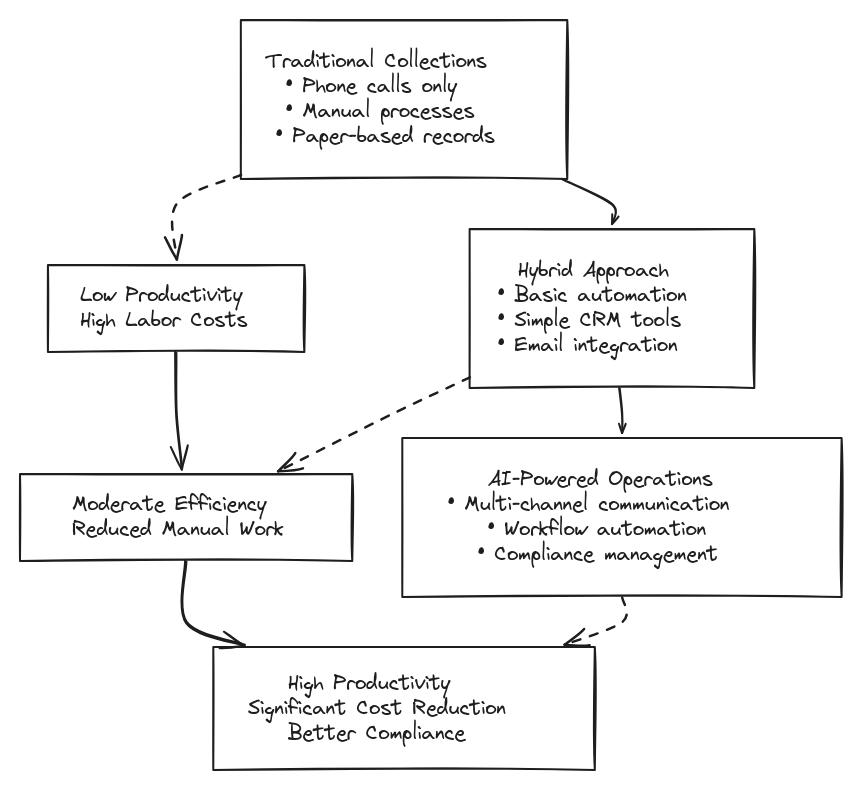
Here's what's actually happening in the industry: AI allows operations that are 8x faster than traditional methods. Collector productivity jumps by 2-4x, and debtor coverage costs drop by up to 70%. Those numbers show the reality for lenders who've made the switch.
The change goes way beyond automating phone calls. Modern AI handles complex conversations across multiple channels, understands context, maintains compliance, and integrates with your existing loan management systems. It's like having a team of expert collectors who never sleep, never get frustrated, and always follow regulations perfectly.
What makes this particularly interesting for debt relief lenders is how AI can maintain empathy while being persistent. The technology has evolved to handle sensitive financial conversations with the right tone, timing, and approach for each individual situation.
Evaluation Methodology
We tested these AI debt relief tools based on what actually matters for running successful operations in 2025. Our criteria focused on real-world performance rather than flashy marketing claims.
Key testing factors:
- Integration features with existing loan servicing systems and CRMs
- Compliance with FDCPA, TCPA, and other regulatory requirements
- Multi-channel communication support across voice, SMS, email, and chat
- Workflow automation features for complex collection scenarios
- Proven results in debt recovery rates and performance improvements
We looked at publicly available client results, technical features, and how well each platform handles the complexity of modern debt relief operations. The goal was to identify which tools actually deliver on their promises versus those that just sound good in demos.
The most effective AI debt relief platforms reimagine how collection workflows should operate in the first place.
One thing we noticed: many platforms excel in one area but fall short in others. Some have great voice AI but terrible workflow automation. Others handle compliance well but can't integrate with your existing systems. The best solutions combine multiple features into a cohesive platform.
1. Best Overall Solution: Conduit
Conduit stands out as the most complete AI platform for debt relief lenders, and honestly, we think it's because we've approached the problem differently than everyone else.
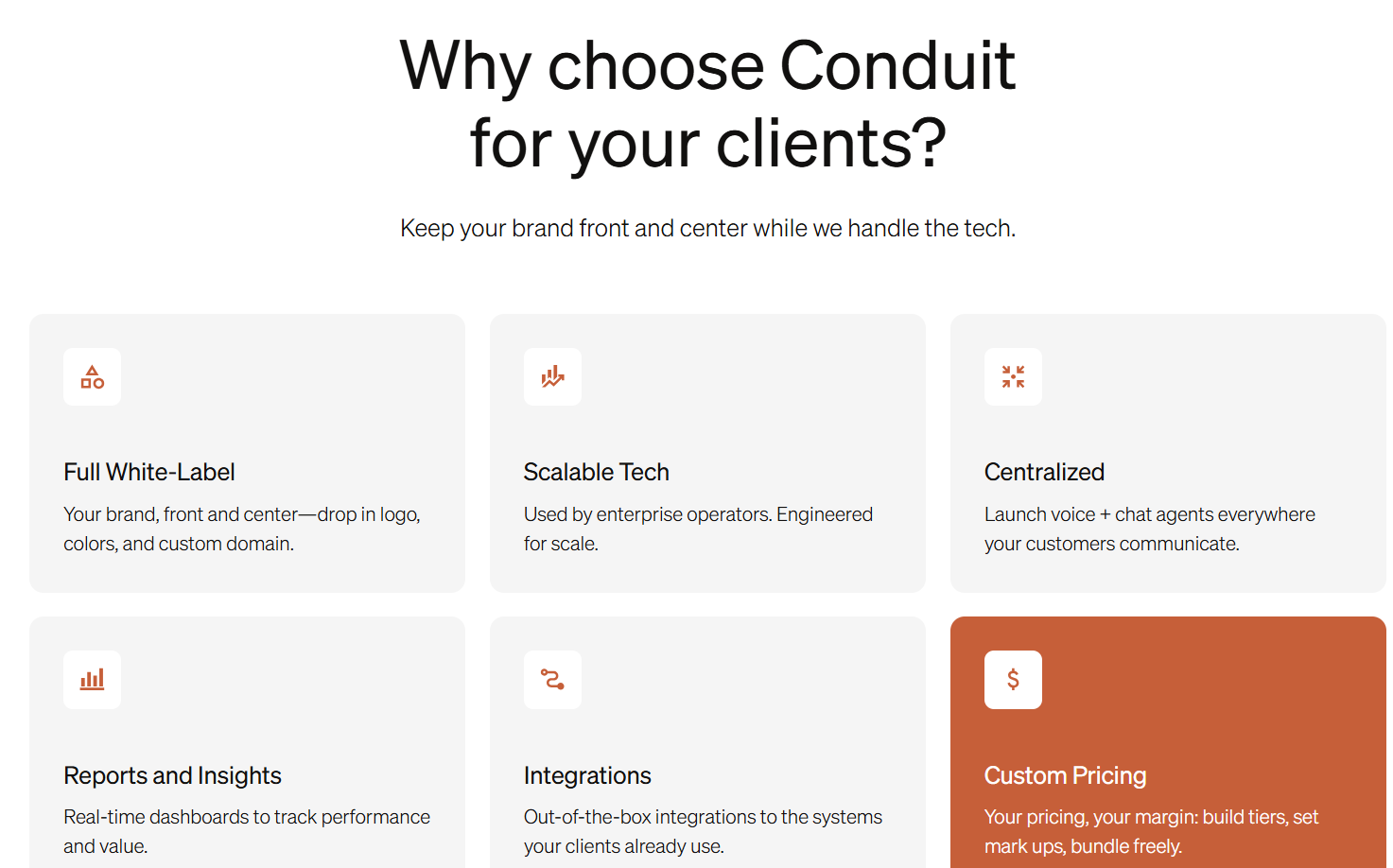
Instead of building another voice AI tool or collections bot, we created a platform that combines conversational AI across every channel: SMS, WhatsApp, email, chat, and voice, with the kind of powerful workflow automation that actually runs a business.
Here's what makes the difference: our unified inbox centralizes all communications so your team won't be juggling multiple platforms. Our agentic workflows can manage entire collection processes end-to-end, from initial contact through payment arrangements to follow-up reminders.
The platform integrates natively with CRMs and loan management systems, which means your AI agents have access to complete customer context. They know payment history, previous interactions, current financial situation, and can make intelligent decisions about the best approach for each case.
Key strengths:
- Multi-channel conversational AI platform that works across all communication channels
- Advanced workflow automation that handles complex business logic
- Native integrations with leading CRMs and loan servicing platforms
- Unified inbox for simple team management
Limitation: As a newer player, we're still building market awareness compared to legacy providers
Bottom line: The only complete solution that truly combines best-in-class communication with the automation tools modern debt relief operations require.
2. Voice-Only Solution: Salient
Salient has carved out a solid position as a generative AI platform focused on loan servicing operations. Their technology simplifies collections, compliance monitoring, and customer communication through an AI-powered platform that handles complex downstream workflows while maintaining regulatory compliance.
They've got some impressive backing with a recent $60M funding round and report $12 million in annual savings for clients like Westlake Financial. That kind of financial validation suggests they're solving real problems for their customers.
The platform intelligently handles loan servicing workflows and has built-in regulatory compliance, which is important for any debt relief operation. Their focus on the lending industry means they understand the particular challenges and requirements better than generic AI platforms.
Key strengths:
- Strong funding and proven loan servicing focus
- Regulatory compliance built into the platform architecture
- Proven cost savings for enterprise clients
Limitation: Limited to loan servicing without the broader conversational AI features that modern operations need
Bottom line: Solid choice for loan servicing operations, but lacks the full multi-channel communication features that loan servicers increasingly require.
3. Collections-Focused Platform: Skit.ai
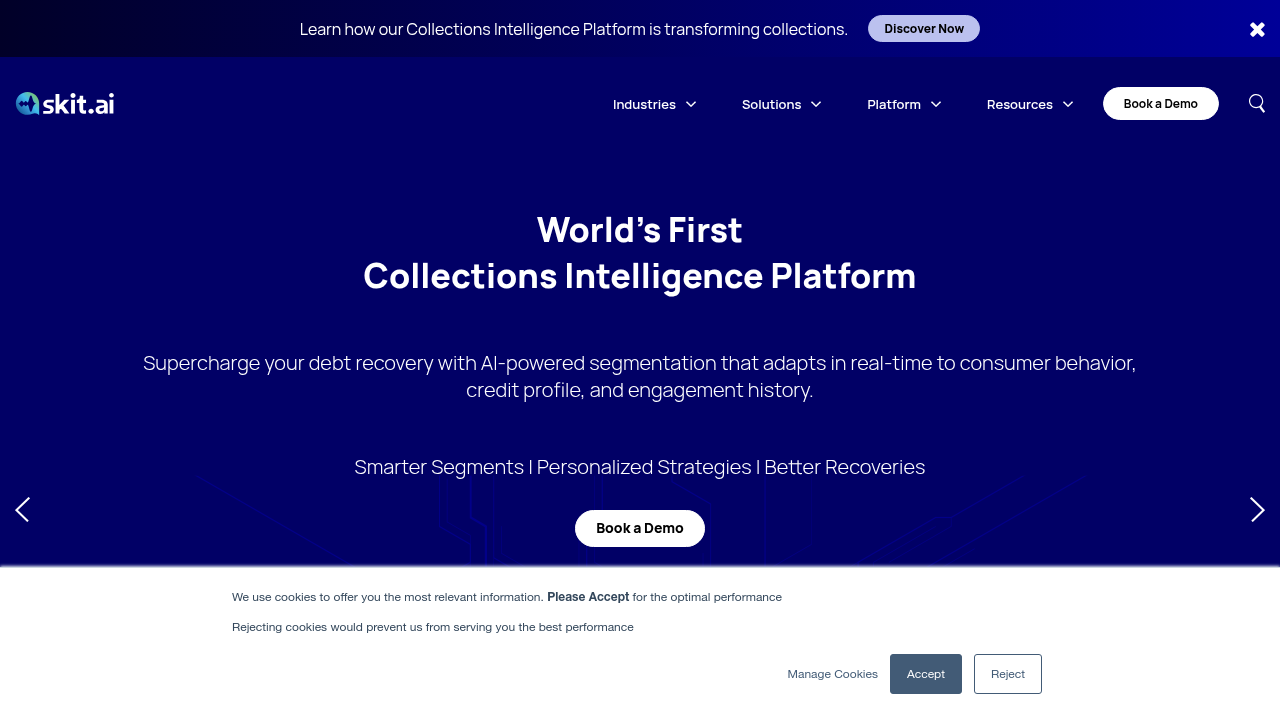
Skit.ai has built their entire platform around conversational voice AI for debt collection. They're delivering 10x increases in outbound collection efforts and 160% spikes in collections for some client portfolios.
Their approach uses what they call a Generative AI-powered Large Collection Model (LCM) that's trained on collection use cases. This specialized training means their AI understands the nuances of debt collection conversations better than general-purpose platforms.
The focus on collections has allowed them to optimize for the particular challenges of debt recovery.
Key strengths:
- Deep collections-specific AI expertise and training
- Proven collection results with measurable improvements
- Purpose-built for debt recovery scenarios
Limitation: Narrow focus on collections without broader lending platform features or multi-channel communication
Bottom line: Excellent for pure collections operations, but lacks the full lending and workflow features that full-service debt relief operations need.
4. Voice Bot Specialist: Vodex
Vodex focuses on voice AI agents for debt collection, with an emphasis on scale and compliance. Their AI-powered voice agents can contact thousands of consumers per hour while staying within FDCPA and TCPA regulations.
What's interesting about their approach is the focus on increasing Right Party Contact rates: actually reaching the people you need to speak with rather than just making more calls. They've put thought into real-time, respectful dialogue that maintains compliance while being effective.
The technical emphasis on staying within regulatory boundaries is smart, especially as compliance requirements continue to tighten. Their voice agents are designed to handle the complexity of debt collection conversations while avoiding the pitfalls that can lead to regulatory issues.
Key strengths:
- Voice AI specialization with high-volume features
- Strong compliance-focused approach to debt collection
- Focus on improving contact rates rather than call volume
Limitation: Voice-only platform without multi-channel communication and workflow automation features
Bottom line: Good choice for voice-focused collections, but missing the broader communication and automation features that modern debt relief operations require.
5. Legacy AI Provider: Zest AI
Zest AI is a known player in lending AI with impressive credentials: $300+ million in funding and 250+ proprietary AI underwriting models. They've built a strong reputation in the lending industry over the years.
However, their focus is primarily on loan origination and underwriting rather than the post-origination servicing and collection needs that debt relief lenders require. Their AI models excel at credit decisions and risk assessment, but that's a different problem than managing ongoing customer relationships and collections.
For lenders who need both origination and servicing tools, Zest AI could be part of a broader technology stack. But for debt relief operations, their platform isn't purpose-built for the communication and workflow challenges you face daily.
Key strengths:
- Proven AI lending platform with solid track record
- Strong financial backing and industry credibility
- Deep expertise in lending and credit decisions
Limitation: Focused on underwriting and origination rather than debt relief operations and customer communication
Bottom line: Solid platform for lending decisions and risk assessment, but not designed for the debt relief communication and workflow needs that post-origination operations require.
6. Enterprise Collections Tool: SmartAction
SmartAction provides conversational AI with collections features, using natural language processing to handle debt recovery through virtual agents. Their approach focuses on handling calls like live agents while trying to reduce negative customer feelings during collection interactions.
They have experience in the conversational AI space and target enterprise customers, which means they understand the scale and complexity requirements of larger operations. Their platform can handle high-volume interactions and integrates with existing contact center infrastructure.
However, their approach feels more like a traditional contact center solution that's been enhanced with AI rather than a modern platform built from the ground up for today's debt relief operations. They lack the sophisticated workflow automation and multi-system integration features that modern operations require.
Key strengths:
- Conversational AI experience with enterprise focus
- Natural language processing features for debt collection
- Integration with existing contact center infrastructure
Limitation: Traditional contact center approach without modern workflow integration and multi-channel features
Bottom line: Decent conversational AI platform, but lacks the advanced workflow automation and full communication features that modern conversational AI platforms provide.
How to Choose the Best AI Tool for Debt Relief Operations
Choosing the right AI platform depends on your specific daily needs and growth plans. Start by honestly assessing where you are today and where you want to be in 12-18 months.
Consider your communication requirements first. Do you need voice features, or do your customers expect to interact via SMS, email, and chat as well? Modern consumers prefer multiple communication options, and platforms that only handle voice might limit your effectiveness.
Check your workflow complexity. Simple collection calls are one thing, but what about payment plan negotiations, compliance documentation, escalation procedures, and integration with your existing loan management system? The more complex your operations, the more you need complete workflow automation.
Think about your team's technical skills. Some platforms require deep technical expertise to implement and maintain. Others are designed for business users to configure and manage. Choose based on your team's strengths and available resources.
Your existing technology stack matters too. If you're already using specific CRMs or loan servicing platforms, make sure your AI tool integrates natively rather than requiring complex workarounds.
For B2B collections operations, relationship management becomes even more critical. You need platforms that can maintain context across multiple touchpoints and stakeholders within client organizations.
Questions to ask potential vendors:
- How quickly can we deploy and see results?
- What level of customization is possible without technical expertise?
- How does the platform handle compliance updates and regulatory changes?
- What kind of reporting and analytics are available?
- How does pricing scale with our growth?
The reality is that most debt relief operations will benefit from complete platforms rather than point solutions. While specialized tools might excel in narrow areas, the complexity of managing multiple vendors often outweighs the benefits.
If you're currently using workflow builders like Zapier to connect different tools, that's usually a sign you need a more integrated platform that handles multiple features natively.
FAQ
What's the difference between voice AI and conversational AI for debt relief?
Voice AI focuses on phone-based interactions, while conversational AI handles multiple communication channels including voice, SMS, email, and chat. For debt relief operations, conversational AI provides more flexibility since customers prefer different communication methods depending on their situation and preferences.
How do AI debt relief tools maintain compliance with FDCPA and TCPA regulations?
The best AI platforms build compliance into their core architecture rather than treating it as an add-on feature. They include automatic call time restrictions, required disclosures, opt-out handling, and documentation of all interactions. Look for platforms that update automatically when regulations change rather than requiring manual updates.
Can AI tools integrate with existing loan management systems?
Yes, but integration quality varies a lot between platforms. Some offer native integrations with popular loan servicing systems, while others require custom development or third-party connectors. Native integrations are generally more reliable and easier to maintain than custom solutions.
How much can AI tools actually improve debt recovery rates?
Results vary by implementation, but well-deployed AI platforms typically show 2-4x improvements in collector productivity and 160-300% increases in successful contacts. The key is choosing platforms that combine communication features with workflow automation rather than automating existing processes.
What's the typical implementation timeline for AI debt relief platforms?
Implementation timelines range from 2-4 weeks for platforms designed for business users up to 3-6 months for enterprise solutions requiring extensive customization. Platforms with pre-built templates and native integrations generally deploy faster than those requiring custom development.
Final thoughts on AI-powered debt relief operations
Debt relief operations need platforms that combine conversational AI with strong workflow automation, not point solutions. You can change your entire business by integrating multi-channel communication with intelligent workflows. Conduit's conversational AI removes the complexity of managing multiple tools while scaling with your growth.

Stay in the loop
Get the latest on AI automation, product updates, and customer stories.

