Hotel Upselling Through a Guest Portal: From Offer to Fulfillment


Hotel Extras
From guest interest to fulfillment
A guest might book a private-chef dinner at the property instead of going out. But they need to know it's available.
That is a different problem from answering a question quickly. Some guests ask for exactly what they want. Others decide when they see a useful offer, with a clear price and a way to book it.
A guest portal gives them somewhere to browse. A conversational AI agent helps them choose. Connecting both to the team's inbox makes the request easier to fulfill.
Start with a service you can reliably deliver
Choose one offer before building a large catalog. Early check-in, airport transfers, and private-chef dining all have different requirements.
For each offer, agree on the price, available times, provider, cancellation terms, and who confirms the booking. A private-chef dinner that needs the chef's confirmation should not look like an instantly confirmed purchase.
Use preferences the guest has actually shared. An early arrival time is useful context for an early-check-in offer. It is not permission to promise a room before housekeeping has confirmed it is ready.
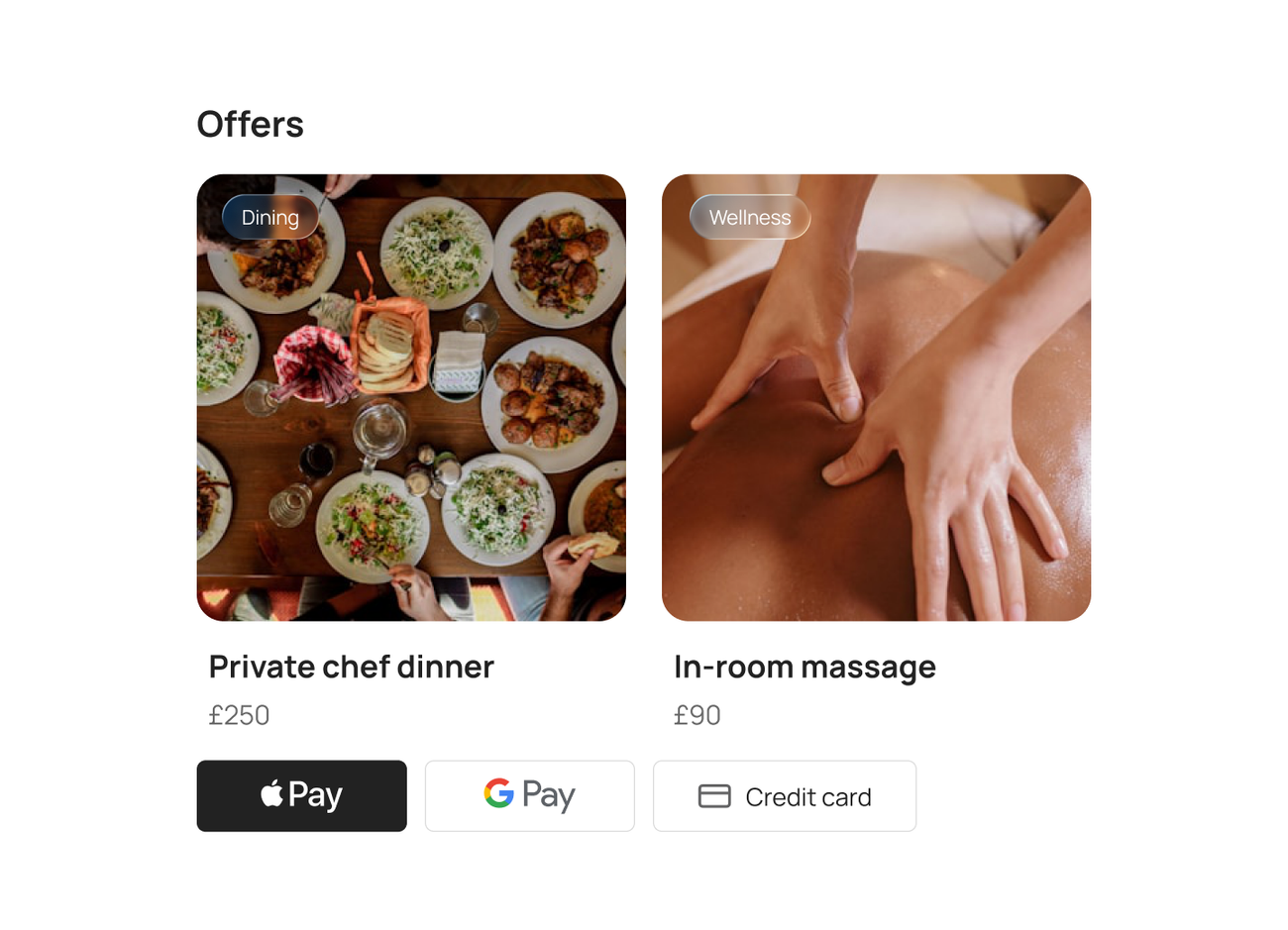
Illustrative offer presentation. Available services, prices, payment methods, and fulfillment depend on the property's configuration.
Choose the right booking path
There are three ways to handle an extra. The guest should be able to tell which one applies before they commit.
- Purchase: The guest pays for a service the property can confirm. Explain what the payment includes and what happens next.
- Request: The guest asks for a service that needs an availability check or approval. Make the pending status clear.
- Referral: The guest continues to a third-party provider. Say who takes the payment, fulfills the service, and handles changes.
A referral can be useful when the property does not run the service itself. It also changes what the operator can measure. A click to a provider is not proof that a guest completed a purchase.
Let guests ask and browse in the same place
A guest might ask whether a private-chef dinner can accommodate their group before booking. Another might open the portal without a particular service in mind.
Conduit brings its conversational AI agent and Portals together in a stay link. The guest can ask a question using the property's information, browse offers, and buy or request an extra without downloading an app.
Keep the offer description and the information used by the AI agent consistent. If the provider needs a day's notice, both should say so. A polished offer card cannot fix conflicting terms.
The link remains useful during the stay, not just before check-in. A guest who declined an extra before traveling may want it after arrival.
Give every request an owner
Portal requests can appear alongside the guest conversation in Conduit's inbox. Configure the workflow around the next decision: who needs to act, what information they need, and when the guest should hear back.
For private-chef dining, build the request around the service date, preferred time, party size, and information the chef needs to confirm the booking. For early check-in, the key decision is whether housekeeping can have the room ready.
These are workflows to configure around the property's staffing and integrations, not automatic promises that every provider is connected. Test unavailable services and unanswered requests as well as successful purchases.
If a provider declines, the guest needs an answer. If they accept, the front desk should not have to search a separate conversation to find out.
Follow one dinner request through to completion
For a private-chef offer that requires approval, a workflow could look like this:
- The guest requests dinner for a particular date and party size. The portal makes clear that the request is pending.
- The request reaches the Conduit inbox. A configured workflow notifies the person responsible for checking with the chef.
- The chef or designated team member confirms availability. If the chef is unavailable, the team offers an alternative or declines rather than leaving the request open.
- The team confirms the service, time, price, and payment arrangements with the guest under the property's terms.
- After dinner, the responsible person records the outcome in the team's process, including any cancellation or refund.
This is an example to configure and test, not a claim that every provider has an integration. Agree who handles unanswered requests and how the next shift sees the decision.
For referrals, the provider may own booking and payment instead. Without a connected confirmation, a click to that provider does not tell your team whether dinner was booked.
Check the payment route for the booking
Supported card or wallet checkout does not mean every booking can use it. The property type, booking channel, service, and payment setup all matter.
For example, Airbnb's off-platform payment guidance distinguishes hotel arrangements and permitted exceptions from ordinary optional-service payments, which generally use the Resolution Center. Check the rules that apply to the reservation before offering an external checkout.
Measure completed services, not just clicks
Separate offer views, requests, approvals, paid purchases, refunds, and fulfilled services wherever your reporting supports those stages.
Start with the records you can verify. Do not call a request revenue, or treat an off-site referral as a completed sale without provider confirmation.
Review where guests drop out and where staff still chase a response. That tells you whether to improve the offer, simplify the purchase, or fix the fulfillment process.
Already using Portals? Open your workspace.
Not set up yet, even if you're already a Conduit customer? Book a demo.

Stay in the loop
Get the latest on AI automation, product updates, and customer stories.

