Vacation Rental Damage Waiver vs. Security Deposit


Waiver Options
Fees, deposits, and guest choice
Guests choosing between a damage waiver and a security deposit need to know what they will pay, what they may get back, and what they could still be responsible for.
Putting two payment buttons on a page does not answer those questions. A clear explanation, access to the terms, and a way to ask for help make the choice easier to understand.
Explain the difference before asking for payment
A refundable security deposit is money held or collected against possible charges under the booking agreement. It is not a fee the operator automatically keeps. The payment process should explain whether the amount is a card authorization or a collected payment, and how release or refund works.
For example, Vrbo's refundable-deposit guidance says an upfront deposit is refunded after the stay if the host does not report damage. That describes Vrbo's process; your own timing and conditions must match your agreement and payment setup.
A damage waiver is a different arrangement. The guest pays a fee under terms that specify which damage charges the operator agrees to waive, along with any limits and exclusions. Do not assume it removes every possible charge or obligation.
A waiver should not automatically be described as insurance. Vrbo's Accidental Damage Protection, for example, is an insurance product with a policy and a named provider. Use the correct description for the product you actually offer and have the terms reviewed for your market.
Put the important terms beside the choice
Where the property offers both options, make the comparison easy to scan:
- The amount due now for each option.
- Whether it is a fee, a payment, or a card hold.
- Any refund or release conditions.
- What the waiver includes and excludes.
- What the guest must do if damage occurs.
- Who can answer a question before they choose.
Link to the full agreement without hiding the basic explanation inside it. Do not describe a smaller payment as the "best" choice for every guest; the terms and the guest's circumstances matter.
Explain refunds and hold releases separately
A card authorization reserves funds; a collected deposit transfers money. Releasing the authorization and refunding a payment are different steps, so use the description that matches your setup.
Tell guests when your team initiates the release or refund and explain that bank processing can affect when funds become available. State what happens if a deduction is proposed and who handles a dispute. Do not promise an instant return unless the actual payment process supports it.
Introduce the portal link through the property's normal booking communication. Explain why the guest is receiving it, what they need to complete, and how to contact the property if they are unsure. An unexpected request for identification and payment can look suspicious even when it is legitimate.
Check the rules for the booking channel
A deposit option that works for direct bookings may not be permitted for every OTA reservation. Airbnb's security-deposit policy says most hosts cannot collect security deposits, with exceptions including certain software-connected hosts and hotel procedures subject to its requirements.
Check the property's eligibility and required disclosure before adding that step. Where charges are permitted, the listing, booking terms, portal, and payment request should agree. A clear portal does not replace the booking channel's rules.
Keep questions and payment steps together
Conduit brings its conversational AI agent and Portals together in a stay link. Guests can ask about the property's terms, review their options, and complete the configured payment steps without downloading an app.
The AI agent's answers should use the same approved information the guest sees in the agreement. If the question requires an interpretation that is not covered there, route it to the team instead of guessing.
A guest asking whether a particular incident is covered needs an accurate answer, not just a faster path to checkout.
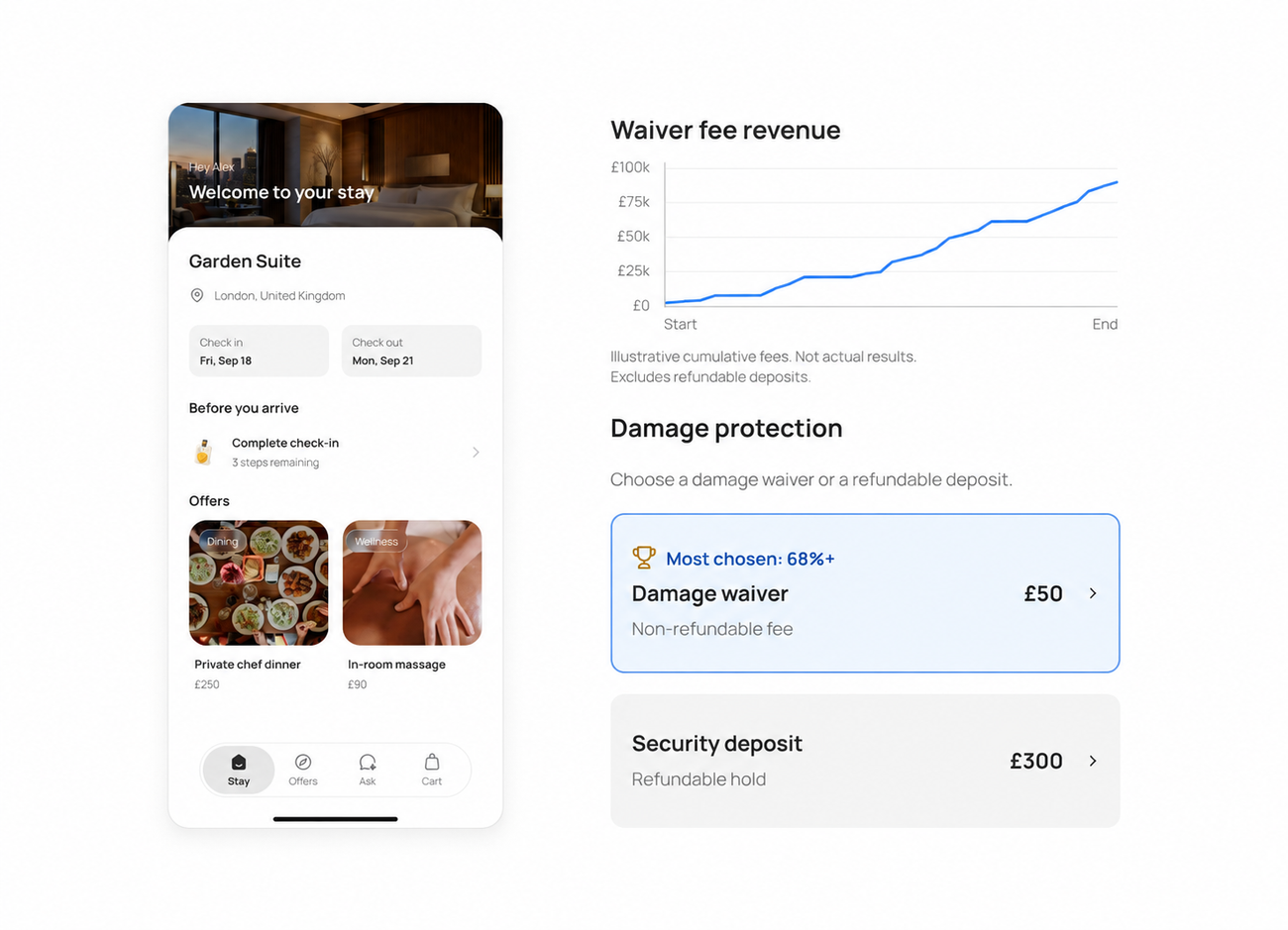
68%+ choose the damage waiver in Conduit's observed guest choice data. The fee chart is illustrative, not actual customer revenue, and excludes refundable deposits.
Separate fees from refundable money
Waiver fees and security deposits should not be combined in a revenue chart. A collected deposit may need to be returned. A card hold is not a sale.
For internal reporting, keep the guest's selection, waiver fees collected, deposit amounts, refunds, and damage-related charges separate. Any revenue reporting should follow the business's accounting policy rather than counting every payment as earned revenue.
The 68%+ choice figure indicates a preference in the observed Conduit data. It does not show what another property will earn or establish that a waiver is more profitable after costs.
Check the full guest flow
Test both choices before making the link part of the arrival process. Confirm that staff can see the selected option and that the guest receives the correct terms.
Check a failed payment, a canceled stay, a refund question, and a damage question that requires a person. The guest should have a clear next step in each case.
Already using Portals? Open your workspace.
Not set up yet, even if you're already a Conduit customer? Book a demo.

Stay in the loop
Get the latest on AI automation, product updates, and customer stories.

