14 Best Accounting Software for Short Term Rentals 2026


Accounting Software Rentals
Features, pricing, and rental bookkeeping.
Your accounting software isn't the problem. The broken data hitting it before a single calculation runs is, and fixing that changes everything.
Short-term rental accounting breaks in a place most operators never think to look. Most vacation rental property managers and operations leads think: "If I just find the right accounting software with the right integrations, my bookkeeping chaos will resolve itself." The failure point is not inside QuickBooks, not inside Xero, and not inside whatever tool you switch to next.
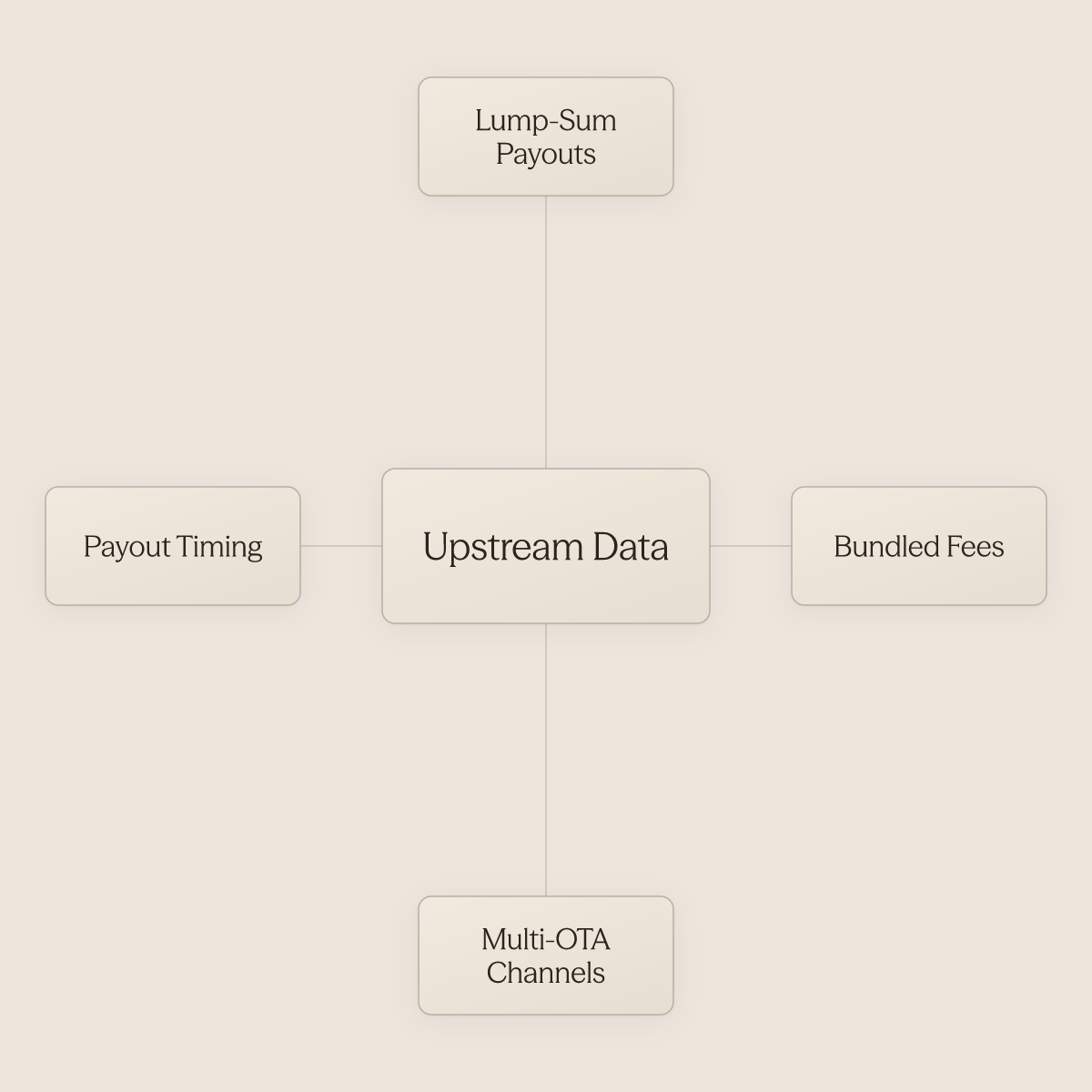
It sits upstream, in the raw data your accounting software receives before it ever attempts a calculation. That distinction separates operators who finally get clean books from those who keep cycling through software trials. Airbnb and Vrbo do not send you a payment per booking.
See our AI for hospitality for how this works in practice.
They send a single lump-sum deposit covering multiple reservations, deducted platform fees, pass-through cleaning charges, and occasional adjustments, all compressed into one line on your bank statement. Industry surveys consistently find that operators managing more than one OTA channel cite payout timing and structure misalignment as among their most persistent bookkeeping friction points. Every month-end reconciliation starts with a guessing game, not a ledger.
Most STR operators manage bookings across multiple OTA channels simultaneously, each with its own payout schedule, fee structure, and transaction-bundling logic. Each platform has its own payout schedule, its own fee structure, and its own way of bundling transactions. That is not a software problem.
That is a structural data problem that lands in your accounting layer already broken. Standard accounting software is built for standard businesses. Short-term rental operations are not standard.
Cleaning fees can be owner-paid or guest-paid. Platform commissions vary by channel and reservation type. Owner distributions require trust-account logic.
Occupancy taxes collected must be separated from operating revenue. As one property accounting framework puts it, STR financial streams "do not map cleanly onto generic chart-of-accounts structures designed for standard businesses." When an operator forces these categories into a generic template, the books look tidy on the surface and are quietly wrong underneath. A property management system logs a booking. An OTA processes a payout. A spreadsheet captures a cleaning callout. None of these systems talk to one another by default, and that silence is where STR bookkeeping chaos begins.
"As an STR operator, I experience panic around tax compliance even when I have a bookkeeper handling remittance. The bookkeeping setup itself creates anxiety before I even open any accounting software."
Key takeaways
-
STR bookkeeping breaks upstream of any accounting software, in how OTA payouts, guest records, and PMS data flow into your systems before a single transaction is imported.
-
Airbnb and other OTAs batch payouts across multiple reservations, stripping the line-item detail your chart of accounts needs, that mismatch is the root cause of reconciliation chaos, not your software settings.
-
QuickBooks holds roughly 80% of the small-business accounting market, but market dominance is not portfolio fit, most STR operators need a tool matched to their scale and property mix, not the most popular option.
-
Picking software before fixing the operational layer feeding it produces reports that look authoritative while concealing errors baked in long before import.
-
Tax season exposes what your bookkeeping system actually is, cleaning fees miscategorized as platform commissions and unreconciled Schedule E line items are symptoms of a data problem, not an accounting problem.
-
The setup sequence that works: automate how OTA payouts, guest records, and PMS data flow into any system first, then choose the accounting tool.
-
Conduit's native integrations with Airbnb, Google Drive, Notion, and Airtable close that operational gap by automatically pulling in knowledge sources and pushing conversation and contact data to external systems, giving your accounting software clean, structured data to work with from the start.
Key Features to Look for When Choosing STR Accounting Software: and the One Most Guides Ignore
Selecting the wrong accounting software for a short-term rental portfolio does not simply leave you with a tool that underperforms. It leaves you with a tool that actively misleads you, producing reports that look authoritative while concealing errors baked in long before a single transaction was imported. Most vacation rental property managers and operations leads assume that finding software with the right integrations will resolve their bookkeeping chaos on its own.
The features on comparison checklists are real and worth evaluating, but each carries a hidden prerequisite: the data flowing into the software must already be clean, structured, and consistent. That upstream condition is precisely what most evaluation guides skip entirely, and it mirrors a broader onboarding blind spot operators hit constantly: critical prerequisites are not disclosed upfront during trials or sales pitches, leaving teams blindsided mid-implementation when the workflow they purchased turns out to depend on a foundation they haven't built yet. One layer of that foundation that rarely appears on any software checklist is guest communication.
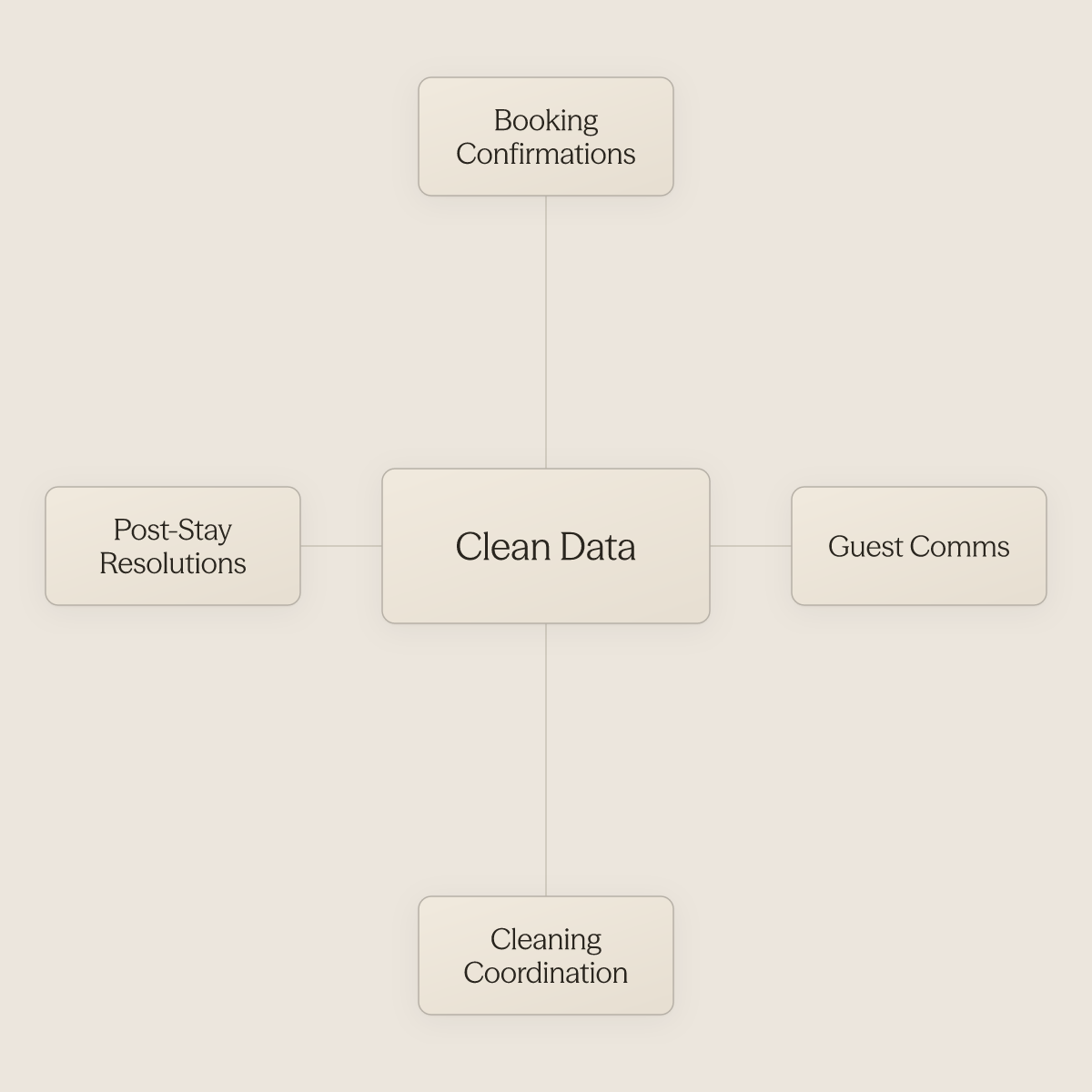
Accounting data does not exist in isolation; it is downstream of every booking confirmation, check-in message, cleaning coordination note, and post-stay resolution that flows through your properties. When those conversations are handled inconsistently across platforms and staff members, the transactional record that reaches your accounting software carries that inconsistency with it. Conduit's Inbox addresses a real operational gap: it is most beneficial when managing guest communications across multiple platforms or properties simultaneously, giving operations teams a single place to monitor, review, and manage all conversations the AI agent is handling, rather than chasing threads across Airbnb, Vrbo, email, and SMS separately.
That matters for accounting because consistent communication drives consistent transaction data. When a guest asks about a cleaning fee at check-out and the answer varies by platform or staff member, the resulting adjustment or dispute lands in your payout as an untagged line item that OTA reconciliation cannot cleanly categorize. Conduit's AI Agents are most beneficial when the business receives a high volume of repetitive guest or customer messages and has existing documentation, SOPs, FAQs, property manuals, to train the agent on.
The first automated guest reply can go live within days of connecting that documentation, and from that point the agent responds continuously whenever a guest sends a message, before, during, or after a stay. Fewer ad-hoc human responses means fewer one-off payout adjustments that break your categorization rules downstream. The Workflows layer extends this further.
Conduit Workflows are most beneficial when the business has recurring, predictable guest touchpoints that currently require manual staff action, booking confirmations, check-in instructions, post-stay follow-ups. They trigger after a defined event in the conversation or guest lifecycle: after a booking is confirmed, after check-in, or when a specific keyword is detected. Automating those touchpoints removes the variability that produces the messy mid-cycle adjustments that end up as noise in your accounting imports.
Conduit Integrations are most beneficial precisely because they allow the AI agent to leverage existing content without manual re-entry. Your SOPs and property guides become the agent's knowledge base without rebuilding anything, which means adoption does not stall waiting for a parallel documentation project to finish.
STR-Specific Chart of Accounts
A chart of accounts built for the asset class is non-negotiable. A generic small-business template groups income as "sales" and expenses as "cost of goods sold." That structure collapses immediately when you need to separate platform commissions, cleaning fees, occupancy tax collected, owner distributions, and maintenance callouts as distinct line items. STR-specific chart-of-accounts logic determines whether your P&L is readable or just correctly imported numbers sitting in the wrong buckets.
Automated Transaction Importing and the Rule-Based Categorization Gap
Automated transaction importing only delivers when the source data is consistent. Airbnb and Vrbo batch payouts combine multiple bookings, cleaning fees, and adjustments into a single deposit. Industry data suggests that properties automating OTA reconciliation frequently recover meaningful annual revenue previously lost to payout discrepancies, signaling how much error accumulates at the source before any accounting rule runs.
The communication layer that precedes the payout is a direct contributor to that parsing problem: when guest interactions are handled inconsistently, they generate the edge-case adjustments that make batch payouts hardest to split. Conduit's AI Agents and Workflows reduce the volume of irregular line items that defeat account reconciliation software before it even runs.
Schedule E vs. Schedule C, The Tax Reporting Distinction
Tools like REI Hub make Schedule E reporting easier by structuring income and expense categories around rental property ownership from the start, rather than retrofitting a freelancer or small-business template. Most generic platforms default to Schedule C logic, which treats the rental as an active business, a distinction that can trigger self-employment tax exposure that a correctly categorized Schedule E filing avoids. If a tool cannot confirm that it supports Schedule E categorization natively, not as a workaround or custom chart-of-accounts build, remove it from the shortlist before evaluating any other feature.
STR Accounting Software Selection Checklist, Match Your Portfolio Profile to the Right Tool
| Profile | Portfolio Size | Primary Need | Recommended Tier |
|---|---|---|---|
| Solo passive investor | 1–2 properties | Basic P&L + Schedule E | Stessa or Wave |
| Growing self-manager | 3–5 properties | OTA reconciliation + owner reporting | REI Hub or OwnerRez |
| Mid-size operator | 6–20 properties | PMS integration + trust accounting | QuickBooks Online + TallyBreeze or Guesty |
| Professional PM company | 20+ properties | Full trust accounting + owner portal + CPA-ready exports | Guesty or Buildium |
Before finalizing any tool, confirm it can answer YES to all four questions below:
-
Does it support an STR-specific chart of accounts (or allow you to build one)?
-
Does it distinguish Schedule E from Schedule C income categorization?
-
Does it integrate directly with your PMS or OTA channels, or does reconciliation remain manual?
-
Does it separate occupancy tax collected (liability) from rental revenue (income)?
The 14 Best Accounting Software for Short Term Rentals - Ranked by Portfolio Fit
The most common mistake STR operators make when selecting accounting software is not picking the wrong tool. It is picking the right tool for the wrong problem. According to industry analysis, QuickBooks holds approximately 80% of the small-business accounting software market in the United States.
That dominance feels like a signal. It is not. QuickBooks was never built for OTA channel reconciliation, trust accounting, or PMS connectivity.
Its market share reflects generic small-business adoption, not STR operational fit. Operators who default to the market leader still inherit every upstream data problem. The tool's ubiquity becomes a false proxy for fitness-for-purpose.
The real question is not which software has the best reviews. It is which software fits your portfolio size, your OTA mix, and the maturity of the operational layer feeding it. A $50-per-month tool receiving structured, automated data from a well-configured PMS will outperform a $200-per-month platform fed manual spreadsheet exports every time.
Portfolio scale and operational readiness, not feature count or star ratings, should drive this decision. The three-tier framework below reflects how the STR operator market actually distributes: small portfolios of one to five properties, mid-size operators running six to twenty units, and professional managers overseeing twenty-plus properties with owner accounting obligations. Each tier has a different bottleneck, and the right software addresses that bottleneck specifically.
Pros and cons at a glance
| ✓ Pros | ✗ Cons |
|---|---|
| direct connectors to Guesty and Hostaway | no native STR chart of accounts |
| automatic revenue and expense recording from PMS data | no trust accounting module |
| widely adopted scaling choice for six to twenty properties | no built-in OTA reconciliation |
Conduit.ai - Best AI-Powered Guest Communication Layer for STR Operators
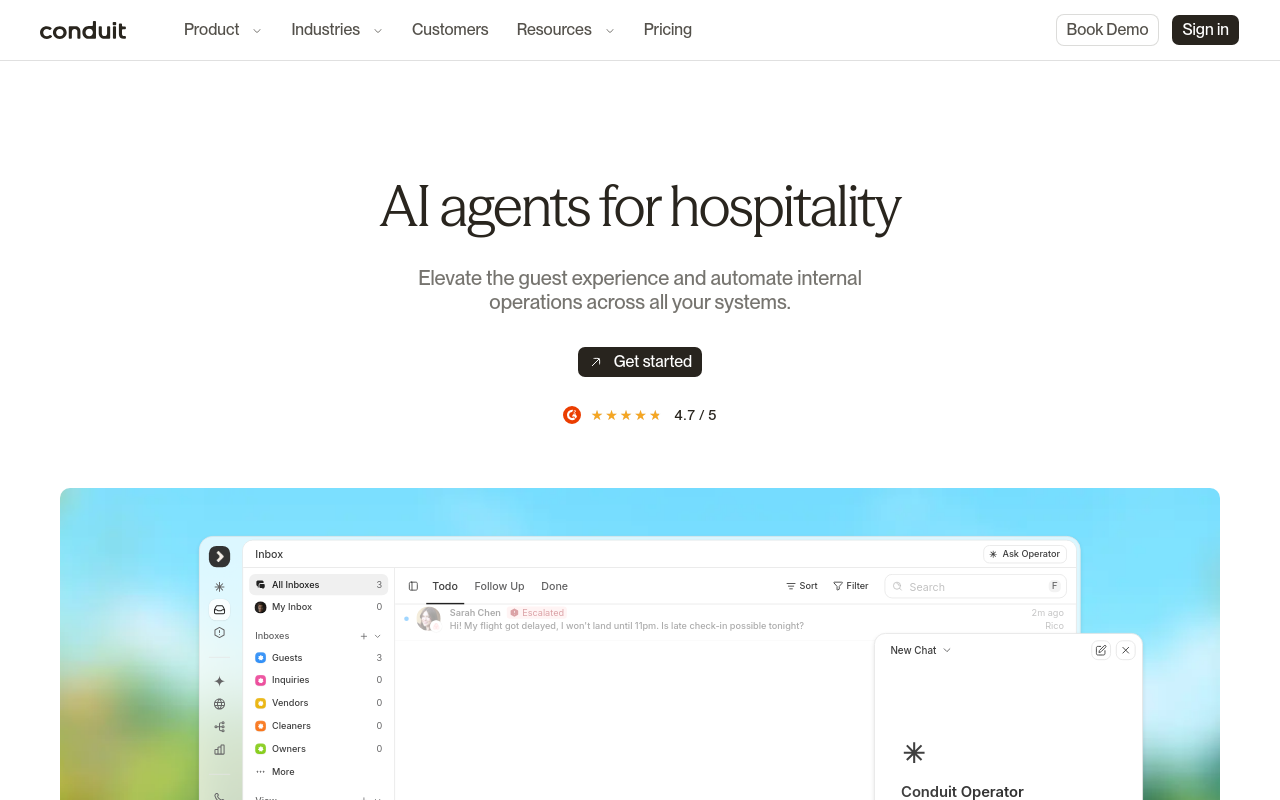
Most operators reading a list of accounting tools will overlook the upstream problem entirely: their books are messy because the data feeding those books was never structured in the first place. Conduit's native integrations with Airbnb, Notion, Google Drive, and Airtable deliver the most value when your business already uses tools like Notion, Google Drive, or Airbnb and you want that existing content to feed your operational layer without manual re-entry, in that setup, guest communication logs, booking records, and operational events arrive already tagged, timestamped, and categorized before they ever reach your ledger. The trade-off is that Conduit is a guest communication and operational layer, not a standalone accounting platform. It works in combination with the tools below, not instead of them.
1. QuickBooks Online - Best General-Purpose Accounting Engine for Growing STR Portfolios

For operators managing six to twenty properties across Airbnb, Vrbo, and direct channels, QuickBooks Online is a widely adopted scaling choice, its integration ecosystem, including direct connectors to Guesty and Hostaway, is the primary operational reason mid-size operators select it over alternatives. Guesty and Hostaway both connect to QBO, enabling automatic revenue and expense recording from PMS data. The honest limitation: QBO has no native STR chart of accounts, no trust accounting module, and no built-in OTA reconciliation. It is the right engine for a growing portfolio only when the upstream PMS integration is already doing the heavy lifting on data structure.
2. Xero - Best Cloud Accounting Platform for STR Operators Who Need Multi-Currency and Global Portfolios

Xero earns its place for operators running properties across multiple countries or currencies, a profile common in markets like Latin America and Europe where Airbnb payouts arrive in local currencies that need conversion before reconciliation. Its bank feed rules and multi-currency ledger handle currency conversion at the transaction level, a capability particularly relevant for operators whose Airbnb payouts arrive in local currencies. The trade-off mirrors QBO: Xero was not built for STR-specific workflows, so cleaning fees, owner distributions, and occupancy tax remittances still require manual chart-of-accounts configuration. Best suited for operators who already have a bookkeeper familiar with Xero and need a platform that handles currency complexity without a custom build.
3. Wave Accounting - Best Free Bookkeeping Baseline for Solo STR Hosts
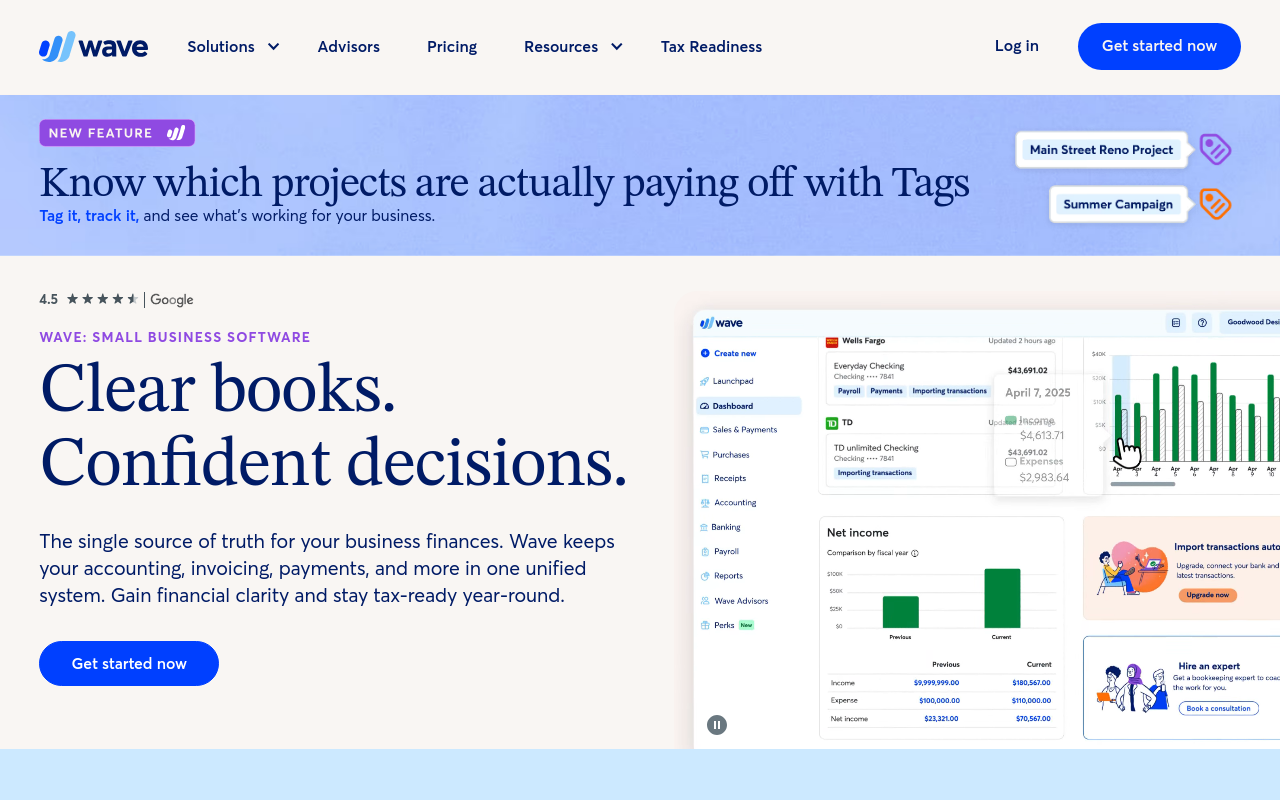
Wave is the right starting point for a solo host managing one or two properties who needs basic income and expense tracking without a monthly software bill. It handles bank feed imports, basic categorization, and simple profit-and-loss reporting. The ceiling is low: Wave has no rental-specific categories, no OTA integration, and no owner reporting module. Treat it as a temporary baseline, not a long-term infrastructure choice.
4. Stessa - Best Rental-Property-Specific Tracker for Passive STR Investors

For hosts managing one to five properties who want rental-specific income and expense tracking without paying for a full accounting suite, Stessa is the strongest free option in this tier. It tracks rental income, mortgage interest, depreciation, and property-level expenses in a format that maps directly to Schedule E reporting. The limitation is real: Stessa does not offer direct Airbnb or Vrbo feed integration, so OTA payouts still require manual import or bank-feed matching. It works well for passive investors who review their books monthly; it struggles for operators running high booking volumes who need daily reconciliation.
5. FreshBooks - Best Invoicing-Forward Accounting Tool for STR Managers Billing Owners
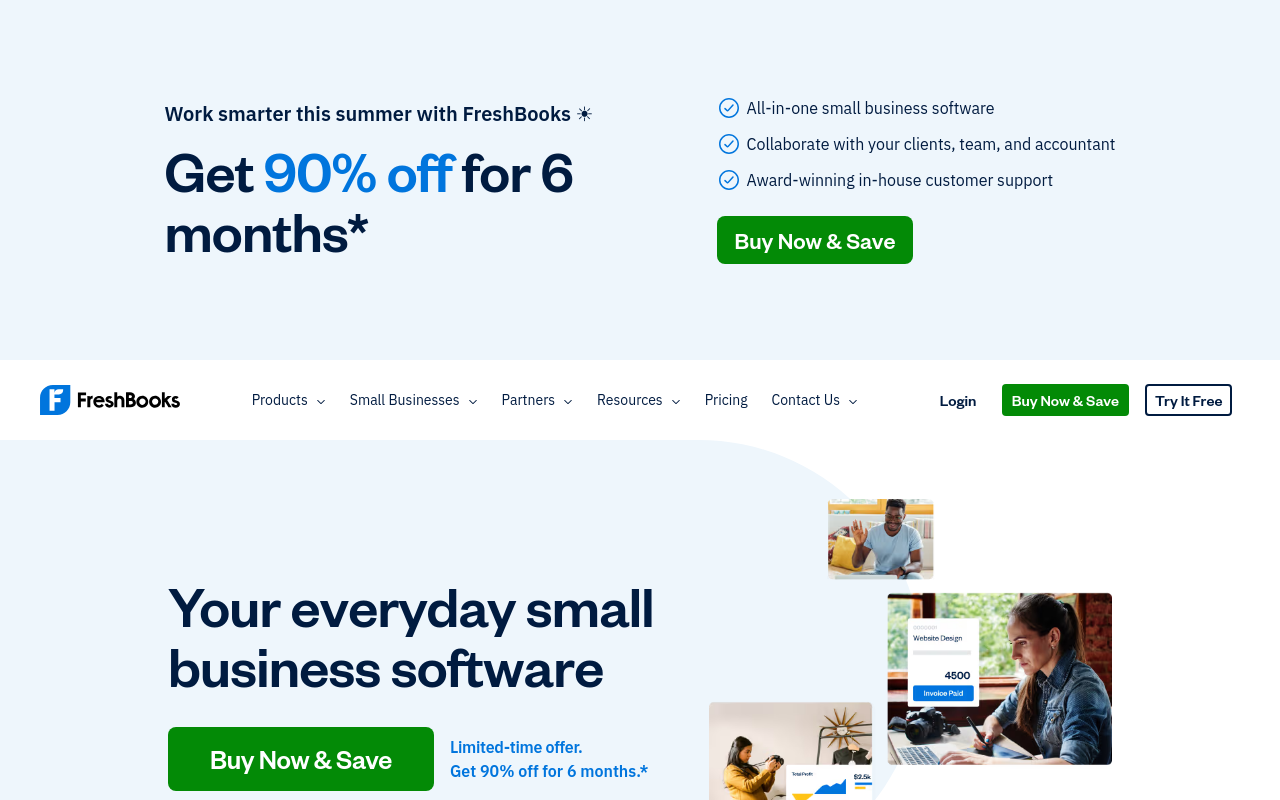
FreshBooks fits a specific operator profile: the property manager who bills property owners on a management-fee model and needs clean, professional invoicing alongside basic bookkeeping. Its invoicing workflow is purpose-built for service-fee billing, unlike QBO or Xero, which route invoicing through general accounts-receivable modules not optimized for recurring management-fee structures. The gap is on the property accounting side. FreshBooks has no rental-specific categories, no trust accounting, and no OTA channel integration. Operators who need owner statements, security deposit tracking, or occupancy tax reporting will find FreshBooks insufficient as a standalone solution and will need to pair it with a PMS that handles those outputs.
6. TallyBreeze - Best QuickBooks Add-On for Automated STR Revenue Reconciliation
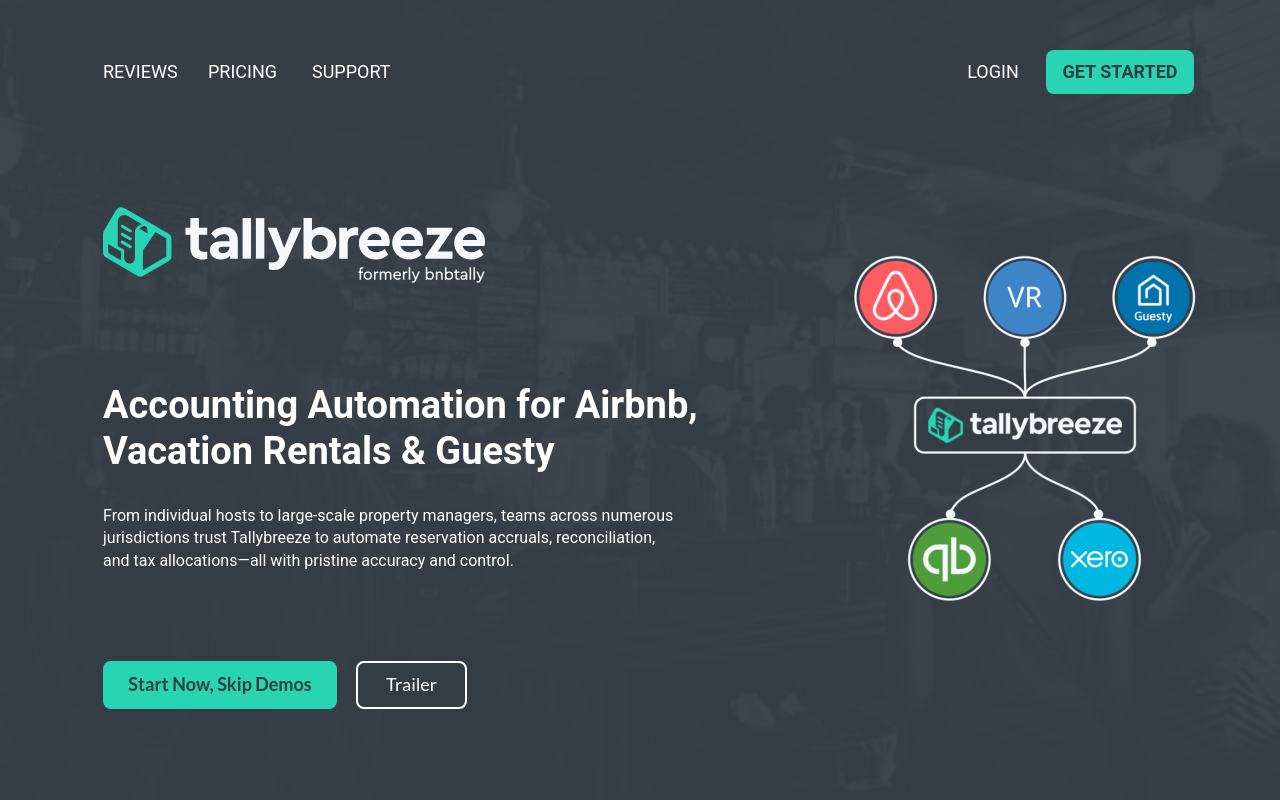
TallyBreeze solves one of the most painful problems in STR bookkeeping: the gap between what Airbnb and Vrbo pay out and what actually happened at the property level. It sits on top of QuickBooks and automatically maps OTA payout batches to individual reservations, splitting host fees, cleaning fees, and taxes into the correct line items. For operators already committed to QBO who are spending hours each month on manual reconciliation, TallyBreeze is the most direct fix available. The trade-off is that it adds a second subscription cost and is only useful if QBO is already in place.
7. Hostfully - Best Property Management Platform with Built-In Financial Reporting for Mid-Size Operators
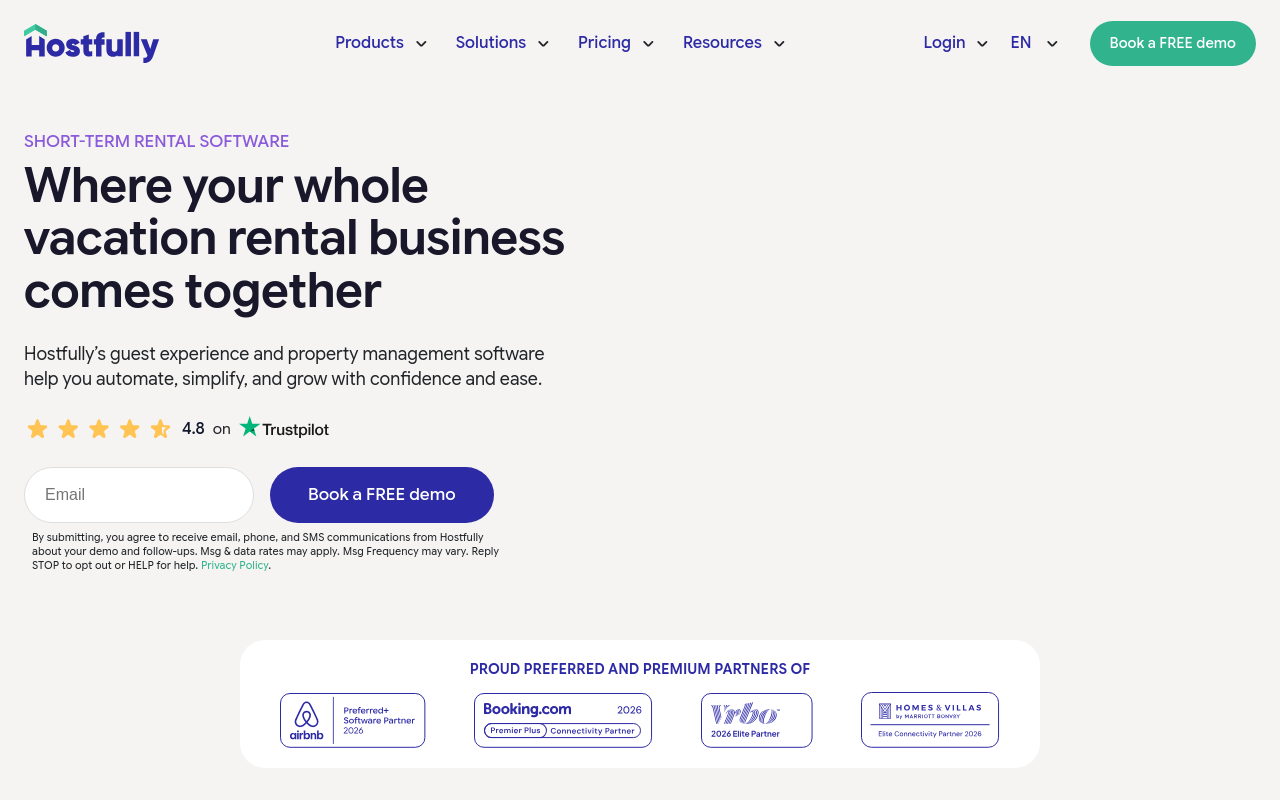
Hostfully is a property management platform, not a pure accounting tool, but its financial reporting layer is strong enough that mid-size operators running six to twenty properties often avoid a separate accounting subscription entirely. Revenue reports, expense tracking, and owner statements are built into the platform. The limitation: Hostfully's financial reporting is not a replacement for a full accounting system at tax time. Operators with complex depreciation schedules, multiple ownership entities, or CPA-reviewed financials will still need to export data into QBO or Xero.
8. iGMS - Best Automation-First Platform with Expense Tracking for Multi-Channel STR Hosts
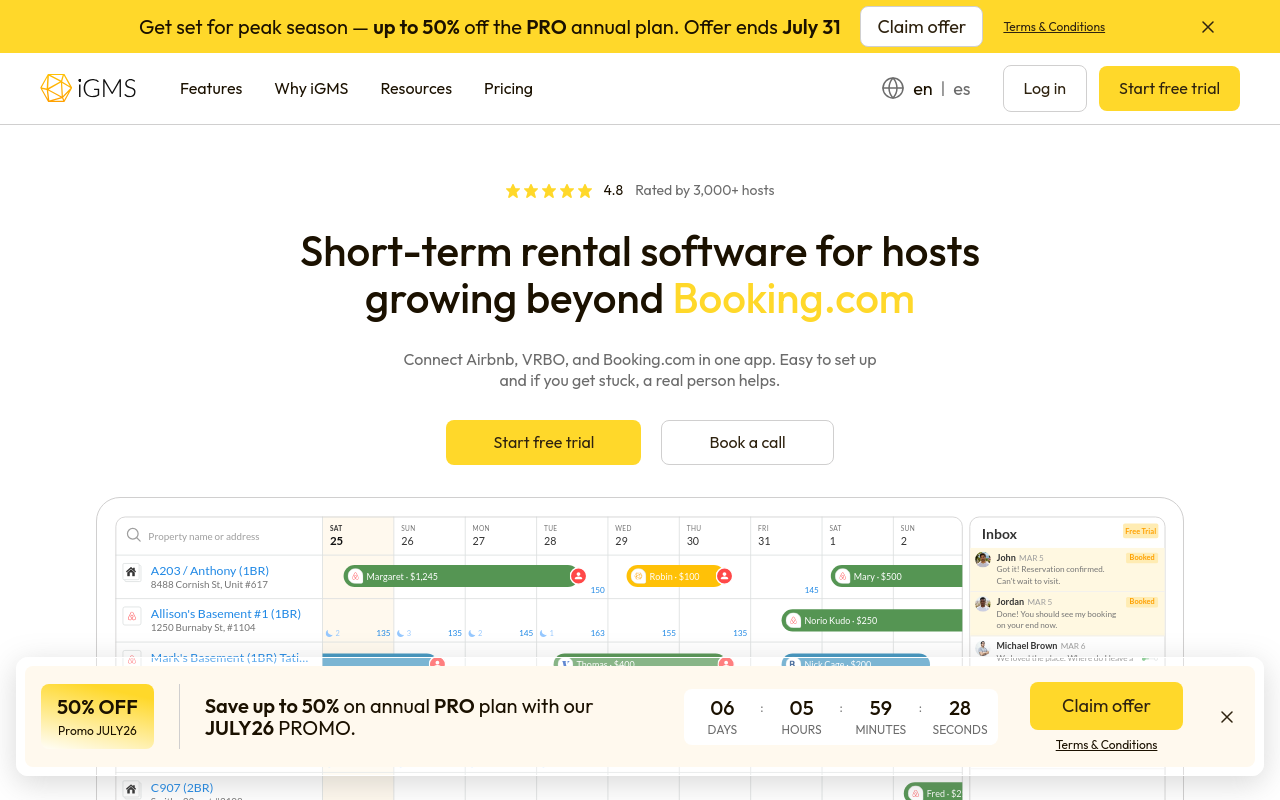
The honest constraint: iGMS financial reporting is summary-level, not transaction-level. Operators who need granular expense categorization, owner distributions, or audit-ready records will find the financial module insufficient and will need to connect iGMS data to a dedicated accounting platform downstream.
9. Lodgify - Best Website-Builder-Plus-PMS Combo with Revenue Tracking for Independent STR Brands

Lodgify is the right choice for independent operators who want to reduce OTA dependency by building a direct-booking website alongside a channel manager and basic PMS. The trade-off is that Lodgify's accounting functionality is limited to revenue reporting. Expense tracking, owner distributions, and tax-ready categorization are not native features. Operators who choose Lodgify for its direct-booking infrastructure will still need a dedicated accounting tool, typically QBO or Xero, connected via export or integration.
10. Guesty - Best Enterprise-Grade PMS with Owner Accounting for Large STR Management Companies
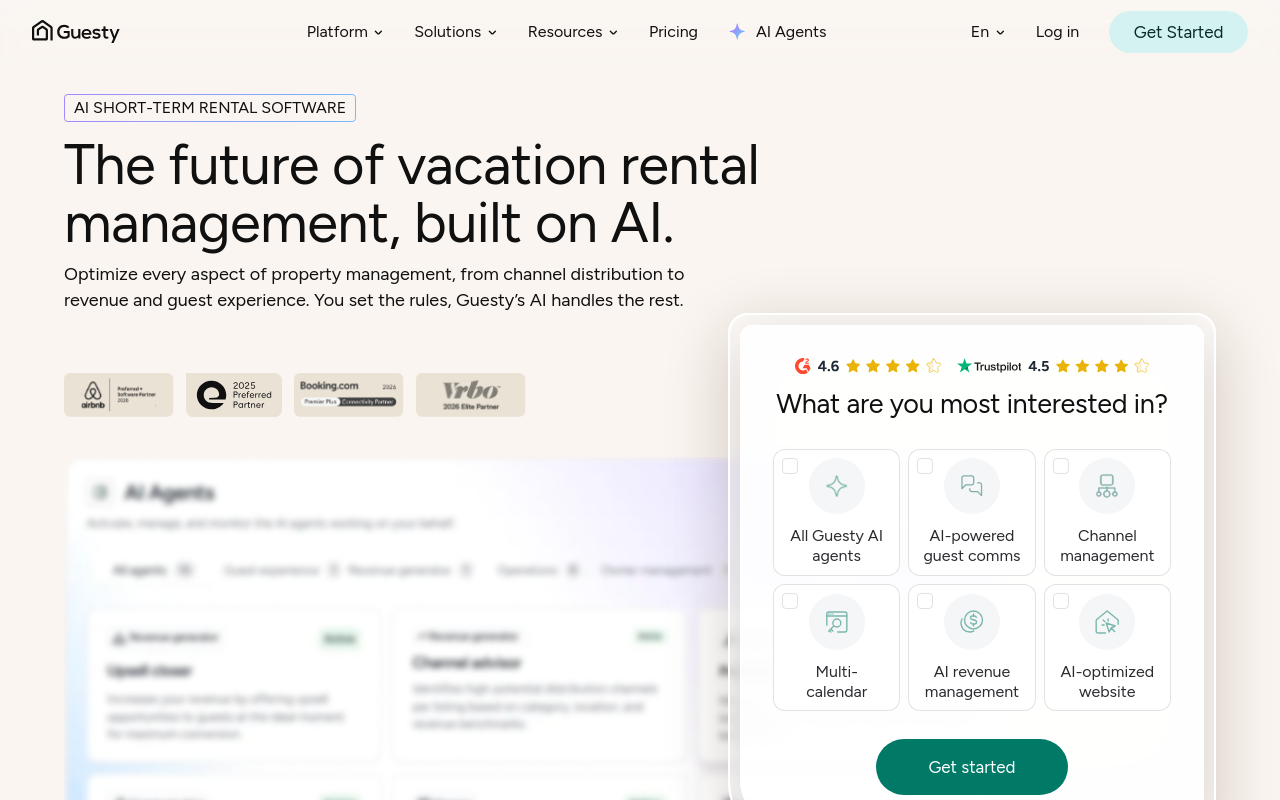
For professional property managers running twenty or more properties with formal owner accounting obligations, Guesty is among the most fully featured operational and financial platforms for professional STR management companies, with a native owner accounting module that handles trust accounting, owner statements, security deposits, and management fee calculations, capabilities that most standalone accounting tools can only approximate through third-party integrations. Guesty's QuickBooks integration makes the data handoff structured rather than manual. The trade-off is cost and complexity: Guesty is priced for professional management companies, not individual hosts, and the onboarding investment is significant.
11. Rentec Direct - Best Landlord Accounting Software for STR Operators with Mixed Portfolios

Rentec Direct fits operators who manage a combination of long-term and short-term rentals under one portfolio and need a single platform that handles both. Its landlord accounting features, including tenant ledgers, lease tracking, and owner distributions, are strong for the long-term side. The gap is on the STR side: Rentec Direct has no native Airbnb or Vrbo integration, so short-term booking revenue requires manual entry or bank-feed matching. Best for operators where long-term rental accounting is the primary need and STR properties are a smaller portion of the portfolio.
12. Buildium - Best Scalable Property Accounting Platform for STR Managers Transitioning to Full PM Companies
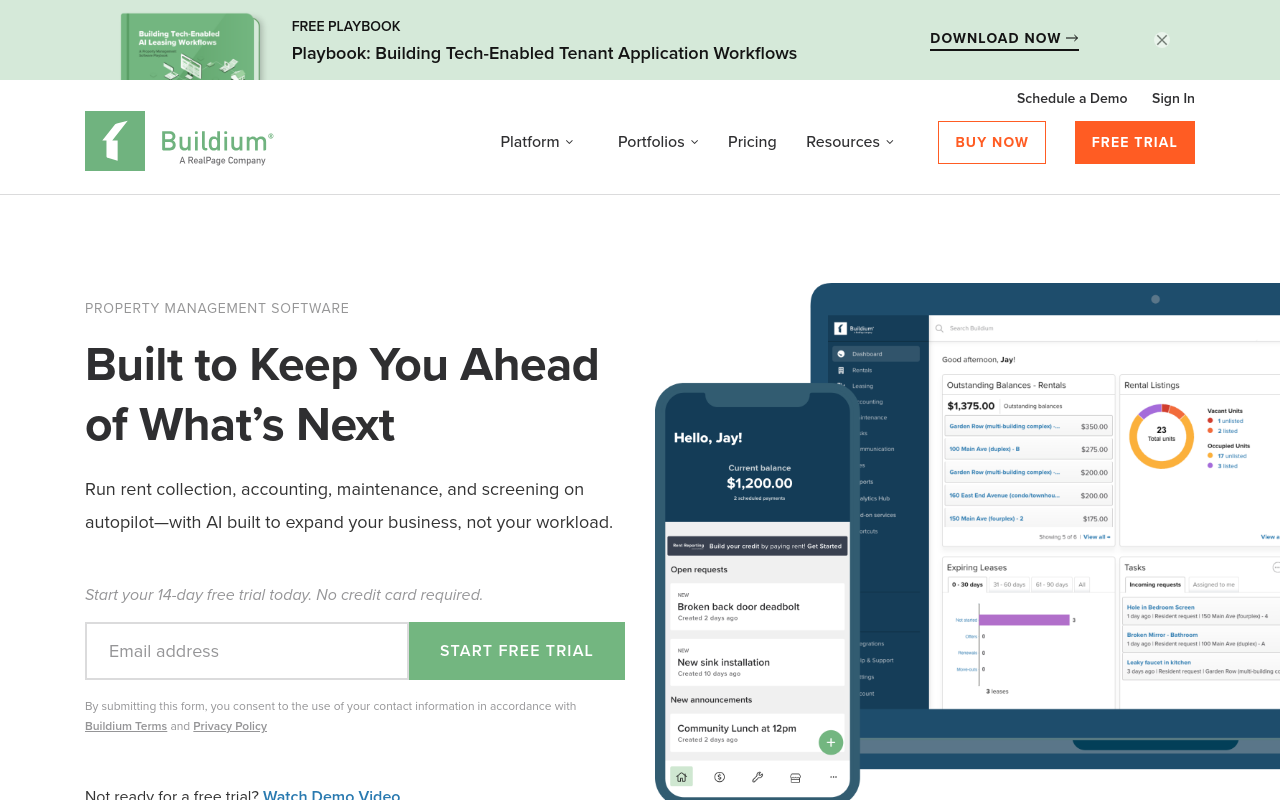
Buildium is built for property management companies that are formalizing their operations, adding staff, and taking on owner accounting responsibilities at scale. Its trust accounting, owner portal, and maintenance tracking make it a natural fit for operators transitioning from DIY bookkeeping to a full property management company structure. The limitation for pure STR operators is that Buildium's feature set is weighted toward long-term residential management, OTA integration is not native, and the platform's cost is difficult to justify for portfolios under twenty units.
13. Zoho Books - Best Budget-Friendly Accounting Suite for Cost-Conscious STR Operators in the Zoho Ecosystem
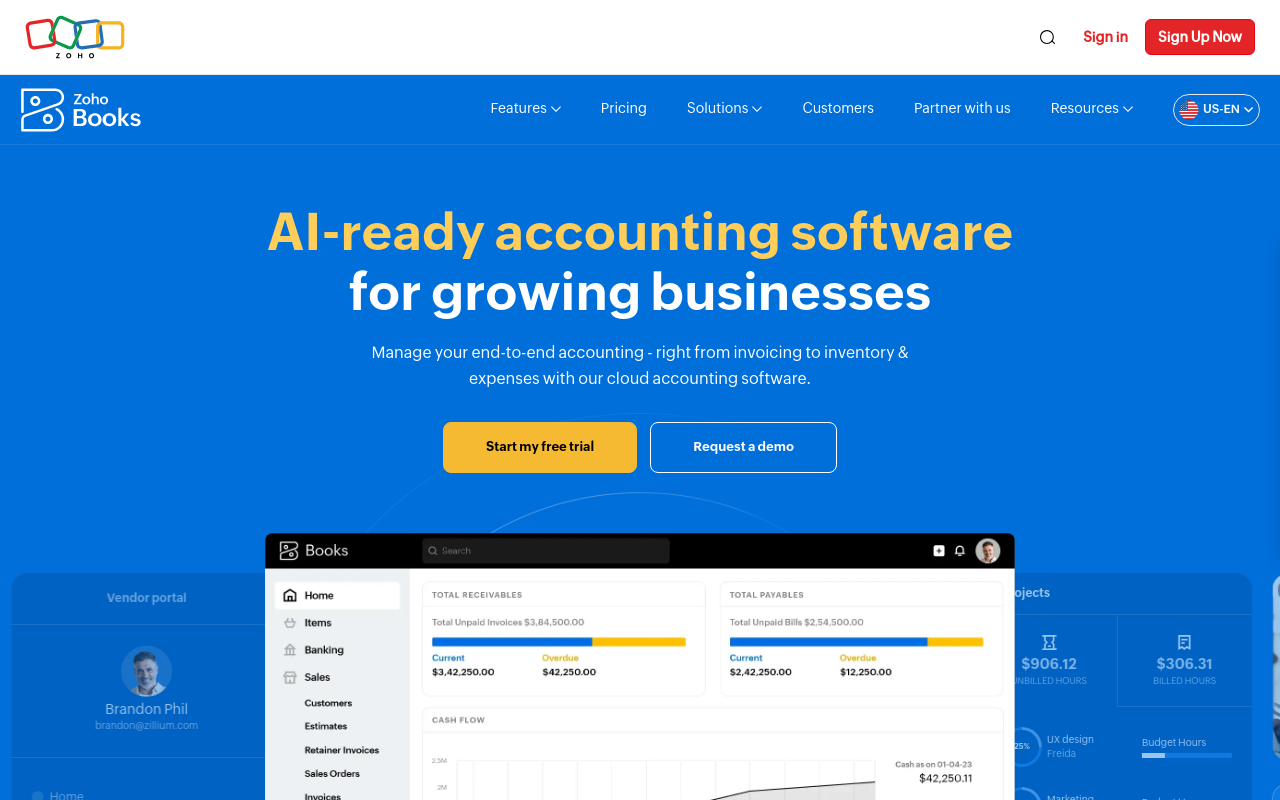
Zoho Books offers a capable accounting suite at a price point below QBO and Xero, with strong automation rules, bank reconciliation, and multi-user access. For operators already using Zoho CRM or other Zoho products, the ecosystem integration is a genuine operational advantage. The trade-off is STR specificity: Zoho Books has no rental-native chart of accounts, no OTA channel integration, and no trust accounting module. It requires more setup than STR-specific alternatives.
14. OwnerRez - Best Channel-Manager-Plus-Accounting Hybrid for Independent STR Operators Avoiding OTA Dependency
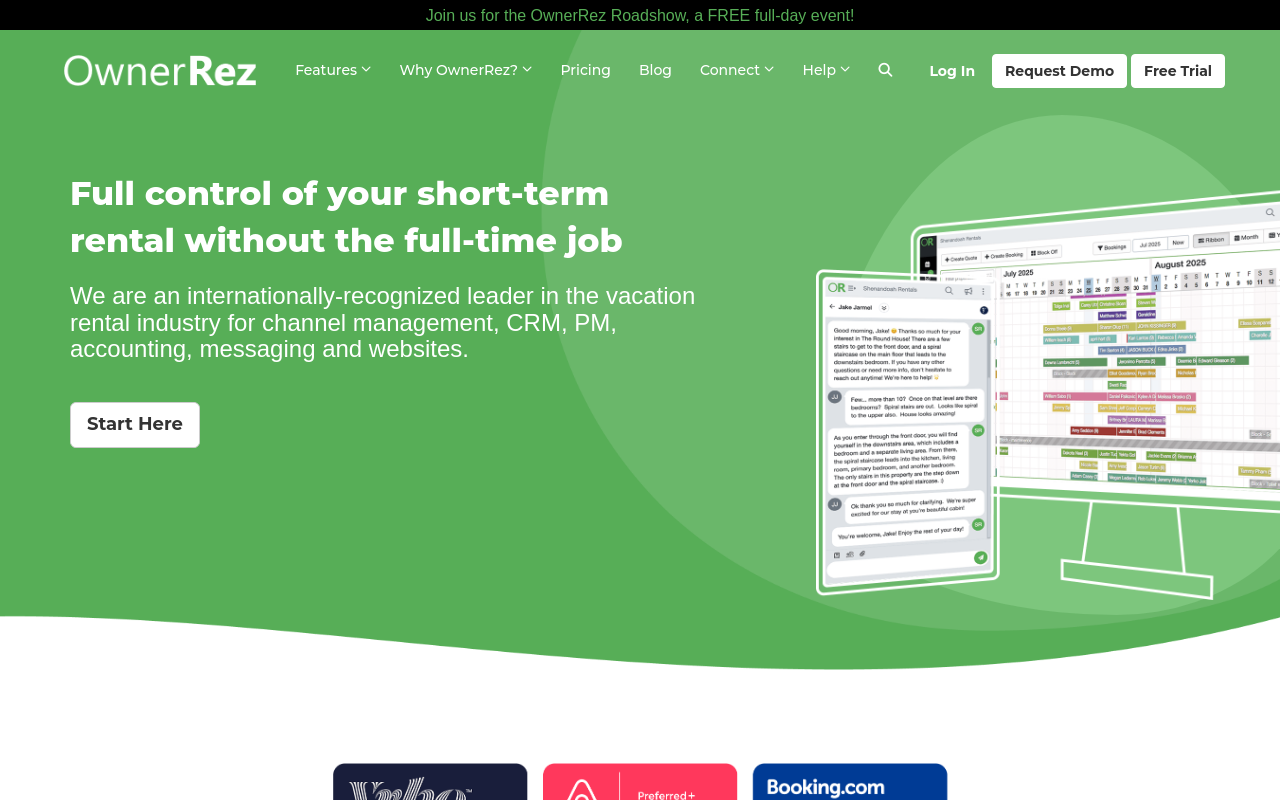
OwnerRez is a strong all-in-one option for independent operators who want to manage channel distribution, direct bookings, guest communication, and basic accounting without stitching together multiple platforms. Its accounting module natively handles revenue tracking, expense categorization, owner reporting, and basic trust accounting within a single channel-manager, a combination most channel managers do not offer without a separate accounting integration. Its accounting module handles revenue tracking, expense categorization, owner reporting, and basic trust accounting in a way that few channel managers match.
The limitation is depth: OwnerRez accounting is not a replacement for QBO or Xero for operators with complex tax situations, multiple ownership entities, or CPA-reviewed financials. Best suited for the independent operator running five to fifteen properties who wants to reduce platform sprawl without sacrificing owner reporting capabilities. Choosing the right software from this list gets your books organized.
Organized books only matter if the transactions inside them are correctly categorized for tax time. The next section breaks down exactly which tax implications and deductible expenses your chosen software must be able to handle, and where most STR operators discover their tool has already let them down.
A $50-per-month tool receiving structured, automated data from a well-configured PMS will outperform a $200-per-month platform fed manual spreadsheet exports every time.
80% QuickBooks' share of US small-business accounting market
Related Reading
-
Vacation Rental Automation
-
Best Pms For Short Term Rentals
-
How To Manage A Vacation Rental Property
-
Vrbo Smart Pricing
-
How To Automate Airbnb Business
-
Airbnb Self Check In
-
Vrbo Management
-
Best Apps For Short Term Rentals
-
Best Pms For Airbnb
Tax Implications and Deductible Expenses for Short Term Rentals - What Your Software Must Handle
Tax season reveals what your bookkeeping system actually is. For most STR operators, that revelation arrives as a CPA invoice for reclassification work, a scramble to reconstruct which transactions were cleaning fees versus platform commissions, and quiet dread about whether the Schedule E they just filed holds up to scrutiny. The problem did not start in April.
It started the first time a transaction landed in the wrong category in January. The same growth dynamic that creates bookkeeping chaos also creates operational chaos. Jack, CEO of Haven Vacation Rentals, described rapidly adding listings in a short period, and the pile-up that follows when every new property means more guest messages, more check-in questions, and more potential for classification errors on both the financial and operational side.
Before Haven had Conduit's AI agent running with a full knowledge base and workflows, they were managing a large portfolio with a substantial support staff across multiple shifts just to keep pace with volume. Growth meant more of everything: more messages, more calls, more hiring, and, unavoidably, more transactions to categorize correctly before April.
Schedule E vs. Schedule C - Why the Wrong Classification Costs More Than a CPA Bill
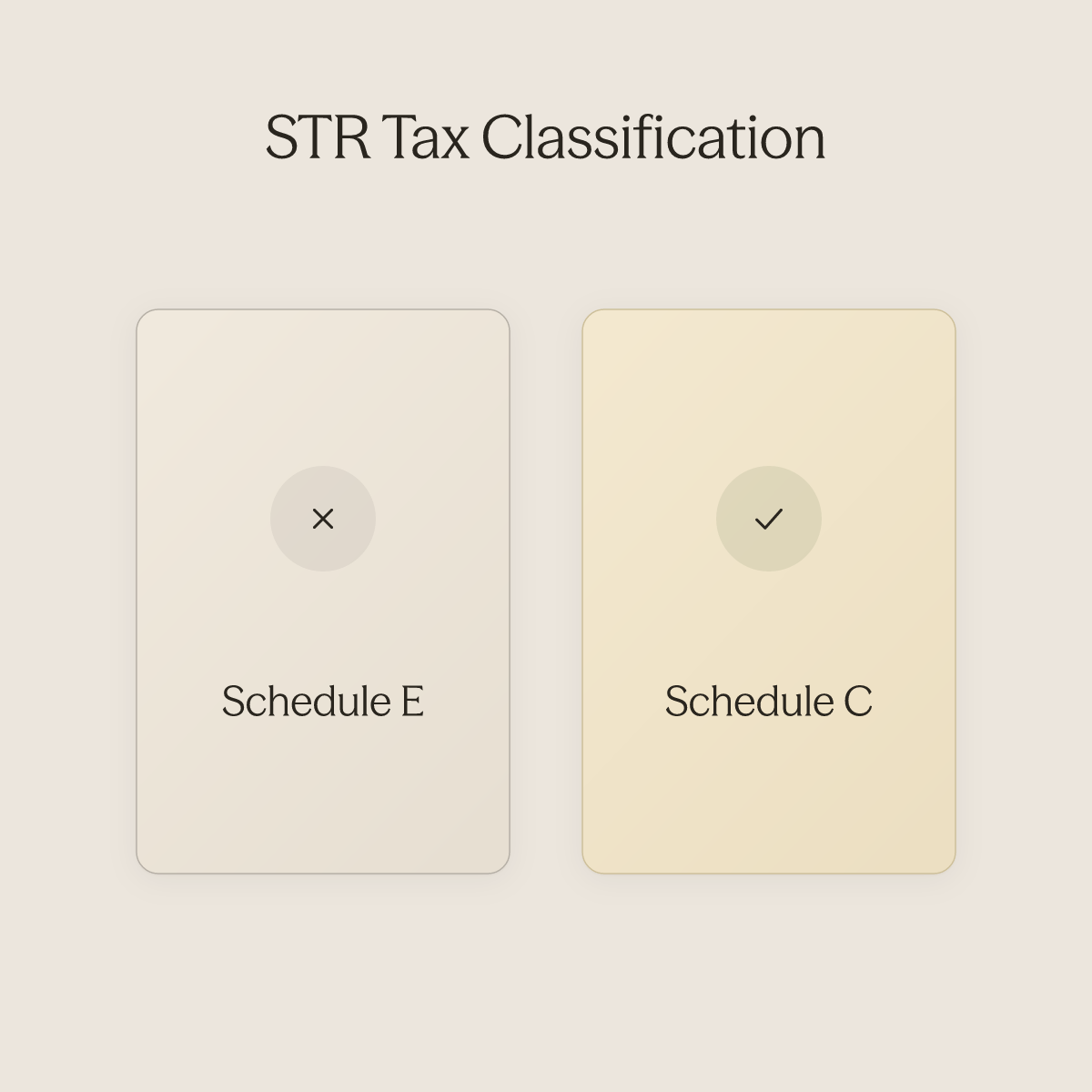
The IRS draws a sharp line based on average rental period. If your average guest stay is seven days or fewer, the property may qualify for Schedule C treatment rather than Schedule E, meaning losses can offset ordinary income directly instead of being deferred under passive activity rules. Across the market, material participation, meeting the IRS-defined hour thresholds for active involvement in the activity, is the threshold that shifts the classification entirely.
Most accounting software has no mechanism to track that threshold in real time, so the chart of accounts gets built against the wrong form from the start. The operators who face the sharpest reclassification bills at tax time are typically those whose back-office records haven't kept pace with portfolio growth. Adding listings without adding the right categorical structure to the books is the bookkeeping equivalent of running an AI agent with no workflows and a minimal knowledge base, enough to take the edge off, but not enough to change how the team operates.
The STR Deductible Expense Categories Most Software Fails to Separate
IRS Publication 527 identifies the core STR deductible categories: cleaning fees, platform commissions, depreciation on the property and furnishings, mortgage interest, property taxes, repairs, and occupancy taxes collected and remitted. Generic accounting tools collapse several of these into single line items, forcing operators who used QuickBooks defaults to manually reclassify hundreds of entries before a Schedule E can be prepared accurately. That rework is billable at CPA rates and entirely preventable.
Operators managing communications and bookings across multiple platforms simultaneously, the exact scenario Conduit's Inbox is built for, face a compounding version of this problem: transactions arrive from Airbnb, Vrbo, and direct booking channels in different formats, making consistent categorization harder the more properties and platforms are in play. The right chart-of-accounts structure, mapped to the right form from day one, is what prevents a multi-platform portfolio from becoming a multi-form tax problem.
Occupancy Tax Collected vs. Remitted - The Liability Line Most Operators Misbook
Occupancy tax is not revenue. Booking it as income is one of the most common STR bookkeeping errors tax professionals flag, as IRS Topic No. 415 makes clear by treating collected-and-remitted taxes as a pass-through obligation rather than operator income. Software lacking a dedicated liability account for collected occupancy tax forces operators to carry a hidden balance sheet error that compounds every booking cycle. At scale, say, a large multi-property portfolio generating nightly bookings across many markets, that compounding error is material by Q2 and painful by April.
Depreciation and Mortgage Interest - High-Value Deductions That Require Clean Upstream Data
Depreciation and mortgage interest are the two highest-value deductions available to most STR operators, and both require clean upstream data, accurate purchase price, closing cost allocation, and a consistent record of capital improvements, before any software can calculate them correctly. What most experienced STR accountants will tell you is that getting these figures right upstream is what separates a defensible Schedule E from one that invites scrutiny. Operators who have been manually categorizing or approximating these figures should treat a chart-of-accounts audit as the first step before filing, not an afterthought.
Jack's observation about Conduit applies equally well to a well-structured general ledger: facing what could be a flood of unresolved issues and having only a handful left instead is the entire point. Clean books heading into tax season work the same way, the goal is to reduce the number of things a CPA has to fix to as close to zero as possible before the first billable hour begins.
The Operational Layer That Determines Whether Any Accounting Software Actually Works
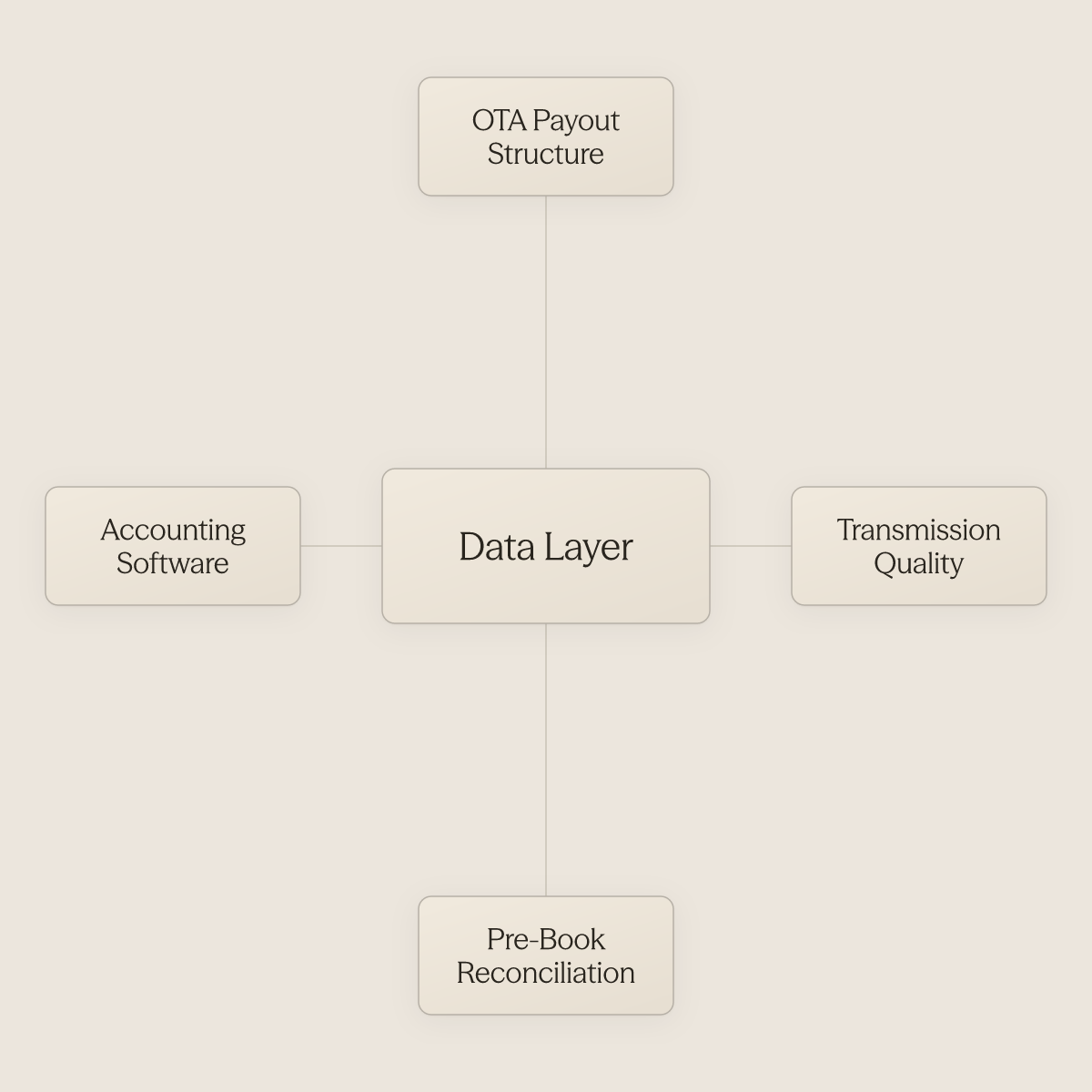
Most accounting software evaluations for short-term rentals start and end with features, but the software is rarely where the real problem lives. What actually determines whether any accounting tool works in an STR context is the data layer sitting upstream of it, specifically how OTA payouts are structured, transmitted, and reconciled before a single transaction reaches your books. Understanding that distinction changes what you should be looking for, and what Conduit is built to address.
Why OTA Batch Payouts Are the Root Cause of Reconciliation Chaos
Spend enough time inside STR operations and a pattern becomes hard to ignore: operators with the messiest books are rarely running bad accounting software. They are running clean software on top of broken data. The accounting tool is doing exactly what it was designed to do.
The problem is everything that happens before a transaction ever reaches it. Here is the synthesis that reframes the entire reconciliation problem: the significant average annual revenue leak from OTA reconciliation discrepancies and the substantial staff hours lost per property are not accounting software failures, they are upstream data-layer failures that accounting software is structurally incapable of correcting. The discrepancies (undercharged virtual cards, overpaid commissions) occur before any transaction reaches the accounting tool, meaning an operator can have best-in-class accounting software and still hemorrhage five figures annually if the OTA-to-PMS data connection remains unautomated and unaudited.
OTA platforms pay out in batches. One deposit from Airbnb can bundle multiple reservations, nightly rates, cleaning fees, host service fees, and occupancy taxes with no clean line-item breakdown attached. When that lump sum lands in your bank feed, your accounting software sees a single number.
The categorization work, the reconciliation against individual bookings, the tax separation: all of that falls on you, manually, every single month. STR operators lose a significant number of staff hours per property annually to manual OTA reconciliation, time that compounds across every unit in a growing portfolio. That is not a chart-of-accounts problem.
That is an upstream data problem. For many smaller STR operators, the cost of layering accounting software on top of this broken data compounds the pain. Tools like QuickBooks Online, priced above $100 per month, represent a meaningful operational expense, and operators who absorb that cost without fixing the upstream data problem end up paying for software that categorizes chaos more neatly, not software that eliminates it.
The PMS-to-Ledger Handoff - Where Clean Data Dies
The PMS is supposed to be the source of truth for booking-level financial data. In practice, reservation records arrive without the transaction-level detail accounting tools need to apply rules automatically. Operators export spreadsheets, reformat columns, and manually match records that should have synced automatically.
This is the structural gap no accounting software upgrade can close, because the gap exists in the connection between systems, not inside the accounting tool itself. Conduit's Integrations layer is designed to address exactly this handoff. When a business already uses tools like Notion, Google Drive, or Airbnb, Conduit's AI agent can leverage existing content, SOPs, FAQs, and property manuals without manual re-entry, reducing the risk that operational knowledge stays siloed in documents that never inform downstream systems.
That tighter connection between existing documentation and live guest interactions is what keeps the data layer cleaner before it ever touches a ledger.
How Automated Guest Communication Reduces Unplanned Transactions at Month-End
Every unresolved guest issue that escalates into a refund, dispute, or manual credit creates an unplanned transaction that must be categorized, reconciled, and explained at month-end. STR operators managing guest communications across multiple platforms or properties simultaneously face this compounding problem acutely: the more inboxes in play, the more escalations slip through, and the more one-off ledger exceptions accumulate. Conduit's AI Agents are built for AI for hospitality, responding to every guest message continuously, before, during, or after a stay, as soon as a message arrives.
For businesses that receive a high volume of repetitive guest messages and have existing documentation like SOPs or FAQs to train the agent on, the AI agent can be delivering its first automated guest reply within days of connecting those materials. When a new response rule is needed, the first custom rule that changes how the agent responds can be in place the same day. The operational result flows directly into the books.
Operators using Conduit's AI-powered guest communication automation achieve automation rates as high as 96% across routine guest interactions, compressing the exception-handling that generates those unplanned ledger entries. The Inbox layer gives the operations or support team an ongoing view of every conversation the AI agent is handling, so oversight remains intact even as AI for hospitality. Fewer escalations mean fewer one-off refunds, manual credits, and dispute adjustments landing in the ledger as uncategorized exceptions, and a cleaner month-end close as a direct result.
Conduit's Workflows layer extends this further. For recurring, predictable guest touchpoints that currently require manual staff action, a post-booking confirmation message, a check-in instruction sequence, a keyword-triggered response, Workflows fire automatically after the relevant trigger event occurs in the guest lifecycle. Each automated touchpoint that resolves a guest question before it becomes a complaint is one fewer unplanned transaction entering the reconciliation queue.
That is not a chart-of-accounts optimization. That is upstream exception prevention, and it is AI for hospitality.
Related Reading
-
Lodgify Competitors
-
Vrbo Automated Messages
-
Guesty Alternatives
-
Lodgify Vs Smoobu
-
Guesty Vs Hostfully
-
Ownerrez Vs Guesty
-
Hospitable Vs Hostaway
-
Guesty Vs Hostaway
-
Guesty Vs Hospitable
Next steps
If your OTA payouts keep arriving as opaque lump sums that defeat every categorization rule you build, the path forward starts with fixing the data layer those payouts flow through before selecting any software. Start with our AI for hospitality.
QuickBooks' 80% market share signals ubiquity, not fitness, for STR operations. Defaulting to the market leader still leaves every upstream data problem intact, just categorized inside a more familiar interface. The $13,000-plus average annual revenue leak from OTA reconciliation discrepancies happens before any transaction reaches your accounting tool, meaning the tool cannot correct what it never received cleanly. Together, these two realities point to the same first action: stabilize the operational layer feeding your ledger, specifically the guest communication and PMS handoff, before committing to any accounting platform.
See conduit.ai for the guest communication and integration layer that structures booking data at the source, so whatever accounting software you choose inherits clean records instead of inheriting your current chaos.
Frequently Asked Questions
Why are my OTA payouts so hard to reconcile in my accounting software?
Airbnb and Vrbo send a single lump-sum deposit that bundles multiple reservations, deducted platform fees, pass-through cleaning charges, and occasional adjustments into one line on your bank statement, not a payment per booking. That structural bundling means the data arrives in your accounting software already broken, and rule-based categorization cannot untangle a batch payout it cannot parse.
Does it matter whether my rental income is filed on Schedule E or Schedule C?
Yes, the distinction is significant. Schedule C treats the rental as an active business, which can trigger self-employment tax exposure that a correctly categorized Schedule E filing avoids. If a tool cannot confirm it supports Schedule E categorization natively, not as a workaround or custom build, the post recommends removing it from your shortlist before evaluating any other feature.
How should occupancy tax be handled in my STR books so it doesn't inflate my revenue?
Occupancy tax collected must be separated from operating revenue and treated as a liability, not income. A proper STR-specific chart of accounts keeps these as distinct line items, and one of the four pre-purchase checklist questions the post recommends asking any software vendor is whether it separates occupancy tax collected from rental revenue.
Why does a generic small-business chart of accounts cause problems for short-term rentals?
A generic template groups everything into broad buckets like "sales" and "cost of goods sold," which collapses the moment you need to separately track platform commissions, cleaning fees, occupancy tax collected, owner distributions, and maintenance callouts. STR financial streams, as the post puts it, "do not map cleanly onto generic chart-of-accounts structures designed for standard businesses," so the books look tidy on the surface while being quietly wrong underneath.
How does messy guest communication actually affect my accounting records?
Accounting data is downstream of every guest interaction, when a guest asks about a cleaning fee and the answer varies by platform or staff member, the resulting adjustment lands in your payout as an untagged line item that reconciliation tools cannot cleanly categorize. Stabilizing guest communication with consistent, automated responses reduces the volume of one-off payout adjustments and irregular line items that defeat categorization rules before they even run.

Stay in the loop
Get the latest on AI automation, product updates, and customer stories.

