9 Best Property Management AI Tools for Hospitality Teams


9 Property Mgmt Tools
AI to automate hospitality ops
Hotels face a constant juggling act: guests checking in at 2 AM, maintenance requests from room 304, and questions about breakfast hours, all while front desk teams manage multiple responsibilities. AI communications for hotels has transformed how properties handle these simultaneous demands through intelligent automation that manages guest interactions, maintenance requests, and booking queries without missing a beat. Modern property management AI tools give hospitality teams the support they need to deliver consistent service around the clock. The key lies in choosing solutions that actually deliver results and fit each property's unique operational needs.
Smart automation handles routine guest communications across multiple channels, freeing staff to focus on the personal touches that create memorable stays. Teams can spend more time resolving complex guest concerns and building relationships that turn first-time visitors into loyal regulars. Hotels that implement the right technology see immediate improvements in response times, guest satisfaction, and operational efficiency. Properties looking to streamline operations and give their teams breathing room can explore AI for hospitality as a practical starting point.
Summary
Guest communication volumes continue rising while staffing gaps persist across the industry. The American Hotel & Lodging Association found that 65% of hotels reported staffing shortages at the end of 2024, with 71% unable to fill all open positions despite wage increases and expanded benefits. Properties averaged 6 to 7 unfilled positions each, while wages increased between 3.7% and 5.9% year over year across key hospitality roles. The problem isn't just tight labor markets; it's that adding headcount no longer solves the underlying issue of fragmented communication across disconnected systems.
Most property management AI platforms are often mistaken for simple chatbots, when in fact they serve as operational infrastructure. Modern systems don't just answer guest questions; they pull reservation data, check availability, route requests to appropriate departments, trigger workflows, and coordinate communication between teams. According to Lee Chen, MBA, 70% of firms increased technology spending post-COVID, yet only 28% built formal training programs to help teams understand what these systems actually do. This gap between investment and understanding causes operators to dramatically underestimate AI's potential impact beyond basic question-and-answer interactions.
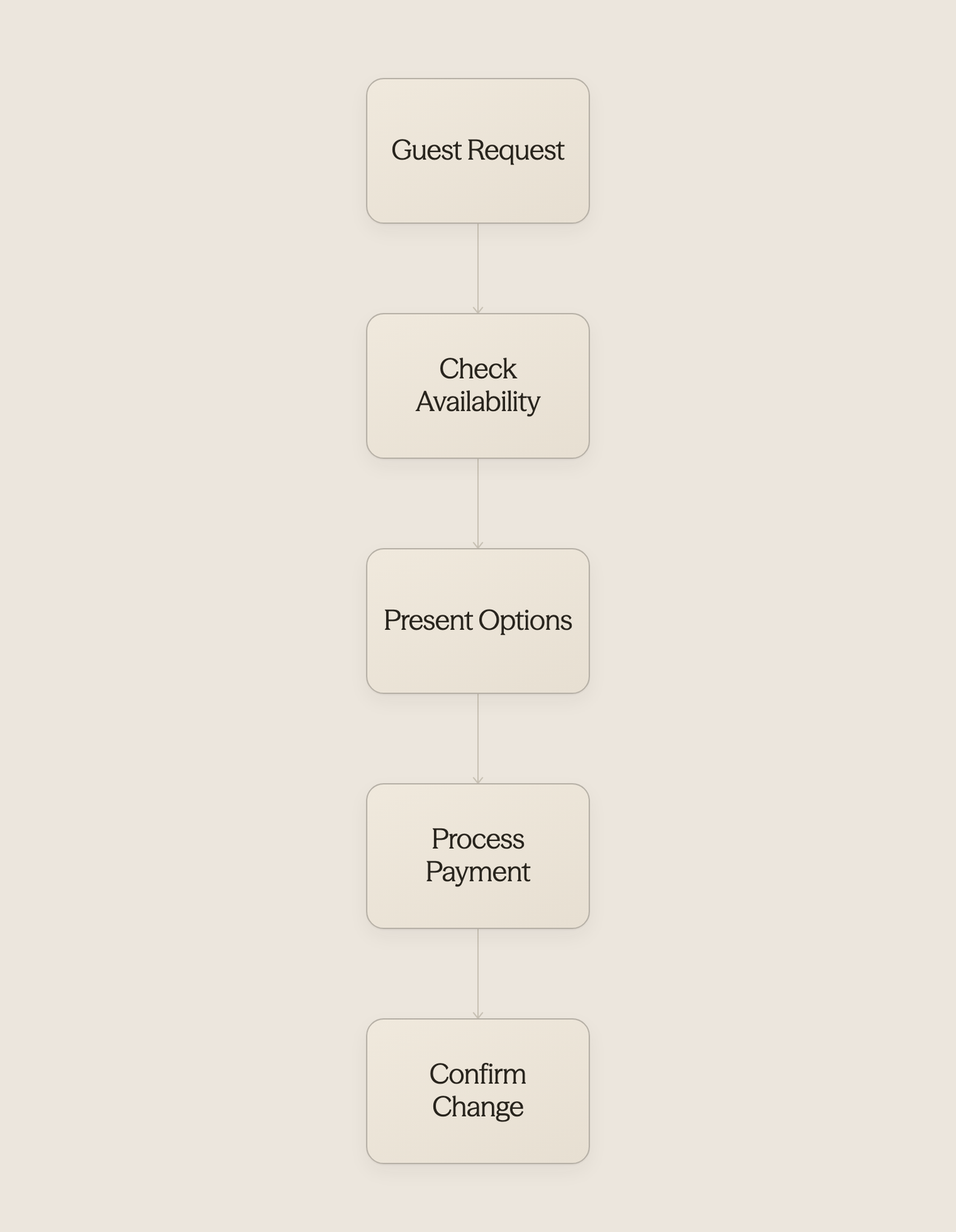
The strongest business cases for hospitality AI increasingly come from revenue generation rather than cost reduction alone. Industry analysis from HotelsHR shows AI can reduce operational costs by up to 30%, but operators pulling ahead treat AI as a revenue engine that identifies upsell moments, promotes ancillary services, and converts inquiries into bookings. When a guest asks about early check-in, modern platforms recognize the revenue opportunity, check availability, calculate pricing, present the upgrade option, process payment, and confirm the modification within the same conversation.
Proactive engagement delivers measurably better outcomes than reactive support. AI-driven personalization from hospitality studies can increase guest satisfaction scores by 25% by shifting from waiting for problems to arrive to initiating conversations based on reservation patterns, booking events, and guest preferences. Properties using this approach send pre-arrival messages with upsell opportunities, detect potential issues such as double bookings or maintenance conflicts before guests notice, and coordinate internal workflows to keep operations running smoothly behind the scenes.
Cross-functional coordination often consumes more staff time than guest-facing conversations themselves. When a guest reports a maintenance issue, advanced AI systems log the request, assign it to the appropriate team, update housekeeping schedules to avoid that room, notify the front desk, and track resolution status. The guest conversation is one touchpoint, but the operational orchestration across departments is where properties actually save hours each day and prevent tasks from falling through the cracks during shift changes or high-volume periods.
AI for hospitality addresses these challenges by connecting guest communication with backend workflows, allowing properties to automate service delivery while capturing revenue opportunities through reservation-aware responses, multi-channel consistency, and lifecycle-triggered outreach.
Why Hiring More Staff Is No Longer Solving Guest Service Problems
Why is traditional staffing failing hotels?
Guest communication volumes are increasing across more bookings, channels, and touchpoints. The instinct is to hire more staff to manage the workload.
That approach is not working. The real problem is not the volume of messages but fragmentation. When a single guest inquiry travels through email, SMS, and OTA messaging platforms, the issue is not staffing levels but the time each person spends switching contexts, locating information, and manually routing requests between disconnected systems.
What do current staffing shortage statistics reveal?
According to the American Hotel & Lodging Association, 65% of hotels reported staffing shortages at the end of 2024, and 71% were unable to fill all open positions despite increasing wages, offering flexible schedules, and expanding benefits. Hotels reported an average of 6-7 unfilled positions per property.
The labor market has structural limits. Average wages increased between 3.7% and 5.9% year over year across key hospitality roles, even as operators worked to improve labor efficiency. You're paying more for each new hire, yet still cannot staff fully.
What actually consumes staff time
Most guest service hours are spent answering the same questions repeatedly: check-in times, parking details, amenity availability, reservation confirmations, late check-out requests, and policy clarifications, rather than on complex problem-solving.
Why does adding more staff fail to improve efficiency?
When your team spends hours daily answering routine inquiries across email, SMS, web chat, and OTA platforms, hiring more people doesn't make the workflow more efficient. It spreads the same repetitive tasks across more inboxes.
What creates the real bottleneck in guest service?
The problem isn't insufficient staff—it's how your systems are structured. If your team must manually search for reservation details, transfer information across platforms, and coordinate internally before answering a customer, hiring another person simply means training them to repeat the same slow process.
You've increased payroll without improving response times. Our Conduit platform eliminates these bottlenecks by automating information retrieval and routing, freeing your team to deliver exceptional service instead of managing manual workflows.
Why automation is replacing headcount expansion
Property managers are shifting their focus from "How many more people do we need?" to "Which tasks can we remove from the team's plate entirely?"
How do AI platforms handle routine guest communications?
Platforms like AI for hospitality handle routine guest communications across multiple channels without staff intervention. Our Conduit system responds to common questions, retrieves reservation details, and escalates complex requests to the appropriate team member.
Your existing team focuses on interactions requiring human judgment, relationship-building, or creative problem-solving, while repetitive inquiries are resolved instantly.
What happens when staff aren't managing inboxes?
When staff aren't buried in inbox management, they can focus on moments that create loyal guests: solving a frustrated traveler's concern with empathy, proactively upgrading repeat visitors, or anticipating needs before they become problems.
But most operators misunderstand what AI tools do, keeping them stuck in outdated workflows.
What Most People Get Wrong About Property Management AI
The biggest misconception is that property management AI is a chatbot. Most operators picture a guest asking a question and the AI providing an answer. Modern hospitality AI extends far beyond basic question-and-answer interactions. Our solutions at Conduit handle everything from reservation management to guest communication automation, helping properties streamline operations comprehensively.
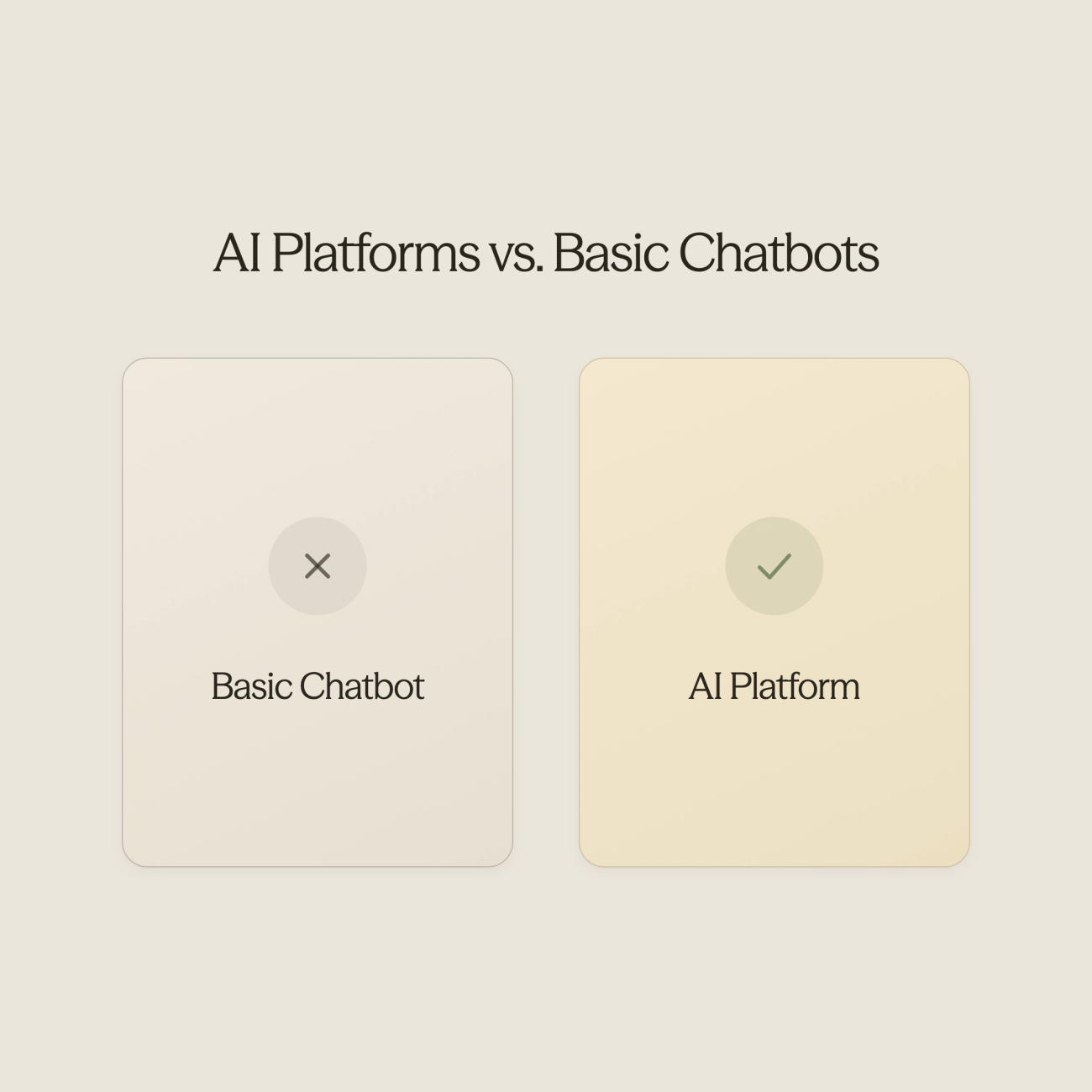
🎯 Key Point: Property management AI has evolved far beyond basic chatbots to become a comprehensive operational tool that transforms how properties manage their entire guest experience.
"Modern hospitality AI does much more than basic question-and-answer interactions, handling everything from reservation management to guest communication automation." — Conduit AI Solutions
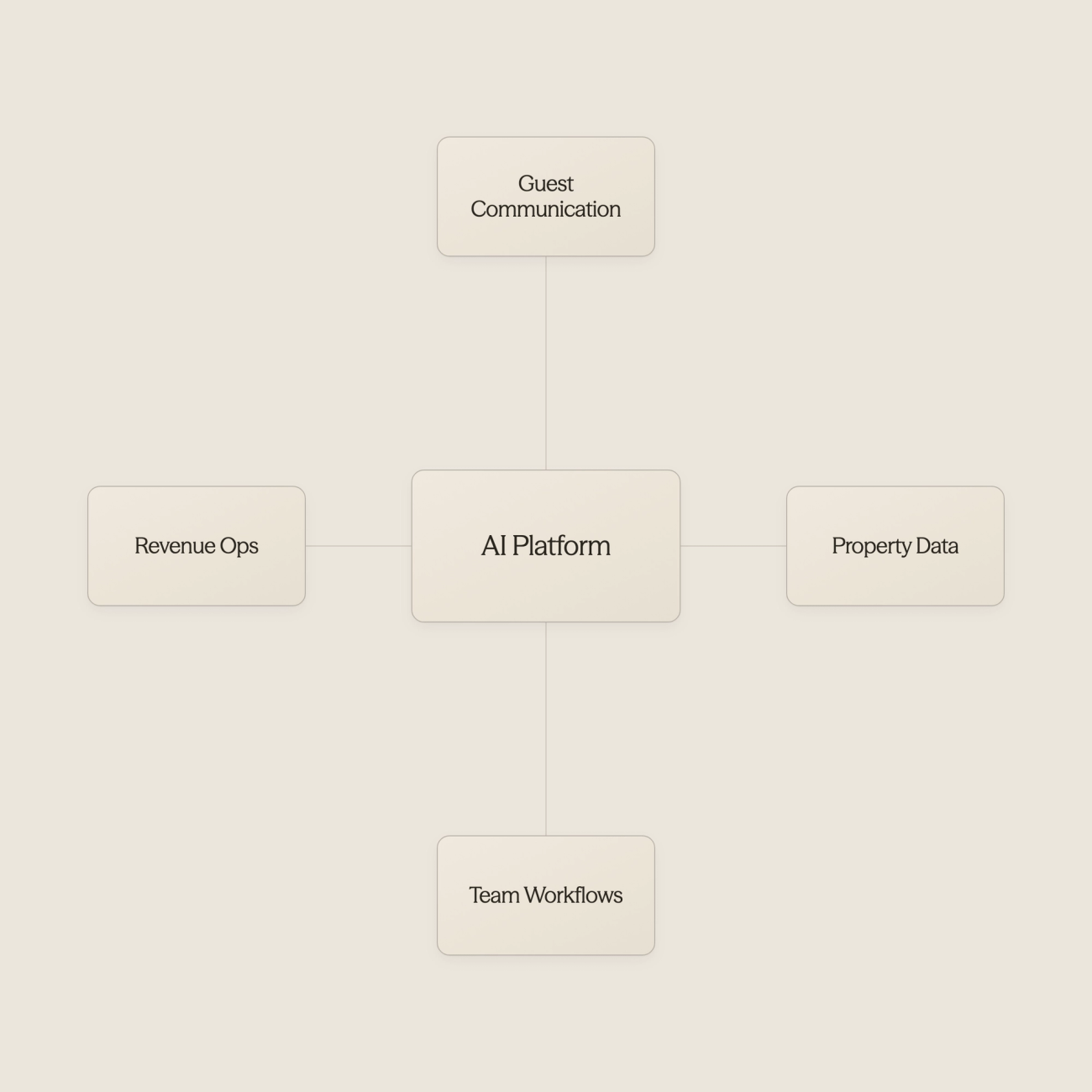
⚠️ Warning: Thinking of AI as just a chatbot severely limits your understanding of how these advanced systems can revolutionize your entire property management workflow.
AI as operational infrastructure, not just conversation
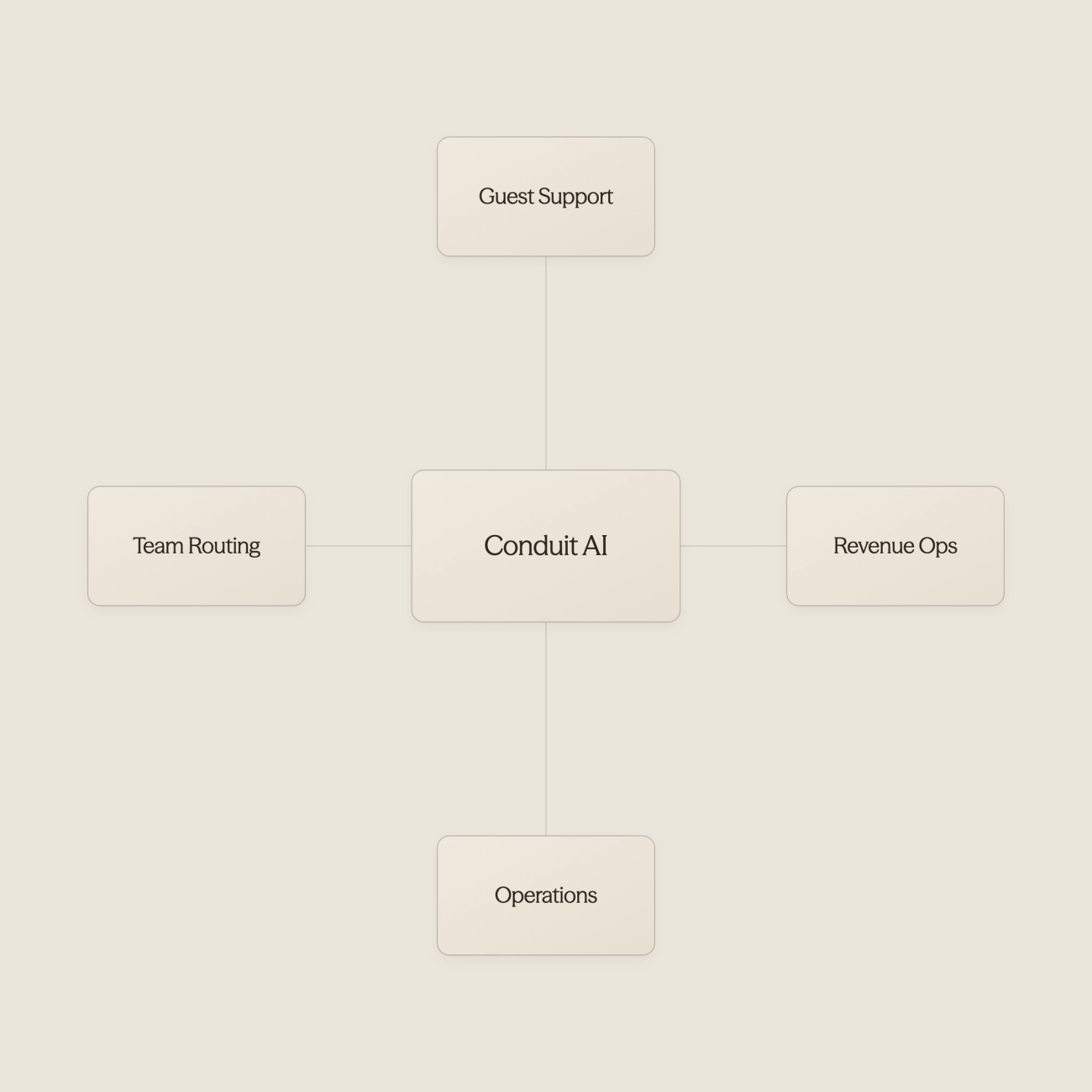
The most valuable AI platforms function as operating systems that connect guest communication, property data, team workflows, and revenue opportunities. They move work forward, not answer questions. Our Conduit platform is built on this principle: connecting your guest interactions with your property operations to drive real results.
Consider a guest message: "Can I check in early tomorrow?" A basic chatbot responds with general policy. A modern hospitality AI system identifies the guest's reservation, verifies arrival details, checks property availability, determines if early check-in is possible, and routes necessary follow-up to the appropriate team.
One provides information. The other completes the task. With Conduit, you get the latter: an AI system that informs and executes on behalf of your team.
Why workflow orchestration matters more than response speed
Hospitality teams aren't overwhelmed because guests ask difficult questions. They're overwhelmed because every question triggers operational tasks: reservation lookups, internal notifications, maintenance requests, housekeeping coordination, upgrade opportunities, guest follow-up, and exception handling. These workflows frequently take longer than the conversation itself.
How does AI integrate with property operations?
Modern property management AI manages both sides of the interaction: it answers guest questions, pulls reservation information, routes requests to departments, triggers operational workflows, and coordinates communication between teams. Rather than existing as a separate communication tool, it becomes part of the property's operational infrastructure.
According to Lee Chen, MBA, 70% of firms increased tech spending after COVID. Yet only 28% created formal training programs to help teams understand these systems. This gap between investment and understanding creates confusion about what AI should accomplish.
What makes workflow orchestration different from basic chatbots?
Platforms like Conduit handle multi-step conversations that pull data from multiple systems, coordinate between departments, and maintain context across channels. Our platform organizes the work that happens before, during, and after guest conversations. Evaluating property management AI solely as a chatbot causes operators to underestimate its impact.
Knowing what AI can do is only half the equation. The harder part is determining which capabilities matter for your operation.
Related Reading
- AI Communications For Hotels
- AI For Vacation Rentals
- AI For Airbnb Hosts
- AI Use Cases In Hospitality
- Best Hotel Chatbot
What to Look for in a Property Management AI Tool
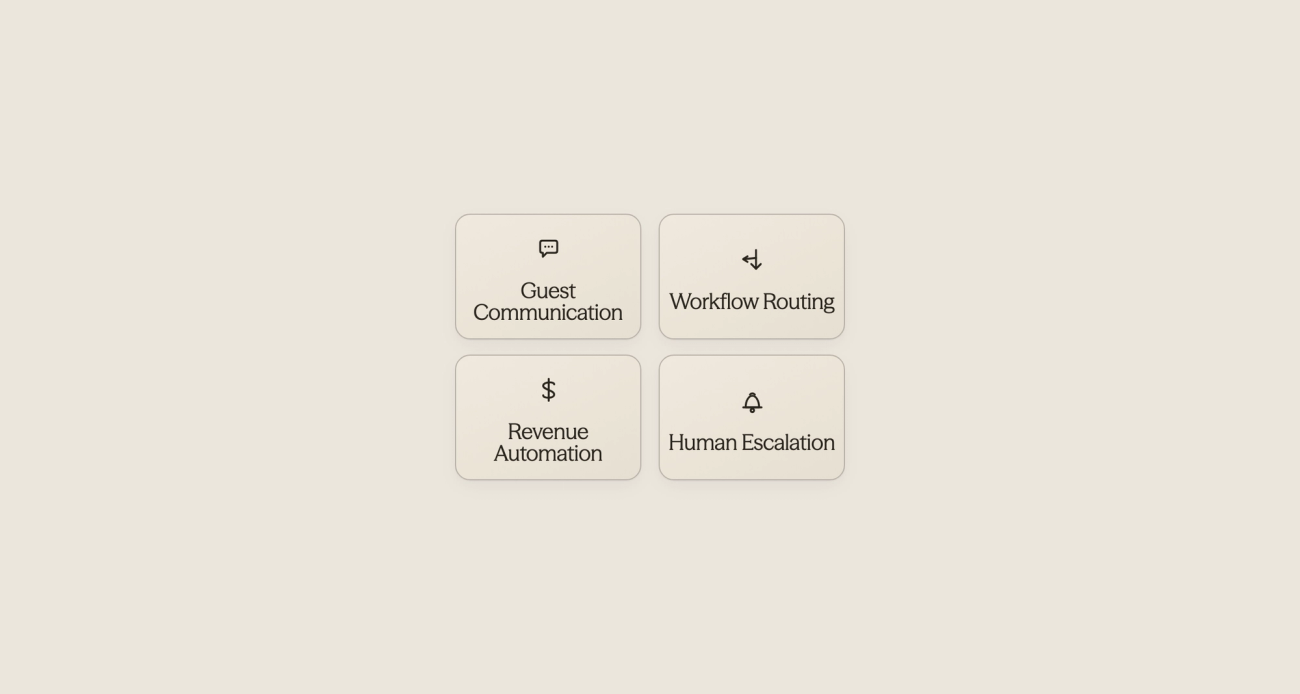
The right property management AI tool should work with the technology you already use, talk to guests through different channels, and start workflows that move tasks through your team. If it cannot access reservation data, send requests to the right department, or find ways to make more money, it will create more work than it eliminates.
🎯 Key Point: The best AI tools integrate seamlessly with your existing tech stack rather than forcing you to learn entirely new systems.
"Property management AI that doesn't integrate with existing systems creates operational friction rather than eliminating it." — Industry Best Practices, 2024
💡 Tip: Before investing in any AI solution, audit your current software ecosystem to ensure compatibility and data flow between platforms.
| Essential AI Tool Features | Why It Matters |
|---|---|
| Multi-channel communication | Guests contact you via phone, email, chat, and social media |
| Workflow automation | Tasks move automatically between departments |
| Revenue optimization | AI identifies upselling and pricing opportunities |
| Data integration | Access to reservation and guest history data |
Deep System Integrations
Determine whether the AI can access real reservation and property information. This reveals the difference between tools that provide general answers and those that support actual day-to-day work.
If a guest asks about their reservation, wants a late check-out, or needs to change their stay, the AI needs access to booking and property data to provide accurate answers. Without connections to other systems, staff must manually check information and find reservations, which limits the AI's usefulness.
The best platforms integrate deeply with the hospitality technology system, pulling real-time availability, pricing, and guest history data. This transforms the AI from answering questions to completing tasks.
Multi-Channel Communication
Guests contact you through multiple channels—email, SMS, OTA messaging, web chat, and social platforms—during their stay. Managing these disparate systems strains teams who must monitor each simultaneously.
A good AI platform should handle conversations across all the channels guests use, creating a consistent experience regardless of where they start. When communication flows through a single central platform, teams spend less time switching between platforms and more time addressing problems that require human intervention.
How do AI tools handle multi-department guest requests?
Guest requests—maintenance issues, extra towels, early arrivals—often require action from multiple departments. A property management AI tool should route these requests to the right team with all necessary details, rather than simply responding to them.
Routing, escalation, and workflow automation create more operational value than conversation alone by reducing delays and eliminating manual coordination.
What problems do manual workflows create for hotels?
Most teams handle requests through email threads and manual handoffs. As properties grow, these threads fragment across inboxes, context gets buried, and response times stretch from hours to days.
Conduit brings guest communication together in one place with automated routing and workflow triggers, accelerating response cycles while preserving full context across departments.
Revenue Automation
Making money is often overlooked when teams evaluate AI. While many hospitality teams first look at AI to reduce support workloads, some of the strongest business cases come from revenue-generating workflows.
Guest interactions create opportunities for room upgrades, stay extensions, late check-outs, ancillary services, and property-specific add-ons. Our Conduit platform identifies and automates these opportunities throughout the guest journey, generating additional revenue while maintaining personalization.
Human Escalation
Even though AI has improved significantly, the hospitality business still depends on people. Difficult guest situations, fixing service problems, making policy exceptions, and handling sensitive requests all require human judgment.
A good AI platform knows when to step back and let people take over, providing teams with guest information, context, and conversation history to solve problems quickly. Our Conduit platform is designed to help staff focus on what matters most.
But knowing which features matter is only helpful if you know which platforms provide them.
9 Best Property Management AI Tools for Different Hospitality Needs
The property management AI market offers specialized solutions for guest communication, operational workflows, revenue management, content creation, and enterprise-scale automation. Choosing the right tool starts with identifying your biggest operational constraint rather than seeking a single "best" platform.
According to Cressco's analysis of AI property management tools, the question isn't which tool has the most features: it's which tool solves the specific problem costing you the most time, revenue, or guest satisfaction.
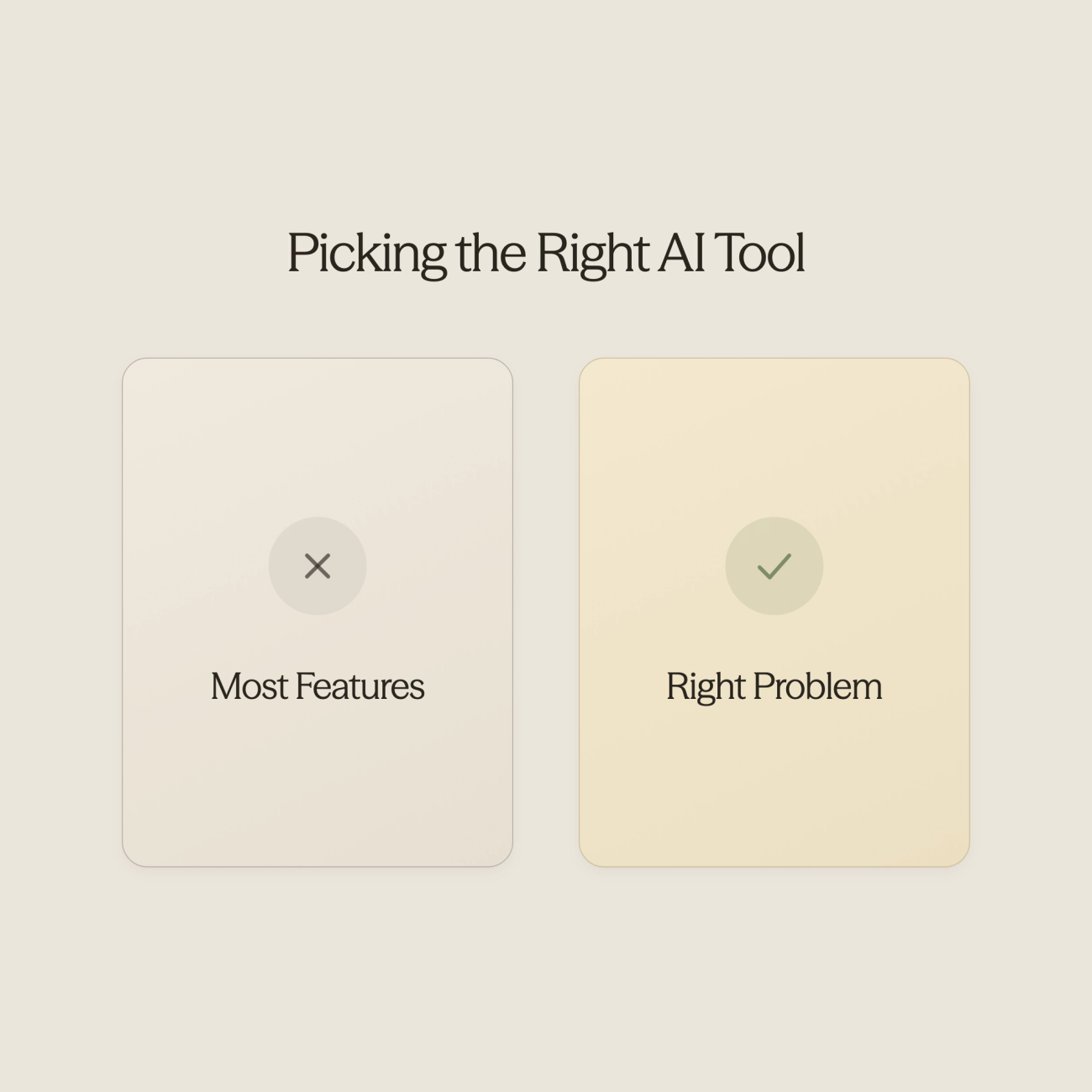
🎯 Key Point: The most effective approach is to identify your primary pain point first—whether it's guest response times, pricing optimization, or content creation—then select the AI tool that directly addresses that constraint.
"The question isn't which tool has the most features—it's which tool solves the specific problem costing you the most time, revenue, or guest satisfaction." — Cressco Analysis, 2025
🔑 Takeaway: Successful AI implementation in property management requires strategic focus rather than feature accumulation. The highest ROI comes from solving your biggest bottleneck with the right specialized tool, not from deploying the most comprehensive platform.
1. Best for Hospitality Customer Service Automation: Conduit
Conduit is designed to help hospitality operators automate guest communication while maintaining operational accuracy. Unlike generic AI tools, Conduit connects directly to the hospitality technology stack, pulling reservation details, property information, and guest context into conversations.
The platform supports multi-channel communication, automates workflows, routes requests to the right teams, and escalates exceptions. It creates proactive guest journeys and enables revenue automation by triggering upgrades, extensions, add-ons, and lifecycle messaging based on guest activity and reservation events.
- Strengths: Deep hospitality integrations, reservation-aware responses, multi-channel support, workflow automation, proactive revenue generation, and human escalation controls.
- Limitations: N/A
- Best-fit use case: Hotels, vacation rentals, and hospitality operators are automating guest service, streamlining operations, and creating revenue opportunities without adding headcount.
2. Best for General AI Writing Assistance: ChatGPT
ChatGPT excels at quickly creating and editing written content, including guest communications, marketing content, standard operating procedures, internal documentation, and knowledge base articles.
However, it's not purpose-built for hospitality operations and doesn't integrate with reservation systems or property workflows. Teams use it to draft email templates, create social media posts, or brainstorm marketing campaigns, but each task requires manual context input. Conduit, by contrast, is purpose-built for hospitality and integrates directly with your reservation systems and property workflows, automating operational tasks without requiring manual context input for each interaction.
- Strengths: Content creation, communication drafting, brainstorming, and documentation support.
- Limitations: Limited hospitality-specific functionality, no direct access to reservations, not designed for operational automation.
- Best-fit use case: Hospitality teams seeking support with content creation and written communication.
3. Best for Property Management Operations: Mews Operations Platform
Mews is a leading cloud-based hospitality management platform that automates front-desk operations, housekeeping coordination, payments, and property workflows. It provides real-time visibility into occupancy, housekeeping status, and guest services while reducing manual operational tasks.
- Strengths: Property operations management, workflow automation, PMS functionality, and operational visibility.
- Limitations: Broader PMS focus rather than dedicated guest-service AI.
- Best-fit use case: Properties seeking operational automation across multiple departments.
4. Best for Guest Messaging: Canary Technologies
Canary has built a strong reputation for guest communication and digital guest journeys. The platform supports messaging, mobile check-in, upselling, digital authorizations, and guest engagement throughout the stay. Its mobile-first approach lets guests complete pre-arrival tasks, request services, and communicate with staff without making phone calls or visiting the front desk.
- Strengths: Guest messaging, digital guest-experience tools, and mobile workflows.
- Limitations: Less focused on broader operational orchestration than some AI-first platforms.
- Best-fit use case: Hotels focused on improving guest communication and digital experiences.
5. Best for Enterprise Hospitality AI: Amadeus Hospitality Solutions
Amadeus serves many of the world's largest hospitality brands with an AI-driven system covering personalization, guest engagement, revenue tools, and enterprise-level integrations. The platform manages guest data, loyalty programs, and distribution channels at scale across multiple properties, brands, and markets.
- Strengths: Enterprise scale, extensive integrations, global hospitality footprint.
- Limitations: Complexity and implementation requirements may exceed the needs of smaller operators.
- Best-fit use case: Large hotel groups and enterprise hospitality organizations.
6. Best for Revenue Management Optimization: IDeaS Revenue Solutions
IDeaS specializes in AI-powered revenue management for hospitality operators. Its forecasting and pricing optimization tools analyze historical data, market conditions, and demand patterns to recommend pricing strategies that maximize occupancy and revenue per available room.
- Strengths: Demand forecasting, pricing optimization, revenue management.
- Limitations: Narrower focus than full-service hospitality AI platforms.
- Best-fit use case: Hotels seeking advanced revenue optimization capabilities.
7. Best for Vacation Rental Messaging: Hostaway
Hostaway helps vacation rental operators manage properties across multiple booking channels, offering messaging automation, channel management, workflow automation, and operational tools designed for short-term rentals.
For property managers handling Airbnb, Vrbo, Booking.com, and direct bookings, Hostaway centralizes communication and syncs availability across platforms. The system automates routine guest messages, including check-in instructions, house rules, and checkout reminders.
- Strengths: Vacation-rental workflows, channel integrations, and messaging automation.
- Limitations: More specialized for vacation rentals than traditional hotel operations.
- Best-fit use case: Property managers operating short-term rental portfolios.
8. Best for Reputation Management: MARA Solutions
MARA helps hospitality businesses manage online reviews using AI, offering review monitoring, response generation, and reputation management across major platforms, including TripAdvisor, Google, and Booking.com.
The platform writes personalized responses to guest reviews while maintaining your brand voice, saving hours of manual writing. It also tracks sentiment trends and identifies recurring issues in reviews.
- Strengths: Review response automation, reputation monitoring, and guest feedback management.
- Limitations: Limited operational functionality beyond reputation management.
- Best-fit use case: Hospitality businesses are seeking to improve the efficiency of review responses.
9. Best for Hospitality CRM and Guest Personalization: Revinate
Revinate helps hotels manage guest relationships and personalized marketing by combining guest data, segmentation, and automation to support retention and direct booking strategies.
Hotels use Revinate to track guest preferences, send targeted email campaigns, and create personalized offers based on past stay behavior. The platform integrates with PMS and booking systems to build comprehensive guest profiles.
- Strengths: Guest marketing, CRM capabilities, personalization, and email automation.
- Limitations: More focused on marketing and retention than operational workflows.
- Best-fit use case: Hotels seeking to strengthen guest relationships and direct marketing efforts.
What factors should you consider when selecting property management AI
The best property management AI tool depends on the problem you're trying to solve. If guest service automation, operational workflows, and proactive revenue generation are your primary goals, AI for hospitality platforms like Conduit stands out because it combines all three in a hospitality-specific system engineered for business growth.
How do specialized AI tools compare to comprehensive platforms
Other tools excel in specific areas such as revenue management, guest messaging, reputation management, CRM, and large hospitality operations. Choose platforms based on the results you need, not their AI features.
What makes a property management AI tool valuable for hotels
The best hospitality AI tools fit naturally into your team's existing workflows, reduce problems and delays, and deliver clear results—whether saving time, increasing revenue, or improving guest satisfaction—within the first 30 days of use.
Related Reading
- AI Tools For Hotels
- AI Agents For Hotels
- Hotel Chatbot Guide
- Best Hotel Chatbot
- Hotel Automation Tools
- AI Chatbot For Hotels
- Guest Communication Tools
Why Hospitality AI Is Moving Beyond Support Automation
Guest service automation solved the volume problem: AI now handles check-in questions, parking details, and late check-out requests. Operators seeing the strongest returns use AI to drive revenue, coordinate operations, and shape guest behavior before problems surface.
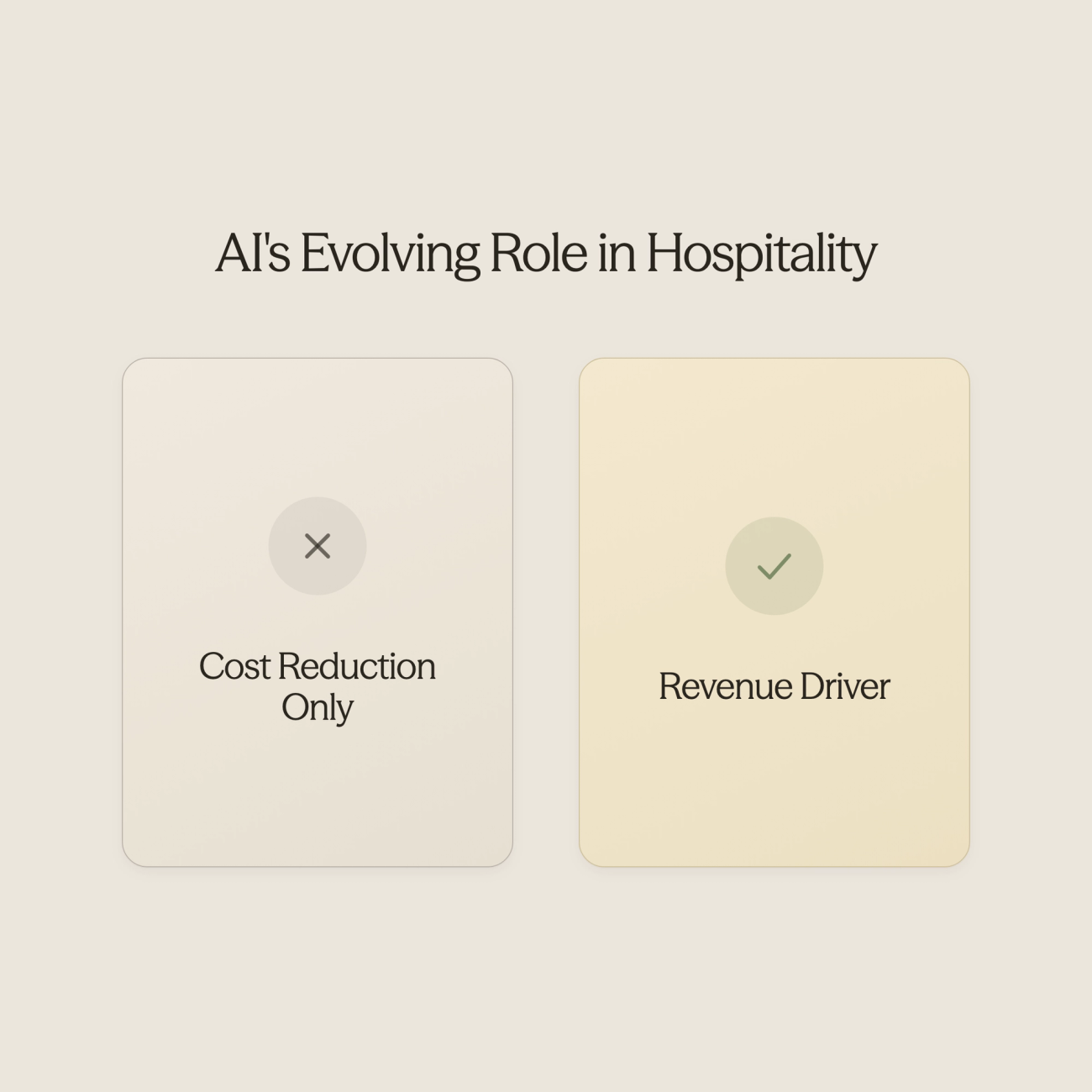
🎯 Key Point: The most successful hospitality operators are moving beyond reactive support to use AI strategically for proactive revenue generation and operational coordination.
"Operators seeing the strongest returns use AI to drive revenue, coordinate operations, and shape guest behavior before problems surface." — Industry Analysis, 2024
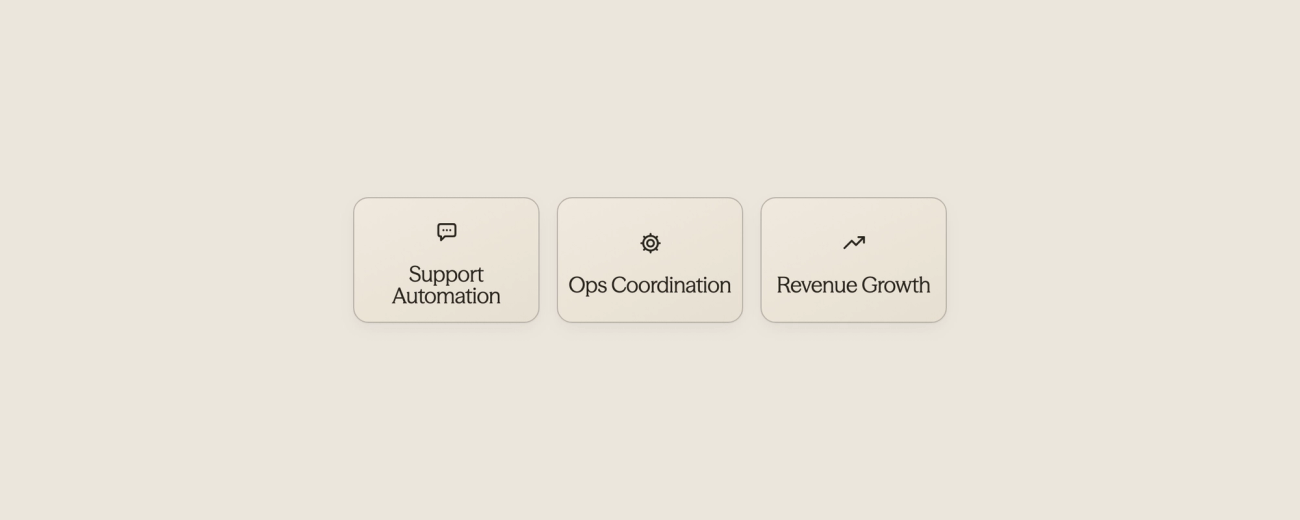
💡 Strategic Insight: Modern hospitality AI transforms from a cost center solving problems to a profit driver that anticipates needs and creates new revenue opportunities through intelligent guest engagement.
Why should hotels focus on revenue generation over cost reduction?
The first wave of hospitality AI focused on efficiency: answering more questions, reducing response times, and freeing up staff capacity.
Industry analysis from HotelsHR shows AI can reduce operational costs by up to 30%, a significant advantage as labor expenses rise. Leading operators, however, treat AI as a revenue driver rather than a cost-cutting tool. They deploy conversational AI to identify upsell opportunities, promote additional services, and convert inquiries into bookings without expanding their sales team.
How does AI transform guest requests into revenue opportunities?
When a guest asks about early check-in, older systems provide a simple answer. Modern AI platforms do more: they assess revenue opportunities, check room availability, calculate pricing, present upgrade options, process payment, and confirm the change. The conversation becomes a sale.
How does AI shift from reactive to proactive guest service?
Most guest service tools wait for problems to surface. A guest submits a request, and the system responds.
AI systems are shifting from reacting to problems to preventing them before they happen. They send messages before guests arrive, offering additional services, analyze reservation patterns to personalize suggestions, and identify potential issues (double bookings, maintenance conflicts, missing preferences) before guests notice.
What results can hotels expect from proactive engagement?
This approach increases guest satisfaction scores by 25%, according to hospitality studies on AI-driven personalization. Guests feel the hotel understands their preferences rather than treating them as anonymous customers, while hotels capture revenue that standard support interactions would miss.
Platforms like AI for hospitality handle repetitive questions automatically, identify upgrades, promote add-ons, and coordinate internal workflows. Conduit AI initiates conversations, suggests options, and completes tasks rather than simply responding.
Cross-functional coordination beyond the front desk
Support automation handles guest-facing conversations, but most operational friction occurs internally: coordinating housekeeping schedules, maintenance requests, inventory updates, and inter-departmental handoffs.
When a guest reports a maintenance issue, AI logs the request, assigns it to the appropriate team, updates the housekeeping schedule to avoid that room, notifies the front desk, and tracks resolution. This operational orchestration saves more time than the guest conversation itself.
Most hospitality leaders still view AI as a guest communication tool rather than an operational backbone. This is changing as properties realize backend coordination often consumes more staff time than conversations themselves.
How Conduit Helps Hospitality Teams Automate Service and Unlock Revenue
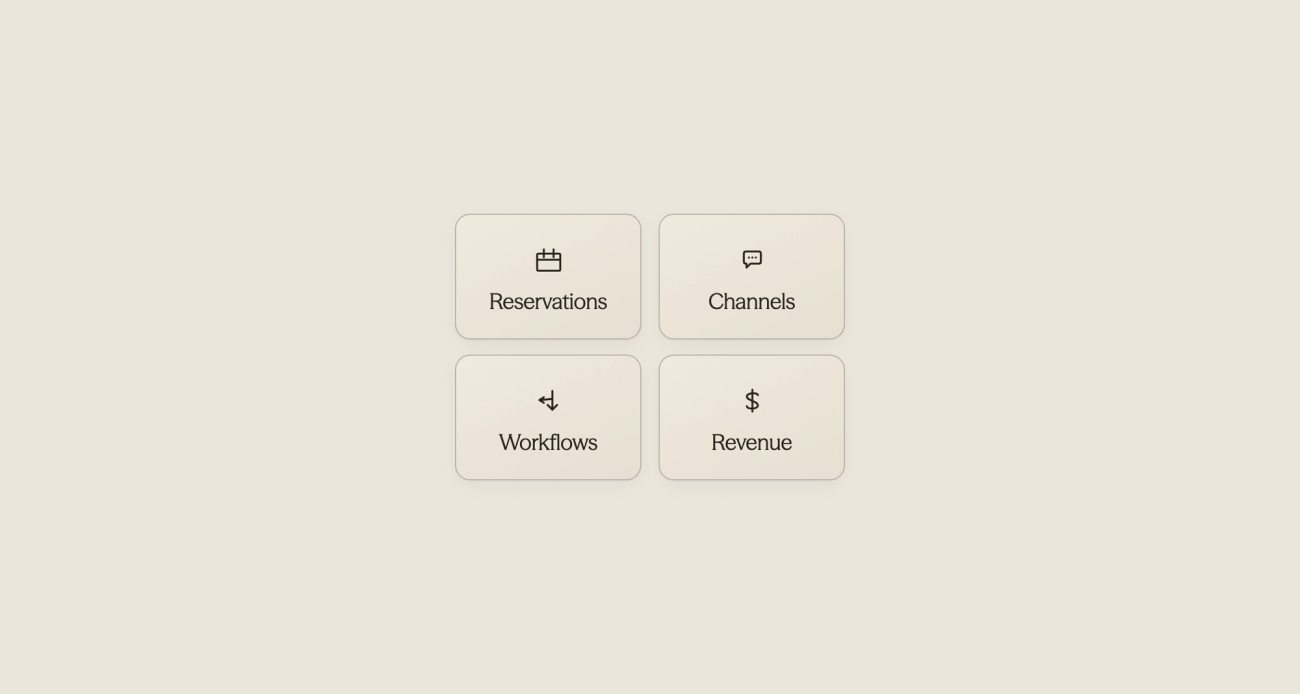
Conduit connects guest-facing communication with backend workflows, automating service delivery while capturing revenue opportunities that manual processes miss. Rather than layering AI onto existing systems, Conduit serves as the operational backbone linking reservations, guest preferences, team workflows, and upselling triggers into a unified experience.
🎯 Key Point: Conduit doesn't just add automation—it fundamentally transforms how hospitality teams operate by creating seamless connections between guest communication and operational execution.
"Unified operational systems that connect guest preferences with backend workflows can capture revenue opportunities that fragmented manual processes consistently miss." — Hospitality Technology Integration Report, 2024
💡 Best Practice: The most effective hospitality automation solutions serve as the central nervous system of operations, ensuring that every guest interaction triggers the appropriate workflow responses and revenue capture mechanisms.
Context-Aware Communication That Completes Tasks
Most chatbots give generic responses because they lack access to real booking data. Conduit connects directly with property management systems to retrieve reservation details, guest history, and real-time availability.
When a guest asks to extend their stay, the platform checks availability, calculates pricing, shows options, and processes the change if approved—all in a single conversation. This eliminates the friction that causes guests to abandon requests or forces staff to manually coordinate across systems.
Multi-Channel Consistency Without Team Overhead
Guests initiate conversations through email, text messages, OTA messaging platforms, web chat, and social media. Managing these separately causes information loss and duplicated work. Conduit maintains conversations across channels, so a discussion that starts via text can continue via email without guests repeating information or staff having to search for earlier messages.
This reduces response time, ensures guests receive correct answers regardless of communication method, and allows teams to spend less time switching between platforms.
Proactive Revenue Generation Through Lifecycle Triggers
The biggest revenue opportunity isn't answering incoming questions—it's starting the right conversation at the right time. Conduit uses booking events, check-in timing, purchase history, and guest behavior to trigger proactive outreach.
A guest checking in for a weekend stay receives an automated message about available room upgrades. Someone booking during peak season receives early offers for spa services or dining reservations. According to Host Genius, a 17-market hospitality business automated these interactions to grow revenue without adding sales staff, identifying opportunities and completing transactions through personalized offers based on guest data.
How does automated workflow routing improve team coordination?
Guest requests create work tasks across different departments: maintenance issues go to engineering, housekeeping requests update schedules, and billing questions go to accounting. Conduit automates these handoffs, sending requests to the right teams, updating schedules, and tracking resolution. Staff receive alerts containing all necessary information, reducing coordination time and ensuring nothing is missed during shift changes or busy periods.
What role does human oversight play in automated systems?
The platform keeps humans in charge when it counts. Important decisions, unusual requests, and guest escalations go to staff who can see the full conversation history and relevant system data.
Teams retain control while automation handles repetitive coordination tasks that previously consumed hours each day. Properties can scale without losing the judgment and personalization that define hospitality.
But seeing how this works in practice reveals something most operators miss when putting it into action.
Book a Demo to See Conduit's AI for Hospitality Customer Service in Action
The most valuable property management AI tools reduce support tickets while improving guest experiences, streamlining operations, and generating additional revenue. Real change depends on how well the system integrates with your existing workflows and how intelligently it routes tasks to the right team member.
💡 Tip: The best AI implementations integrate seamlessly with your current hospitality stack rather than requiring complete system overhauls.
"Properties that leverage AI for guest support see significant improvements in operational efficiency while maintaining the personal touch that creates memorable stays."
Book a demo with Conduit to see how our AI connects to your hospitality stack, automates guest support across channels, identifies revenue opportunities, and routes operational tasks with the context your team needs. Properties that grow without burning out their teams let automation handle predictable coordination so their people can focus on what creates memorable stays.
🎯 Key Point: Smart automation doesn't replace your team—it empowers them to focus on high-value guest interactions that drive loyalty and revenue.
Related Reading
- Airbnb Automated Messages
- Best AI for Hotels
- AI Software For Hotels with the Best Reviews
- Hijiffy Pricing
- Enso Connect Pricing
- Duve Pricing
- Airbnb Automation Tools
- Hotel Automation Software
Stay in the loop
Get the latest on AI automation, product updates, and customer stories.

