19 Best Apps for Short Term Rentals in 2026


Apps for Short Term Rentals
Best apps for short term rentals in 2026
Most operators pick apps to win more bookings. The ones actually making money picked apps to handle what happens after the booking lands.
Picking the right app for a short-term rental business sounds straightforward until you realize most operators are solving the wrong problem. The instinct is to chase distribution: more channels, more listings, more eyeballs on your properties. For a solo host managing two or three units, that logic holds.
For an operator running ten or more properties, it quietly leads you toward a ceiling you never see coming. The best apps for short-term rentals split cleanly into two jobs: finding and booking a stay (the guest side) and running the operation behind it (the host side). Those are not the same job, and the tools that win at one rarely win at the other.
See our AI for hospitality for how this works in practice. Across the market, multi-channel listing is now standard practice at that scale, which means distribution breadth is table stakes, not a differentiator.
The real gap opens in the post-booking layer: guest messaging, check-in coordination, maintenance requests, and the dozens of routine inquiries that land across every channel simultaneously. That is where profitability either compounds or quietly bleeds out. What most teams report bears this out: the average guest response time across short-term rentals is 57 minutes. That same research found that fast response times can boost bookings by 116%.
Every hour a guest waits is an hour they spend reconsidering, switching platforms, or canceling outright. For operators managing 20 or 30 properties, that erosion compounds across every booking, every week. Most vacation rental property managers and operations leads believe the only way to maintain quality guest communication at scale is to hire more people or accept slower response times, that the human-in-the-middle is a permanent, irreplaceable fixture of the operation.
Anyone who has tried it knows the ceiling does not move much. The majority of guest messages are repetitive, low-value inquiries: early check-in requests, Wi-Fi passwords, parking instructions. The bottleneck is structural, not a headcount problem.
"We're listing on multiple platforms and taking direct bookings, but still losing money because high platform fees are eating into our margins. It's a distribution-first mindset that ignores total cost structure."
116% Booking boost from fast response times
57 minutes Average guest response time across short-term rentals
Key takeaways
- Chasing more listing channels is the right move for a solo host, and a slow ceiling for anyone managing 10+ properties.
- The real operational split happens after the booking: distribution fills the calendar, but guest communication, turnover coordination, pricing, and access control each need their own dedicated layer.
- A 35-property operator hit 96% guest communication automation and sub-1-minute response times, not by hiring more staff, but by adding the right AI layer on top of an existing stack.
- Most STR app roundups rank tools by channel reach; the features that actually predict profitability sit one level deeper, in operational depth: automated messaging, dynamic pricing logic, and noise compliance.
- Response time benchmarks in hospitality sit around 57 minutes industry-wide, a gap that costs operators reviews, repeat bookings, and platform ranking.
- Cleaning, smart locks, and noise monitoring are not problems a PMS was built to solve; top-quartile operators treat each as a separate stack layer with a dedicated tool.
- conduit.ai's AI Agents close the post-booking communication gap by reading directly from a host's own SOPs, manuals, and FAQs to answer guests accurately across every channel, no human intervention required, around the clock.
What Are the Best Apps for Guests Booking Short-Term Rentals?
Most hosts who expand beyond a single platform discover the same problem in the same order: they solve distribution first, then get blindsided by communication. An inquiry sits unanswered long enough to trigger a late-response penalty, a frustrated inquiry, or a booking that quietly goes elsewhere.
Distribution without communication infrastructure does not multiply revenue, it multiplies exposure to the exact failure points that damage search ranking and review scores simultaneously. The best apps for guests booking short-term rentals depend almost entirely on trip type, not platform size. A family of six pricing out lake cabins faces a completely different decision than an international business traveler hunting a city-center apartment in a country they've never visited.
Defaulting to the biggest brand name often means paying more in fees or scrolling past irrelevant inventory. Airbnb charges guest service fees that can reach into the double digits of the booking subtotal, plus an intercurrency charge added in 2024 for international bookings, per its own fee documentation. Booking.com and Expedia properties carry their own fee structures, changing the long-term math for frequent travelers who book whole homes.
That fee gap and rewards structure are why experienced travelers comparison-shop rather than defaulting to one app. The six entries below map each platform to the scenario where it actually wins. The synthesis claim this guide is built on: Distribution platforms fill the calendar, but operators who solve only the distribution question while neglecting communication speed will find their hard-won listing placement actively undermined by the operational layer they ignored, because Vrbo is moving toward surfacing response-time metrics to prospective guests, and Airbnb's ranking algorithm already ties fee transparency to search visibility, meaning slow human-handled responses are becoming a measurable public liability, not merely a guest-experience inconvenience.
1. Conduit.ai - Best for AI-Powered Guest Communication in Short-Term Rentals
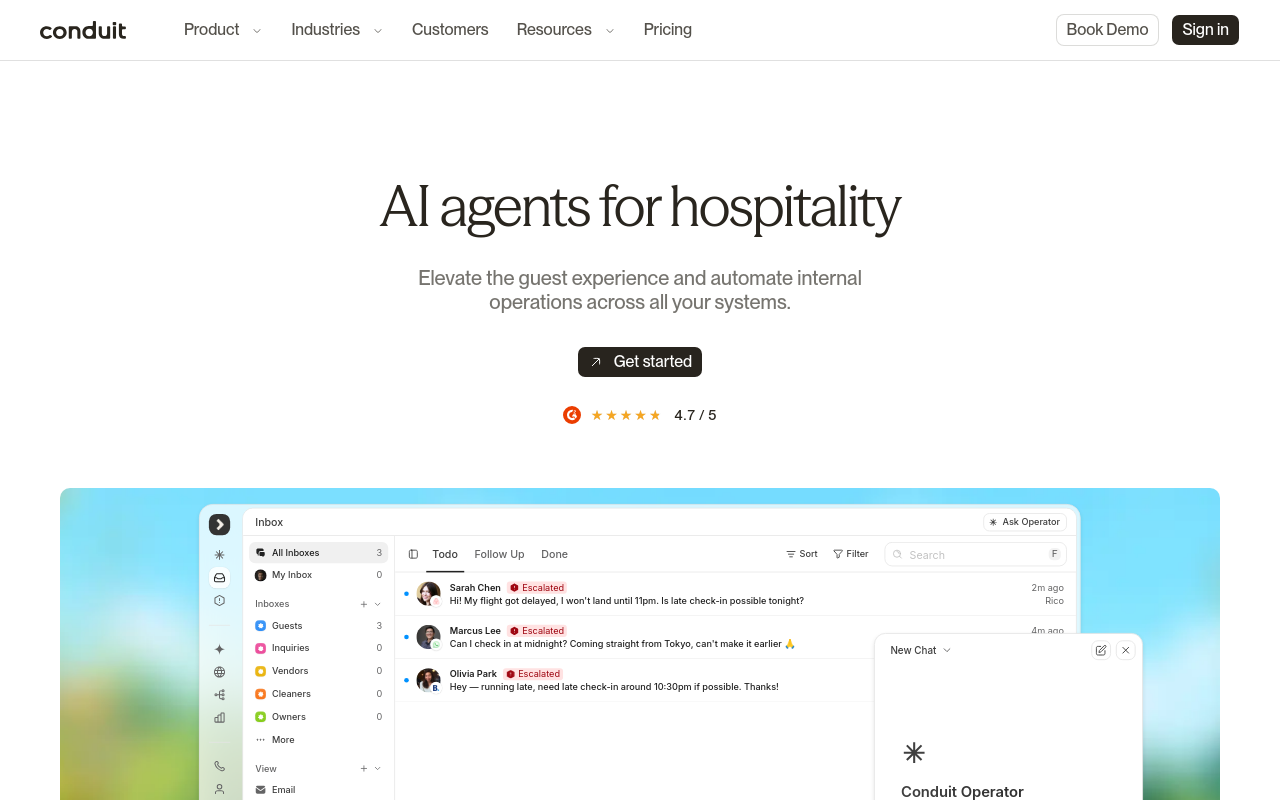
Guests encounter Conduit not as a booking marketplace but as the reason a host's responses feel instant and accurate at any hour. AI for hospitality trained on a property's own SOPs and FAQs means check-in instructions, pet policies, and local recommendations arrive in under two minutes. The tradeoff: Conduit delivers the most value when a host manages high inquiry volume and has existing documentation to train the agent on; it is not a standalone booking channel.
2. Airbnb - Best All-Around Marketplace for Global Short-Term Rental Discovery
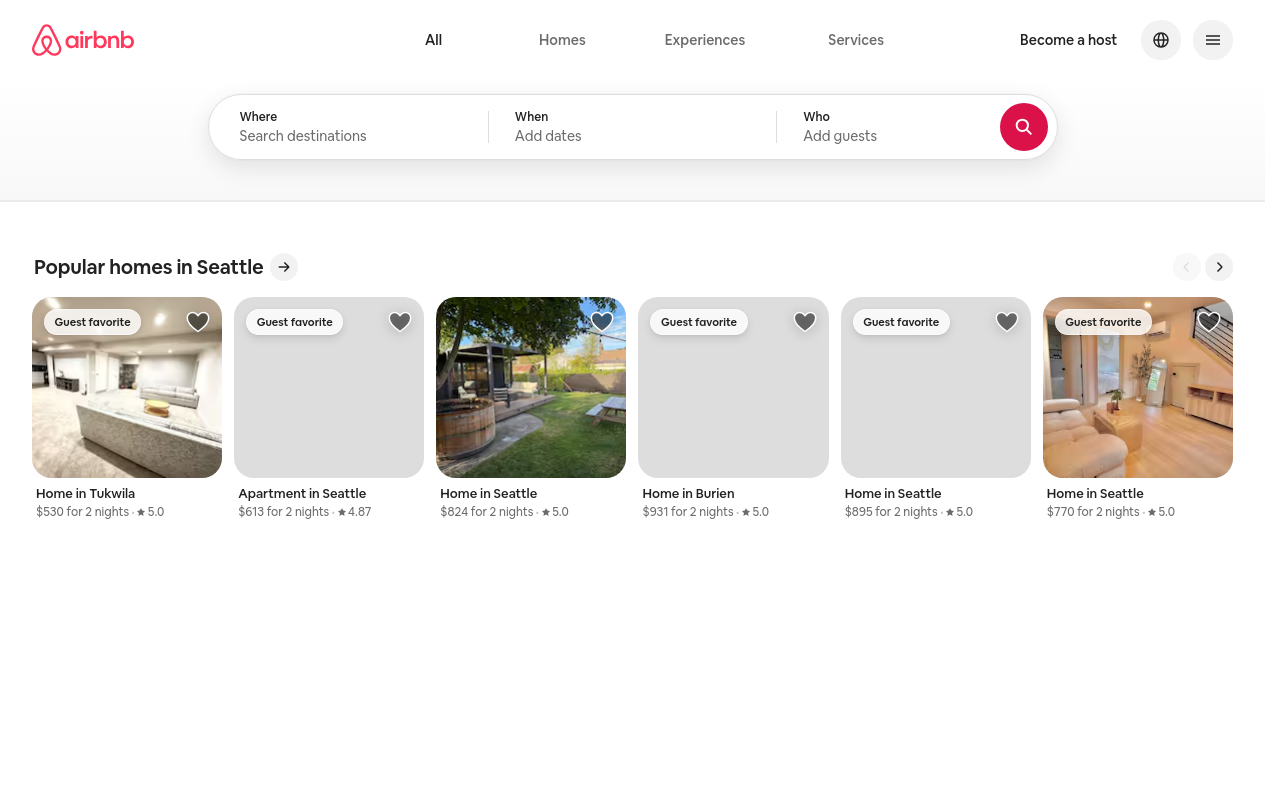
Airbnb is the right starting point for travelers who prioritize variety, unique stays, and urban apartments across 100,000-plus cities worldwide. The real limitation is cost transparency: guest service fees that can reach into the double digits, plus the 2024 intercurrency surcharge for cross-border bookings, can push total checkout prices noticeably above competing platforms for the same property.
3. Vrbo - Best for Whole-Home Family and Group Rentals with Lower Fees
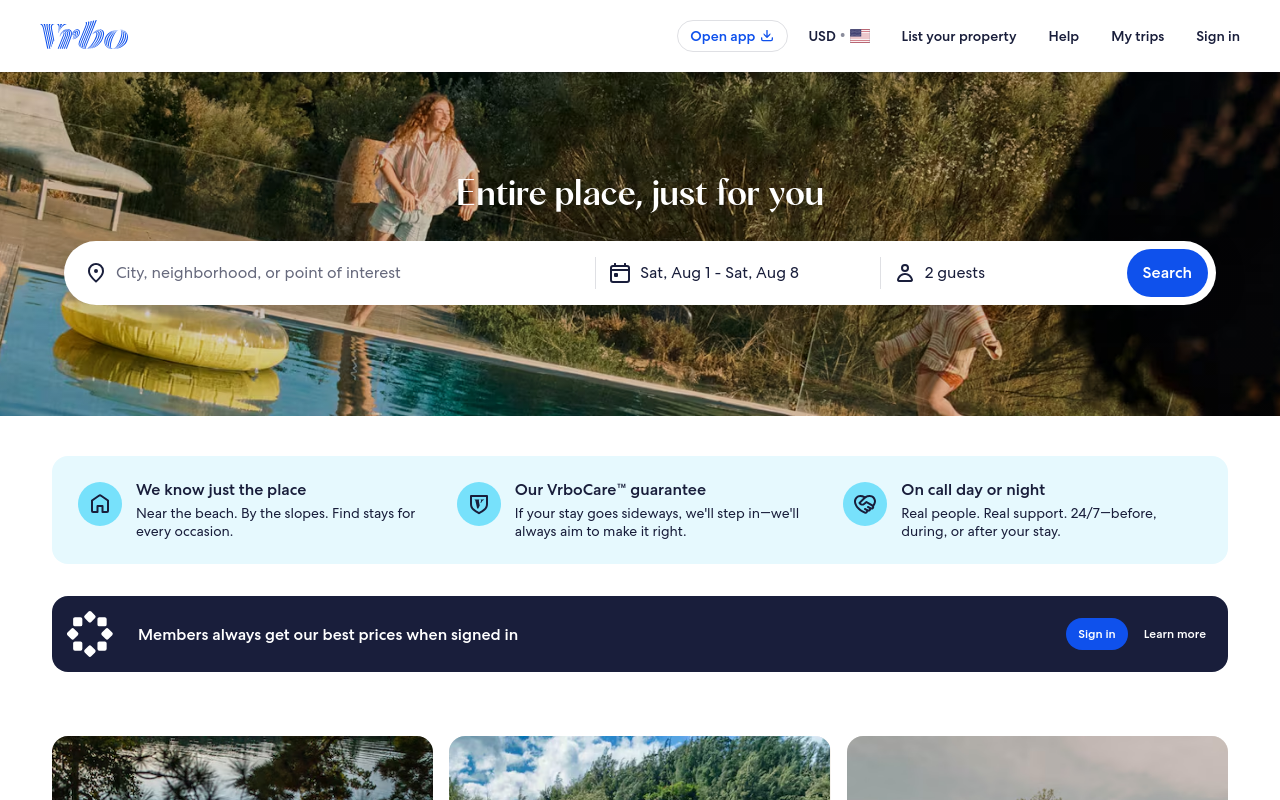
Vrbo lists only entire homes, making it the cleaner search experience for families who need multiple bedrooms and private outdoor space. The One Key rewards program adds meaningful long-term value for repeat bookers. The tradeoff is inventory depth in dense urban markets, where Airbnb's shared-space listings outnumber Vrbo's whole-home supply, making Vrbo a poor fit for solo city travelers.
4. HomeToGo - Best Vacation Rental Aggregator for Comparing Prices Across Platforms
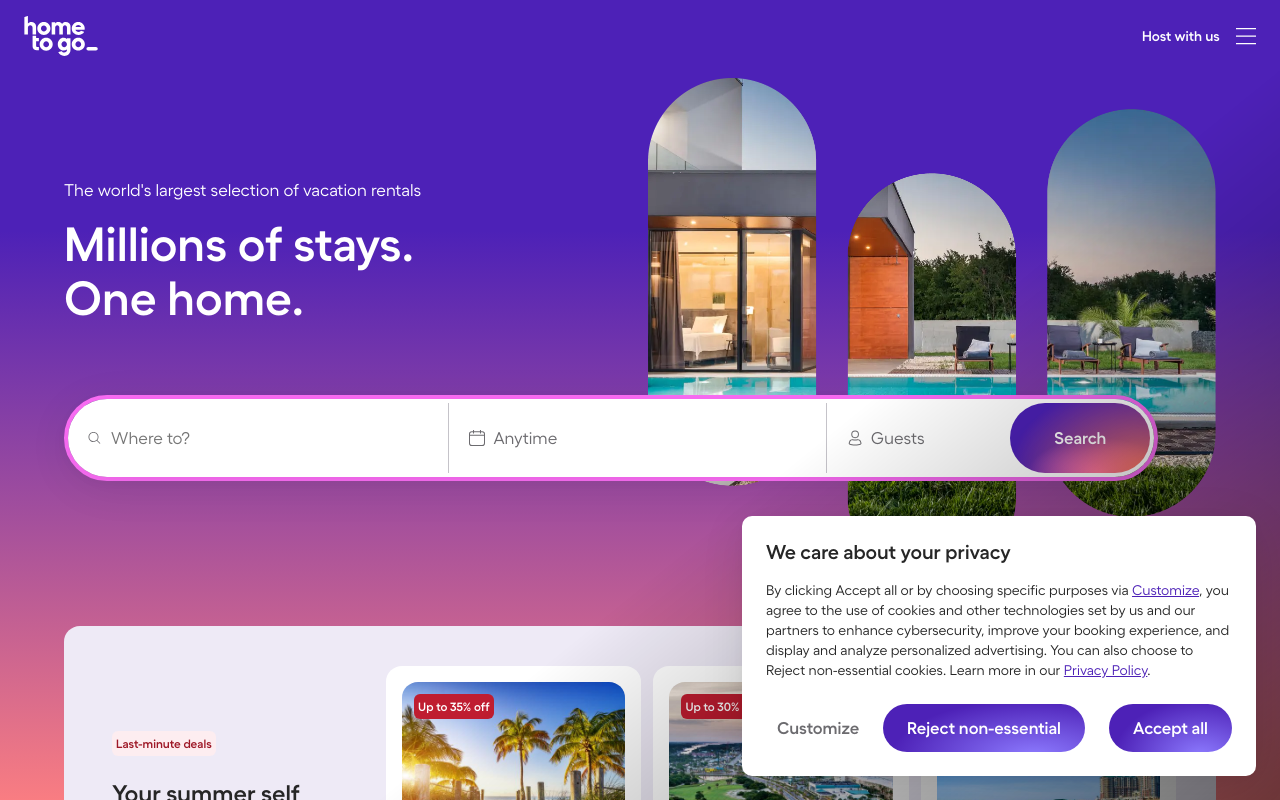
HomeToGo aggregates listings from Vrbo, Booking.com, and dozens of other platforms into a single price-comparison interface, a scale that independent testing by The Points Guy confirmed covers a broader range of rental sources than any single OTA, making it a strong first stop for guests who want broad market visibility before committing to one channel. It does not process bookings itself, so guests land on the originating platform to complete the reservation, an extra step, but the upfront price visibility is worth it for longer or higher-cost stays.
5. Glamping Hub - Best Niche App for Unique and Outdoor Short-Term Stays
Glamping Hub specializes in distinctive outdoor accommodations, treehouses, yurts, safari tents, cabins, and eco-lodges, that mainstream platforms list inconsistently. For guests seeking a memorable, nature-immersive short-term rental rather than a standard apartment or house, it's the most curated option available. It's especially well-suited for couples and experience-driven travelers. The limitation is narrow: inventory is geographically uneven and won't serve guests looking for urban or standard residential rentals.
6. Cozycozy - Best Meta-Search App for Finding Short-Term Rentals and Hotels Together
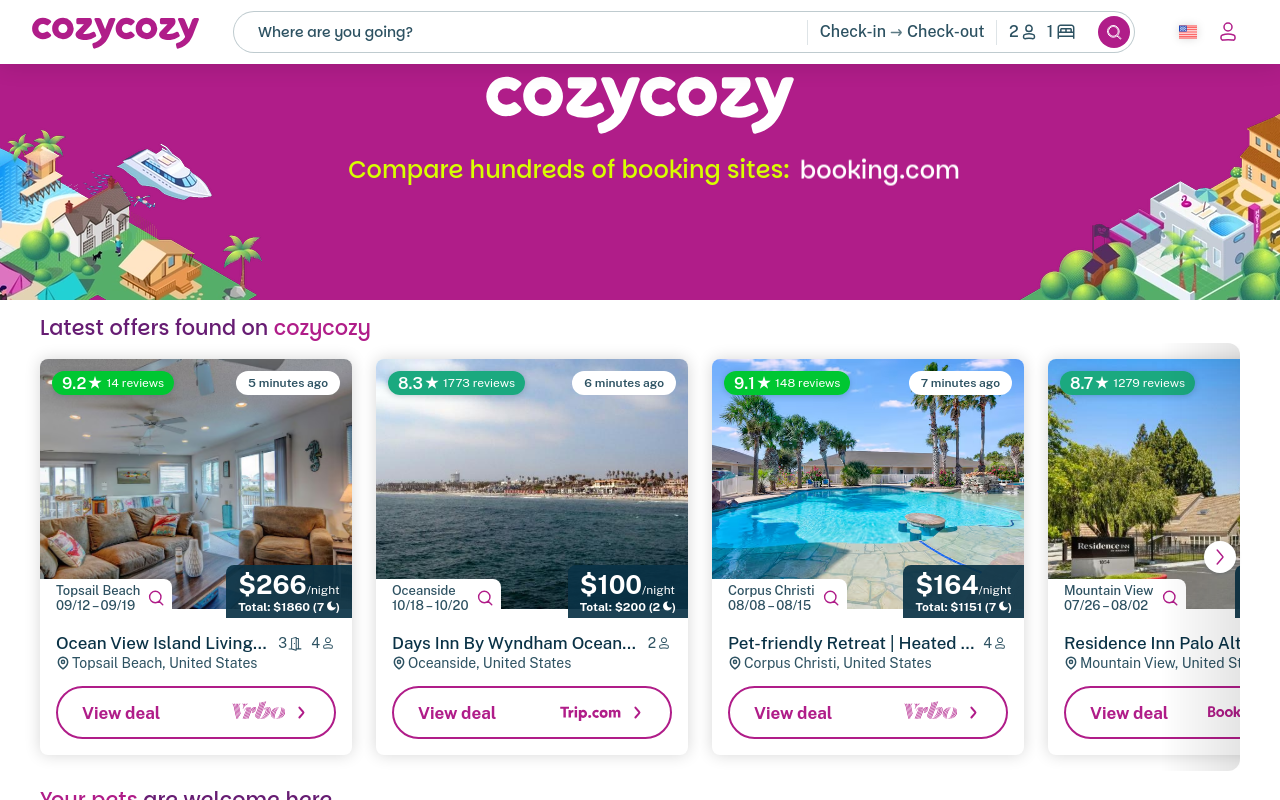
Cozycozy functions as a meta-search engine that pulls vacation rentals, Airbnb listings, B&Bs, and hotels into one unified search, giving guests a rare apples-to-apples comparison between STR and traditional accommodation options. It claims savings of up to 45% by surfacing deals across providers simultaneously. It's the right pick for flexible travelers who haven't committed to a rental-only stay. The tradeoff: like all aggregators, it redirects to external booking pages, which can create friction at checkout.
What Are the Best Apps for Hosts Managing Short-Term Rental Properties?
The best apps for hosts managing short-term rental properties are not determined by how many platforms they connect to. They are determined by what stage of operational complexity you are running. A solo host with two listings needs something different from an operator managing 30 properties across three markets.
The right tool is the one that matches where your operation actually is, not where you hope it will be. Channel reach is table stakes by 2026.
The real performance gap between operators at the same portfolio size comes from what the app does after the booking lands: how it handles guest messaging, coordinates turnovers, adjusts pricing in real time, and reduces the manual labor that quietly erodes margin. Evaluating apps purely on listing reach causes operators to overlook the operational depth that actually determines profitability at scale.
1. Conduit.ai - Best AI Guest Communication Tool for Short-Term Rental Hosts
Conduit is purpose-built AI for hospitality operators, not a repurposed generic chatbot. It automates guest interactions across channels, handles routine inquiries, and supports revenue optimization for vacation rental managers, boutique hotels, and property management companies. It's the right pick for hosts who want enterprise-grade guest communication without hiring more staff. The tradeoff: it's best suited for operators managing multiple properties rather than solo hosts with a single listing.
2. Hostaway - Best All-in-One Channel Manager and PMS for Scaling Hosts
Hostaway earns the top slot for operators managing 10 to 50 properties who want a single platform that handles channel sync, automated messaging, and reporting without stitching together separate tools. With over 1,578 verified reviews on Capterra, one of the highest review counts among short-term rental PMS platforms listed there as of Q1 2025, it is one of the most widely adopted options in the space. The tradeoff: the feature depth that makes Hostaway powerful for a 20-property operator can feel like overkill for a solo host who just wants clean calendar sync and a mobile inbox.
3. Guesty - Best Enterprise-Grade PMS with AI-Assisted Management Features
Guesty is built for operators running 50-plus units who need multi-brand support, advanced reporting, and enterprise-level integrations. Its AI-assisted features reduce manual work on guest communication and task assignment. The honest limitation is cost: Guesty's per-unit pricing makes it expensive for smaller operators, and the onboarding curve is steeper than most mid-size teams want to absorb. It is the right call when portfolio complexity justifies the investment, and the wrong call when it does not.
4. PriceLabs - Best Dynamic Pricing App for Maximizing Short-Term Rental Revenue
PriceLabs adjusts nightly rates automatically based on demand signals, local events, competitor data, and seasonality. From our market understanding, hosts using dynamic pricing tools see meaningful revenue lifts compared to static rate strategies. It connects to most major PMS platforms without requiring developer support. The tradeoff worth knowing: operators with fewer than five properties or highly irregular booking patterns may find the initial setup investment outweighs the early gains. It earns its place in the stack once the portfolio has enough booking history to train the algorithm on.
5. Turno - Best Automated Cleaning and Turnover Coordination App for Vacation Rentals
Turno (formerly TurnoverBnB) automates turnover scheduling, connects hosts to a marketplace of vetted cleaners, and sends photo-verified completion reports so the host does not need to chase confirmation before the next guest arrives. Hosts across short-term rental communities describe missed cleans and cleaner no-shows as among the most damaging operational failures they face, and Turno's marketplace depth addresses that supply risk directly. The limitation: it works best in markets with sufficient cleaner supply on the platform.
In rural or low-density areas, the marketplace option thins out. Most operators assume that once a PMS and channel manager are in place, guest communication is handled. The inbox tells a different story: pre-arrival questions, mid-stay requests, and late-night issues keep arriving, and no PMS was built to resolve them without a human in the loop.
Hospitality AI built for operators like Conduit closes that gap by deploying AI agents trained directly on the operator's own SOPs and FAQs, responding across every channel without human intervention. The benefit materializes most clearly when the business receives high volumes of repetitive guest messages and already has documentation to train the agent on, turning what was a staffing cost into a 24/7 guest communication layer that scales with the portfolio. A PMS, a pricing engine, and an AI communication layer cover the demand and booking side of the stack, and there is a distinct set of operational support apps built specifically for that job.
Related Reading
- Vacation Rental Automation
- Best Pms For Airbnb
- Best Pms For Short Term Rentals
- Best Accounting Software For Short Term Rentals
- How To Manage A Vacation Rental Property
- Vrbo Smart Pricing
- How To Automate Airbnb Business
- Airbnb Self Check In
- Vrbo Management
What Operational Support Apps Do Hosts Need (Cleaning, Pricing, Noise Monitoring, Smart Locks)?
Cleanliness, noise compliance, and keyless entry that holds up at 2 a.m. are not problems a PMS, a pricing engine, or an AI communication layer were built to solve. Operators consistently clearing top-quartile RevPAR numbers have already accepted that turnover, access control, and on-property compliance each deserve their own dedicated layer, and they have assembled their stacks accordingly. Here is what that stack looks like in practice.
1. Conduit.ai - Best AI Guest Communication & Automation for STR Operators
Conduit is purpose-built AI for hospitality, not a repurposed generic chatbot. It automates guest messaging, handles inquiries around the clock, and helps property managers improve revenue through smarter interactions. Ideal for vacation rental managers and multi-property operators who need to scale without adding headcount. The main tradeoff: it's focused on communication and guest experience rather than pricing or physical operations like locks or cleaning.
2. PriceLabs - Best Dynamic Pricing Engine for Data-Driven STR Revenue Management
PriceLabs is the leading app for dynamic pricing optimization, automatically adjusting nightly rates based on demand signals, seasonality, and local competitor data across your entire portfolio. It earns its place as a standalone specialist layer because a PMS rate calendar simply cannot process the same volume of real-time market inputs. Operators who want to go deeper into performance benchmarking can use the PriceLabs Revenue Reports alongside portfolio-level rate strategy resources to calibrate base rates and minimum prices with market evidence rather than guesswork. The real tradeoff: PriceLabs requires an initial calibration period to set minimum prices and base rates accurately, and operators who skip that setup often undercut their own revenue floor.
3. Turno - Best Cleaning Automation & Turnover Scheduling App for Airbnb Hosts
Turno (formerly TurnoverBnB) solves the property turnover management problem that breaks most growing portfolios: coordinating cleaners across dozens of checkouts without a full-time logistics coordinator. It auto-schedules cleaners from a vetted marketplace the moment a booking confirms, syncs with your PMS calendar, and handles payment automatically. It is most beneficial when you manage five or more properties with variable checkout times, precisely because this is the growth stage where turnover coordination starts consuming disproportionate staff hours and blocking the rapid portfolio expansion operators are targeting. The limitation is real: if you already have a locked-in cleaning crew with their own scheduling system, the marketplace feature adds less incremental value.
4. Minut - Best Noise Monitoring & Guest Behavior Sensor for STR Properties
Minut monitors decibel levels, occupancy, and cigarette smoke without recording audio, making it the compliance-friendly choice for urban properties operating under strict local ordinances. A host using Minut can detect a noise event and trigger an automated guest message before a neighbor complaint ever reaches the city. Noise monitoring devices meaningfully reduce party-related damage claims and neighbor disputes for operators in dense residential areas. The tradeoff: Minut's value is highest in urban or HOA-governed properties; rural listings with no noise ordinance risk may find the per-property subscription harder to justify.
5. RemoteLock - Best Smart Lock & Keyless Access Control Platform for Vacation Rentals
RemoteLock generates unique, time-limited access codes for each guest booking and syncs directly with most major PMS platforms, eliminating physical key handoffs entirely. Keyless entry is now a baseline guest expectation, not a premium feature, and RemoteLock is the right pick when you manage properties across multiple locations and need centralized access control without on-site staff. The honest limitation: hardware costs and installation require upfront investment per door, which can slow ROI for operators with smaller portfolios.
The four tools above cover pricing intelligence, turnover logistics, noise compliance, and access control, each solving a problem the PMS couldn't. Operators who run all four in an integrated stack see the tools compound in value rather than operate in parallel silos. But there is a pattern worth naming: operators who invest in this entire operational layer often discover that the remaining bottleneck is guest communication volume.
Every booking confirmation, check-in instruction, noise alert follow-up, and post-stay review request still lands in an inbox that requires a human to open and answer, and that labor cost scales directly with portfolio size. AI closes the loop. AI Agents are most beneficial when the business receives a high volume of repetitive guest or customer messages and has existing documentation, SOPs, FAQs, property manuals, to train the agent on.
The operator or ops lead sets the rules; no IT involvement is needed. Once connected to your existing documentation, the agent begins handling guest replies automatically, and its Workflows trigger outbound touchpoints after a booking is confirmed, after check-in, or when a specific keyword is detected in a conversation, replacing the recurring manual staff actions that accumulate across a growing portfolio. The Inbox gives the operations or support team a single place to monitor, review, and manage every conversation the AI agent is handling across all properties and platforms simultaneously.
For operators already using tools like Notion, Google Drive, or Airbnb, the Integrations layer lets the AI agent draw on that existing content without manual re-entry. Tools like Breezeway can also feed property-specific task and maintenance documentation directly into that knowledge base, keeping the agent's responses accurate as property details change. The practical result: portfolio expansion no longer requires proportional growth in support headcount, and the operational overhead tied to a centralized reservations or guest services team meaningfully decreases.
The App Most STR Roundups Miss - AI Guest Communication at Scale: App #19 on This List, #1 by ROI
At some point in every growing STR operation, the calendar stops being the problem. You have bookings. What you don't have is a scalable way to handle everything that happens after the confirmation email lands.
The industry benchmark for guest inquiry response time sits at roughly 57 minutes, according to industry research. That number is not a staffing failure. It is the structural output of a model where human availability caps throughput.
A guest messages at 11 PM about a keypad that won't read their code. Someone scrambles to respond before the review window tightens. That cycle repeats across every property, every week, compounding into review risk, NOI drag, and a headcount ceiling that makes the next 10 properties feel like a liability instead of an asset.
Here is the insight most operators miss: if you have been running a multi-property STR operation for more than two years, you have almost certainly already done the hardest part of AI implementation. You converted institutional knowledge into structured message sequences with defined triggers, check-in instructions, house rules, parking details, late checkout policies. That library of templates is machine-executable logic waiting for a faster engine.
Adding an AI communication layer is a translation exercise, not a rebuild. Operators still paying human labor costs to run that process are paying a premium to execute something structurally identical to what a trained AI system handles at a fraction of the cost per touchpoint. That distinction matters when you look at what operators running hospitality AI are actually reporting.
Cash Flow Street hit a high rate of guest communication automation with responses delivered within one minute, around the clock. Easy BnB significantly expanded its portfolio and achieved substantial monthly savings without hiring additional team members. Wynwood House meaningfully cut guest resolution time after deploying an AI communication layer.
These are production operations compounding a structural cost advantage over every competitor still running manual coverage. The ROI case is strongest when two conditions are true: the business receives high volumes of repetitive guest inquiries, and existing documentation, SOPs, FAQs, check-in manuals, is already in place to train the agent. For an operator at 15 units and growing, the ceiling is already visible.
1. Conduit.ai - Best AI Guest Communication Platform for STR Operators at Scale
Conduit.ai earns the top slot for operators managing 10 or more properties who already have SOPs and FAQs in place, because it reads directly from that documentation to resolve guest inquiries autonomously across every channel, 24/7, without requiring a human in the loop for routine messages. The documented automation gains at Cash Flow Street and the substantial monthly savings at Easy BnB are the proof points that matter. The honest tradeoff: operators without structured documentation will need to build that foundation first, so setup is not instant.
2. Enso Connect - Best Digital Guest Experience Platform for Upsell-Focused STR Managers
Enso Connect is the right pick for operators whose primary goal is monetizing the guest journey through upsells, digital guidebooks, and branded guest portals rather than pure communication automation. For operators who want incremental revenue per stay through add-ons and late-checkout offers, Enso Connect fits that objective well. Its AI messaging depth is narrower than purpose-built communication platforms, so operators prioritizing autonomous inquiry resolution at scale may find it underpowered for that job.
Hospitable, Best Automated Messaging Tool for Independent STR Hosts Scaling to Small Portfolios. Hospitable is a strong entry point for independent hosts managing one to ten properties who want rule-based automated messaging without a steep learning curve or enterprise pricing.
3. Hospitable - Best Automated Messaging Tool for Independent STR Hosts Scaling to Small Portfolios
Hospitable is a widely adopted automated messaging and channel management tool built for independent Airbnb and VRBO hosts who want reliable, rule-based communication without heavy configuration. It handles pre-arrival, mid-stay, and post-checkout sequences efficiently. The key limitation for growing operators: its AI layer is less contextually adaptive than purpose-built hospitality AI platforms, making it less effective as portfolio complexity increases beyond a handful of listings.
Key Features to Look for in Short-Term Rental Apps: and the Criteria That Actually Predict Profitability
Choosing the right short-term rental app is a framework problem. Most operators start by counting channel connections, then realize too late that channel reach is the entry fee, not the differentiator. The features that separate a profitable portfolio from a busy one live one layer deeper.
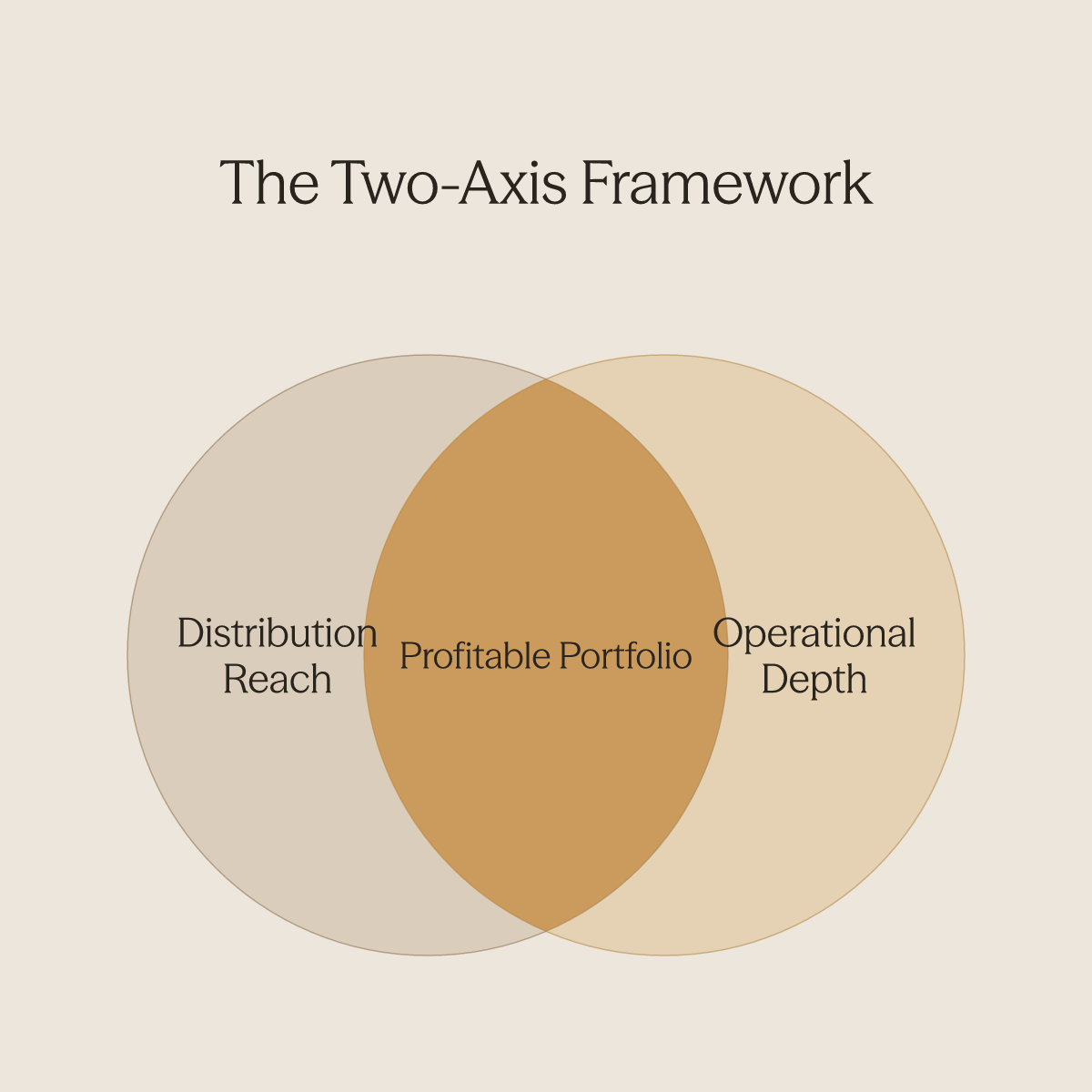
The Two-Axis Evaluation Framework - Distribution Reach vs. Operational Depth
Score every app on two axes. Distribution reach measures how many booking platforms it connects to and how large the traveler audience is. Operational depth measures automation rule sophistication, AI-driven response speed, API openness, and dynamic pricing connectivity.
An app that scores high on reach but low on depth fills your calendar while quietly eroding margin on every booking, a dynamic consistently reported by operators who prioritize distribution reach over operational depth. Operational depth is also where the AI-first argument becomes concrete. As Darren, Founder of Easy BnB / Bali Luxury Stays, puts it: "We all agree that AI first is the best approach."
That is not a branding preference; it is a structural one. When an AI agent handles repetitive guest messages continuously, before and after a stay, the operations team stops being the bottleneck and starts being the exception handler.
The Non-Negotiable Feature Checklist
Five features belong on every evaluation checklist. Channel connectivity prevents double bookings across Airbnb, Vrbo, and direct. Dynamic pricing integration (via tools like PriceLabs) captures demand spikes automatically.
Automation rules handle check-in sequences, review requests, and maintenance triggers without staff involvement. API openness determines whether the app fits your existing stack or forces a rebuild.
Ai's approach to automation rules is worth understanding here. The first custom rule that changes how the AI agent responds can be live the same day. More importantly, those rules fire after a trigger event in a conversation or guest lifecycle, after a booking is confirmed, after check-in, or when a specific keyword is detected, which means the workflow runs on guest behavior, not on staff memory.
For operators whose businesses currently depend on an owner or manager being present and responsive at all hours, this directly addresses one of the hardest scaling problems in short-term rentals: building a systemized, scalable operation that does not depend entirely on owner involvement. One invisible cost that belongs on this checklist but rarely appears: time-tracking discipline. STR owners who manage tasks across spreadsheets and handwritten notes routinely fail to document hours accurately, a gap with real tax consequences, particularly for operators relying on IRS material participation thresholds to qualify for active loss treatment.
An app with structured automation and a unified inbox creates a documented, timestamped activity record as a byproduct of normal operations, closing that compliance gap without additional administrative effort.
Total Cost of Ownership, Not Just Listing Fees
Per-booking charges, payment processing fees, and channel manager markups stack on top of headline rates, and the real cost only becomes visible when modeled across a full year of bookings. Factor in the labor cost of every manually handled guest message and every task that slips through a spreadsheet, and the TCO calculation shifts further toward tools that automate those touchpoints by default.
Portfolio Size as the Deciding Variable
A solo host with two properties needs clean channel sync and basic automated messaging. An operator at ten properties needs automation rules, a unified inbox, and dynamic pricing. At 50-plus properties, API openness and operational depth become the ceiling on growth; without them, every new unit adds coordination overhead the team absorbs manually.
The tier that felt like overkill at five properties becomes the minimum viable tool at twenty. This is also where overnight and after-hours inquiries become a measurable revenue problem.
Handling volume over a holiday weekend requires an AI agent that operates continuously, not a staff member whose shift ends. Conduit's AI Agents are designed precisely for this: most beneficial when a business receives high volumes of repetitive guest messages, they respond to every inbound inquiry before, during, or after a stay, and they draw on existing SOPs, FAQs, and manuals, integrated directly from tools like Notion, Google Drive, or Airbnb, without requiring manual re-entry of content the team has already built. The Inbox layer sits on top of that: operations and support teams use it on an ongoing basis to monitor, review, and manage every conversation the AI agent is handling across multiple platforms or properties simultaneously.
At scale, this is what replaces the coordination overhead that otherwise grows linearly with each new property added.
Multi-Platform vs. Single-Platform Strategy
Operators listing across multiple platforms capture meaningfully higher booking volume than single-platform hosts, but the revenue gain only holds if a unified inbox and AI-driven response layer can handle the communication load that multi-platform presence generates. Without that infrastructure, the volume gain is partially offset by slower response times, missed inquiries, and guest experience inconsistency, costs that don't appear in a channel manager dashboard but show up in reviews and repeat booking rates.
Next steps
If your portfolio keeps growing but the inbox grows faster, the path forward starts with recognizing that the staffing ceiling is an architecture problem, not a headcount one. Operators who have documented their SOPs and message sequences have already done the hardest part of AI implementation. What they are actually holding is machine-executable logic waiting for a faster engine. Start with our AI for hospitality.
The 57-minute industry average response time already costs operators a documented 116% booking uplift, and that gap compounds with every property added because human cognitive load scales with portfolio size while AI response latency stays flat. At the same time, communication automation is a compounding daily operational lever that affects every booking on every platform simultaneously, which makes it a different category of decision than the one-time choice to list on a fourth channel. Those two realities together point to one obvious next step: replacing manual message routing with an AI layer trained on documentation you have already built.
Start by exploring conduit.ai to see how Conduit deploys AI agents trained on your existing SOPs and FAQs. From there, the agent handles routine guest inquiries across every channel around the clock, and your operations team shifts from answering messages to reviewing the ones that actually need a human.
Frequently Asked Questions
Do guest service fees actually differ that much between Airbnb and Vrbo?
Yes, and the gap is meaningful. Airbnb charges guest service fees that can reach into the double digits of the booking subtotal, plus an intercurrency surcharge added in 2024 for cross-border bookings. Vrbo's One Key rewards program, launched in 2023 and expanded through 2024, lets guests earn points redeemable across Vrbo, Hotels.com, and Expedia properties, which is why experienced travelers comparison-shop rather than defaulting to one platform.
Can I list my property on multiple platforms at the same time, and is it worth it?
Multi-channel listing is now standard practice for operators managing ten or more properties, meaning distribution breadth is table stakes, not a differentiator. The real risk of listing across multiple channels without the right infrastructure is that guest messages arrive simultaneously from every platform, and the post notes the average guest response time across short-term rentals is 57 minutes, which is long enough to lose bookings and damage search ranking.
What types of properties does Vrbo actually support, and where does it fall short?
Vrbo lists only entire homes, making it a strong fit for families who need multiple bedrooms and private outdoor space. It is a poor fit for solo city travelers because Airbnb's shared-space listings outnumber Vrbo's whole-home supply in dense urban markets.
How do automation and AI features actually help with guest communication at scale?
The majority of guest messages are repetitive, low-value inquiries, early check-in requests, Wi-Fi passwords, parking instructions, making the bottleneck structural rather than a headcount problem. Conduit's AI agents are trained on a property's own SOPs and FAQs and respond across every channel in under two minutes, turning what was a staffing cost into a 24/7 guest communication layer that scales with the portfolio.
Is slow response time really hurting my search ranking, or is that just a scare tactic?
It is a measurable operational liability. Airbnb's ranking algorithm already ties fee transparency to search visibility, and Vrbo is moving toward surfacing response-time metrics to prospective guests. The post also cites data showing fast response times can boost bookings by 116%, while every hour a guest waits is an hour they spend reconsidering, switching platforms, or canceling outright.
Stay in the loop
Get the latest on AI automation, product updates, and customer stories.

