15 Ways How to Automate Property Management and Save Time


Automate Property Ops
15 ways to scale without hiring.
The common assumption among vacation rental property managers and operations leads is that the only lever they have is headcount: hire more coordinators, add a VA, or spread existing staff thinner, because managing guest communication, maintenance, and leasing at scale inherently requires human judgment at every step. But the workflows most property managers run today trace back to a single-owner, single-property model. According to Hemlane's research, each property added layers on the same recurring manual touchpoints, communication, maintenance coordination, follow-ups, meaning operational burden scales linearly, not efficiently. See our AI for hospitality for how this works in practice.
A 20-property portfolio can consume over 120 hours of management time per week under that model. That's not a staffing shortage. That's a structural mismatch between the workflow's original design and the demands of a modern multi-property operation. The familiar fix is to hire a coordinator or VA to absorb the overflow. The hidden cost isn't the salary, it's what those hires are plugged into. A significant majority of guest communication is routine and repetitive: check-in instructions, Wi-Fi codes, late checkout requests, the same five questions across different listings.
Operators like Easy BnB discovered that the vast majority of their communication volume was low-value "fluff" before restructuring around an AI layer that handled the routine, freeing staff for decisions that actually required human judgment. There's a pattern that surfaces reliably around 15 to 30 properties: the team that felt manageable at 10 units starts breaking at 25. Response times slip overnight.
Maintenance tickets fall through the gaps between inboxes. Review scores dip not because the properties got worse, but because the coordination layer couldn't keep pace. The next plateau arrives at 40 units, then 60, each requiring the same structural fix that was never made.
Operators like Alloggio and Hometime didn't solve this by hiring more coordinators, they replaced the human-in-the-middle on routine communication with an AI layer purpose-built for hospitality.
Adding staff delays the wall; it doesn't remove it.
120 hours Weekly management time for 20 properties
Key takeaways
- Operators who hit 96% automation rates, like Cash Flow Street at 35 properties, aren't running hands-off businesses; they've built a structure that reserves human attention for decisions that actually require it.
- The bottleneck in most property management operations isn't headcount, it's the workflow design forcing staff to manually touch every repetitive guest, tenant, and maintenance interaction.
- Stacking five software tools without auditing your highest-burden touchpoints first doesn't reduce coordination overhead, it just distributes it across more tabs.
- Rent collection, maintenance routing, tenant screening, and guest communication aren't equally urgent to automate, sequencing matters, and the operators who scale past 50 units without proportional hiring almost always do it in the same order.
- AI agents running in production today aren't the scripted chatbots of three years ago, they handle dynamic guest conversations, flag edge cases, and escalate only when human judgment is genuinely required.
- Faster response speed isn't a hospitality nicety; it's a direct revenue line item, because inquiries that go unanswered for hours convert at a fraction of the rate of those answered in minutes.
- Conduit closes the guest communication gap specifically, its AI handles inbound inquiries, automates responses across channels, and escalates only the interactions that need a human, so operators capture revenue without adding headcount.
What Is Property Management Automation: and What It Actually Looks Like at Scale
That different operating model does not arrive automatically when you subscribe to four different software tools. It might just mean you have five different places to check before making a decision, the same coordination overhead, distributed across more tabs. That distinction is the whole game for property managers trying to scale without burning out their teams, and most operators are losing it without realizing it.
The common assumption among vacation rental property managers and operations leads is that the only lever they have is headcount: hire more coordinators, add a VA, or spread existing staff thinner, because managing guest communication, maintenance, and leasing at scale inherently requires human judgment at every step. What makes that assumption so costly is how early it starts to bite. Managing even two or three properties manually becomes messy fast, rent tracking, tenant communication, and renewals each demand separate attention with no shared layer connecting them.
By the time a portfolio reaches 50 units, manual coordination of cleaning schedules, owner communication, and review tracking stops being a background task and becomes the dominant one. The business is no longer growing; it is administrating its own growth. And past that threshold, handling guest messages, cleaning coordination, review responses, and pricing updates across multiple channels simultaneously becomes genuinely unsustainable, not because the team lacks effort, but because the model itself has a ceiling.
The Working Definition - Automation Replaces Manually Triggered, Human-Routed Tasks
Automation, in the truest operational sense, means removing the human who decides what happens next, not just the human who types the reply. According to TenantCloud's 2025 Property Management Trends Report, 83% of property managers still handle routine tasks manually despite owning property management software. The software exists, the subscription is paid, and yet someone on the team is still triaging, forwarding, and following up by hand. The goal that property managers who have crossed this threshold articulate is consistent: scale the portfolio without proportionally increasing coordination headcount. That requires a system where the routing, the response, and the follow-up happen without a human initiating each step, and where brand voice and SOPs are enforced consistently across every property and every market, not just the ones a senior coordinator happens to touch that day.
The Automation Spectrum - From Auto-Reply Templates to AI Agents
At the shallow end of the spectrum, you have scheduled messages and auto-reply templates. At the deep end, you have AI agents coordinating guests, vendors, and channels simultaneously without waiting for a human to initiate each step. The distance between those two points is not a feature upgrade; it is a structural shift. Conduit's AI Agents are most beneficial precisely when a business receives a high volume of repetitive guest or customer messages and already has documentation, SOPs, FAQs, manuals, that defines how those messages should be handled.
Once those materials are connected, the agent can deliver its first automated guest reply within days, and from that point it operates continuously: before, during, and after every stay or guest interaction, without waiting for a staff member to open the inbox. Critically, the integration layer means tools a team already relies on, Notion, Google Drive, Airbnb, feed the agent directly, so existing content does not need to be manually re-entered to train it. The instinct behind adopting an AI-first approach, rather than continuing to build custom internal tooling, reflects a hard-won operational truth: purpose-built AI will compound improvements faster than any internal patchwork, and the teams that recognize that early stop spending engineering cycles on infrastructure and redirect them toward portfolio growth instead.
The Disconnected-Systems Trap - Coordination Overhead
Industry analysis from Innowave Studio (2025) notes that operators using disconnected point solutions for leasing, maintenance, and communication create coordination overhead rather than eliminating it, because no unifying workflow layer ties them together. That coordination tax compounds invisibly until a team that thought it was automated realizes it is actually just busy in a more organized way. Conduit's Workflows address that trap directly.
They are most beneficial when a business has recurring, predictable guest touchpoints that currently require manual staff action, and they fire automatically after a trigger event occurs in a conversation or guest lifecycle: after a booking is confirmed, after check-in, or when a specific keyword is detected. The operations or support team monitors all of it through a unified Inbox, reviewing and managing every conversation the AI agent is handling without switching between platforms. The result is that coordination overhead does not scale with the portfolio, the system absorbs the volume increase while the human team focuses on exceptions.
The Structural Reframe - Reserving Human Judgment for What Requires It
Reaching 90-plus percent automation is not about doing less, it is about being precise about where human judgment actually adds value. Routine guest inquiries, maintenance dispatch, post-stay review responses, and channel-specific pricing updates are not judgment calls, they are pattern-matching tasks that drain coordinator bandwidth every time they land in a human inbox. Standardizing brand voice and SOPs across every property and market through an AI agent does not dilute the guest experience; it makes it consistent in a way that a growing team of humans, working across time zones and channels, structurally cannot.
Key Tasks to Automate in Property Management - Ranked by Impact
Rent collection, maintenance routing, tenant screening, lease renewals, financial reporting, vacancy syndication, and self-showing coordination are the seven property management workflows where automation delivers measurable, fast returns. Operators who scale past 30 or 50 properties without adding proportional headcount almost always automate in this order, because the sequencing compounds the gains. The underlying reason sequencing matters is structural, not tactical.
The true cost of the "hire one more coordinator" reflex is not a single salary, it is a compounding operational liability, because portfolio workload scales linearly and every coordinator added to absorb volume creates unsustainable workloads that drive turnover, which then forces re-hiring and retraining at the same per-door cost floor. The pattern is visible even at small scale: managing rent tracking, tenant communication, and renewals manually becomes messy and error-prone with as few as two properties, which is precisely why those three functions sit at the top of every high-impact automation list. Automation breaks the headcount loop not by offloading work but by eliminating the linear relationship between unit count and human effort entirely, making headcount a structurally self-defeating scaling strategy that these seven workflows are specifically designed to replace.
The staff-reliability problem compounds the cost math in ways that rarely appear on a spreadsheet. Easy BnB, for example, relied on a large team of virtual assistants to maintain 24/7 coverage across its portfolio. The overwhelming majority of communication volume was routine and low-value, staff missed overnight shifts, and the business could not grow its property count without adding costly headcount, a ceiling that directly capped its exit valuation multiplier.
That is not a staffing problem; it is a structural one, and it scales into long-term residential property management just as readily as it does into short-term rentals. Conduit addresses this structural ceiling through AI Agents that are most beneficial when a business receives a high volume of repetitive guest or customer messages and already has existing documentation, SOPs, FAQs, property manuals, to train the agent on. The agent begins handling communications continuously, before, during, and after a stay or interaction, with the first automated reply typically live within days of connecting those source documents.
For operators managing communications across multiple platforms simultaneously, a unified Inbox lets the operations or support team monitor, review, and manage every conversation the AI agent is handling, without toggling between tools. Workflows layer on top, triggering automated touchpoints after predictable lifecycle events such as a confirmed booking, check-in, or a detected keyword, replacing the manual staff action that previously required a coordinator to remember, initiate, and follow up. Conduit's Integrations pull existing content directly into the agent without manual re-entry, removing the implementation friction that causes most automation initiatives to stall.
1. Automated Rent Collection - Highest ROI Automation for Any Portfolio Size
Automating rent collection eliminates manual follow-up, reduces late payments, and creates a consistent cash-flow record landlords can reference at tax time. It suits independent landlords and large portfolio managers equally. The real tradeoff: tenants who prefer paper checks or cash require a parallel manual process, so full automation works best when your tenant base skews tech-comfortable.
2. Tenant Screening Automation - Eliminate Manual Background-Check Bottlenecks
Automated screening pipelines pull credit, criminal, and eviction reports the moment an applicant submits, cutting days of manual coordination to minutes. This is the right pick for managers fielding high application volume where speed-to-decision is a competitive advantage. The key limitation: automated scoring can surface false positives on thin-file applicants, so human review of edge cases remains essential for fair-housing compliance.
3. Maintenance Request Routing - Cut Response Time and Vendor Coordination Overhead
Automated maintenance workflows let tenants submit requests via portal or SMS, then route work orders to the right vendor based on issue category, urgency, and location, without a manager touching the ticket. Best for portfolios with recurring repair categories and established vendor rosters. The tradeoff is upfront configuration time: routing rules must be built carefully or emergency jobs can land with the wrong contractor.
4. Vacancy Listing Syndication - Fill Units Faster by Publishing Everywhere at Once
Syndication automation pushes a single vacancy listing to Zillow, Apartments.com, Craigslist, and dozens of other ILS platforms simultaneously, eliminating double-entry and keeping availability data consistent across channels. It's the highest-impact automation for managers with frequent turnover or large unit counts. The limitation: platform-specific formatting rules mean some listings still need manual tweaks to display correctly on certain sites.
5. Lease Renewal Automation - Retain Tenants Without Manual Calendar Tracking
Automated lease renewal workflows send renewal offers, rent-increase notices, and deadline reminders at configurable intervals before expiration, removing the risk of a lease lapsing unnoticed. This is critical for managers overseeing more than a handful of units where manual calendar tracking becomes error-prone. The tradeoff: automated renewal offers can feel impersonal, so high-value long-term tenants often benefit from a supplemental personal outreach touchpoint.
6. Financial Reporting and Accounting Automation - Replace Spreadsheets with Real-Time Ledgers
Automated accounting tools categorize transactions, reconcile bank feeds, and generate Schedule E-ready reports without manual data entry, giving landlords a live view of net operating income across their portfolio. This is the right fit for investors managing multiple properties who need accurate numbers for lenders, partners, or tax preparers. The real limitation: automated categorization still misclassifies unusual transactions, requiring periodic manual audits to maintain accuracy.
7. Self-Showing and Lockbox Automation - Schedule and Conduct Tours Without Staff Involvement
Self-showing automation lets prospective tenants schedule tours online, receive time-limited smart-lock access codes, and complete the showing independently, removing the need for a leasing agent to be present. It's the right pick for managers with geographically dispersed units or high showing volume relative to staff size. The key tradeoff: unaccompanied showings increase the risk of property damage or unauthorized occupancy, so ID verification and liability waivers are non-negotiable prerequisites.
15 Ways to Automate Property Management and Save Time
Cash Flow Street's founder didn't hire a tenth employee when the portfolio hit 35 properties. The operation was already running at 96% automation across all guest interactions. SkyShare didn't add a coordinator for every 10 properties it acquired on the way from 22 to 140 units. These aren't outliers with unlimited tech budgets. They're operators who treated automation as a layered architecture, not a one-time software purchase. The 15 methods below are that architecture, sequenced so you can build it in stages.
How to Automate Maintenance Request Workflows Using a Structured Work-Order Platform
Buildium converts tenant-submitted maintenance requests into structured work orders automatically, routes them to the right vendor or in-house technician, and tracks status through resolution without coordinator involvement. For residential property managers running 50 to 300 units, this is one of the highest-ROI automations in the stack because maintenance coordination is typically the second-largest time sink after rent collection. The tradeoff: Buildium's communication automation is solid but its AI capabilities are more rules-based than adaptive, so complex multi-party vendor coordination still benefits from a layer on top.
How to Automate Budgeting and Financial Forecasting for Large or Mixed-Use Portfolios
MRI Software targets enterprise and institutional operators who need automated budget variance tracking, multi-entity financial consolidation, and forecasting tied to live portfolio data. The automation value isn't just time saved on spreadsheets; it's the elimination of the manual reconciliation cycle that typically delays monthly reporting by days. For operators managing commercial or mixed-use portfolios above 200 units, MRI's depth justifies the complexity. Smaller residential operators will find it overbuilt, and if your reporting cycle is already under 48 hours with your current stack, the ROI case weakens considerably.
1. Conduit.ai - Best All-in-One AI Automation for Property Management
Most operators assume they need separate tools for guest messaging, maintenance routing, and proactive outreach, then stitch them together with Zapier, a fragmentation pattern that Easy BnB's operation reflected before consolidating onto a single AI layer, after which they recovered roughly $22,000 per month in labor costs across 75 units.
Conduit's AI for hospitality unifies guest communication, maintenance coordination, and proactive follow-up into a single system. Easy BnB saved roughly $22,000 per month across 75 units without a single additional hire. Wynwood House cut resolution time from 15 minutes to 3 minutes across 7 countries.
Most beneficial when you're managing 20-plus units and fragmentation is already costing you review scores.
2. Automate Rent Collection with Scheduled ACH Payments
Automated rent collection reduces late payments by 60%, and the operational case is just as strong as the cash-flow one. Scheduled ACH pulls remove the chase entirely: payment fires on the due date, the ledger updates automatically, and the tenant never has to remember. The one real tradeoff is ACH timing complaints from tenants whose paydays don't align with fixed pull dates, so building a grace-period window into the rule set matters.
3. TenantCloud - Best for Automating Online Rental Applications
TenantCloud handles the full rental application intake workflow: online form submission, document collection, and applicant status updates without a leasing agent touching each file individually. For operators managing 10 to 50 units who want accessible entry-level automation without an enterprise price tag, it covers the basics well. The limitation worth knowing: TenantCloud's automation depth doesn't match what larger platforms like AppFolio or Buildium offer at the maintenance and accounting layers, so operators who outgrow the leasing workflow will likely need to migrate or layer on additional tools.
4. Deploy AI Chatbots to Handle 70% of Tenant Inquiries Automatically
Scripted chatbots answer FAQs. AI agents handle multi-turn conversations, pull from a live knowledge base, escalate intelligently when a situation requires human judgment, and maintain consistent brand voice across every channel simultaneously. The 70% figure is a floor for well-configured deployments. The failure mode operators hit is deploying a generic AI agent without hospitality-specific training, which produces robotic replies that tenants and guests notice immediately. Escalation logic matters as much as the automation itself.
5. Buildium - Best for Automating Maintenance Request Workflows
Buildium's maintenance automation routes incoming work orders to the right vendor or in-house technician automatically, sends status updates to tenants, and logs completion for compliance records. It's the strongest fit for property managers with established vendor networks who need accountability at scale. The tradeoff is that Buildium's pricing scales with unit count, making it expensive for portfolios under 50 units.
6. MRI Software - Best for Automating Budgeting and Financial Forecasting
MRI Software automates property-level budgeting, expense tracking, and financial forecasting, pulling live data from rent rolls and vendor invoices to generate real-time reports. It's purpose-built for commercial and large residential portfolios where manual spreadsheet management creates risk. The significant tradeoff is implementation complexity, MRI requires dedicated onboarding time and often professional services support.
7. Automate Lease Renewal Reminders with Triggered Email Sequences
Missed lease renewals are one of the most avoidable vacancy costs in property management. A triggered sequence that fires 90, 60, and 30 days before expiration, with a direct renewal link in each message, removes the dependency on a coordinator remembering to follow up. The setup investment is low, ongoing maintenance is minimal, and most property management platforms support this natively, so there's no reason to leave it as a manual task.
8. Automate Tenant Screening with Instant Background and Credit Check APIs
API-connected screening tools return background checks, credit reports, and eviction history in under three minutes, versus one to two business days for manual third-party services. At scale, that speed difference directly affects how quickly you can move qualified applicants to lease signing before they accept another offer. The decision-relevant tradeoff: instant results require the applicant to complete identity verification correctly on the first attempt, so applications with mismatched data still require manual review. Build that exception path into the workflow before you go live.
9. Automate Lease Document Generation with E-Signature Workflows
Lease document generation automation pulls applicant data, property details, and lease terms from your PMS and populates a compliant template without manual data entry. The document routes to all signing parties automatically, tracks completion status, and stores the executed lease in the tenant file. For operators processing five or more leases per month, this eliminates a category of error, wrong unit number, wrong term dates, missing addenda, that creates legal exposure later. Most beneficial when your lease templates are standardized across the portfolio; custom one-off terms still require human review before generation.
10. Automate Late Fee Assessment and Delinquency Notices
The answer isn't to avoid automating late fees; it's to configure the automation with precision. Automated systems assess fees the morning after the grace period closes, post the charge to the ledger, and send a delinquency notice simultaneously, without a coordinator making a judgment call. The rule is consistent for every tenant, which actually reduces perceived favoritism. The configuration detail that matters most: grace period length and notice tone, both of which should be set once and reviewed quarterly.
11. Automate Property Listing Syndication Across Multiple Rental Platforms
Listing syndication automation publishes a new vacancy or availability update from a single source of truth and pushes it to every connected channel, Zillow, Apartments.com, Realtor.com, and short-term rental platforms, in real time. For short-term rental operators, this includes availability calendar sync, which prevents double-bookings that damage both revenue and review scores. The limitation: syndication tools handle distribution well but don't optimize listing copy or pricing per channel. Pair this with a dynamic pricing tool for the full revenue impact.
12. Automate Preventive Maintenance Scheduling with Calendar-Based Triggers
A plumbing failure that a scheduled inspection could have caught at $200 becomes a $2,000 emergency call on a Saturday night. Calendar-based preventive maintenance automation schedules HVAC filter changes, gutter cleanouts, and appliance inspections at fixed intervals, assigns them to the right vendor, and logs completion automatically. LeadSimple supports this workflow for residential operators. The discipline required is an accurate property asset register to begin with; automating maintenance scheduling on incomplete asset data produces gaps that defeat the purpose.
13. Automate Utility and Vendor Invoice Processing with OCR and Accounting Integration
OCR automation extracts vendor name, invoice number, line items, and amount from a scanned or emailed invoice, matches it to the corresponding work order or purchase order, and routes it for approval or posts it directly to the accounting ledger. For operators managing 30-plus units with multiple vendors, this is one of the highest-volume automations in the stack. The accuracy caveat: handwritten or non-standard invoice formats still require a human review step, so the workflow needs an exception queue.
14. Automate Move-In and Move-Out Inspection Workflows with Digital Checklists
A photo-timestamped digital checklist, completed on a mobile device at the time of inspection, creates a defensible condition record that protects both operator and tenant. HappyCo's digital inspection platform is built specifically for this workflow, with structured checklists, photo documentation, and automated report generation that reduces time per inspection and the likelihood of security deposit disputes. The operational benefit compounds at scale: standardized reports across the portfolio make it possible to identify recurring maintenance issues by property type or vendor, feeding directly into the preventive maintenance schedule.
15. Automate Tenant Communication with AI-Powered SMS and Email Drip Campaigns
SkyShare scaled its portfolio substantially without proportional headcount growth, and automated communication sequences were a core part of that structure, handling welcome messages, check-in instructions, mid-stay check-ins, and post-stay review requests without a coordinator composing each one. AI-powered drip campaigns go further than static templates: they adjust message timing based on booking behavior, personalize content based on guest or tenant history, and escalate to a live team member when a response signals a problem. Most beneficial when consistent, timely communication across all units is no longer possible for a human team to maintain manually.
Each of these 15 automations closes a specific manual bottleneck. Knowing what to automate is only half the equation. The other half is choosing the platform architecture that makes these automations talk to each other, which is exactly what the next section maps out across the leading property management software platforms built for 2026 and beyond.
"At scale (50+ units), manual coordination of cleaning, owner communication, and review tracking becomes the dominant task rather than a supporting one, directly signaling the need for the field in property management."
96% Automation rate across all guest interactions
Related Reading
- Vacation Rental Automation
- Best Apps For Short Term Rentals
- Best Pms For Airbnb
- Best Pms For Short Term Rentals
- Best Accounting Software For Short Term Rentals
- How To Manage A Vacation Rental Property
- Vrbo Smart Pricing
- How To Automate Airbnb Business
- Airbnb Self Check In
- Vrbo Management
Top Property Management Automation Software Platforms for 2026
The best property management software platform is not the one with the most features. It is the one built for your specific operator archetype. A platform that transforms operations for a 500-unit residential portfolio manager actively creates friction for a 12-unit independent landlord, and neither was designed for a short-term rental operator juggling OTA channels across three markets. The top automation software platforms for property management in 2026 map directly to operator type, and choosing the wrong branch costs more time than staying on spreadsheets.
1. Conduit.ai - Best AI-Native Automation for End-to-End Property Management
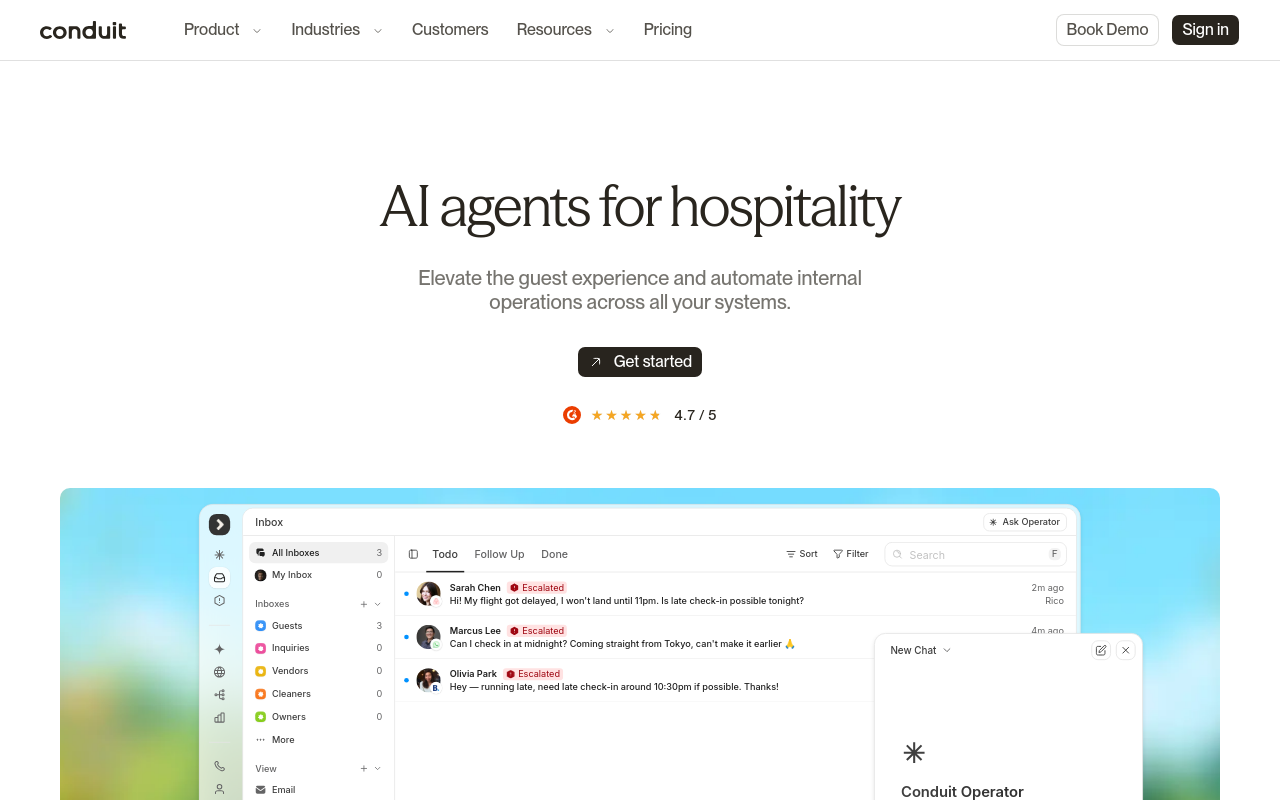
Conduit.ai is the right pick when the PMS layer is already in place but guest and tenant communication still requires a human in the loop. Most property management platforms handle rent collection, maintenance ticketing, and lease workflows, but none were built to absorb inbound message volume at scale. Conduit's unified inbox handles guest communication across multiple properties and platforms simultaneously, routing context-aware responses without manual triage. Most beneficial for portfolios above 15 units where response consistency directly affects review scores.
2. MagicDoor - Best AI-Native Platform for Multi-Owner Portfolio Managers
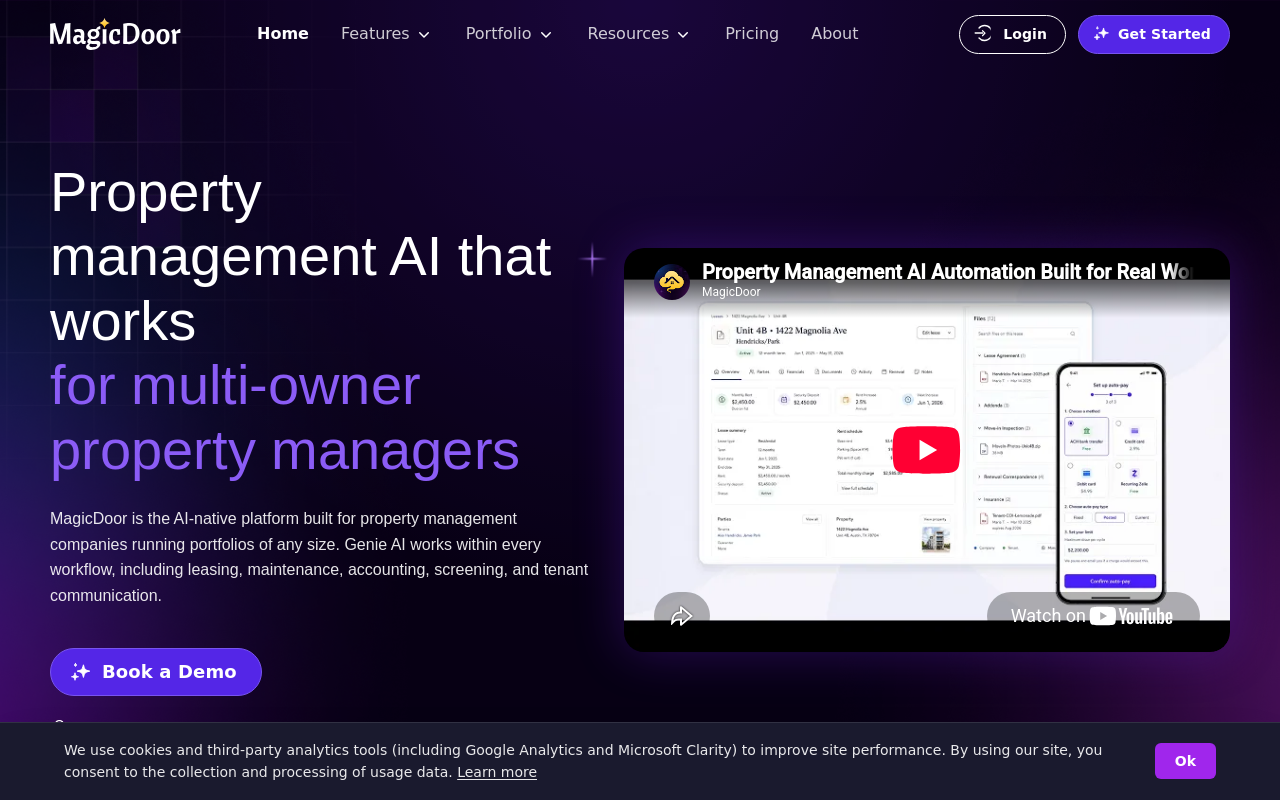
MagicDoor is built for property managers handling portfolios across multiple owners, where AI-assisted maintenance resolution and lease renewal automation reduce coordination overhead that typically scales with unit count. The tradeoff: MagicDoor is newer to the market, so operators who need deep accounting integrations or an established support ecosystem may find its maturity a limitation compared to more established alternatives.
3. AppFolio - Best Scalable Cloud Platform for Growing Residential Portfolios
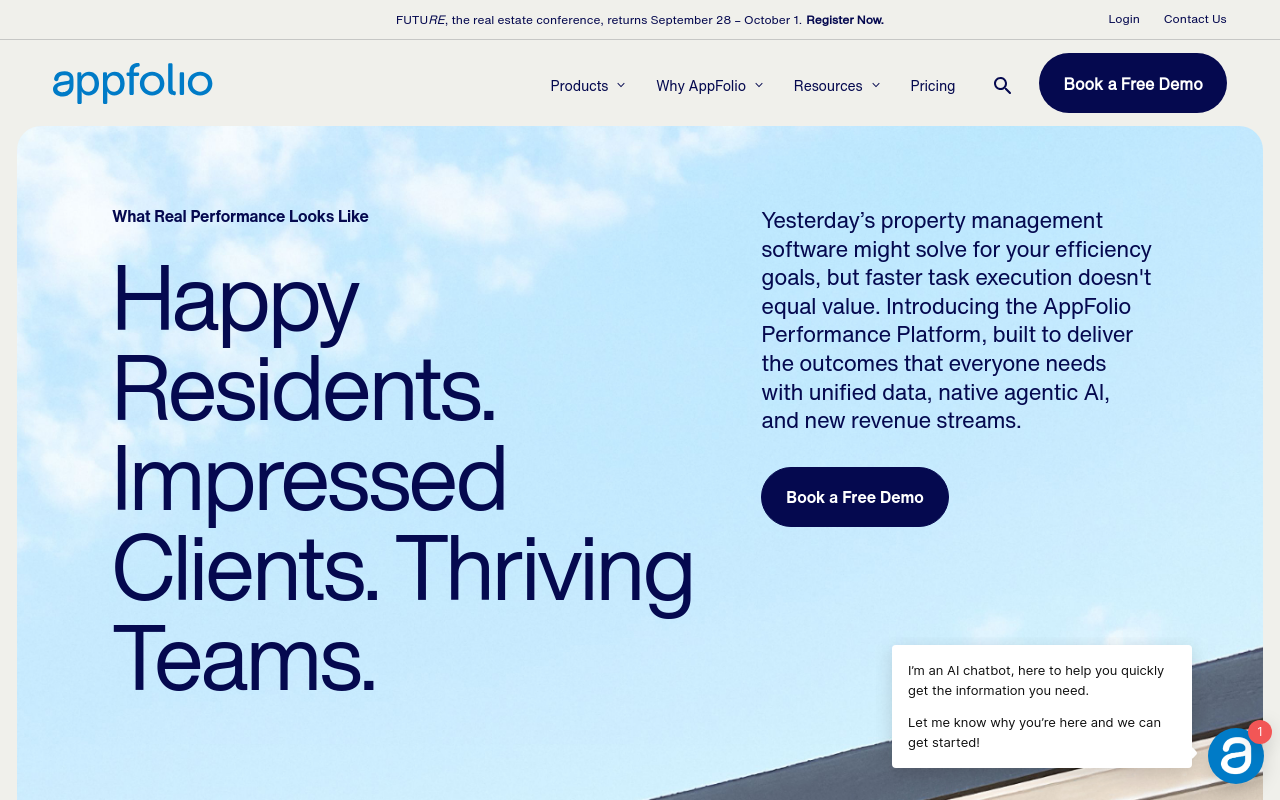
AppFolio is the benchmark platform for residential portfolio managers scaling from 50 to 500-plus units. Its AI-powered leasing assistant handles applicant screening conversations autonomously, and its mobile-first architecture keeps field teams connected without desktop dependency. According to AppFolio's 2025 financial results, companies using integrated, AI-powered platforms measurably outperform those relying on manual workflows. The real tradeoff is cost: AppFolio's pricing favors operators at scale, making it a poor fit for landlords under 50 units who will pay for capabilities they cannot fully use.
4. Buildium - Best Automation Suite for Community Association and Residential Managers
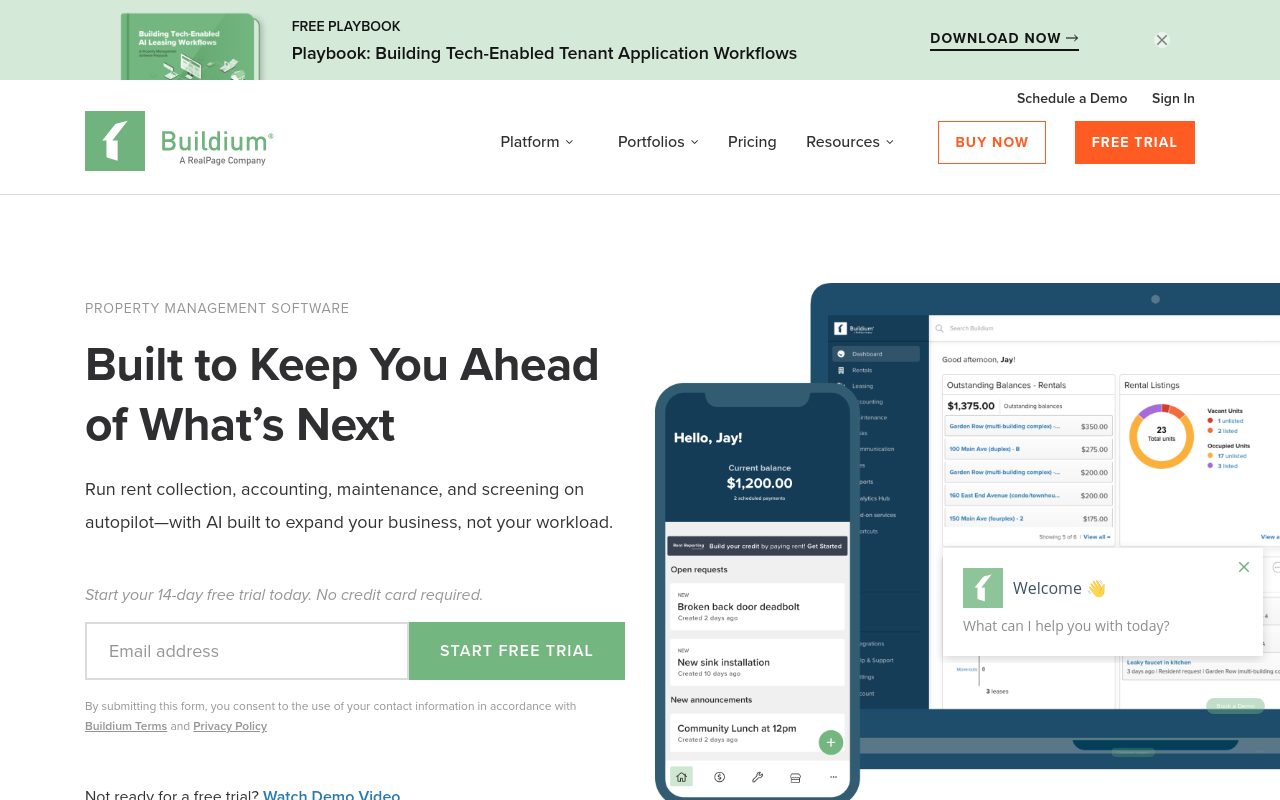
Buildium earns its position for HOA and community association managers who need resident portals, violation tracking, and board communication workflows alongside standard lease and maintenance automation. That breadth is also the limitation: operators running pure short-term rental portfolios will find Buildium oriented toward long-term tenancy workflows, with no OTA channel management or dynamic pricing.
5. TenantCloud - Best Affordable Automation Tool for Independent Landlords
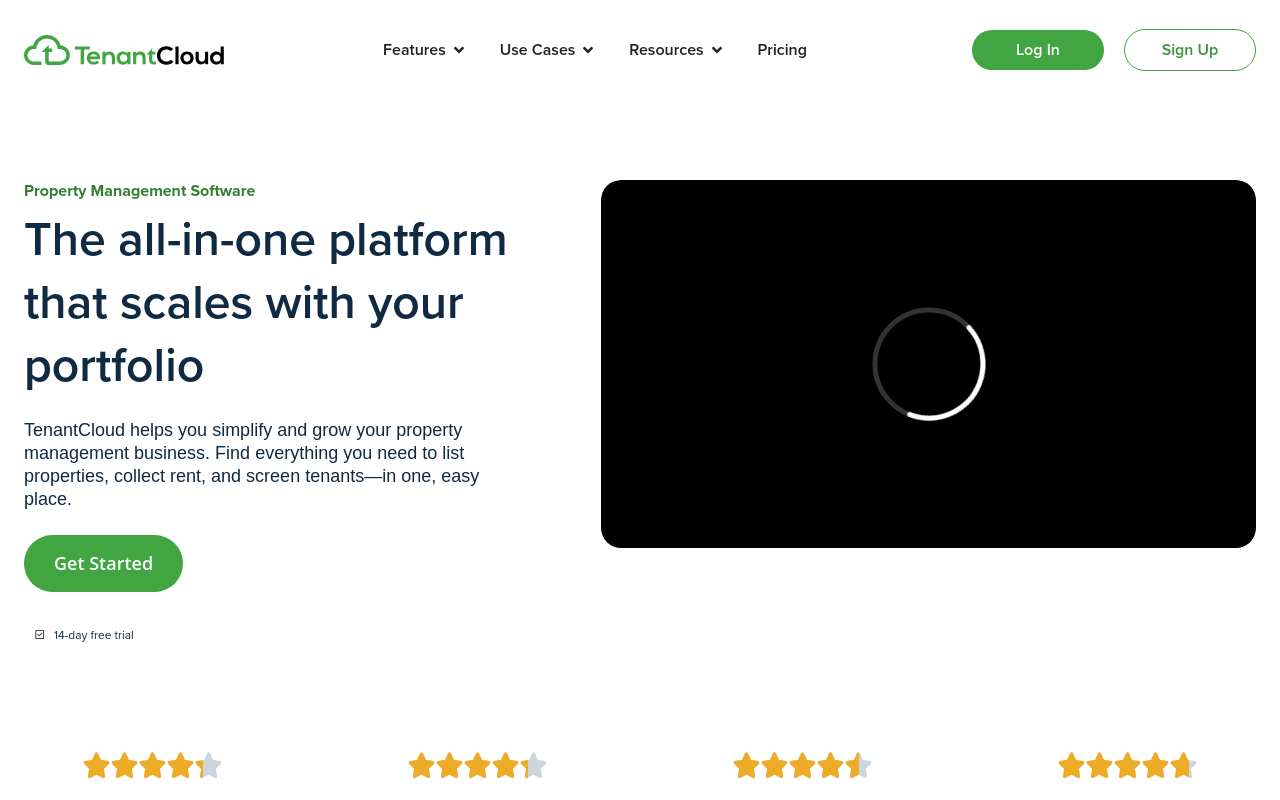
TenantCloud delivers cloud-based automation for independent landlords who need online rent collection, maintenance request tracking, rental applications, and accounting without enterprise-level pricing. It's the right pick for landlords managing between 1 and 50 units who want meaningful automation at a low cost. The primary limitation is that its automation depth doesn't match platforms like AppFolio or MagicDoor for managers running larger or more complex portfolios.
6. Innago - Best Free Automation Platform for Small-Portfolio Landlords

Innago consistently earns high marks from small landlords for its zero-cost model that still delivers automated rent collection, tenant screening, lease management, and maintenance tracking. It's the ideal choice for landlords with under 20 units who want to automate property management without subscription fees. The tradeoff is that screening and online payment fees are passed to tenants, which can create friction during onboarding with cost-sensitive renters.
7. Yardi Breeze - Best Enterprise-Grade Automation for Commercial and Mixed-Use Portfolios
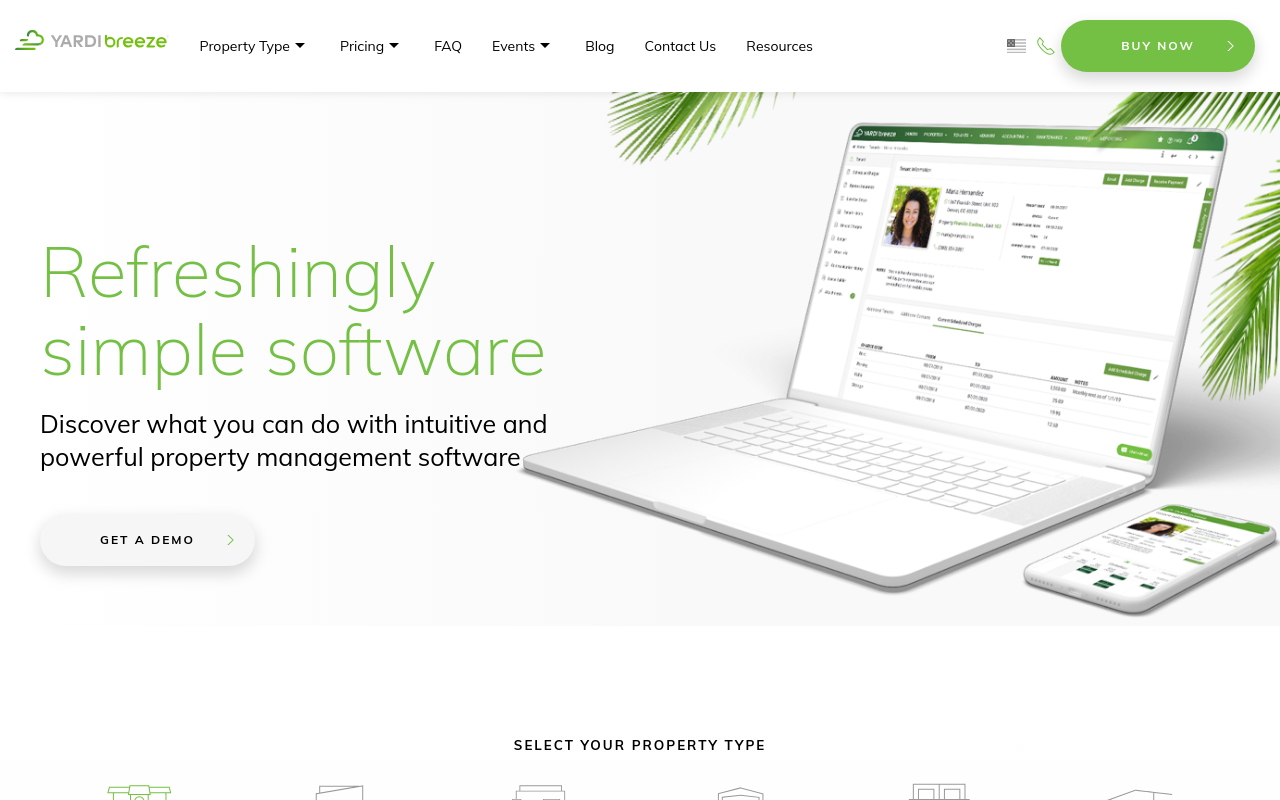
Yardi Breeze brings enterprise-level automation to commercial, mixed-use, and large residential portfolios, with deep CAM reconciliation, trust accounting, 1099 filing automation, and robust owner reporting that few competitors can match. It's the right platform for property management firms handling complex lease structures and multi-entity accounting. The key limitation is its higher price point and implementation complexity, which makes it overkill for landlords managing simple residential units.
How to Implement Property Management Automation - Step-by-Step
Skipping the workflow audit is the single most expensive mistake operators make before buying automation software, and the implementation failure mode most automation vendors never disclose is not technical, it is structural: operators who start automation without first mapping which touchpoints consume the most human time risk automating the wrong workflows entirely, leaving their highest-burden tasks untouched while generating the impression of progress. Because most operators are already running disconnected point solutions, a pre-implementation workflow audit is not optional preparation, it is the single variable that determines whether automation compounds into a durable operational advantage or simply adds another tool to a fragmented stack. Industry experience consistently shows that operators who map their highest-repetition touchpoints before selecting a platform avoid this trap.
The platform is rarely the problem. The discipline surrounding it almost always is.
1. Step 1: Audit Your Current Workflows to Identify High-Repetition Pain Points
Before touching any software, track every manual task your team performs over two weeks and log the time spent on each. Industry experience consistently shows that software implementations underperform when operators skip this diagnostic phase, buying tools that solve the wrong problem. The audit output should be a ranked list: which workflows consume the most hours, which repeat daily versus weekly, and which require human judgment versus simple rule-following. That list, not a vendor demo, drives every decision that follows.
2. Step 2: Automate Rent Collection and Late-Payment Reminders First
Rent collection is the highest-ROI starting point because the rules are binary, the volume is predictable, and the time savings are immediate and measurable. Platforms like TenantCloud and AppFolio handle automated reminders, ACH processing, and late-fee enforcement out of the box. The real trade-off: tenant ACH adoption takes time, and operators managing older demographics often see slower opt-in rates, so plan for a parallel paper process during the first billing cycle.
3. Step 3: Implement Maintenance Request Routing and Status Update Automation
Lack of status updates is consistently cited as the leading driver of tenant and guest complaints in property management operations. Automated routing through platforms like Property Meld (which acquired Mezo's conversational AI in early 2024) solves the dispatch problem, but the communication gap is where most operators still stall. Rule-based triggers handle standard confirmations well. The breakdown comes with nuanced, escalating conversations: a frustrated guest asking why their third follow-up went unanswered, or a mid-stay request that doesn't fit a clean if/then trigger. That gap is where purpose-built hospitality AI sits between your PMS triggers and your human team.
4. Step 4: Deploy Lease Renewal Automation with Conditional Offer Logic
Lease renewals handled manually create dangerous gaps, missed notice windows trigger costly vacancy cycles. Configure your platform to send renewal offers 90, 60, and 30 days before expiration, with conditional rent increase logic tied to market benchmarks. Operators managing 50+ units see the biggest gains here. The tradeoff: conditional logic requires clean lease-end-date data in your system, which many operators discover is inconsistently entered.
5. Step 5: Automate Owner Reporting and Financial Statement Distribution
Owner communication is a time sink that scales poorly, manually compiling monthly statements for 20 owners is manageable; for 200, it breaks teams. Automate report generation and distribution on a fixed schedule, pulling live data from your accounting layer. Owners receive consistent, professional statements without staff intervention. The key limitation: automation quality is only as good as your bookkeeping hygiene, unreconciled accounts produce reports that damage owner trust.
6. Step 6: Select and Integrate a Property Management Platform with Open API Access
Automation stacks collapse when tools can't talk to each other. Evaluate platforms not just on feature lists but on API openness, webhook support, and data portability, your ability to extract your own data without vendor lock-in is a long-term operational risk. Platforms with closed ecosystems force workarounds that break as you scale. The tradeoff: open-API platforms often require more configuration time than all-in-one closed systems.
7. Step 7: Measure Automation ROI Against a Defined Baseline Metric
Automation without measurement is just change for its own sake. Before going live, establish a single primary metric per workflow, hours saved per week, late payment rate, average maintenance resolution time, or owner churn. Run the automated workflow for 30 days, then compare against your pre-automation baseline. Operators who skip this step can't justify further investment or identify when automation is underperforming. The limitation: meaningful baselines require at least 60–90 days of historical data.
Advanced AI and Future Trends in Property Management Automation
Advanced AI capabilities in property management are no longer theoretical. The tools that operators once filed under "monitor for later" are actively running portfolios today, and the gap between early adopters and everyone else is widening with each quarter of inaction.
AI Agents Have Already Replaced Scripted Chatbots
The early wave of property management "AI" was, in practice, a decision tree dressed in a chat window. Tenants noticed immediately, and the frustration was pointed. Property managers we work with hear it directly: tenants describe AI interactions so hollow that "respond" feels too generous a word for what they received.
That perception is a review score waiting to collapse. Today's AI agents are structurally different. They handle multi-turn conversations, remember context across a thread, maintain a consistent brand voice, and escalate to a human only when the situation genuinely requires judgment.
Operators like Wynwood House saw resolution time drop dramatically after deploying hospitality-specific AI agents, a concrete marker of the structural difference from scripted decision trees. One failure mode the old tooling never solved is the after-hours gap. Property managers regularly miss critical maintenance requests because calls arrive during showings, active maintenance tasks, or outside business hours entirely, leaving active leaks and no-heat situations unresolved until someone checks a voicemail the next morning. A guest message about a failing boiler gets an immediate, contextually accurate reply rather than a silence that turns into a one-star review by dawn. Conduit is most beneficial when the business receives a high volume of repetitive guest or customer messages and has existing documentation, SOPs, FAQs, manuals, to train the agent on.
The first automated guest reply can be live within days of connecting those materials, deploying custom response logic on day one and protecting review scores by resolving issues before they compound overnight. The Inbox layer means the operations or support team can monitor, review, and manage every conversation the AI agent is handling from a single place, across multiple platforms and properties simultaneously, so nothing falls through the cracks between platforms.
Predictive Maintenance via IoT Sensors
The predictive maintenance model converts a reactive fire-fighting workflow into a prevention system. IoT sensors monitoring HVAC units, plumbing pressure, and moisture levels can flag a failing compressor weeks before a guest stay, allowing a scheduled repair instead of an emergency call and a one-star review. Industry analysis of AI in proptech confirms that predictive maintenance is among the highest-ROI applications now being deployed at scale across residential and commercial portfolios, reducing unplanned downtime and the capital expenditure spikes that follow emergency repairs.
The operational link to communication is direct. Conduit Workflows can trigger an automatic guest or staff notification the moment a keyword or threshold event is detected in a conversation or guest lifecycle, for example, when a guest reports a symptom that matches a known equipment fault. That automatic loop closes the delay that has historically sat between a reported problem and a dispatched technician.
AI-Powered Leasing Pipelines
AI leasing systems now qualify leads, schedule showings, answer FAQs, and deliver digital lease offers without a leasing agent in the loop. Research on AI adoption in real estate highlights that AI-driven lead response tools cut response time from hours to minutes, a gap that directly affects conversion rates given that prospective tenants frequently contact multiple listings simultaneously. That speed advantage is compounded when the AI agent is already trained on existing property documentation.
Conduit's Integrations connect directly to tools operators already use, Notion, Google Drive, Airbnb, so the agent can answer leasing questions by drawing on current listing details, house rules, and pricing without anyone manually re-entering content. The result is a leasing pipeline that maximizes occupancy by ensuring no inquiry waits hours for a reply while a competing listing responds in seconds.
The Compounding Asset Value Argument
NOI gains from automation do not stay flat; they compound. Faster leasing reduces vacancy days. Predictive maintenance lowers the capital expenditure line. Consistent guest communication, across every platform, at every hour, improves review scores, which in turn drive occupancy and the revenue per property that justifies the portfolio in the first place. Proptech trend analysis for 2026 frames this compounding dynamic as the defining commercial argument for AI adoption: each layer of automation reinforces the others, and the operators who delay are not simply missing individual efficiency gains, they are forfeiting the compounding effect entirely.
The Real Benefits of Automating Property Management - Beyond Saving Time
Time savings is the entry point, not the destination. Operators who treat automation purely as a labor-reduction exercise leave the most significant returns unclaimed. The real compounding happens across three simultaneous value drivers: labor cost reduction, revenue captured through faster response, and review-score-driven asset appreciation.
Response Speed as a Revenue Line Item, Not Just a Courtesy Metric
Most property managers know slow replies feel bad. Fewer have quantified what they cost. What begins as a manageable problem at two or three properties, a missed inquiry here, a late check-in message there, compounds into measurable occupancy gaps at ten, twenty, or fifty units.
Every inquiry sitting unanswered while your team sleeps is a prospective booking already browsing a competing listing, and at portfolio scale those missed windows stack daily into revenue that never appears in your P&L. The data backs this up: fast response times boost bookings by 116% for short-term rentals, documenting the direct link between faster replies and higher booking conversion, making response speed a revenue line, not merely a guest-satisfaction metric. Conduit's AI Agents are built to close that gap.
Once trained on your existing SOPs, FAQs, and property manuals, the agent begins handling repetitive guest messages automatically, before, during, and after a stay, so the first reply goes out in minutes regardless of the hour. For operators receiving a high volume of repetitive inquiries across multiple platforms simultaneously, that shift from manual to automated first response removes the single largest delay point in the booking funnel. The result is not a hospitality nicety; it is a direct revenue multiplier, because every unautomated touchpoint carries a dual cost: the immediate lost booking and the downstream review-score degradation that reduces achievable ADR across the entire portfolio.
Consistent Guest Experience Across Every Listing Protects Review Scores at Scale
Review scores directly influence listing rank and achievable nightly rates. Consistency breaks down as portfolios grow, guests who receive slow or fragmented communication leave lower scores, suppressing future revenue across the entire portfolio. The operational reality for managers handling 50 or more units is that manual coordination of guest messaging, cleaning schedules, owner communication, and review responses consumes the majority of working hours.
There is no spare capacity left to audit whether every guest received a timely pre-arrival message or a post-checkout follow-up. Conduit's Workflows address this directly: after a trigger event, a booking confirmation, a check-in, a detected keyword, the platform fires the appropriate touchpoint automatically, without requiring a staff member to remember, queue, or send it. The inbox layer then gives the operations team a single place to monitor and review every conversation the AI agent is handling across all properties and channels, so nothing falls through the cracks even as the portfolio grows.
Operators like Cascadia Getaways have demonstrated that high automation rates and top-tier guest communications scores can coexist, disproving the assumption that automation sacrifices quality. Structured, predictable guest touchpoints delivered consistently are what protect review scores at scale, and that consistency is only achievable when it does not depend on individual staff bandwidth.
Portfolio Scalability Without the Linear Headcount Tax
Every new property creates more messages, more coordination overhead, and pressure to hire. That pressure is felt acutely even at small portfolio sizes: managing just a handful of properties manually, rent tracking, tenant communication, renewals, cleaning coordination, piles up faster than most operators anticipate. Without a system, growth does not feel like success; it feels like chaos.
Conduit's Integrations layer means operators do not need to rebuild their knowledge base from scratch. If your team already uses Notion, Google Drive, or Airbnb, the AI agent pulls from that existing content directly, without manual re-entry. That removes the most common friction point that stops operators from deploying automation: the fear that setup requires recreating everything they already have.
Easy BnB broke the linear relationship between portfolio size and headcount by pushing overnight and daytime messaging to AI, a shift that is only sustainable when the automation can learn from the documentation the business already maintains, and when a unified inbox ensures the team stays in control of every conversation the agent is running on their behalf.
Related Reading
- Lodgify Competitors
- Vrbo Automated Messages
- Guesty Alternatives
- Lodgify Vs Smoobu
- Guesty Vs Hostfully
- Ownerrez Vs Guesty
- Hospitable Vs Hostaway
- Guesty Vs Hostaway
- Guesty Vs Hospitable
Next steps
If your portfolio keeps demanding more coordination time with every property you add, the path forward starts with removing routine touchpoints from the team entirely rather than adding people to absorb them.
The 83% of property managers still handling routine tasks manually despite owning software are paying SaaS costs while bearing full labor costs, which means the bottleneck is not tools but the absence of a unifying workflow layer connecting them. And because portfolio workload scales linearly, every coordinator hired to absorb volume creates unsustainable workloads that drive turnover and re-hiring at the same per-door cost floor, making headcount a structurally self-defeating strategy. Together, these two realities point to one action: replace the human-in-the-middle on repetitive touchpoints with an AI layer purpose-built for hospitality, before the next growth plateau forces another hiring decision.
Start with AI for hospitality to see how Conduit handles guest communication, maintenance routing, and proactive follow-up from a single system. From there, you connect your existing SOPs and property documentation, and the agent begins delivering automated replies within days, covering every property, every channel, and every hour your team cannot.
Frequently Asked Questions
What does property management automation actually mean?
Automation in property management means removing the human who decides what happens next, not just the human who types the reply. The goal is a system where the routing, the response, and the follow-up happen without a human initiating each step, so brand voice and SOPs are enforced consistently across every property without a coordinator touching each interaction.
At what portfolio size does manual management start breaking down?
The breaking point typically surfaces between 15 and 30 properties, a team that felt manageable at 10 units starts showing cracks at 25, with response times slipping overnight, maintenance tickets falling through gaps, and review scores dipping because the coordination layer can't keep pace. A 20-property portfolio can consume over 120 hours of management time per week under a manual model.
Does buying more property management software tools fix the coordination problem?
Not on its own. Operators using disconnected point solutions for leasing, maintenance, and communication create coordination overhead rather than eliminating it, because no unifying workflow layer ties them together, meaning you may just end up with five different places to check before making a decision. A team that thought it was automated can end up simply busy in a more organized way.
Which property management task should I automate first?
Rent collection earns the top position because the return is immediate and the adoption curve is low. Automated ACH collection eliminates manual follow-up, triggers late-fee enforcement without a conversation, and syncs directly to your ledger, making it the single fastest way to reclaim hours without hiring anyone new.
How do I build an automation system without re-entering all my existing content into a new tool?
If your team already runs on tools like Notion, Google Drive, or Airbnb, an integration layer can pull existing SOPs, FAQs, and property manuals directly into an AI agent without manual re-entry. Conduit.ai's Integrations are designed specifically to remove that implementation friction, which is the step where most automation initiatives stall.
Stay in the loop
Get the latest on AI automation, product updates, and customer stories.
