How to Increase Hotel Occupancy: 12 Strategies That Fill Rooms


Increase Hotel Occupancy
Proven strategies to fill more rooms
Unsold rooms rarely mean a pricing problem. They mean a conversion problem. Here is how to fix the leaks your dashboard is not showing you.
Occupancy rate is the number every ownership meeting starts with, and for good reason. Most hospitality business owners think that if they're on the right channels at the right price, the bookings should come, so unsold rooms must mean they need more visibility or deeper discounts. But treating occupancy as a reporting metric rather than a compounding lever is where most independent operators quietly lose ground.
For properties that want to maximize revenue per room, understanding what drives this number is the starting point for every other strategic decision you make. Hotel occupancy rate is calculated by dividing occupied rooms by available rooms, then multiplying by 100. A 60-room property with 45 rooms sold on a given night runs at 75% occupancy.
See our AI for hospitality for how this works in practice. What the formula captures is your inventory conversion rate. Every unsold room is permanent lost revenue.
Unlike a retailer who can discount yesterday's stock tomorrow, a hotel room that goes empty on Tuesday night is gone.
Occupancy rate feeds directly into RevPAR (Revenue Per Available Room), calculated as occupancy rate multiplied by ADR (Average Daily Rate). That relationship reflects how heavily occupancy discounts rate strength into actual revenue. Asset valuation compounds this further: hotel properties are valued on income capitalization, meaning every percentage point of sustained occupancy improvement raises net operating income and appraised value. Hotel occupancy sits in the 65–75% range for full-service properties, though the meaningful benchmark is always relative to your competitive set and market segment rather than a national average.
Key takeaways
- Occupancy rate is a compounding lever, not a reporting metric, operators who treat it as the latter keep discounting their way into a worse ADR without ever diagnosing the real leak.
- OTA commission dependency (15–25% per booking, up to 30% when fees stack) is a margin problem disguised as a distribution strategy; direct booking investment is the structural fix.
- Discounting in slow periods trains guests and algorithms alike to wait you out, the operators who fill shoulder seasons do it by identifying who books during that window, not by cutting price.
- Conversion rates drop sharply after the first hour of an unanswered inquiry; the 1am question that sits until 9am is a booking that already chose a competitor.
- The Lauderdale Boutique Hotel cut guest response time from 57 minutes to 2 minutes, the occupancy gains that followed weren't from new demand, they were from demand that was always there and previously lost to silence.
- Every upstream strategy in this post, dynamic pricing, Google Hotel Ads, loyalty outreach, terminates at the moment a guest sends an inquiry and waits; Conduit's AI-powered guest communication tools keep that window open around the clock, so the demand you generate actually converts.
Why Standard Tactics Don't Fill Rooms on Their Own - The Execution Gap
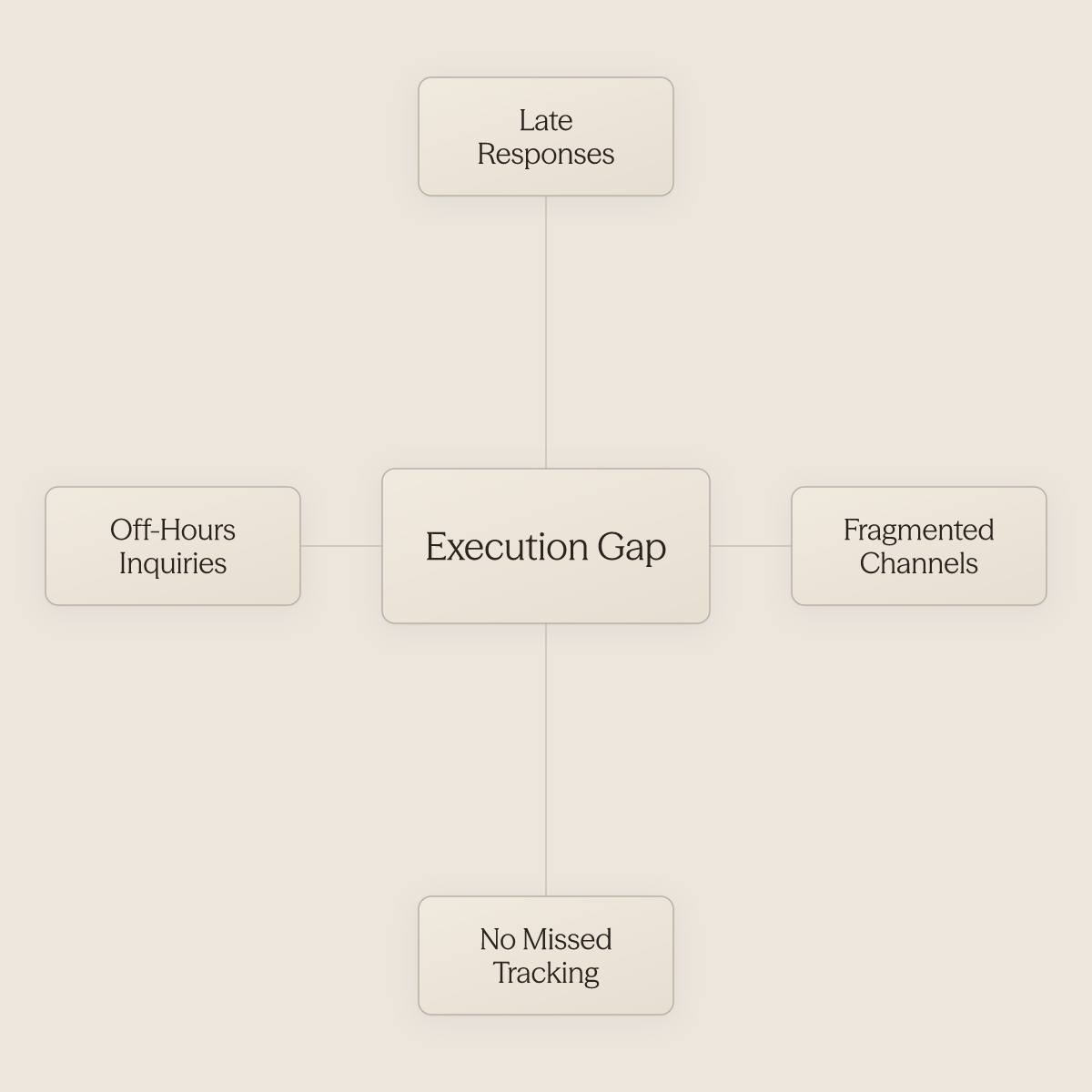
A boutique hotel with strong TripAdvisor scores, competitive rates, and active OTA listings can still bleed bookings every night without a single dashboard flagging the problem. Most hospitality business owners think that if they're on the right channels at the right price, the bookings should come, and that unsold rooms must mean they need more visibility or deeper discounts. But the demand often arrived. The execution failed. The gap between those two moments is where occupancy quietly erodes.
The Invisible Leak - Why Overnight Inquiries Never Show Up as Missed Bookings
Hotel booking inquiries don't respect business hours. A guest planning a weekend trip searches at 11pm, finds your property, sends a message, and waits. By 9am when your front desk opens the inbox, that guest has already confirmed elsewhere. Your system records an unsold room, never a lost booking. That invisibility is what makes this failure mode so costly: you cannot fix a leak you cannot see.
Fragmented Channels, Fractured Follow-Up
The problem compounds when inquiries arrive across email, OTAs, WhatsApp, and SMS simultaneously with no single view. Operators describe it plainly: "Everything's scattered across WhatsApp and email." During high-demand windows, that fragmentation is fatal. A message that falls between platforms on a busy Friday afternoon converts directly into occupancy loss, with no record of the miss.
Response Speed as the First Impression
Response time is not a courtesy metric; it is a conversion metric. Responding within one minute can increase conversions by up to 391% compared to responding after five minutes, a figure drawn from cross-industry lead-response research. Operator data from properties using AI-driven guest communication corroborates the directional pattern, with documented cases showing response time compression from an industry average of roughly 57 minutes down to approximately 2 minutes, producing measurable booking uplift. Every hour of latency is a window a faster competitor is actively winning. This is where AI for hospitality closes the gap staffing alone cannot.
Pricing Strategies to Drive Bookings - Dynamic Pricing, Length-of-Stay Controls, and Packages
Cut rates when occupancy dips, fill the gap, recover later. That logic feels sensible until you track what it actually costs over twelve months. Guests who book your discounted rate in March tell their algorithm the same thing you just did: this property goes cheaper when you wait. The result is a slow erosion of ADR that never shows up as a single bad decision, only as a pattern that's harder to reverse each quarter. Operators consistently running stronger occupancy without sacrificing rate treat pricing as a demand-shaping tool, not a panic lever. Three tactics define that approach:
- Dynamic pricing based on demand signals
- Length-of-stay controls during peak windows
- Value-added packages that protect rate integrity
1. Automate Rate Adjustments with AI-Powered Dynamic Pricing
Dynamic pricing replaces static rack rates with real-time rate adjustments driven by demand signals, competitor rates, and booking pace. It's the right approach for hotels of any size looking to increase hotel occupancy rate without leaving revenue on the table during peak periods. The core tradeoff: implementation requires reliable data infrastructure and ongoing calibration, hotels without a revenue manager or RMS tool risk misfiring rates that erode guest trust.
2. Deploy Minimum Length-of-Stay Controls to Protect High-Demand Nights
Minimum length-of-stay (MinLOS) restrictions prevent single-night bookings from blocking high-value multi-night stays around peak events, holidays, or weekends. This tactic is ideal for resort and leisure properties where shoulder nights would otherwise go unsold. The critical limitation: overly aggressive MinLOS settings during softer demand periods can suppress occupancy and push guests to competitors, so restrictions must be lifted strategically as the arrival date approaches.
3. Bundle Value-Added Packages to Stimulate Bookings in Low-Demand Periods
Rate packages, combining room nights with breakfast, spa credits, or local experiences, allow hotels to increase perceived value without publicly discounting the base rate, protecting rate integrity. This strategy works best for business and leisure properties targeting price-sensitive segments during off-peak seasons. The key tradeoff is operational complexity: packages require tight coordination across departments and can dilute RevPAR if the bundled cost exceeds the incremental revenue generated per booking.
Boost Direct Bookings and Distribution Channels - OTAs, Direct, and Beyond
OTAs are not the problem. Commission dependency is. Treating Booking.com or Expedia as a destination rather than a doorway hands over 15–25% of booking revenue per reservation, and total distribution costs can climb to 30% of booking value when you stack fees across platforms.
That is not a channel strategy; it is a margin leak with a dashboard that makes it look intentional. The smarter frame: OTAs are a paid acquisition funnel. The operators growing occupancy most profitably use that exposure to win first-time guests, then convert those guests into direct repeat bookers, turning a recurring commission cost into a one-time acquisition fee.
1. Launch a Best-Rate Guarantee With Exclusive Direct-Only Perks
Hotels serious about increasing occupancy rate must give travelers a compelling reason to bypass OTAs entirely. A best-rate guarantee paired with direct-only perks, early check-in, free breakfast, or room upgrades, shifts price-sensitive guests toward your own booking engine. The tradeoff: you must enforce rate parity vigilantly, as OTA contract violations can trigger ranking penalties that temporarily suppress your visibility on those platforms.
2. Invest in Metasearch Advertising to Capture High-Intent Comparison Shoppers
Google Hotel Ads, Trivago, and TripAdvisor metasearch place your direct booking link alongside OTA listings at the exact moment a traveler is comparing prices, the highest-intent moment in the funnel. For independent hotels looking to increase occupancy rate without surrendering 18–25% OTA commissions, metasearch delivers measurable ROI. The key limitation is budget discipline: cost-per-click bidding requires ongoing optimization, and underfunded campaigns quickly lose placement to OTA giants.
3. Build a Loyalty Program That Makes Repeat Direct Bookings the Obvious Choice
Modern hotel loyalty programs extend well beyond points accumulation, personalized rewards, instant perks, and member-exclusive rates create a self-reinforcing cycle where past guests default to booking direct. For hotels aiming to increase occupancy rate through repeat business, loyalty is the highest-ROI long-term channel. The real tradeoff is upfront investment: building a program with genuine perceived value requires technology integration and ongoing reward fulfillment costs that smaller properties must budget carefully.
Improve Online Presence and Digital Marketing to Reach More Potential Guests
Search visibility gets travelers to your door; the right digital channels determine whether they walk through it or detour to an OTA. PPC advertising, social media, and email marketing are the three that most reliably move the needle on direct bookings for independent hotels. Each targets a different stage of the guest's decision window, and together they reduce OTA dependency by pulling high-intent demand toward your own booking engine.
1. Optimize Your Google Business Profile to Capture High-Intent Travelers
Hotels looking to increase occupancy should treat their Google Business Profile as a direct booking channel, not just a listing. A fully optimized profile with accurate amenities, high-quality photos, regular posts, and consistent review responses improves visibility in local search and Google Maps. The tradeoff: maintaining it requires ongoing effort, outdated info or ignored reviews actively erode trust and ranking.
2. Build a Visual Instagram Presence That Converts Scrollers Into Bookers
Instagram is a high-impact channel for hotels with strong visual identities, boutique properties, resorts, and design-forward brands especially benefit. Showcasing rooms, local experiences, and behind-the-scenes content builds aspirational appeal that drives booking intent. The real limitation is that Instagram alone rarely closes the booking; it must be paired with a frictionless link-in-bio landing page and a clear call-to-action tied to your booking engine.
3. Leverage a Multi-Channel Social Media Strategy With UGC and Retargeting
Hotels serious about increasing occupancy need more than organic posts, a layered strategy combining user-generated content, content pillars, UTM-tracked promo codes, and Meta or Google retargeting campaigns targets guests who browsed but didn't book. This approach is especially effective during need periods when occupancy dips. The tradeoff is complexity: coordinating UGC rights, booking engine integration, and ad creative testing demands consistent time and budget commitment.
Related Reading
- How To Improve Hotel Operations
- Hotel Demand Forecasting
- Hospitality Operations Management
- How To Increase Revpar
- Hotel Revenue Management Strategies
- Automated Hotel Reservation System
- Hotel Upselling
- Hotel Budgeting And Forecasting
- Hotel Guest Messaging
- Hospitality Automation
- Adr Vs Revpar
Target Low-Demand Periods and Specific Segments to Fill Rooms Year-Round
Slow periods and underserved guest segments are not revenue gaps to accept; they are engineering problems with solvable mechanics.
The guests who fill your rooms on a Tuesday in February or a shoulder-season weekend are not waiting to be invented. They already exist. The operators who find them stop asking "how do we make the room cheaper?" and start asking "who books during this window, and what do they actually need to hear?"
1. Launch Midweek Corporate Packages to Fill Tuesday - Thursday Gaps
Business travelers are the most reliable segment for filling midweek voids that leisure guests leave empty. Partnering directly with local companies, offering negotiated corporate rates, and bundling amenities like fast Wi-Fi, early check-in, and meeting room access creates sticky, repeatable demand. The tradeoff: corporate accounts require dedicated sales effort and contract management, making this strategy better suited to hotels with a dedicated revenue or sales manager.
2. Create Off-Peak Wellness Packages to Attract Shoulder-Season Bookers
Wellness-focused packages, combining spa credits, healthy dining, and guided experiences, appeal to a growing segment of travelers who deliberately avoid peak crowds and seek restorative escapes. These packages justify maintained rate integrity during slow periods without discounting rooms. The key limitation is upfront investment in programming and partnerships with wellness providers, which may not be feasible for budget-constrained independent hotels without existing spa infrastructure.
3. Target Bleisure Travelers to Extend Short Business Trips Into Weekend Stays
Bleisure travelers, professionals who tack leisure days onto business trips, represent a high-value segment that bridges weekday and weekend demand gaps simultaneously. Hotels can capture this audience by offering flexible checkout, local experience guides, and loyalty-friendly upgrade incentives that encourage extending stays. The tradeoff is that bleisure conversion depends heavily on destination appeal and personalized digital communication pre-arrival, requiring investment in guest messaging technology.
The Response-Speed Layer - How Always-On Guest Communication Turns Strategies Into Confirmed Bookings
Every demand-generation strategy a hotel runs, from dynamic pricing to OTA optimization to loyalty outreach, ultimately terminates at a single moment: a guest sends an inquiry and waits. That window, whether it opens at 2pm or 1am, is where upstream investment either converts into a confirmed booking or quietly funds a competitor's occupancy rate. This section examines why response speed is the final, often invisible variable in your occupancy equation, and how closing the gap changes what your existing strategies actually produce.
At a glance
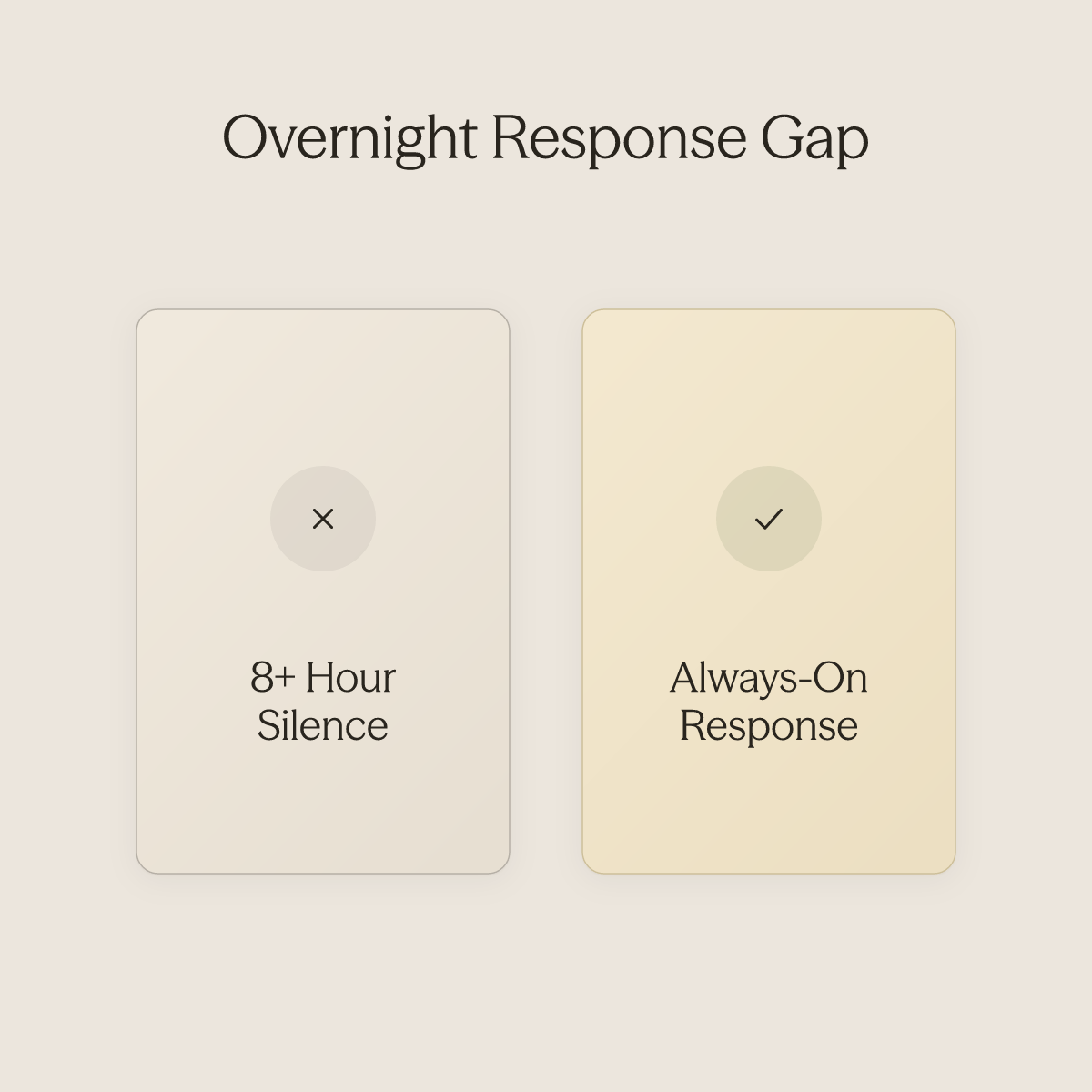
Every demand-generation strategy you have built, dynamic pricing, OTA optimization, Google Hotel Ads, loyalty outreach, terminates at a single moment: a guest sends an inquiry and waits. What happens in that window determines whether your upstream investment produces a confirmed booking or quietly funds a competitor's occupancy rate.
The 1am Inquiry Problem - Overnight Silence as an Occupancy Leak
The guest who messages at 1am is not waiting until morning. Operator research on hotel response patterns puts the industry-average response time at roughly 57 minutes during staffed hours, but overnight, that window stretches to eight hours or more. By 9am, the booking is gone. It does not appear as a missed reservation on any report; it simply never arrives. Roughly a third of all booking inquiries arrive outside standard business hours, making the overnight gap a structural, nightly revenue exposure that no pricing tool or OTA listing can fix.
From 57 Minutes to 2 Minutes - What Response-Time Compression Does to Conversion
Response latency is an occupancy leak that never shows up on a dashboard. AI-powered guest communication automation can compress hotel response times from a roughly 57-minute industry average down to approximately 2 minutes, documented through operator data. That compression matters because guest intent decays fast: a traveler comparing three properties at midnight books the one that replies first, not the one with the best rate. Closing that gap does not require more staff; it requires a communication layer that operates independently of shift schedules.
Operator Proof - Wynwood House, Easy BnB, and the NOI Math Behind Faster Replies
Wynwood House, operating across seven countries in Latin America and Europe, cut guest inquiry resolution time from 15 minutes to 3 minutes after consolidating guest communication into a single AI-powered inbox. Mayra, the company's Global Head of Customer Experience, described the quality directly: "You cannot tell the difference between an AI agent and a human agent. It feels like a full conversation with a human." Easy BnB translated speed into margin: approximately $22,000 saved per month across 75 units, with zero additional hires, a result achieved without adding to the team's headcount. Faster first response converts inquiries that were already in the market, no new demand required.
Why Hospitality-Specific AI Agents Convert More Inquiries Than Generic AI Tools
A generic AI handles questions. An AI for hospitality agent handles the conversational patterns specific to pre-booking decisions, room-type questions, rate queries, availability checks, and cancellation terms, that a generic AI routes to a fallback or escalates to staff. Wynwood House reported that guests could not distinguish Conduit's AI agent from a human agent, a quality bar that reflects the hospitality-specific training and conversational design behind purpose-built AI agents rather than general-purpose tools.
Related Reading
- Best Revenue Management Software For Hotels
- Siteminder Competitors
- Digital Concierge Software
- Hospitality Conferences
- Hotel Distribution Management
- Best Hotel Channel Manager Software
- Canary Technologies Competitors
- Cloudbeds Alternatives
- Hospitality Chatbot
Next steps
If your rooms go dark between midnight and 9am while your OTA listings, dynamic pricing, and Google Hotel Ads campaigns sit idle, the path forward starts with recognizing that channel presence and rate strategy create the opportunity, communication speed is what closes it. Start with our AI for hospitality.
Every pricing strategy in your revenue playbook attracts inquiries that exist in a window measured in minutes. A rate-optimized listing that generates a 1am inquiry and returns a 9am reply has already lost the booking, the rate was never the problem. Separately, the commission savings of a direct booking are entirely erased if the direct inquiry goes cold before anyone responds, making response automation the prerequisite condition for any channel-mix strategy to actually produce margin. Together, those two realities point to the same action: close the response gap before adding more spend to the top of the funnel.
Start with AI for hospitality to see how Conduit compresses inquiry response times from a 57-minute industry average to roughly 2 minutes, without adding headcount. Properties like Easy BnB documented approximately $22,000 saved per month across 75 units after deployment. The demand is already in your market, this is the layer that stops returning it to competitors every night.
Frequently Asked Questions
What is a good occupancy rate for a hotel?
A broadly cited benchmark for healthy U.S. hotel occupancy is 65–75% for full-service properties, based on industry data. That said, the post is clear that the meaningful benchmark is always relative to your competitive set and market segment rather than a national average.
What's the difference between occupancy rate, ADR, and RevPAR?
Occupancy rate is the share of available rooms sold on a given night, ADR (Average Daily Rate) is the average rate charged per occupied room, and RevPAR multiplies the two together to show actual revenue earned per available room. According to CoStar/STR data from December 2024, U.S. hotels posted an ADR of $142.12 but a RevPAR of only $89.54, a gap that shows how heavily occupancy discounts rate strength into real revenue.
Do value-added packages actually help occupancy without hurting my room rate?
Yes, packages let you improve occupancy during low-demand periods without publicly lowering your base rate, because perceived value shifts without the rack rate moving. The post gives the example of a coastal property adding a "Sunset Sail and Stay" bundle during shoulder season to maintain ADR while improving occupancy.
How do I get repeat guests to book directly instead of through an OTA again?
A simple loyalty structure, such as a tiered discount or an exclusive returning-guest rate, gives repeat guests a reason to bypass the intermediary on their next stay. The post frames this as a compounding strategy: the OTA acquires the guest once, and the direct channel converts the ongoing relationship, turning a recurring commission cost into a one-time acquisition fee.
Why do guests book elsewhere even when I'm priced competitively and listed on OTAs?
The post points to response speed as the primary culprit: a guest who sends an inquiry at 11pm and waits until 9am for a reply has almost always already confirmed elsewhere, and your system records an unsold room rather than a lost booking, making the leak invisible. Responding within one minute can increase conversions by up to 391% compared to responding after five minutes, which is why 24-hour inquiry coverage is treated in the post as a conversion metric, not a courtesy one.
Stay in the loop
Get the latest on AI automation, product updates, and customer stories.

