How to Manage Short Term Rentals for Maximum Profit


Manage Short Term Rentals
Tips to Manage Rentals for Maximum Profit
STR management is not passive income. It is a 24/7 hospitality operation, and the operators who scale it successfully are the ones who stop relying on effort alone and start building systems that run without them.
Short-term rental management is the active, daily operation of a hospitality business running on real-estate infrastructure. Most operators discover the truth about it the same way: somewhere between their third property and their fifth, the calendar fills up and the chaos begins. Guest messages stack up overnight.
A cleaner cancels two hours before checkout. A smart lock battery dies at 11 PM. What looked like a real-estate investment starts running like a hotel front desk, except there is no front desk.
The gap between expectation and reality is structural, not accidental. Platforms like Conduit emerged to address what operators running large portfolios consistently describe as the coordination gap no spreadsheet, group chat, or single PMS was architected to close, a problem surfaced repeatedly in operator forums, industry surveys, and Conduit's own 2026 case studies with multi-property operators. Most vacation rental property managers and operations leads assume that consistent, high-quality STR management at scale requires a proportionally larger human team; the best operators can do is hire carefully, build good SOPs, and use a PMS to stay organized.
See our AI for hospitality for how this works in practice. Every booking on Airbnb or Vrbo triggers a cascade of time-sensitive tasks: guest screening, pre-arrival communication, turnover coordination, post-stay review requests, and maintenance triage. None of these tasks are optional, and none of them wait for business hours.
Short-term rentals can generate 2 to 3 times more gross revenue than long-term rentals for the same property, with separate estimates putting the gross revenue premium at 30 to 80 percent above long-term rental income. But that premium is directly proportional to operational intensity: every additional booking cycle resets guest communication, cleaning, pricing, and maintenance requirements from scratch.
More revenue means more repetitions of every task, not a smoother ride.
2 to 3 times More gross revenue than long-term rentals
STR management operates across three domains at once. Guest experience covers every touchpoint from inquiry to review response. Property operations covers turnover scheduling, maintenance routing, and smart-home monitoring. Financial and compliance oversight covers dynamic pricing, occupancy tax remittance, and local permit requirements. A failure in one domain cascades into the others: a missed maintenance ticket becomes a guest-facing problem, a guest-facing problem becomes a review, and a damaged review compounds into lower search placement and reduced occupancy.
Key takeaways
- Short-term rental management stops being passive income the moment you hit three to five properties, that's when coordination overhead, not vacancy rate, becomes the real margin killer.
- Guest communication, cleaning turnover, dynamic pricing, and maintenance are the four operational pillars of every STR business, and none of them can be reliably delegated to luck or a checklist alone.
- Owning the right tools, a PMS, channel manager, dynamic pricer, smart locks, and running an actually automated operation are two different things; the tools don't talk to each other without a coordination layer in between.
- Erwan Le Roy ran 35 properties to a 96% automation rate and sub-1-minute response times without adding headcount, the bottleneck wasn't staffing, it was the absence of a system that understood how the business actually ran.
- The self-manage vs. hire-a-property-manager decision is a margin question, not a lifestyle one, and the math shifts dramatically once you have operational infrastructure that absorbs routine volume.
- STR permits and zoning compliance aren't a one-time setup task; the regulatory workload compounds with every property you add and varies by jurisdiction.
- Conduit.ai closes the coordination gap by acting as an AI-powered guest communication layer that makes decisions, answering guests, routing issues, and handling routine volume, so operators scale the portfolio without scaling the headcount.
Core Operational Responsibilities in STR Management - The Four Pillars You Can't Outsource to Luck
Four operational responsibilities sit at the center of every short-term rental business: guest communication, cleaning turnover, dynamic pricing, and property maintenance. The common assumption is that consistent, high-quality STR management at scale requires a proportionally larger human team; the best operators can do is hire carefully, build good SOPs, and use a PMS to stay organized. In reality, these four responsibilities are not four separate to-do lists.
They are a chain, and when one link breaks, the others feel it immediately. One of the clearest patterns we see in early-stage STR operations is that new managers rarely lack effort, they lack structure. When someone steps into a role covering all four pillars at once, guest communication, cleaner scheduling, maintenance coordination, and owner relations, they are effectively on call around the clock with no structural relief.
The result is response fatigue, quality degradation, and an operator who becomes the bottleneck rather than the backbone of the business. The sections below address each responsibility directly, including where automation removes the structural pressure before it compounds.
"STR managers handling all four core operational pillars, guest communication, cleaner scheduling/checks, maintenance coordination, and owner relations, are effectively on call 24/7 with no structural relief or backup from ownership."
1. Guest Communication Systems - Building Proactive Touchpoints That Prevent 3 AM Panic Messages
Response time is no longer just a courtesy metric. Platforms including VRBO have begun surfacing host response times directly to potential guests, making communication speed a visible booking conversion signal, not just a background algorithm input. A guest who waits too long for check-in instructions doesn't just feel frustrated, they write about it. That review drops your score, your score drops your search ranking, and your ranking drops your occupancy. Proactive communication systems break this chain before it starts.
This is also where the staffing math breaks down at scale. Running a centralized reservations or guest services team to cover inbound messages across multiple properties and platforms is expensive, and the labor cost scales directly with volume. Conduit's AI Agents are designed specifically to eliminate that bottleneck, handling the round-the-clock communication load that currently requires a human on standby, without proportionally increasing headcount.
The agent is most effective when the business already has documentation in place: SOPs, FAQs, house manuals. Once those are connected, the agent can begin handling guest replies within days, and continues operating continuously, before, during, and after every stay. Conduit's Integrations pull from existing content directly, so there is no manual re-entry of information the business has already built.
Automated Workflows then handle the predictable touchpoints, booking confirmations, pre-arrival instructions, check-in codes, parking details, house rules, triggered automatically after events like a confirmed reservation or a detected check-in keyword. The goal is to answer the predictable majority of inbound questions before guests think to ask them, freeing your team's attention for the minority that requires genuine judgment. For operators managing communications across multiple platforms or properties simultaneously, the Inbox gives the operations or support team a single place to monitor, review, and manage every conversation the AI agent is handling, so oversight doesn't require jumping between platforms or relying on memory.
2. Turnover Cleaning Standards - Defining the Line Between a Standard Flip and a Deep Clean
A standard flip between back-to-back bookings and a deep clean after a long stay are not the same job, and treating them identically is one of the most common sources of guest complaints. When booking patterns compress, three two-night stays in a single week, the margin for a missed detail shrinks to almost nothing. The operational fix is a two-tier checklist:
- A standard flip protocol for routine turnovers
- A deep-clean protocol triggered by stay length, guest count, or seasonal transitions
Cleaners should not be guessing which standard applies. That ambiguity is where a missed towel or an unreported maintenance issue slips through and surfaces in a guest review instead of a cleaner's report.
Cleaner coordination through platforms like Turno is also one of the first responsibilities to degrade when an operator is stretched across all four pillars without delegation infrastructure. When the same person managing guest messages at midnight is also scheduling turnovers at 7 AM, the communication gaps between those tasks are where errors accumulate. Structured turnover workflows, triggered automatically after a checkout event is detected, remove the manual handoff and ensure the right protocol reaches the right person without a manager in the middle of every exchange.
3. Dynamic Pricing Management - Adjusting Nightly Rates Around Seasonality, Demand, and Competitor Data
Adjusting nightly rates around seasonality, demand, and competitor data is one of the highest-leverage decisions an STR operator makes. Static pricing is one of the most expensive passive decisions an STR operator can make. Based on our market understanding and PriceLabs' own published operator analyses, active dynamic pricing strategies consistently outperform fixed-rate approaches on revenue per available night, because demand signals, local events, competitor availability, and booking window length shift constantly and a static rate captures none of that upside.
Key takeaway: Effective dynamic pricing requires a human review layer for anomalies, not just a tool running on default settings.
Effective dynamic pricing requires a human review layer for anomalies, not just a tool running on default settings.
4. Routine Property Inspections - Scheduling Off-Season and Between-Stay Walkthroughs Before Guests Find Problems First
Schedule walkthroughs before guests find problems first. A significant share of maintenance issues in short-term rentals are first reported by guests rather than caught during operator inspections. A guest who discovers a broken shower head or a faulty lock doesn't submit a maintenance ticket, they leave a review. Proactive inspection schedules, triggered by stay length and property age, catch those issues before the next guest arrival rather than after the damage to your rating is already done.
Maintenance coordination is also the responsibility most likely to fall through the cracks when an operator is absorbing all four pillars without a structural system behind them. When guest communication is consuming the available attention, especially overnight, maintenance flags get delayed, and delayed flags become guest complaints. Routing guest-reported issues through an AI agent that can triage, log, and escalate based on keyword detection keeps those signals from getting buried in a crowded inbox during a high-volume stretch.
Technology and Automation Tools Essential to STR Management: and the Coordination Gap They Leave Open
The standard short-term rental tech stack is genuinely impressive on paper. A property management system centralizes reservations. A channel manager kills double-bookings. Dynamic pricing fills the calendar. Smart locks remove the front-desk dependency. Together, they look like automation. The problem is that owning the right tools and running an automated operation are two entirely different things.
1. Conduit.ai - Best AI Coordination Layer for Managing Short Term Rentals at Scale
The tools above solve data fragmentation; they deliberately leave the coordination problem unsolved. Every handoff between a confirmed booking, a cleaning assignment, an inspection sign-off, and a guest check-in message still requires a human to route, confirm, and act. At 20 or 30 properties, those moments compound into a full-time coordination job that no single point solution was designed to eliminate.
Conduit.ai sits above the existing stack as a coordination intelligence layer, most beneficial when operations involve specific brand standards, escalation policies, or complex multi-property workflows that require differentiated behavior across properties. The operator who already owns Hostaway or OwnerRez plus PriceLabs plus smart locks does not need to replace their stack. They need the layer that makes those tools finally talk to each other, a coordination function that Conduit's 2026 case studies show enabled Haven Vacation Rentals to run 270 properties with 2 people per shift, the result of pairing the AI layer with well-documented property policies and clear escalation paths, not a plug-and-play outcome.
The tools covered here define the infrastructure floor, the minimum viable stack for managing short-term rentals without constant firefighting.
270 Properties run by just 2 people per shift
2. Channel Managers (Hostfully, Lodgify, Hospitable): Powerful OTA Sync, Blind to On-the-Ground Reality
Channel managers synchronize calendars across Airbnb, Vrbo, and direct booking sites in real time, preventing the double-bookings that cost operators both money and reviews. Operators without synchronized OTA calendars face near-certain calendar conflicts at scale, a pattern consistently documented among multi-platform operators managing more than five properties. The hard limit: a channel manager confirms a reservation exists. It cannot confirm the property is guest-ready, the cleaner showed up, or the turnover was completed before the next arrival.
3. PriceLabs - Dynamic Revenue Optimization That Ignores Operational Capacity
PriceLabs uses demand signals, local events, and competitor supply to adjust nightly rates algorithmically, and the revenue lift over manual pricing is material. The structural gap is that it optimizes for occupancy with zero awareness of whether your turnover crew can physically execute back-to-back same-day bookings. Aggressive pricing fills nights; it does not coordinate the people required to make those nights deliverable.
4. Smart Locks (Nuki, August, Schlage): Keyless Access Automation With a Verification Blind Spot
Smart locks are now table-stakes infrastructure for STR operators. Contactless self-check-in removes front-desk dependency entirely, and enterprise solutions like PointCentral are purpose-built for portfolio-wide smart home management. The verification gap: a smart lock confirms a code was used. It cannot confirm a cleaner completed the turnover before that code fired. Operators running 20-plus properties have learned this the hard way when a guest walks into an uncleaned unit minutes after a code activates on schedule.
5. STR Accounting Tools (REI Hub, VRPlatform): Financial Clarity Without Operational Context
Purpose-built STR accounting platforms like REI Hub track rental income, owner payouts, cleaning fees, and expense categorization in ways generic tools like QuickBooks cannot match. For hosts managing short term rentals as investment properties, this financial visibility is essential for tax preparation and profitability analysis. The coordination gap: these tools record what happened financially after the fact but have no connection to the operational workflows, a missed cleaning or a maintenance cost that wasn't logged never surfaces until it's a problem.
Related Reading
- How To Automate Airbnb Business
- Vrbo Management
- Airbnb Self Check In
- Vacation Rental Automation
- Best Apps For Short Term Rentals
- Best Pms For Airbnb
- Best Pms For Short Term Rentals
- Best Accounting Software For Short Term Rentals
- How To Manage A Vacation Rental Property
- Vrbo Smart Pricing
Should I Self-Manage or Hire a Property Manager? A Decision Framework Based on Portfolio Size and Margin Goals
A Decision Framework Based on Portfolio Size and Margin Goals
Deciding between self-managing your short-term rental portfolio and hiring a professional property manager looks like a lifestyle question on the surface. In practice, it is a margin question, and the math changes significantly depending on what operational infrastructure you already have in place. The conventional framing treats this as a binary, self-manage and keep the margin, or delegate and surrender 25–35% of gross revenue, but that framing obscures the real synthesis: both paths converge on the same margin ceiling unless a third coordination layer exists, and the emergence of AI-driven operational infrastructure makes the traditional binary obsolete past roughly ten units.
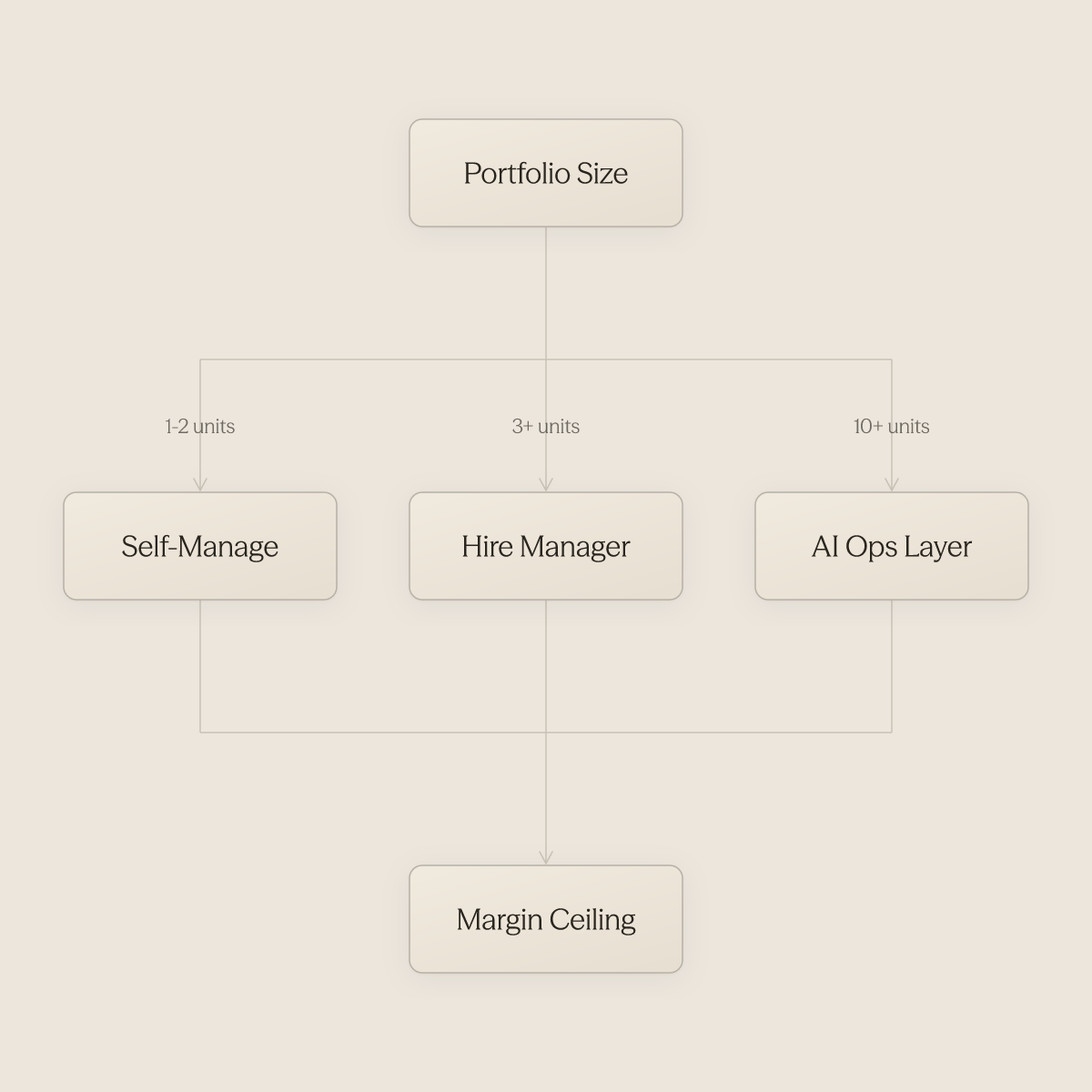
The 3-Property Threshold - Why Self-Management Complexity Compounds Before Revenue Does
Self-management works well for one or two properties. At three, the coordination load shifts in a way that catches most operators off guard. The 3-property mark is where scheduling conflicts, guest inquiry volume, and turnover coordination start compressing net income rather than growing it.
Operators managing several properties manually often spend a significant number of hours each week on routine tasks alone, and that number climbs steeply with each additional unit. The revenue does not triple when you add a third property, but the operational complexity often does. One of the most common patterns we see with newer operators is a property generating well below what market benchmarks suggest it should be earning:
- Slow guest inquiry responses that cost bookings
- Inconsistent pricing that misses demand windows
- Review scores that drift downward when communication is reactive rather than consistent
Each of those is a coordination failure before it is a revenue failure.
What Property Managers Actually Charge and What the 15-35% Fee Range Really Buys You
According to Vacasa's homeowner guides, full-service operators like Vacasa typically charge between 25% and 35%, while the broader market average for full-service management sits closer to 18–25%. That fee covers listing creation, guest communication, cleaning coordination, and maintenance routing. An independent breakdown published by RedAwning reinforces that the total cost of full-service management frequently reaches the upper end of that range once ancillary fees are factored in.
The real question is not whether 25% sounds high, it is whether your current self-management approach is silently costing you more through pricing errors, slow response times, and inconsistent guest experiences that drag down review scores. A property earning well below the local market median is already paying a hidden fee in the form of unrealized revenue; the issue is that fee never appears on an invoice.
How to Use AirDNA to Run the Math Before You Decide
AirDNA provides market-level benchmarking data, average daily rate, occupancy, and revenue per available night, for specific zip codes and property types. Before committing to a management arrangement, pull the local comp data for your market. If a property manager projects revenue on a property where AirDNA shows the local market median is materially lower, that projection deserves scrutiny. Conversely, if you are self-managing a property where comparable units consistently outperform your current income, the performance gap may justify the management fee, or it may point to a pricing and communication problem a manager alone will not fix. Misaligned management, whether self-directed or outsourced, is the more common culprit behind that gap than the property itself.
The Hidden Variable That Changes the Self-Manage vs. Hire Decision - Coordination Infrastructure
The real decision variable is not property count or fee percentage; it is what coordination mechanism you install. The critical insight that neither the self-management nor the full-service management camp surfaces is this: manual self-management and full-service management both hit the same margin ceiling when coordination remains a human bottleneck. An AI-driven coordination layer changes the denominator, it absorbs routine volume without adding to the payroll line, which is why the self-manage-versus-hire binary becomes genuinely obsolete past roughly ten units.
Conduit's operational model addresses the problem structurally rather than cosmetically. The platform's AI Agents are most beneficial when a business receives a high volume of repetitive guest messages and already has existing documentation, SOPs, FAQs, property manuals, to train the agent on. Once those materials are connected, the agent begins handling automated guest replies within days, not weeks, and operates continuously: before, during, and after a stay, whenever a guest sends a message.
That means inquiry response times stop being a function of how many hours an operator has available, which directly protects occupancy and review scores, the two metrics most responsible for the significant performance gaps operators frequently discover too late. The Inbox feature gives the operations team ongoing visibility, allowing them to monitor, review, and manage every conversation the AI agent is handling without becoming the bottleneck in each one. Workflows extend that logic further: after a trigger event, a confirmed booking, a check-in, a detected keyword, automated touchpoints execute without requiring manual staff action, standardizing the guest experience across every property in the portfolio.
For operators who already use tools like Notion, Google Drive, or Airbnb, the Integrations layer means the AI agent draws on existing content without requiring manual re-entry, so the operational lift of adding a new property does not scale with headcount.
- Scale a portfolio without proportionally increasing headcount
- Maximize revenue per property by improving occupancy and guest satisfaction through consistent communication
- Standardize brand voice and SOPs across every property and market
These are capabilities that neither pure self-management nor traditional full-service management delivers at the same margin. The fee question only resolves cleanly once the coordination question is answered first.
Legal and Compliance Requirements for Short-Term Rentals - What You Must Check Before the First Booking
Local STR regulations, permits, and zoning laws must be verified before the first booking and monitored continuously afterward. Operating without the required permits exposes hosts to fines, forced delisting, and in some jurisdictions, criminal liability. Compliance is not a setup task; it is a recurring operational workload that grows with every property you add.
1. Local Zoning and Land-Use Permits - Confirm STR Is Allowed Before You List
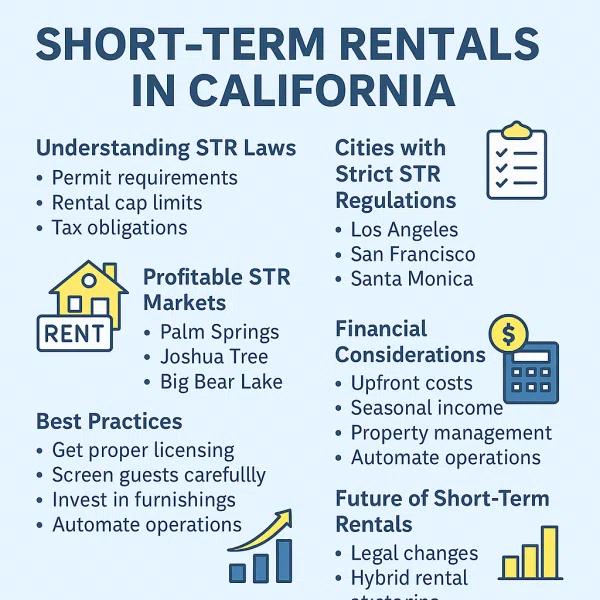
Many hosts discover zoning violations only after receiving a county enforcement letter, sometimes years into operating. When managing short term rentals, verifying that your property's zoning classification explicitly permits STR activity is the single most critical pre-launch step. Some municipalities ban STRs outright in residential zones, others require conditional-use approval. The tradeoff: zoning research is time-consuming and hyper-local, requiring direct contact with municipal planning offices rather than relying on platform guidance.
2. Short-Term Rental Business License and Registration - Secure Your Permit Number
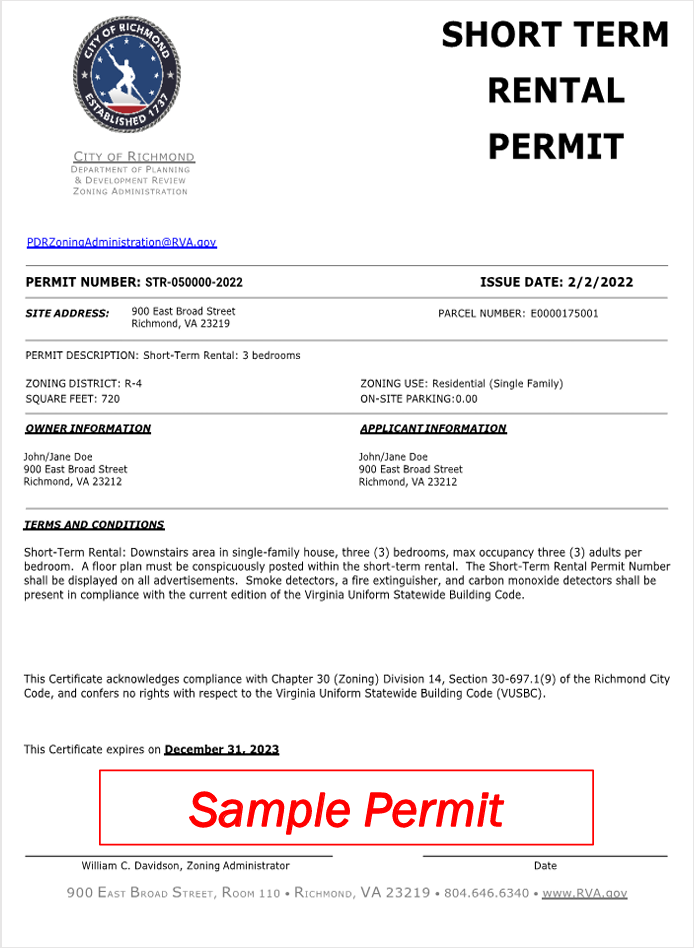
Jurisdictions like Virginia Beach have elevated STR violations to criminal offenses, meaning operating without a valid business license or registration number is no longer just a civil fine risk. Hosts managing short term rentals must obtain the correct municipal permit, display the license number in all listings, and renew annually. The key limitation is that license requirements vary dramatically city by city, and platforms like Airbnb do not proactively enforce local registration mandates on your behalf.
3. Lease and HOA Subletting Restrictions - Read Every Clause Before Accepting Guests
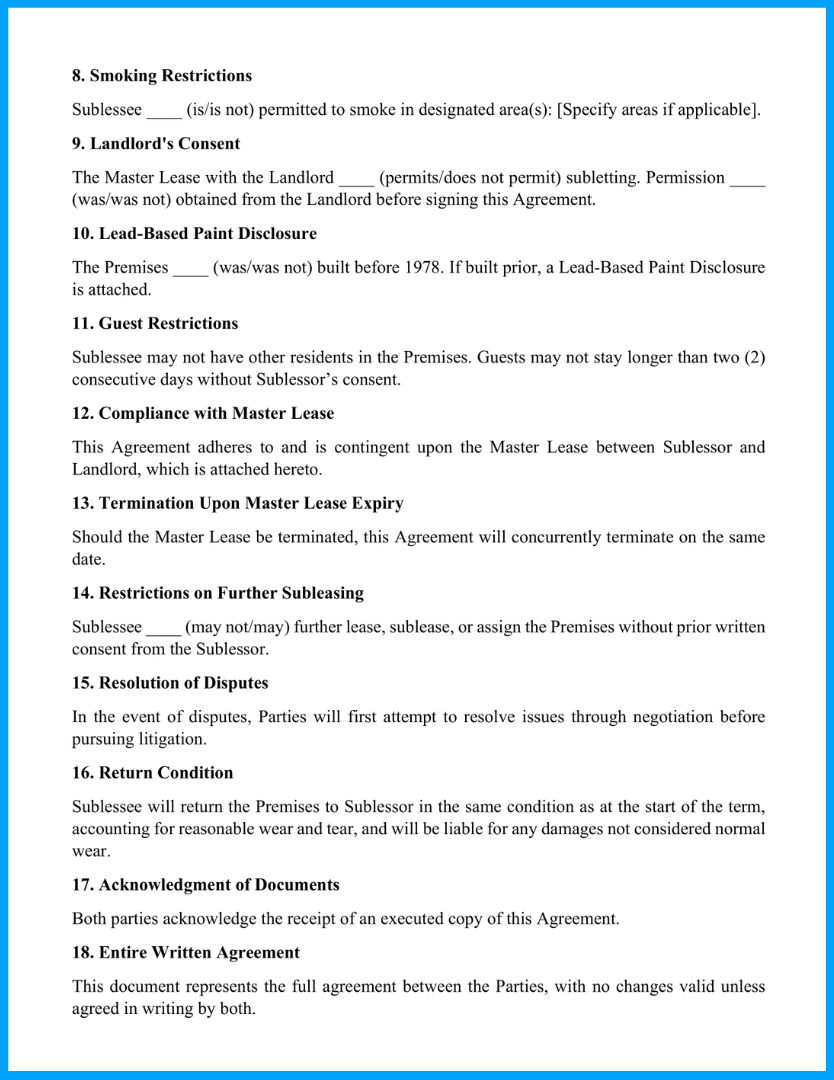
Airbnb explicitly states that unauthorized subletting is not a violation of its own policies, meaning the platform will continue processing bookings even if your lease or HOA agreement prohibits STR activity entirely. Hosts have faced eviction mid-booking, leaving guests stranded. When managing short term rentals in rented or HOA-governed properties, a thorough review of subletting clauses is non-negotiable. The tradeoff: even a permissive landlord's verbal approval is legally insufficient without written amendment.
4. STR-Specific Insurance Coverage - Don't Rely on Standard Homeowners Policies

Standard homeowners insurance policies routinely deny claims when a property is being used as a short-term rental at the time of loss, treating commercial hosting activity as a policy exclusion. Hosts managing short term rentals need a dedicated STR insurance product or a commercial landlord rider that explicitly covers guest-caused damage, liability claims, and loss of rental income. The real tradeoff is cost, purpose-built STR policies carry higher premiums, but the alternative is bearing catastrophic out-of-pocket exposure.
5. Transient Occupancy Tax Registration - Collect and Remit Before Your First Payout
Most states and municipalities impose transient occupancy taxes (TOT) or lodging taxes on short-term rental revenue, and failure to register as a tax collector before your first booking creates retroactive liability with penalties and interest. While some platforms auto-collect TOT in select jurisdictions, many markets still require hosts to register independently, file returns, and remit taxes directly to local authorities. The key limitation: tax rules change frequently, and platform auto-collection does not guarantee full local compliance.
Best Practices for STR Management at Scale: and the Coordination Layer That Separates 5-Property Operators from 50-Property Operators
Scaling from 10 properties to 50 is not a hiring problem dressed up as an operations problem. The operators who cross that threshold without bloating payroll have something structural in place: a coordination layer that absorbs routine volume so humans only touch work that genuinely requires judgment.
1. Conduit.ai - Best for AI-Powered Guest Communication at Scale
Airbnb's search ranking is widely understood among operators to reward consistently high review scores, and response lag is one of the most direct ways to erode those scores, a pattern borne out by the experience of operators who have tracked ranking changes alongside communication metrics. At scale, that lag is structural. Human response time degrades as message volume grows; a coordination layer does not.
Erwan Le Roy of Cash Flow Street scaled operations using AI for hospitality without adding a single headcount, according to the Conduit case study published in 2026. Haven Vacation Rentals illustrates the same principle at greater scale, achieving a 9-star rating.
Jack, Haven's CEO, described adding 14 listings in January with zero new hires. That outcome is only possible when the AI handling guest messages is hospitality-native, not a generic auto-responder retrofitted from another industry. Conduit.ai operates across Airbnb, Vrbo, and direct-book channels simultaneously, handling high-frequency, low-judgment messages that consume most of a team's shift.
The honest trade-off: it requires a well-maintained knowledge base to perform at that level. Operators who document property-specific policies and edge cases get compounding returns; those who deploy it with minimal setup will see partial automation, not the 96% ceiling that structured operators reach.
2. Hostaway - Best Central Command Hub for Multi-Platform STR Portfolios
Hostaway centralizes reservations, owner statements, and channel synchronization across Airbnb, Vrbo, and direct-book platforms, removing the double-booking risk and calendar chaos that derails multi-platform portfolios. At this stage, it is a non-negotiable infrastructure layer. The limitation surfaces when the PMS is treated as the communication layer too. A PMS routes messages; it does not resolve them. Hostaway is most valuable when paired with a dedicated guest communication layer that handles resolution autonomously, leaving the PMS to consolidate operational data and financial reporting.
3. PriceLabs - Best Dynamic Pricing Engine for Revenue-Focused STR Operators
Static pricing is one of the most significant margin leaks in STR portfolios, compounding invisibly. Dynamic-pricing users consistently outperform fixed-rate portfolios on RevPAR, with the performance gap widening most sharply during local-event demand spikes, holidays, and periods of competitor supply change, exactly the moments when a static rate leaves the most money on the table. PriceLabs is most effective when an operator has enough booking history to feed its algorithm meaningful signals, typically after 6 to 12 months of occupancy data per property.
4. Documented SOPs via Yardi Breeze Framework - Best Operational Foundation for Scaling Past 20 Properties
The coordination layer that separates 5-property operators from 50-property operators isn't software alone, it's documented standard operating procedures. Using a structured SOP framework ensures that cleaning protocols, maintenance escalation paths, and guest communication standards live in systems, not in one person's head. This approach is essential before hiring your second operations hire. The real limitation: SOPs require disciplined ongoing maintenance; outdated procedures create more confusion than having none at all.
5. Specialized Role Segmentation - Best Organizational Structure for STR Teams Crossing 30+ Units
Past 30 units, generalist coordination breaks down. The operators who scale past that threshold without proportionally growing headcount typically segment roles explicitly: a dedicated guest communication function (increasingly AI-handled), a field operations lead who owns cleaner and maintenance vendor relationships, and a revenue manager who owns pricing strategy and channel performance. Blending all three into a single operations role works at 10 properties; it becomes the bottleneck at 40.
Related Reading
- Lodgify Competitors
- Vrbo Automated Messages
- Guesty Alternatives
- Lodgify Vs Smoobu
- Guesty Vs Hostfully
- Ownerrez Vs Guesty
- Hospitable Vs Hostaway
- Guesty Vs Hostaway
- Guesty Vs Hospitable
Next steps
If your portfolio is growing but your margins aren't, the path forward starts with recognizing that the tools you already own were never designed to close the coordination gap between them. Start with our AI for hospitality.
Platform algorithms now treat response lag as a direct ranking and conversion signal, which means every hour your inbox goes unanswered is simultaneously a booking loss and a review score risk. And as the 270-property Haven Vacation Rentals example shows, the scaling variable between a 5-property and a 50-property operation isn't headcount, it's whether a coordination layer exists that routes, responds, and acts without a human in the middle of every exchange. Together, those two realities point to the same next step: installing something that handles the high-volume, low-judgment communication load before it compounds into a ceiling your PMS and pricing tool can't lift.
Start with conduit.ai to see how Conduit handles the guest communication layer your current stack leaves open. Connect your existing SOPs and property documentation, and automated guest replies go live within days.
Frequently Asked Questions
What does a short-term rental property manager actually do day to day?
A short-term rental manager handles the active, daily operation of a hospitality business across three domains simultaneously: guest experience (every touchpoint from inquiry to review response), property operations (turnover scheduling, maintenance routing, and smart-home monitoring), and financial and compliance oversight (dynamic pricing, occupancy tax remittance, and local permit requirements). Every booking triggers a cascade of time-sensitive tasks, guest screening, pre-arrival communication, turnover coordination, post-stay review requests, and maintenance triage, none of which are optional or wait for business hours.
At what point does managing my own short-term rentals stop making sense?
Industry data consistently points to the 3-property mark as where scheduling conflicts, guest inquiry volume, and turnover coordination start compressing net income rather than growing it. Beyond roughly ten units, the traditional binary of self-managing versus hiring a property manager both converge on the same margin ceiling unless a third coordination layer, such as an AI-driven operational infrastructure, is in place.
Does dynamic pricing software handle everything, or do I still need to stay involved?
Dynamic pricing tools like PriceLabs use demand signals, local events, and competitor supply to adjust nightly rates algorithmically, and the revenue lift over manual pricing is material. However, the post is clear that effective dynamic pricing still requires a human review layer for anomalies, and tools like PriceLabs optimize for occupancy with zero awareness of whether your turnover crew can physically execute back-to-back same-day bookings.
How do I stop guests from messaging me at 3 AM about check-in details?
The fix is a proactive communication system that answers predictable questions before guests think to ask them, booking confirmations, pre-arrival instructions, check-in codes, parking details, and house rules, all triggered automatically after events like a confirmed reservation. Conduit.ai's AI Agents and Automated Workflows are designed to handle exactly this round-the-clock communication load, and they work most effectively when you already have SOPs, FAQs, and house manuals documented and connected.
What's the difference between a standard flip and a deep clean, and why does it matter?
A standard flip between back-to-back bookings and a deep clean after a long stay are not the same job, and treating them identically is one of the most common sources of guest complaints. The operational fix described in the post is a two-tier checklist, a standard flip protocol for routine turnovers and a deep-clean protocol triggered by stay length, guest count, or seasonal transitions, so cleaners are never guessing which standard applies.
Stay in the loop
Get the latest on AI automation, product updates, and customer stories.
