13 Best Vacation Rental Automation Tools & Software 2026


Rental Automation Tools
13 best vacation rental automation tools
More tools won't fix the gap. Here is why your stack breaks at 15 properties and what operators scaling past 50 did differently before the math stopped working.
Vacation rental automation is the practice of using software, smart devices, and connected workflows to handle repetitive operational tasks without a human decision at every step. A booking triggers check-in instructions, a checkout triggers a cleaning assignment, and a guest question gets answered, all without anyone manually touching the process. Most vacation rental property managers and operations leads think the only fix is hiring more staff or cobbling together a stack of point solutions, a channel manager here, a messaging template there, and someone still has to sit in the middle, routing and reviewing every conversation.
See our AI for hospitality for how this works in practice. The question most operators ask is whether they have enough of it. The more important question is whether what they have holds together at scale.
Most operators managing five or six properties feel reasonably covered: a property management system, a channel manager, maybe a pricing tool. Below a certain portfolio size, that works. The system bends but doesn't break.
The break happens later, and it happens fast.
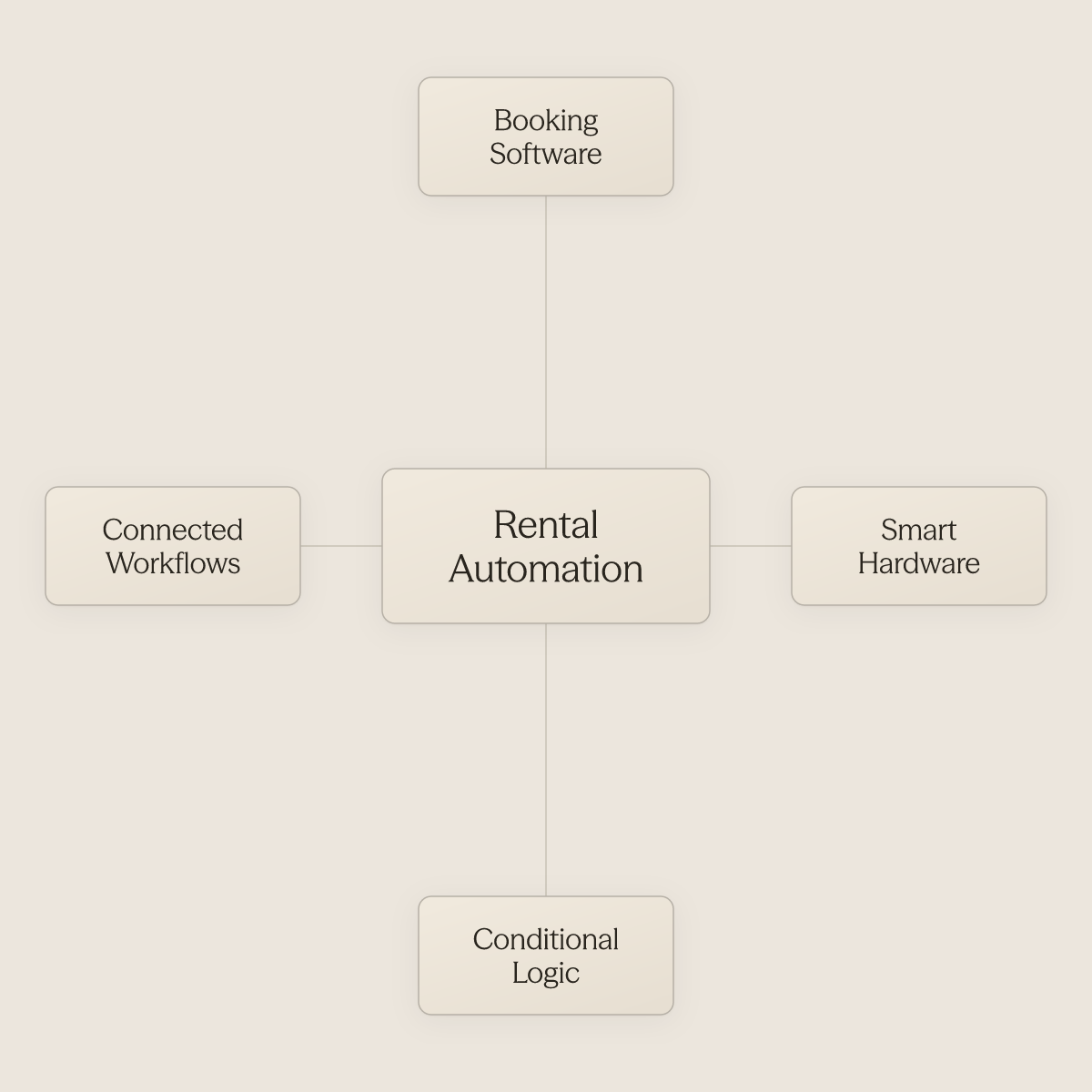
Short-term rental automation spans three distinct layers: software that manages bookings and messaging, hardware that controls physical access and environment, and the conditional logic connecting those two layers into a single operating system. Most operators have pieces of all three. Very few have them working as one.
That gap is invisible at five properties. At fifteen, it becomes the ceiling on everything: response times, review consistency, and the team's capacity to take on new listings without adding headcount. According to data cited by hospitality operations researchers, fast response times can boost short-term rental bookings by as much as 116%, meaning communication lag is a direct revenue variable, not a service quality issue.
At ten properties, a single ops lead can maintain response speed manually. At fifteen, the math stops working. The operators who scale past twenty or fifty properties without proportional hiring closed the gap between their tools before it closed in on them, treating short-term rental automation as infrastructure from the start, rather than a convenience layer added after the pain arrives. That shift is what the rest of this guide is built around.
116% Booking boost from fast response times
Layer 1: Software, Bookings, Messaging, and the Logic That Connects Them The software layer is where most operators begin and, for a while, where most of the leverage lives. A property management system handles reservations, syncs calendars across channels, and stores guest records. It lists across Airbnb, Vrbo, Booking.com, and direct booking sites simultaneously.
Messaging tools send templated communications at defined trigger points: booking confirmation, pre-arrival instructions, day-of check-in, mid-stay check-in, checkout reminder, and post-stay review request. At the surface level, this looks like automation. In practice, it is often scheduled messaging with a human still monitoring the inbox for anything that falls outside the template.
The difference between scheduled messaging and true automation is conditional logic. Conditional logic means the system reads the state of a reservation and routes accordingly: if a guest books same-day, the check-in window compresses and a different instruction sequence fires; if a guest messages after midnight, a response goes out immediately and a flag routes to staff for morning follow-up; if a cleaning assignment is not marked complete by checkout plus two hours, an escalation triggers without anyone watching a dashboard. That conditional layer is what most operators are missing.
They have the tools. They have not wired the tools together with rules that account for the exceptions, and in short-term rental operations, the exceptions are not edge cases. They are Tuesday.
The hardware layer controls what happens inside and around the property itself, and it is the layer most directly responsible for guest experience at the moment it matters most: arrival. Smart locks eliminate the coordination overhead of physical key handoff, generate unique access codes per reservation that expire automatically at checkout, and create an audit trail of entry events that operations teams can reference if a dispute arises. Noise monitors provide decibel-level data without recording audio, giving operators an early signal when a property is trending toward a policy violation before a neighbor complaint or platform strike occurs.
Smart thermostats allow remote temperature management between stays, reducing energy costs during vacancy windows and ensuring the property is at a comfortable temperature when a guest walks in rather than requiring them to adjust a cold or overheated unit as their first interaction. Leak sensors, door and window sensors, and occupancy monitors extend that physical awareness further, turning the property itself into a data source rather than a black box that only surfaces problems after a guest checks out and leaves a review. The critical point about the hardware layer is that its value multiplies only when it is connected to the software layer.
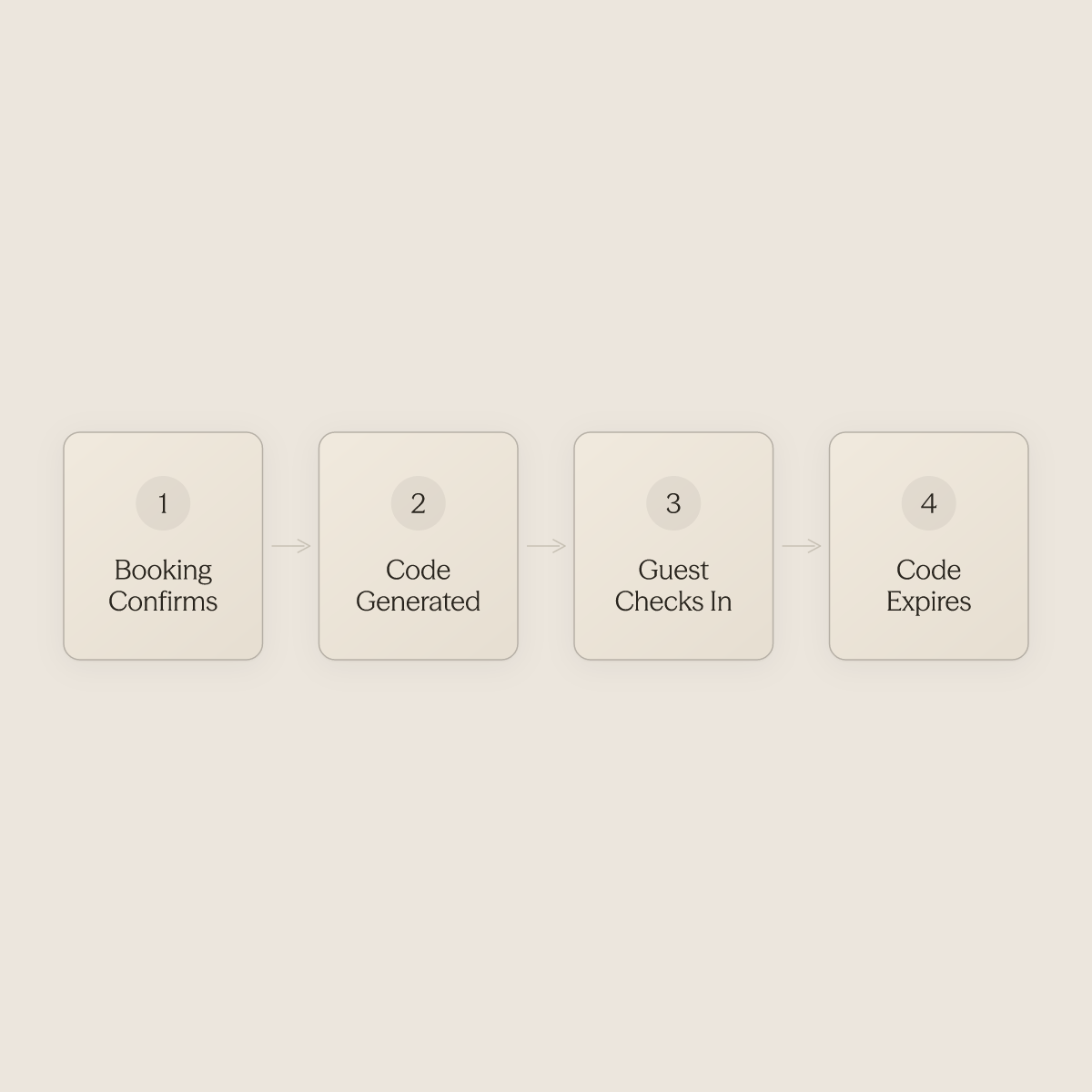
A smart lock that generates a code manually, copied and pasted into a message template, is a convenience tool. A smart lock that receives a unique code generated by the PMS at booking confirmation, delivered automatically through the messaging system, confirmed as functional before guest arrival, and expired the moment checkout is recorded, that is infrastructure. The hardware is not the automation.
The connection between the hardware event and the software response is.
Key takeaways
- Vacation rental automation stacks fail past 10 properties not because operators chose the wrong tools, but because no single tool was built to coordinate across all the others, someone still has to sit in the middle.
- Guest messaging is the highest-frequency, highest-failure-point in any rental operation, and templated auto-replies break the moment a guest asks anything outside the script.
- Operators hitting 90%+ automation rates in 2026 run a deliberate category stack, PMS, dynamic pricing, smart access, housekeeping dispatch, with a coordination layer above all of it, not another point solution bolted onto the side.
- Dynamic pricing, smart locks, and housekeeping automation each solve one job; none of them can handle the unstructured, real-time guest conversation that happens between booking and checkout.
- Erwan Le Roy's 35-property portfolio reached a 96% automation rate and sub-1-minute response times not by adding more software, but by giving one AI layer access to his own SOPs, FAQs, and decision rules.
- Conduit's AI Agents close the coordination gap by reading directly from your existing SOPs, manuals, and FAQs, then handling guest conversations autonomously, across channels, without human routing at every step.
The Real Cost of a Patchwork Automation Stack: and What It Leaves Unsolved
Most operators assume the automation problem is a coverage problem, that finding the right tool for each category will eventually add up to a solved operation. What that assumption misses is the coordination layer sitting between every tool in the stack, the invisible work that keeps growing as the portfolio does. This section breaks down why covering all five standard automation categories still leaves that gap open, and what it actually takes to close it.
The Five Categories Every Operator Tries to Cover
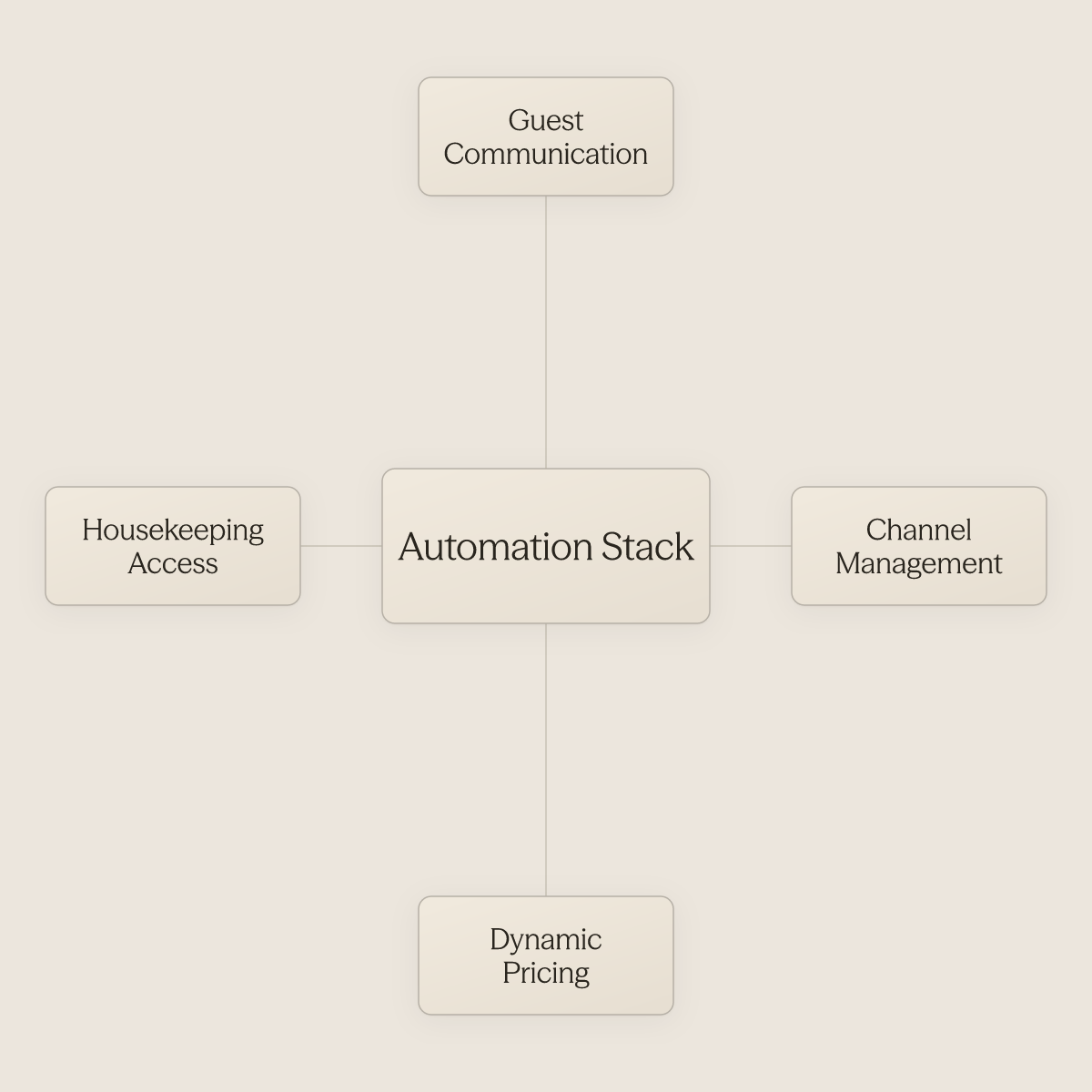
Most vacation rental property managers and operations leads believe the only fix is hiring more staff or cobbling together a stack of point solutions, a channel manager here, a messaging template there, and someone still has to sit in the middle, routing and reviewing every conversation. These are the five categories every serious vacation rental operator eventually tries to automate:
- Guest communication
- Channel management
- Dynamic pricing
- Housekeeping coordination
- Smart home access control
Cover all five and the stack looks complete on paper.
In practice, the gaps between those tools are where the real work lives. The vacation rental automation stack is not broken because the tools are bad.
It is incomplete because the tools were never designed to coordinate with each other. That distinction matters for any operator evaluating whether adding one more integration will finally close the gap.
The Hidden Sixth Layer - The Coordination Gap
The honest answer is: a person does. Every multi-tool stack quietly creates a role nobody hired for, a coordinator who reads signals across platforms, translates context between systems, and makes judgment calls no single tool was built to handle. This is the guest messaging bottleneck operators feel but rarely name.
Forum data from BiggerPockets puts the management burden at 5 to 10 hours per month per rental unit, even for operators running multiple software tools. Forum participants consistently note that routine communication alone accounts for a disproportionate share of those hours per property per week. At 15 properties, that math produces a full-time coordination role nobody budgeted for.
Why Adding Another Integration Won't Fix Your Vacation Rental Automation Stack
The short-term rental operations problem is not that the five categories lack good tools. It is that no tool holds the operator's actual decision logic, the house rules, exception policies, and guest FAQ answers a new team member would spend three weeks learning. That institutional knowledge lives in someone's head or a Google Doc nobody updates.
Benefits of Vacation Rental Automation - Time, Consistency, and Revenue at Scale
Operators who cap their automation gains at 30% often share one thing in common: they treat each tool as a standalone fix rather than a layer in a compounding system. According to Hostaway's 2025 industry analysis and corroborating data from Rental Network's market trends report, automation reduces operating costs by up to 30% for vacation rental operators, but that ceiling only materializes when the layers of a stack reinforce each other, not when they sit in parallel.
Automation Cuts Operating Costs by Up to 30%, but Only When Layers Work Together
The 30% cost reduction figure comes with a condition and a hidden structural trap most operators never name. One of the most persistent time drains in short-term rental operations is deceptively mundane: hosts manually answering the same guest questions, week after week, at all hours of the day and night:
- Check-in instructions
- WiFi passwords
- Early check-out requests
- Parking logistics
These questions don't require judgment; they require availability, and that availability is quietly consuming staff capacity that could be directed elsewhere. The coordination tax of point-solution stacks compounds this problem. Operators spending a disproportionate share of their weekly hours per property on communication alone, multiplied across a 15-property portfolio, absorb a significant volume of staff time weekly on tasks that a unified AI coordination layer demonstrably collapses to near-zero.
Most operators misattribute this cost to "being busy" rather than to a fundamental failure in how their stack is assembled. The shift isn't just about efficiency; it's architectural. Operators who install a channel manager, bolt on a pricing tool, and add a template-based messaging sequence capture the easy wins: fewer double bookings, less manual rate-setting, and some reduction in repetitive replies.
What they don't capture is the coordination cost hiding between those tools. ai's Integrations layer addresses this directly, connecting to tools operators already use, like Notion, Google Drive, and Airbnb, so the AI agent can leverage existing content without manual re-entry. That means the SOPs and FAQs a team has already built don't sit idle; they become the intelligence the system acts on.
How to Stack Vacation Rental Automation Layers for 90%+ Task Automation.
"We all agree that AI first is the best approach."
Pros and cons at a glance
The failure point is usually architectural. Rule-based template systems handle predictable scenarios well, covering the majority of guest inquiries. The remaining 30 to 40%, edge cases, property-specific questions, and mid-stay issues, escalate to a human by default.
That human becomes the bottleneck. ai's AI Agents layer changes the equation. AI Agents are most beneficial when a business receives a high volume of repetitive guest messages and has existing documentation, SOPs, FAQs, and manuals, to train the agent on.
Once connected to that documentation, the agent begins delivering its first automated guest replies within days. Critically, it operates continuously, before, during, and after a stay, reasoning through edge cases rather than simply pattern-matching against templates. AI agent layers trained on an operator's own SOPs and FAQs push automation rates above 90% for exactly this reason.
The Workflows layer reinforces this further. Triggered automatically after booking confirmation, check-in, or a detected keyword in a conversation, Workflows handle the recurring, predictable guest touchpoints that currently require a staff member to remember, initiate, and execute manually.
Finally, the Inbox gives the operations or support team a single place to monitor, review, and manage every conversation the AI agent is handling across multiple platforms and properties simultaneously. The goal is not to remove human oversight; it is to make that oversight scalable, so a team managing 15 properties isn't absorbing 60 staff-hours a week on tasks the system should have handled. Scale the portfolio, not the chaos with it.
13 Best Vacation Rental Automation Tools & Software for 2026 - Ranked by Category
The operators consistently hitting 90%+ automation rates in 2026 are not running one all-in-one platform. They are running a deliberate category stack where each tool owns one job, and an AI coordination layer sits above all of it to handle the communication, routing, and decision-making that no property management system was designed to do autonomously. The 13 tools below are organized by that logic: category first, then fit by portfolio size.
For context on what "best in class" looks like: operators using purpose-built AI guest communication alongside their existing stack have documented 96% task automation rates, response times dropping from 57 minutes to under 2 minutes, and portfolio coverage shifting from 25 staff members to 2 per shift across 270 properties. Operators can automate a substantial majority of guest messaging with the right AI-powered tools in place.
1. Conduit.ai - Best AI Guest Communication for Vacation Rental Automation
Conduit's AI agents sit above your existing PMS and channel manager as the coordination intelligence layer, reading from your own SOPs, guest FAQs, and house rules to respond autonomously across SMS, email, and WhatsApp in under two minutes. Darren, founder of Easy BnB, put it plainly after restructuring his entire operation around it: "We all agree that AI first is the best approach." The benefit is most pronounced when a business receives a high volume of repetitive guest messages and already has existing documentation, SOPs, FAQs, or property manuals to train the agent on. The honest tradeoff: operators without existing documentation need to build that knowledge base before the AI agent performs at its ceiling.
2. Guesty - Best All-in-One Property Management Platform
Guesty is the right anchor for multi-property operators who need a single command center consolidating reservations, owner reporting, financials, and multi-channel calendar sync. The tradeoff is cost and complexity: Guesty's pricing is structured for portfolios where that breadth earns its keep, and operators under 20 units often pay for capabilities they rarely use.
3. Hostaway - Best Channel Manager with Built-In Automation Workflows
Hostaway connects to a broad range of OTA and direct booking channels and handles triggered messaging, task assignment, and review requests without requiring a separate tool for each job. The practical limitation is that built-in automation still means template-based logic: it handles predictable sequences well, but edge-case guest conversations still land in a human inbox. Hostaway is the right pick when channel breadth and workflow consolidation matter more than autonomous guest communication.
4. PriceLabs - Best Dynamic Pricing Automation for Revenue Optimization
PriceLabs uses local demand signals, competitor rates, booking pace, and seasonality data to automatically adjust nightly rates across a portfolio, removing the need for manual price-setting entirely. Dynamic pricing tools typically increase vacation rental revenue by 10 to 40% compared to static pricing, depending on market and baseline pricing discipline. It is purpose-built for short-term rental operators rather than adapted from hotel revenue management software, which matters when your portfolio has irregular unit types and seasonal demand patterns. The limitation: it requires regular rule review to stay calibrated as local market conditions shift.
5. Turno - Best Automated Cleaning & Turnover Scheduling Tool
Turno (formerly TurnoverBnB) automates cleaner assignment, checkout-triggered scheduling, photo checklist verification, and payment, removing the coordinator role from every turnover. The marketplace model works well in high-density metro markets where cleaner supply is strong, but thins out considerably in rural or lower-density markets. Rural operators should evaluate whether marketplace coverage matches their specific market before committing.
6. Hospitable - Best Automated Messaging & Review Automation for Independent Hosts
Hospitable is the most accessible entry point for independent hosts who want to automate the predictable 60% of guest communication: pre-arrival instructions, check-in codes, mid-stay check-ins, and review request triggers. The ceiling is clear: template logic handles what you anticipated, not what guests ask at 11 p.m. on a Friday. Operators who grow past 10 to 15 properties typically find that Hospitable handles volume but not complexity, the inflection point where an AI agent layer becomes the next logical addition.
7. RueBaRue - Best Digital Guidebook & In-Stay Communication Automation
RueBaRue automates the in-stay guest experience through digital guidebooks, local area recommendations, and SMS-based communication sequences that trigger automatically from check-in. It reduces the volume of "where is the nearest grocery store" messages operators field manually every week. The tool is narrow by design: it handles in-stay experience well but does not replace a full guest communication layer or integrate deeply into maintenance workflows. Best used as a complement to a broader communication stack.
8. Beyond - Best Vacation Rental Revenue Management with Automated Rate Publishing
Beyond positions itself as a revenue management platform rather than a pure dynamic pricing tool, adding market data reporting and portfolio-level analytics alongside automated rate publishing to connected OTAs. The tradeoff relative to PriceLabs is customization depth: Beyond's interface suits operators who want sensible defaults without extensive rule-building, while operators who want granular control over pricing logic will find PriceLabs gives them more levers to pull.
9. Ownerrez - Best Vacation Rental Automation for Direct Booking Website Owners
Ownerrez is a strong option for operators who have invested in direct booking as a primary channel and need a PMS that treats it as a first-class citizen. It handles direct booking website integration, automated payment processing, damage deposit management, and rental agreement delivery without third-party add-ons. The limitation is its interface: Ownerrez has a steeper learning curve than Guesty or Hostaway, and operators who are not comfortable configuring systems themselves will spend more onboarding time here.
10. StayFi - Best Wi-Fi Marketing Automation for Vacation Rental Guest Data Capture
StayFi turns the guest Wi-Fi login into a first-party data capture moment, automatically collecting guest emails and enabling post-stay marketing sequences, a channel OTAs structurally restrict by withholding guest contact data from operators. For operators building a direct booking strategy, this is the infrastructure layer that makes repeat guest marketing possible at all. StayFi solves one specific problem exceptionally well, making it a revenue amplifier for a mature stack rather than a foundational automation layer for operators still solving core operational bottlenecks.
11. Minut - Best Automated Noise & Occupancy Monitoring for Vacation Rentals
Minut automates property monitoring through noise detection, occupancy sensing, and temperature alerts, sending automated warnings to guests before a noise event escalates to a neighbor complaint or platform violation. The tradeoff is false-positive management: noise thresholds require calibration per property, and poorly configured alerts generate guest friction rather than prevent it. Minut is most beneficial for operators managing properties in noise-sensitive urban neighborhoods or HOA-governed communities where one incident has outsized consequences.
12. Jetstream - Best Vacation Rental Automation Platform for Enterprise Property Managers
Jetstream is built for enterprise-scale property management groups that need centralized operations across large, distributed portfolios with multiple brands or ownership structures. (Positioning according to industry data, published platform documentation, and enterprise tier feature set.) For operators under 50 units, the platform's depth is likely overkill and the pricing reflects its enterprise positioning. The right fit is a regional or national property management company that has outgrown mid-market PMS platforms.
13. Lodgify - Best Vacation Rental Website Builder with Integrated Booking Automation
Lodgify combines a direct booking website builder with a lightweight PMS and channel manager, making it the most accessible entry point for operators who want to reduce OTA dependency without managing three separate tools. Its booking automation handles availability sync, payment collection, and basic guest messaging in one place. Lodgify's property management features are sufficient for operators under 15 units but show gaps at scale, particularly around owner reporting, advanced task management, and multi-user workflows.
It is the right starting point, not permanent infrastructure for a growing portfolio. Most operators will instinctively reach for a PMS or channel manager first, and that is the right call for operations infrastructure.
The operators who break through that ceiling added the one layer their PMS was never designed to be: an AI coordination layer trained on how their specific operation actually runs. Every tool in this list automates a specific job. The harder question is whether the AI communication layer you choose, whether that is Enso Connect, Lynx Automation, or another purpose-built option, is trained on how your operation runs, or whether it is a generic responder that breaks the moment a guest asks something your template library did not anticipate.
That distinction is exactly what the next section unpacks.
96% Task automation rate across 270 properties
Related Reading
- Best Pms For Short Term Rentals
- How To Manage A Vacation Rental Property
- Vrbo Smart Pricing
- How To Automate Airbnb Business
- Airbnb Self Check In
- Vrbo Management
- Best Apps For Short Term Rentals
- Best Pms For Airbnb
- Best Accounting Software For Short Term Rentals
How AI Guest Communication Automation Works: and Why Generic Tools Fall Short
Guest messaging is the highest-frequency touchpoint in any vacation rental operation, and the one most likely to break under portfolio growth. AI-powered guest communication tools can automate the full messaging lifecycle, from pre-arrival instructions through mid-stay support to post-checkout review requests, without a human routing each exchange. The stakes in 2026 are no longer theoretical.
As Erwan Le Roy of Cash Flow Street puts it plainly: "Right now you don't have an option anymore. We see a divergence of hosts now: the hosts that use AI and the hosts that don't use AI. If you compete human versus AI, I'm sorry, you lost the game.
" The question operators face is not whether to automate that lifecycle, but which type of automation holds up when a guest asks something your template has never seen before.
The Automated Guest Messaging Lifecycle
Automated guest communication covers five sequential touchpoints:
- Booking confirmation
- Pre-arrival instructions
- Check-in day logistics
- Mid-stay check-ins
- Post-checkout review requests
Each is predictable in timing and triggerable by a reservation event, which is why template-based sequences handle them adequately at low volume.
That second category is where booking conversion, review scores, and operator sleep schedules take the hit. The deeper operational cost is what that 40% does to your team around the clock. Eliminating the bottleneck of around-the-clock guest communication is not a convenience upgrade; it is the difference between a portfolio that scales and one that adds headcount every time it adds doors.
Timely, consistent replies directly improve guest experience and review scores; delayed or inconsistent ones compound across a distributed portfolio where brand voice is already hard to standardize. Property managers handling multiple OTA inboxes manually, Airbnb, Vrbo, direct booking, SMS, know exactly how fast a single unanswered message at midnight becomes a one-star review by morning.
Rule-Based Templates vs. SOP-Trained AI Agents
The capability line between template automation and AI agents is architectural, not cosmetic. Template tools match an incoming message to a keyword trigger and return a pre-written reply. That works until a guest asks whether the parking gate code is the same as the front door code, or whether they can check in 30 minutes early because their flight landed ahead of schedule.
Those questions have no universal answer; the correct answer lives in your house rules, your check-in guide, or a conversation you had with your cleaner last Tuesday. Generic or entry-level tools lack AI automations built for real-world guest situations exactly like these, leaving hosts with theoretical workflows that collapse the moment an actual guest sends an actual edge-case message. The hosts who feel this most acutely are those managing five or more properties across multiple platforms, each with its own inbox, its own quirks, and its own guests expecting a human-quality reply within minutes.
An SOP-trained AI agent closes that gap by reading your own documentation directly and constructing a property-specific answer without a human in the loop. Conduit's AI Agents are most beneficial precisely when a business receives a high volume of repetitive guest messages and already has existing documentation, SOPs, FAQs, property manuals, to train the agent on. Once those documents are connected, the first automated guest reply is live, and from that point forward the agent responds continuously, before, during, and after every stay, without staff intervention on each exchange.
As Enso Connect's research notes, purpose-built hospitality AI trains on the operator's own documentation, enabling accurate responses without constant prompt maintenance. There is a critical distinction worth naming here: guests can tell when they are not speaking to a real intelligence. The robotic, one-size-fits-all automated responses that large property management companies deploy frustrate guests precisely because they feel dismissive, the reply arrives but the issue goes unresolved.
An agent trained on your property's specifics produces replies that are contextually accurate and on-brand, which is what protects review scores at scale. Standardizing guest communication quality and brand voice across a large, distributed portfolio is not achievable with a shared keyword library; it requires an agent that knows your properties the way your best team member does. Conduit's Workflows layer handles the predictable, trigger-based touchpoints, booking confirmation, check-in day message, post-checkout review request, firing automatically after a reservation event or keyword is detected, so your team is never manually queuing those sequences.
The Inbox sits above all of it: a single surface where your operations or support team can monitor, review, and manage every conversation the AI agent is handling across platforms simultaneously, without toggling between OTA dashboards. And for operators who already run their documentation in Notion, Google Drive, or maintain their listing data on Airbnb, Conduit's Integrations pull that existing content into the agent without requiring manual re-entry, your knowledge base is wherever you already keep it.
Five Questions to Ask Any AI Messaging Vendor
Before signing a contract, push any vendor on these five points:
- Does the system train on your documentation, or a shared knowledge base?
- How does it handle a question it cannot confidently answer, does it escalate gracefully or return a wrong reply?
- Which channels does a single agent cover simultaneously, SMS, email, WhatsApp, and OTA inbox, or only one?
- Who maintains the knowledge base when your house rules change, and does that update propagate instantly to every property?
- Can your operations team monitor live conversations in a single inbox without platform-hopping, and does the tool connect to the systems, Notion, Google Drive, Airbnb, you already use, or does it demand you rebuild your documentation inside its own walled garden?
Smart Home & Access Control Automation - Locks, Codes, and Energy Management
Managing physical access and property climate across a vacation rental portfolio means dozens of per-booking manual steps that compound into significant operational drag at scale. Smart locks and thermostat automation eliminate that drag by tying credential creation, code expiration, and energy setpoints directly to booking events, so the reservation itself does the work. The details matter here, though, because the same network configurations that keep a property secure can silently break device discovery in ways that look like hardware failure until you know where to look.
How Smart Locks Auto-Generate and Expire Unique Guest Codes
Smart locks for vacation rentals automatically generate a unique door code the moment a booking confirms, then expire that code at checkout, with no key exchange required. Platforms like Lynx Automation connect directly to your PMS booking trigger, so code creation happens as a zero-manual-step output of the reservation itself. The guest never needs to coordinate pickup, and the operator never needs to remember to rotate credentials between stays.
For portfolios managing access across 15 or more units, that elimination of per-booking manual steps compounds quickly into real hours recovered each week. One non-obvious barrier worth flagging for self-hosted setups: if your network uses VLAN segmentation, a common security practice, Matter and Thread device discovery can silently break. mDNS is link-local and does not traverse VLANs without an mDNS repeater configured explicitly for that purpose.
Operators who hit this wall often assume a hardware fault before realizing the device is simply unreachable across network segments. It is a solvable configuration problem, but it is not documented clearly in most lock manufacturer guides.
Thermostat Automation Between Stays, Vacant-Mode Scheduling
Smart thermostats cut utility costs by returning the property to an energy-saving setpoint the moment a guest checks out. According to HomeandCo's landlord resource guide, smart thermostats save landlords up to 15% on energy costs by automatically adjusting temperature settings when a property is unoccupied. The thermostat shifts back to a comfortable range roughly an hour before the next check-in, timed against the booking calendar.
Two failure modes operators encounter in practice are worth designing around from the start. First, HVAC running wastefully when a door or window is left open after checkout is a genuine cost leak. The fix is an automation that disables heating and cooling after the opening persists beyond a set duration, typically around five minutes. Second, some properties have rooms, often a back bedroom, where the central system simply does not reach adequate temperature. Supplemental inline fans wired into the same automation layer are a common workaround that keeps the guest experience consistent without oversizing the HVAC.
AvantStay's energy management guide covers this layered approach in more depth. The trade-off remains: this setup requires a thermostat model that integrates with your PMS or smart home hub. A standalone device without that connection still needs manual scheduling, reintroducing the human step it was supposed to remove.
The Delivery Problem, Why the Code Alone Is Not Enough
The failure point most operators discover too late is not the lock hardware itself; it is the gap between code generation and code delivery. A guest arriving on the same day needs the code, the entry instructions, and the check-in reminder to arrive without anyone on the operations team logging in to send them.
Hosts managing larger portfolios consistently report that the locked-out guest scenario almost never traces back to a hardware fault; it traces back to a message that was never sent. This is precisely where the communication layer becomes load-bearing infrastructure. Le Roy, a multi-property operator, found that his virtual assistant team was spending their days fielding the same mundane questions, Wi-Fi codes, parking instructions, check-in details, while higher-value work went untouched.
Delivering consistent, around-the-clock instant responses across all time zones was pulling him back into daily operations despite having SOPs in place; he described micromanaging the team like "the mom." The root problem was not effort; it was the absence of a system that could act on existing documentation at the moment a guest message arrived, regardless of the hour.
Hardware as the Physical Extension of the AI Communication Layer
The real unlock is treating the smart lock not as a standalone convenience feature but as one node in a coordinated guest lifecycle, where the booking trigger, the code, the delivery message, and every follow-up question a guest asks at midnight are handled by the same connected layer. AI Agents are most valuable precisely in this scenario: when a business receives a high volume of repetitive guest messages and already has SOPs, FAQs, or property manuals it can train the agent on. Once those documents are connected, the agent begins handling guest replies automatically, before, during, and after a stay, without a human monitoring every thread.
For operators managing communications across multiple platforms or properties simultaneously, the Inbox provides a single surface where the operations or support team can monitor and review all conversations the AI agent is handling, stepping in only when genuine judgment is required. Workflows close the remaining gap: after a booking confirms, after check-in, or when a specific keyword surfaces in a conversation, a triggered workflow can push the right message, access code, parking instructions, or checkout reminder, without anyone on the team manually initiating it. The hardware generates the credential; the communication layer ensures it actually reaches the guest.
Housekeeping & Maintenance Automation - Auto-Schedule, Notify, and Verify Without Manual Coordination
Turnover quality is the last operational mile before a guest writes their review, and it is the one most operators are still running on text messages and gut instinct. The 25% property management fee remote hosts pay is not primarily compensation for judgment; it is a structural arbitrage on the coordination tax: the majority of what that fee covers (housekeeping dispatch, maintenance follow-up, status confirmation) maps precisely to the task categories operators most want to automate, meaning purpose-built AI that handles those workflows autonomously does not merely reduce management costs, it eliminates the underlying dependency that makes the 25% fee structurally defensible in the first place. What makes this especially costly is that most hosts do not adopt cleaning software until the coordination pain becomes acute, reacting to chaos rather than preventing it.
Property managers running multiple properties face the same pattern at scale: manual coordination of housekeeping and maintenance tasks across units creates compounding drag that no group chat can resolve. The hosts we work with consistently describe spending disproportionate time sitting inside threads, between guests, cleaners, contractors, and owners, that should never have required a human intermediary at all.
Checkout Detection Triggers Instant Cleaner Assignment, No Coordinator Needed
"Property managers struggle with manual coordination of housekeeping and maintenance tasks across multiple properties, driving demand for dedicated housekeeping portals and mobile task management tools."
Cleaning and turnover automation works by connecting your booking calendar directly to your housekeeping schedule: the moment a checkout is detected, the system auto-assigns the next available cleaner and sends a job notification without any human input. Tools like Turno (formerly TurnoverBnB) operate on this trigger-based model, so a coordinator is not the bottleneck between a departed guest and a guest-ready unit. The practical result is that turnover lead time shrinks to minutes, not the hours it takes for a group chat thread to surface a response.
Conduit's Workflows layer sits directly on top of this logic. Workflows fire after a trigger event occurs in a guest lifecycle, after checkout is confirmed, after check-in, or when a specific keyword is detected, making them most valuable precisely when the business has recurring, predictable guest touchpoints that currently require manual staff action. A checkout is the clearest possible example: fully predictable, recurring on every booking, and until now dependent on someone manually reading a calendar and firing off a message.
Conduit removes that person from the chain without removing the action.
Photo Checklists and Time-Stamped Completion Verification Replace the Status-Chase Call
Time-stamped photo verification built into housekeeping platforms replaces the status-chase call entirely: cleaners submit room-by-room photo checklists through a mobile app, and the system logs completion with a timestamp before marking the unit guest-ready. Industry data suggests that cleanliness and maintenance failures account for the majority of low-star reviews on Airbnb and VRBO, making photo-verified turnover a direct input to your review score, not a back-office nicety. The coordination layer that surrounds that verification step, confirming the cleaner received the job, following up when a task stalls, notifying the owner when a unit is ready, is where manual overhead compounds across a portfolio.
Conduit's Workflows handle exactly these recurring, post-trigger confirmations automatically, keeping guests, cleaners, contractors, and owners coordinated without a human sitting in every thread. For operators expanding their portfolio, this matters structurally: it is the mechanism that enables rapid portfolio growth without a proportional increase in support headcount, because the coordination work scales with automation rather than with staff.
A Guest-Reported Broken Appliance Becomes a Maintenance Ticket Before a Human Reads the Message
Guest maintenance reports arrive unpredictably and demand immediate routing, to the right contractor, with the right context, without the host manually triaging an inbox. Conduit's AI Agents are trained on your existing SOPs, FAQs, and property manuals, and begin handling repetitive inbound messages automatically within days of connecting that documentation. When a guest flags a broken appliance, the agent captures the report, applies the relevant protocol from your SOPs, and routes the action, creating a maintenance touchpoint before any human has read the original message.
The Inbox gives your operations team a single surface to monitor, review, and manage every conversation the AI is handling across properties and platforms simultaneously, so oversight does not require sitting inside individual threads. The result is that a guest-reported issue moves from message to coordinated response faster than a manually managed inbox can triage it, and the guest's pre-checkout experience, the one that shapes the review they are about to write, stays intact.
Dynamic Pricing & Channel Management Automation - Maximize Revenue Across Every OTA
Leaving nightly rates static or managing calendars manually across multiple platforms is one of the fastest ways to leave revenue on the table and create guest-facing problems at the same time. Dynamic pricing algorithms and channel management tools solve both sides of that equation by automating rate decisions based on real market signals and keeping availability accurate everywhere a listing appears. Understanding how these systems work, and where they break down without the right foundation, is what separates operators who scale profitably from those who stay stuck reacting to problems.
How Dynamic Pricing Algorithms Actually Set Your Nightly Rate
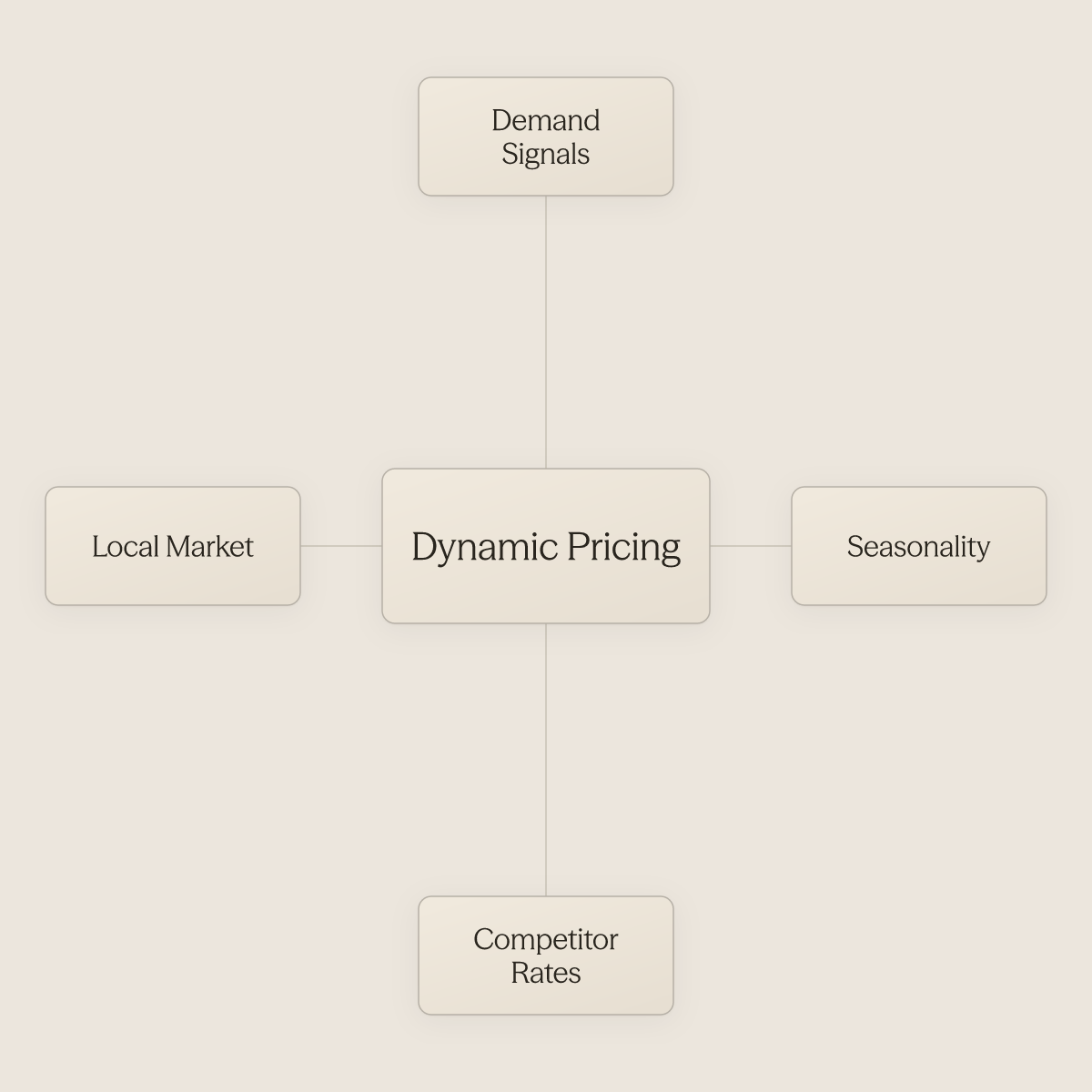
Dynamic pricing tools adjust nightly rates automatically based on demand signals, seasonality, competitor rates, and local market conditions, removing the need for manual rate-setting across your listings. Algorithms pull real-time data on nearby events, booking pace, and platform supply to price each night at what the market will actually bear. According to industry data, dynamic pricing tools typically increase vacation rental revenue by 10 to 40% compared to static pricing. PriceLabs offers granular, hands-on control for operators who want to tune the logic themselves; Beyond and Wheelhouse take a more automated approach. The right choice depends on how much time your team has to manage pricing rules directly.
Why Real-Time Calendar Sync Is the Foundation of Multi-OTA Revenue
A channel manager prevents double bookings by syncing availability across Airbnb, VRBO, and Booking.com the moment a reservation lands. Without it, a booking on one platform can sit unblocked on another for minutes or hours, enough to create a double booking with immediate guest experience damage. Platforms like Hostaway and Guesty connect to 60-plus OTAs, meaning your calendar reflects reality everywhere simultaneously. For multi-channel operators, this is the non-negotiable foundation that makes every other revenue decision credible.
The Compounding Problem Nobody Warns You About
Higher occupancy from better pricing directly generates more guest messages, not fewer. A 20-property portfolio running at 75% occupancy handles meaningfully more booking inquiries, check-in questions, and mid-stay requests than the same portfolio at 55%. The revenue gain from dynamic pricing is real, but it creates a downstream communication load that manual handling quietly erodes. An operator celebrating a 25% ADR lift can find that lift partially absorbed by the staffing cost of the message volume it produced. A guest inquiry that waits 40 minutes during a peak weekend is a booking at risk.
How to Build Your Vacation Rental Automation Stack - Core Components by Portfolio Size
Building a vacation rental automation stack in the wrong order is one of the most expensive mistakes operators make, and the right sequence depends entirely on where you are in your growth. Each layer covered here creates the operational foundation the next one requires, so skipping ahead means building on unstable ground. What follows maps the core components by portfolio size, from the non-negotiables at one to five properties through the AI coordination layer that becomes structurally necessary as message volume outpaces any human team.
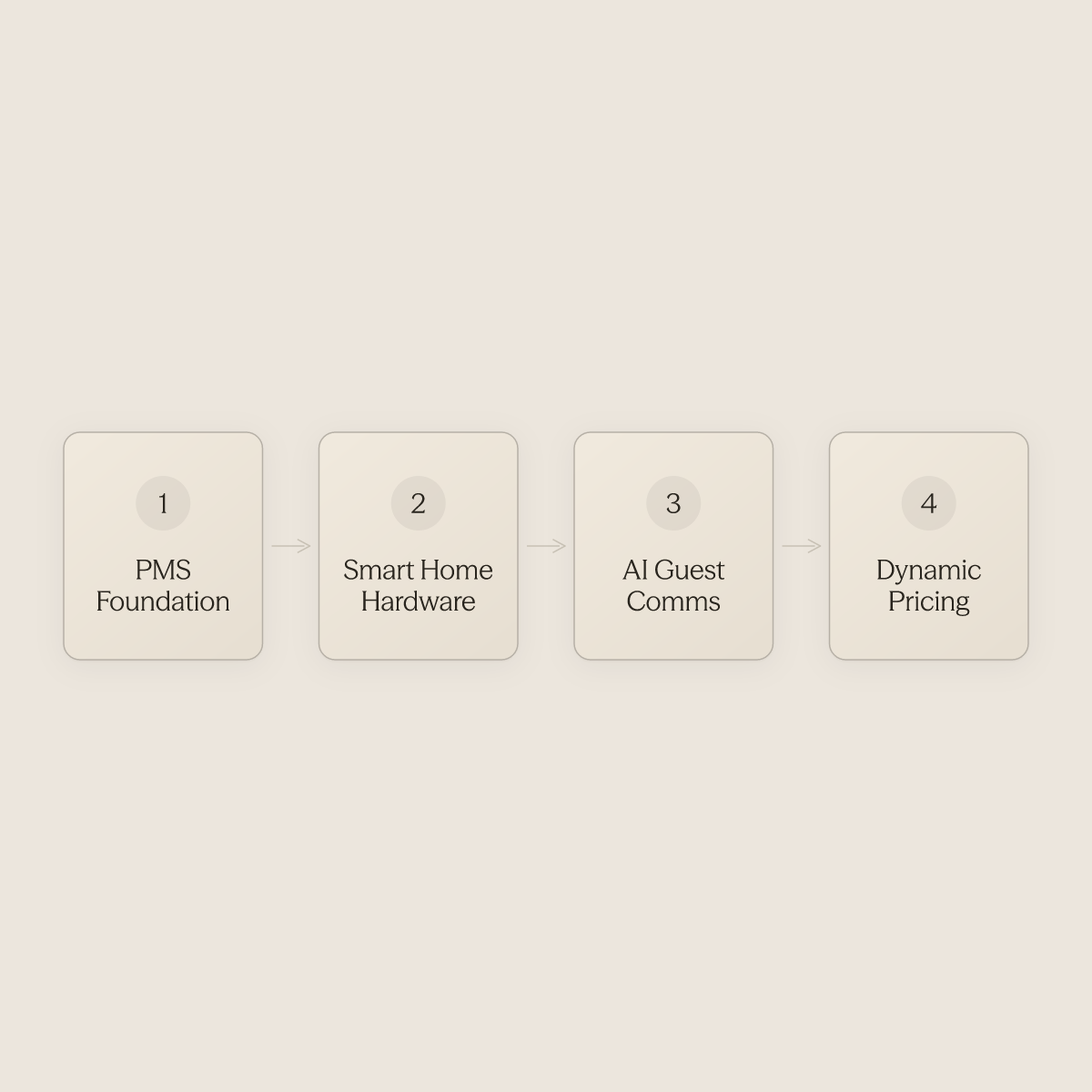
Four Vacation Rental Automation Stack Layers, Built in Order
The core components of a vacation rental automation stack are a property management system, AI-powered guest communication, smart home hardware, and dynamic pricing, built in that sequence, because each layer creates the operational surface the next one needs. According to Hostfully's Tech Stack Study, AI guest communication shows the steepest adoption curve of any category by portfolio size, jumping from 9% at 1 to 5 properties to 39% at 100 or more. That gap is structural: operators who reach 15 or more properties without an AI coordination layer aren't choosing manual workflows, they're hitting a wall where per-property message volume mathematically exceeds what any human team can route consistently.
Layer 1 and 2 (1 to 5 Properties): PMS Foundation and Smart Home Hardware
At 1 to 5 properties, the non-negotiables are a PMS with channel management and basic smart home hardware. A PMS syncs calendars across Airbnb, VRBO, and Booking.com in real time, eliminating double bookings. Smart locks generate unique guest codes on booking confirmation and expire them at checkout, removing key exchanges entirely. These two layers don't automate the operation, they create the data infrastructure every upstream layer depends on. Jumping to dynamic pricing or AI messaging first is the most common sequencing mistake small operators make.
Layer 3 (6 to 15 Properties): Dynamic Pricing as the Revenue Multiplier
At six to fifteen properties, dynamic pricing shifts from nice-to-have to a direct revenue driver. Algorithms adjust nightly rates based on demand signals, seasonality, and competitor rates automatically. Operators who move from manual to algorithm-driven pricing see revenue lifts of 10 to 40%, though results depend on market conditions and baseline pricing discipline.
Layer 4 (15 or More Properties): The AI Coordination Layer. Most operators assume they need to finish building their stack before an AI agent becomes relevant. The hidden cost: every month without the coordination layer, the PMS and pricing tool operate as disconnected silos rather than a unified system.
Vacation Rental Automation Stack - Which Layer Do You Need Next?
Use this decision framework before adding any new tool to your stack.
| Portfolio Size | Layer Priority | Minimum Tools Required | Skip Until Later |
|---|---|---|---|
| 1–5 properties | PMS + Smart Home Hardware | PMS with channel sync, smart locks | Dynamic pricing, AI messaging |
| 6–15 properties | Dynamic Pricing | PriceLabs or Beyond on top of PMS | AI agent layer, enterprise PMS |
| 15–30 properties | AI Guest Communication | Conduit AI Agents + existing PMS | Enterprise platforms (Jetstream) |
| 30+ properties | Full AI Coordination | AI agents, dynamic pricing, monitoring (Minut), Wi-Fi capture (StayFi) | Nothing, all layers now earn their keep |
Quick-check criteria before purchasing any automation tool:
- Does this tool replace a task someone on my team does manually today? - [ ] Does it integrate with my existing PMS without a custom build? - [ ] Does it handle edge cases, or only the 60–70% of predictable scenarios? - [ ] Will I need to hire or retain a coordinator to bridge this tool and the rest of my stack? - [ ] Is there a documented operator outcome (case study, data point) at my portfolio size?
Next steps
If your portfolio has outgrown what any human inbox can handle consistently, the path forward starts with replacing the coordination layer, not expanding it. The bottleneck was never headcount or tool count. It was the absence of an AI layer trained on how your specific operation actually runs. Start with our AI for hospitality.
The compounding math makes the next step clear. Operators spending 30 to 60 staff-hours weekly on routine guest messaging are absorbing a cost most misattribute to being busy, when it is actually an architectural failure in how their stack is assembled. At the same time, dynamic pricing gains of 10 to 40% in ADR are only fully realized when the downstream communication layer can absorb the resulting inquiry volume without a human bottleneck eroding response times. Automating pricing while leaving guest communication manual means systematically leaving the conversion tail of your own revenue gains uncaptured. Those two structural gaps point to the same action: an AI coordination layer trained on your SOPs, not a generic responder that collapses on the first edge case.
Start with AI for hospitality to see how Conduit's agents pull from your existing documentation and begin handling guest communication autonomously within days. Operators who already have SOPs and FAQs in place see the automation rate climb fastest, because the agent starts with the institutional knowledge your best team member spent months building.
Frequently Asked Questions
What exactly is vacation rental automation?
Vacation rental automation is the practice of using software, smart devices, and connected workflows to handle repetitive operational tasks without a human decision at every step, so a booking triggers check-in instructions, a checkout triggers a cleaning assignment, and guest questions get answered automatically. It spans three distinct layers: software that manages bookings and messaging, hardware that controls physical access and environment, and the conditional logic connecting those two layers into a single operating system. Most operators have pieces of all three but very few have them working as one.
What kind of results can I actually expect from automating my vacation rental operations?
Industry data shows automation reduces operating costs by up to 30% for vacation rental operators, but only when the layers of a stack reinforce each other rather than sit in parallel. Operators using a purpose-built AI guest communication layer alongside their existing stack have documented 96% task automation rates, response times dropping from 57 minutes to under 2 minutes, and portfolio coverage shifting from 25 staff members to 2 per shift across 270 properties. Fast response times alone can boost bookings by as much as 116%, making communication speed a direct revenue variable.
At what portfolio size does my current automation setup start to break down?
Below around five or six properties, a property management system, channel manager, and pricing tool bend but don't break. The break happens fast around 15 properties, where the coordination gaps between point-solution tools quietly create a full-time role nobody budgeted for, forum data puts management burden at 5 to 10 hours per month per unit even for operators running multiple software tools. Operators who scale past 20 or 50 properties without proportional hiring closed that gap between tools before it closed in on them.
Why doesn't adding another integration fix the coordination problems in my stack?
The problem isn't that individual tools are bad, it's that they were never designed to coordinate with each other, and no single tool holds the operator's actual decision logic: the house rules, exception policies, and guest FAQ answers a new team member would spend three weeks learning. That institutional knowledge lives in someone's head or a Google Doc nobody updates, so someone still has to sit in the middle routing and reviewing every conversation. Adding another integration doesn't eliminate that hidden coordinator role; an AI agent layer trained on your own SOPs and FAQs is what collapses it.
What do I need to have in place before AI guest communication will actually perform well?
AI agents deliver the strongest results when a business receives a high volume of repetitive guest messages and already has existing documentation, SOPs, FAQs, or property manuals, to train the agent on. Operators without that documentation need to build the knowledge base first, because the agent performs below its ceiling until it is in place. Once connected to that documentation, the agent can begin delivering automated guest replies within days and operate continuously before, during, and after a stay.
Stay in the loop
Get the latest on AI automation, product updates, and customer stories.

