10 VRBO Management Tools to Run Your Rentals Smarter


VRBO Management Tools
Best Tools to Run Your Rentals Smarter
Most VRBO operators obsess over listings and ignore the gap that actually kills bookings: slow guest communication. Here is where the real money is being lost, and how to fix it without adding headcount.
VRBO management covers more ground than most owners initially expect. The four core components are listing optimization, booking management, guest communication, and property maintenance coordination. Most operators invest heavily in the first and last, then treat the middle two as administrative afterthoughts.
That ordering is exactly backwards, and it costs real money. Most vacation rental property managers and operations leads think that consistent, on-brand guest communication across a growing VRBO portfolio requires a dedicated human team, and that the best available fix is hiring more staff or installing a basic PMS to keep things organized. In reality, vacation rental management operates across four distinct functions:
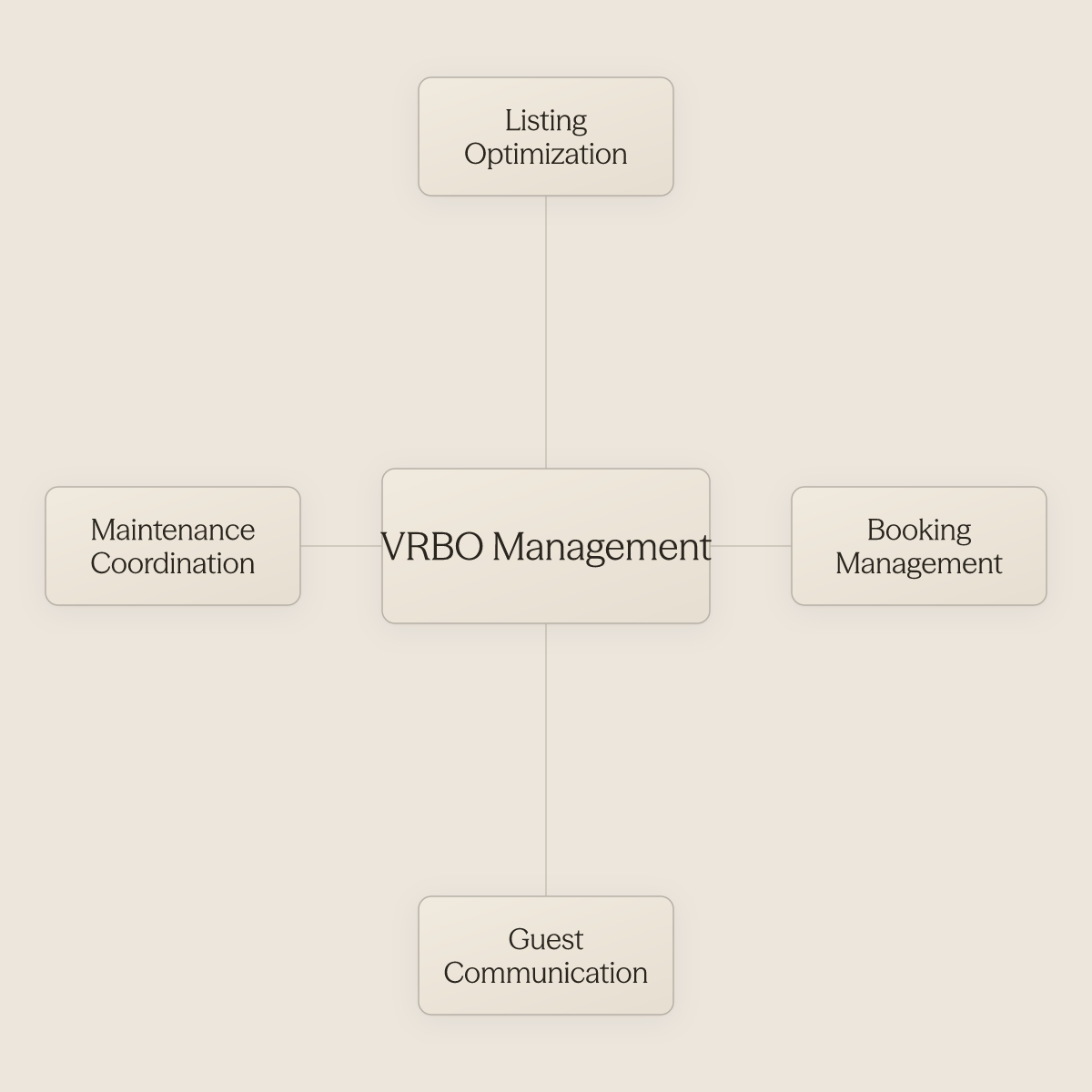
- Listing optimization, which covers photos, descriptions, and amenity filters
- Booking management, which handles reservations, calendar sync, and pricing
- Guest communication, which spans every touchpoint from inquiry to checkout review
- Property maintenance coordination, which keeps the physical asset guest-ready between stays
Each pillar has its own tools, its own failure modes, and its own return profile. The mistake most operators make is treating them as equally weighted when they are not. Listing quality is visible, measurable, and satisfying to fix.
Operators pour time into this pillar first, and the industry obliges with endless advice on staging and search rank. The problem is that a great listing gets guests to click; it does not close the booking. Multiple OTA operators and industry analysts have documented response time as a core algorithmic ranking signal, meaning communication infrastructure directly determines search visibility, not listing content alone.
The hidden cost is the communication layer running entirely on human bandwidth, with no redundancy. When the person on shift is busy, asleep, or having an off night, guests feel it, and that feeling shows up in a three-star review by morning. Faster response times meaningfully lift booking conversion rates, a pattern reported across major OTA platforms and confirmed by operators who have closed off-hours coverage gaps.
Operators who close this gap with AI for hospitality infrastructure remove the structural inconsistency without adding payroll. Conduit's AI agents read directly from an operator's own SOPs and FAQs, meaning the benefit is most pronounced for operations that already have documented processes, house manuals, or FAQ files in any format. Operators without existing documentation will need to build that foundation before the agents can resolve inquiries autonomously.
Key takeaways
- Guest communication and booking management drive more revenue impact than listing optimization or maintenance coordination, most owners have that priority order exactly backwards.
- A 1 AM message that goes unanswered until 7 AM doesn't just frustrate the guest, it registers as a response failure in VRBO's algorithm and surfaces in the review they leave before checkout.
- Professional VRBO management companies charge 10 to 50% of rental revenue, and what's actually covered inside that range varies enough to make the fee structure the most important thing to audit before signing.
- The VRBO Owner App is a capable starting point for solo hosts, but the advantage compresses fast as portfolio size grows, the tool doesn't scale, the communication load does.
- A layered tool stack, PMS, dynamic pricing, channel manager, still leaves one gap: every routine guest message still waits for a human to read it, decide, and type a reply.
- Erwan Le Roy's 35-property operation reached a 96% AI automation rate and sub-1-minute response times without adding headcount, the lever wasn't more tools, it was removing the human from routine guest touchpoints.
- conduit.ai's AI Agents close that gap by handling guest conversations autonomously, pulling answers directly from your SOPs, manuals, and FAQs, across channels, around the clock, without a human in the loop.
The Guest Communication Gap That Breaks VRBO Portfolios at Scale
Every time a guest sends a message at 1 AM and nobody answers until 7, that silence doesn't just frustrate the guest. It registers on VRBO's algorithm as a response failure, and it shows up in the review they leave before checkout. The common assumption among vacation rental property managers and operations leads is that consistent, on-brand guest communication across a growing VRBO portfolio requires a dedicated human team, and that the best available fix is hiring more staff or installing a basic PMS to keep things organized.
But the structural problem isn't that your team is careless. It's that manual guest communication breaks down predictably as a portfolio grows, and no amount of goodwill covers the gap between when a message arrives and when a human happens to see it. One of the clearest patterns in how operators at scale reckon with this problem is the realization that building proprietary solutions doesn't move the needle; the infrastructure that handles guest messaging reliably at volume is something purpose-built platforms will execute better than any internal workaround.
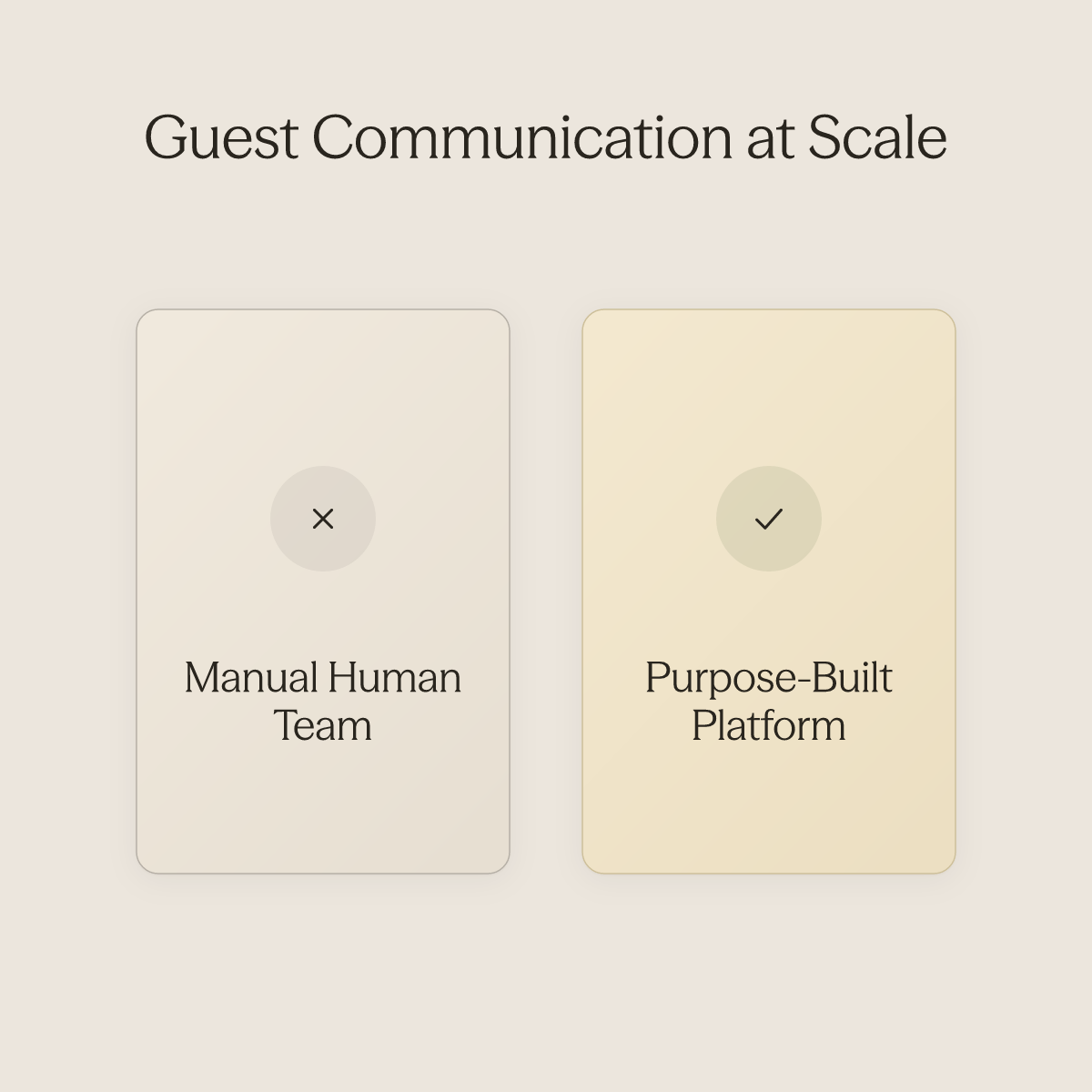
The more durable path is standardizing guest communication quality and brand voice across a distributed portfolio without proportionally scaling the coordination headcount required to sustain it.
Why Response Time Is a Revenue Variable, Not Just a Courtesy Metric
Response time is a direct algorithmic ranking factor on VRBO. Platform data and operator reporting consistently confirm that slow or inconsistent replies suppress listing visibility continuously, regardless of how many staff are on the payroll. A delayed reply isn't just a hospitality miss, it's a search placement miss.
A listing that responds within one hour earns better visibility and, by extension, more bookings. There's a compounding problem that operations leads managing multiple properties know well: VRBO's internal messaging system is not a reliable safety net. Unread or unanswered messages leave hosts in limbo as arrival dates approach, a direct communication gap that threatens booking security at scale.
When the mechanism you're depending on for guest contact has its own delivery inconsistencies, a manual-first response model doesn't just slow things down, it introduces genuine risk to confirmed bookings. AI-native response infrastructure delivers the speed and consistency that resolves this most reliably, but it works best for operations that already receive a high volume of repetitive guest inquiries and have SOPs, FAQs, or property manuals that can be used to train the agent. Conduit's AI Agents can deliver a first automated guest reply within days of connecting that documentation, and respond continuously, before, during, and after a stay, whenever a guest sends a message.
Without that documentation baseline, automated responses risk accuracy errors that damage rather than protect review scores.
How Routine Inquiries Quietly Consume the Capacity You Need for Higher-Value Work
Most inbound guest messages cover the same handful of topics: check-in instructions, Wi-Fi passwords, parking details, house rules. Hosts managing growing operations routinely spend 20 or more minutes per booking on these exchanges alone, a burden that isn't obvious at five listings but becomes a direct constraint on growth at fifteen or twenty. Multiply that time cost across a portfolio and it crowds out the higher-value work, owner acquisition, pricing strategy, maintenance coordination, that actually scales the business.
The problem isn't limited to host-to-guest messaging. Manual communication at scale creates dangerous gaps between guests and cleaners as well. Missed handoff messages, unacknowledged schedule changes, and coordination failures that worsen as the portfolio grows aren't edge cases, they're predictable consequences of a system where every touchpoint requires a human to initiate it.
Conduit's Workflows address this directly: after a trigger event occurs in a conversation or guest lifecycle, a booking confirmation, a check-in, a detected keyword, automated sequences execute the recurring touchpoints that currently require manual staff action. The operations or support team can then use the Inbox to monitor, review, and manage all conversations the AI agent is handling, rather than originating each one. Conduit's Integrations mean the AI agent can leverage existing content without manual re-entry; the documentation your team already maintains becomes the knowledge base the agent draws from, which removes a common barrier to getting automated responses up and running accurately.
The 1 AM Message That Becomes a 1-Star Review by Morning
Late-night inquiries are the clearest proof that a staffing model has a ceiling. Unanswered off-hours messages convert directly into negative reviews, a failure that shift coverage schedules cannot fully prevent, because the gap between when a message arrives and when a human happens to see it is structural, not a staffing shortfall. No hire closes it permanently; the next portfolio expansion reopens it.
The operations that scale a portfolio without scaling coordination headcount are the ones that remove the structural dependency on a human being available at the moment a guest sends a message. Conduit's AI Agents run continuously, most beneficial precisely when the business is managing guest communications across multiple platforms or properties simultaneously, so the response that reaches a guest at 1 AM reflects the same brand voice and accuracy standard as the one sent at noon. That consistency is what protects listing visibility at the algorithm level and protects review scores at the guest level, at the same time.
DIY VRBO Management Tools and Methods - What Owners Can Do Themselves
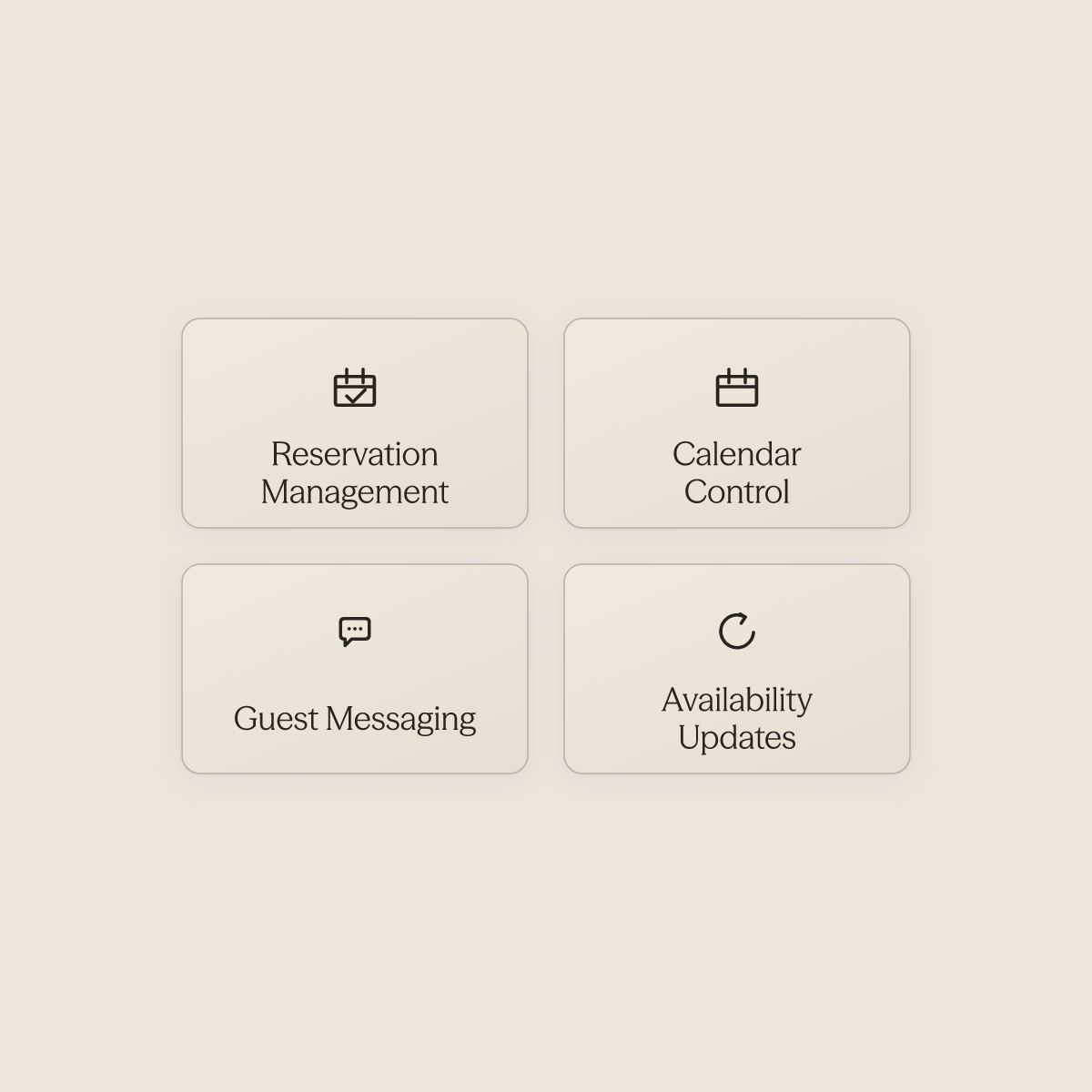
The Vrbo Owner App gives self-managing hosts a genuinely capable starting point. According to broader industry trends, the app centralizes reservation management, calendar control, and guest messaging in a single mobile interface, so a solo owner can run their listings without a desktop or third-party software. The honest question is how far that advantage stretches as the portfolio grows.
What the Vrbo Owner App Actually Lets You Control From Your Phone
The Vrbo Owner App handles the core DIY management loop: viewing and managing reservations, blocking calendar dates, updating availability, and messaging guests directly from your phone. For a solo host running one to three listings, this covers nearly everything: accept booking requests, send pre-arrival instructions, and flag calendar conflicts without opening a laptop. What most self-managing VRBO owners report holds true here: the majority operate fewer than five properties, which is precisely the range where the native app performs well.
That said, even at modest scale the complexity compounds fast. Managing two units plus a whole-house listing manually across Airbnb and Vrbo simultaneously creates real calendar sync complexity and a genuine risk of double bookings, not because the app is broken, but because cross-platform coordination was never what it was built for.
How Instant Booking Removes Friction and Why It Matters for Conversion
Instant Booking removes the approval step from the reservation flow, letting guests confirm without waiting for an owner response. Vrbo's own documentation notes this increases guest convenience and can lift booking volume, aligning with the broader vacation rental pattern: friction in the booking window costs conversions. Instant Booking is one of the highest-leverage switches a DIY owner can flip without spending a dollar.
Where the Native Tool Stack Hits Its Ceiling
The ceiling isn't a feature gap you can see in the app dashboard. It's structural. Every listing added beyond the first increases the odds that a guest message arrives when no one is available.
The Vrbo algorithm treats response rate as a ranking signal, so slow replies across multiple listings compound into booking suppression that never surfaces as a visible metric inside the app. Owners who've grown from two to five properties often describe this as a slow erosion: the app still works fine, but they don't. The Vrbo Owner App was designed around a single owner checking in regularly.
It has no mechanism to enforce consistent response quality across off-hours, multiple time zones, or coverage gaps. What makes this painful in practice isn't just speed; it's the full weight of the manual workflow: switching between platforms to draft messages, translate responses, review guest history, and track performance. Wynwood House's customer experience team lived this reality before finding a different approach.
Their guest resolution times averaged 15 minutes per interaction, sentiment was tracked manually via inconsistent spreadsheets, shift handoffs required reading entire conversation histories, and managers lacked reliable visibility into guest satisfaction at scale. That's the hidden cost of a native tool stack stretched past its design limits. This is precisely where an AI agent built on existing documentation changes the equation.
AI agents are most beneficial when a business already receives a high volume of repetitive guest messages and has existing documentation, SOPs, FAQs, manuals, to train on. The agent can begin handling guest replies within days of connecting those materials, and it pulls from tools hosts already use, including Notion, Google Drive, or Airbnb content, without requiring manual re-entry. The result isn't a templated autoresponder.
"The first thing we noticed was the quality of the AI replies. You cannot tell the difference between an AI agent and a human agent. I work with ChatGPT and other AI tools every day, and sometimes you can immediately tell it's AI. With Conduit, we're not seeing that. It feels like a full conversation with a human."
"The first thing we noticed was the quality of the AI replies. You cannot tell the difference between an AI agent and a human agent.
I work with ChatGPT and other AI tools every day, and sometimes you can immediately tell it's AI. With Conduit, we're not seeing that. It feels like a full conversation with a human."
A solo operator managing vacation rental tools through the native app is working against a ceiling that becomes visible only after the portfolio has already grown past it. The Vrbo Owner App remains the right tool for what it was built to do, but for hosts whose inbox never sleeps, the structural gap is real, and it widens with every listing added.
Professional VRBO Management Companies - What They Provide and What They Charge
Professional VRBO management companies typically charge 10 to 50% of rental revenue, and what sits inside that range varies more than most owners expect before they sign a contract. Understanding exactly where each tier draws the line between "covered" and "your problem" is the difference between a fee that makes sense and one that quietly erodes your returns.
What Professional VRBO Management Companies Actually Deliver
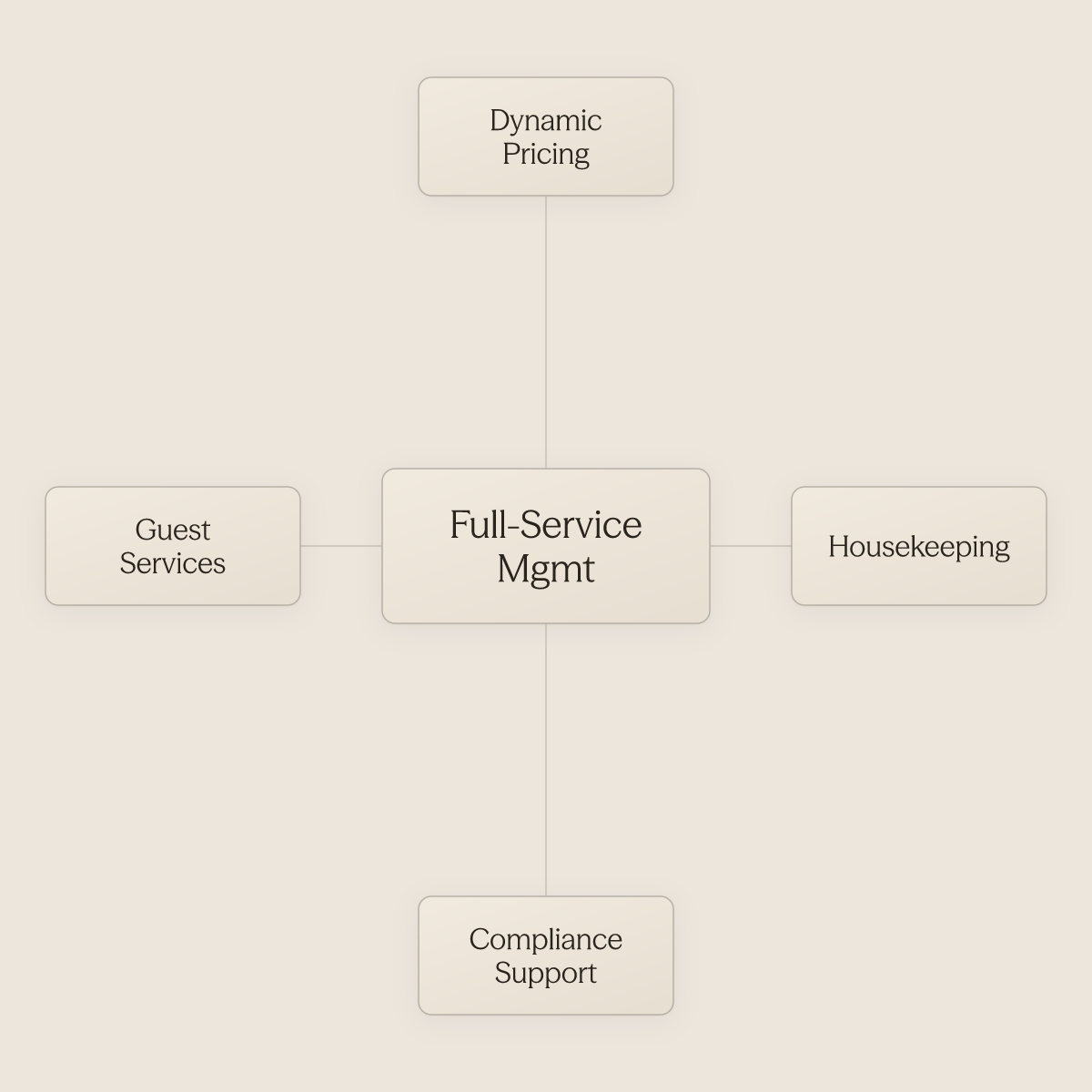
Full-service management typically includes dynamic pricing calibrated to local demand, housekeeping coordination, and regulatory compliance support including permit tracking and tax remittance. According to Vacasa's published homeowner guides, these services are bundled into a single management relationship rather than requiring owners to source multiple vendors. What that bundling obscures, however, is the hidden labor cost running underneath it.
A real-world example: Haven, a short-term rental operator managing 270 properties, required approximately 25 support staff across multiple shifts just to handle the volume of check-in questions, lockouts, cleaning issues, and guest complaints that came with that portfolio. That headcount is the true cost of what "full service" means at scale, and it's a cost every management fee is ultimately absorbing. For owners questioning whether professional management fees are justified, the answer isn't peace of mind in the abstract; it's whether the company you're paying has actually solved the operational problem, or whether they've simply staffed it.
The Fee Spectrum - Vacasa vs. Evolve vs. SkyRun
Vacasa sits at the higher end, typically charging 25 to 35% of rental revenue for its full-service model. Evolve operates a co-hosting model at roughly 10%, handling marketing and booking support while the owner retains responsibility for guest issues and on-the-ground coordination. Regional specialists like SkyRun fall between those poles, offering localized expertise at mid-range commission rates.
The fee maps directly to how much operational involvement the owner keeps. Paying less means doing more, and that tradeoff is rarely spelled out clearly during the sales conversation. What it specifically means in practice: at Evolve's 10% tier, guest communications, issue escalation, and review management land back on the owner.
An unresolved cleaning complaint, for instance, is what turns a four-star stay into a three-star review. Owners choosing a leaner management model need a system that handles that volume without proportional headcount, which is precisely where tools like Conduit's AI Agents become operationally relevant: most beneficial when a business receives a high volume of repetitive guest messages and has existing documentation, SOPs, FAQs, and cleaning instructions to train the agent on. The first automated guest reply can go live within days of connecting those materials, and the agent runs continuously before, during, and after every stay.
Damage Protection and Regulatory Compliance - The Risk-Transfer Value Owners Underestimate
Damage protection coverage is commonly bundled into professional management packages, reducing direct owner exposure without separate insurance procurement, as Vacasa's homeowner guides confirm. Local short-term rental ordinances change frequently, and a management company tracking permit renewals and tax obligations protects owners from fines that can exceed a full season's profit. In high-regulation markets, compliance support alone can justify the management fee, particularly for owners who lack the bandwidth to monitor permit renewals and tax-remittance deadlines across multiple jurisdictions.
For aspiring property managers building a new management business, this compliance infrastructure is also one of the hardest credibility signals to establish early. Property owners hand over high-value assets only when they see proof of competence, and demonstrating that your operation has the systems, not just the intention, to handle regulatory complexity is part of earning that trust. A guest communications layer that runs reliably across multiple properties simultaneously, paired with Workflows that trigger automatically at booking confirmation, check-in, or key conversation moments, is visible evidence of operational maturity that owners can see before they sign.
That's the concrete difference between pitching a management relationship and proving one.
10 to 50% Typical pro VRBO management fee range
10 VRBO Management Tools to Run Your Rentals Smarter
Pick any 10 tools at random from the vacation rental software market and you will end up with a stack that competes with itself. The real architecture question is not which apps to buy, it is which layer ties them together so guests stay informed, operations stay coordinated, and your team stops being the connector between every moving part. The 10 tools below are organized as a layered infrastructure stack. Each solves a distinct operational problem. The last entry is where most property managers discover the hidden cost sitting inside every tool they already own.
Tool-Stack Decision Framework - Match the Tool to Your Portfolio Stage
Use the table below to identify which tools apply to your current operation before purchasing.
| Portfolio Size | Primary Problem | Recommended Tool Layer | Skip Until Later |
|---|---|---|---|
| 1–3 listings | Basic reservation control | Vrbo Owner App | PMS, AI agents |
| 3–9 listings | Double-bookings, pricing gaps | Channel manager (Hostaway), PriceLabs | Full PMS, enterprise AI |
| 10–19 listings | Communication bottleneck, turnover quality | AI agent layer (Conduit.ai), Turno, Breezeway | Full-service mgmt company |
| 20+ listings | Operational overhead, staff cost, review consistency | Guesty PMS + AI agents + Turno + StayFi | DIY native app |
Decision rule: If your current bottleneck is not yet guest communication, start with channel management and dynamic pricing. Add the AI communication layer before portfolio size makes the communication gap structural.
1. Conduit.ai - Best AI-Powered VRBO Management Platform
Most VRBO operators route guest messages to a human inbox and call it a communication system. That works at five properties. At 15 or 35, the inbox becomes the bottleneck that quietly suppresses every other tool in the stack.
Erwan Le Roy's 35-property operation at Cash Flow Street hit a 96% AI automation rate with sub-one-minute response times after deploying AI agents for hospitality trained on his own SOPs and property manuals, with zero additional headcount. The agents resolve routine guest touchpoints autonomously from existing documentation, so the benefit materializes fastest when you already have SOPs, FAQs, or house manuals in any format. Operators with no written processes will need to build that foundation first.
2. PriceLabs - Best Dynamic Pricing Engine for VRBO Hosts
Dynamic pricing is the highest-leverage revenue action a VRBO operator can take without changing a single listing. PriceLabs is among the most widely adopted dynamic pricing tools in the professional short-term rental market, consistently appearing at or near the top of operator surveys and third-party PMS integration lists, including Guesty's and Hostaway's published partner directories. It analyzes real-time occupancy trends, local demand signals, booking lead times, and competitor rates to set nightly prices automatically across your portfolio, integrating directly with VRBO to push rate updates without human intervention. It is most valuable once you have consistent occupancy history to anchor its algorithms. Operators with fewer than 10 bookings on record will see limited signal quality in the early months.
3. Guesty - Best Full-Suite Property Management Software for VRBO
Guesty is a leading full-suite PMS for operators managing 10 or more listings, recognized in multiple third-party comparisons (including Capterra's 2024 short-term rental software rankings) for its depth of reporting, multi-channel sync, and owner-statement functionality. It centralizes reservations, owner statements, multi-channel calendar sync, and financial reporting in a single dashboard, reducing coordination overhead as portfolio size grows. The tradeoff is cost and complexity: Guesty is priced for professional operators, and portfolios under 10 units will find the feature set exceeds what they need.
4. Hostaway - Best Channel Manager for Multi-Platform VRBO Operators
Hostaway syncs calendars, rates, and availability across VRBO, Airbnb, Booking.com, and direct booking channels in real time, reducing double-booking exposure that comes with manual calendar management. Operators who have moved from manual calendar management to a dedicated channel manager consistently report a sharp reduction in double-booking incidents, the core problem Hostaway is designed to eliminate. It includes a unified inbox and basic automation for guest messaging, though that inbox still routes messages to a human responder. The communication bottleneck remains unless you pair it with a dedicated guest communication layer. Hostaway is the right pick when distribution complexity is the primary problem.
5. Turno - Best Automated Cleaning Scheduler for VRBO Turnovers
Turno (formerly TurnoverBnB) automates the scheduling, assignment, and quality-check workflow between stays. It connects directly to your booking calendar and dispatches cleaning teams automatically when a checkout is confirmed, removing the manual handoff that causes missed turnovers and last-minute scrambles. The limitation: Turno coordinates the workflow; it does not source the cleaners. You need reliable teams already in its marketplace or your own network.
6. Hometime - Best Full-Service VRBO Management for Hands-Off Owners
Hometime handles listing creation, guest communication, cleaning coordination, and owner reporting on behalf of the property owner. It is the right fit for owners who want professional management without DIY operational involvement. Fees reduce net income compared to a self-managed operation running a lean tool stack. Hometime is built for property owners who prioritize hands-off income over operational control, making it the wrong fit for operations leads whose primary objective is maximizing NOI across a growing portfolio.
7. Futurestay - Best Listing Optimization Tool for VRBO Visibility
VRBO's search algorithm rewards listings that are complete, visually strong, and filter-rich. Futurestay audits and improves photo quality, amenity filter coverage, and description completeness to improve search visibility and click-through rates. Photo quality and exhaustive amenity tagging (pool type, beachfront, ocean view, and similar filters) materially affect booking conversion. Industry research specifically identifies amenity filter completeness as a primary search-surface variable on the platform. Futurestay is most useful during initial listing setup or when an existing listing has stalled in search performance, a one-time optimization audit with periodic refresh value, not a dynamic tool that responds to market shifts.
8. StayFi - Best Guest WiFi and Email Marketing Tool for VRBO Hosts
StayFi solves a problem most VRBO operators do not realize they have: the platform owns the guest relationship, not the operator. StayFi captures guest contact information at WiFi login during the stay, building a first-party email list for direct booking campaigns and repeat guest outreach. For operators building toward direct booking revenue or reducing OTA dependency, this is a foundational data asset. The limitation: StayFi only captures data from guests who connect to your WiFi, so properties without reliable in-unit internet will produce incomplete lists.
9. Breezeway - Best Property Care and Inspection Tool for VRBO Operations
Breezeway manages inspection checklists, maintenance task assignment, and property condition tracking across a portfolio, creating a documented record of each turnover that reduces the risk of a guest arriving to an unresolved maintenance issue. For operators managing 10 or more properties, the absence of a structured inspection workflow almost always produces review score erosion over time. Breezeway integrates with most major PMS platforms. Smaller operations may find the added process more burden than benefit until portfolio size justifies it.
10. GuestWisely - Best Guest Communication and Upsell Automation for VRBO
GuestWisely automates the scheduled messaging cadence most operators either skip or handle manually: pre-arrival instructions, mid-stay check-ins, post-stay review requests, and upsell offers for early check-in or late checkout. For VRBO operators who want to improve review capture rates and generate incremental revenue without adding staff time, GuestWisely addresses both in one workflow. The critical distinction: it automates scheduled outbound messages, not inbound inquiries. Pair it with a guest communication layer like Hospitable or an AI-native solution for inbound coverage, or gaps in responsiveness will remain.
Related Reading
- Vacation Rental Automation
- Best Apps For Short Term Rentals
- Best Pms For Airbnb
- Best Pms For Short Term Rentals
- Best Accounting Software For Short Term Rentals
- How To Manage A Vacation Rental Property
- Vrbo Smart Pricing
- How To Automate Airbnb Business
- Airbnb Self Check In
Best Practices for VRBO Management Success - Tying the Tool Stack Together
Scattered tools create scattered outcomes. When a pricing engine updates a rate but the messaging layer never learns why, when a review-response template contradicts the tone a guest experienced during their stay, when a maintenance alert fires in one platform while the guest-facing assistant in another platform knows nothing about it, each gap quietly erodes the trust signals that booking algorithms and repeat guests both measure. The damage rarely shows up as a single catastrophic failure; it accumulates as a slightly lower response score here, a lukewarm review there, a guest who books a competitor next.
The core insight operators miss is this: slow response rates, review score erosion, and repeat-booking loss are not three separate hospitality problems, they are three simultaneous loss channels sharing a single root cause: the absence of a consistent communication infrastructure layer. No best-practice checklist closes that gap, because the gap is structural, not behavioral. Treating best practices as a checklist is how operators lose ground without realizing it. Properties that hold strong review scores and response rates as portfolios grow tend to rely on systematized tool ownership rather than individual effort, a pattern consistent with what high-performing teams consistently report, which identifies structured workflow assignment (not headcount) as the differentiator in high-performing multi-property operations.
Amenity Filter Coverage - A Search Ranking Input
Optimizing VRBO listings for bookings starts before a single guest sees your photos. Across the market, VRBO's search algorithm surfaces properties that match traveler filter selections; missing an amenity tag means missing the search impression entirely. Fill every applicable filter field on every listing, treat it as a structural ranking input, and assign the audit to a recurring calendar task rather than a one-time setup.
Cleaning Coordination - The Highest-Impact Review Driver
Cleaning and maintenance coordination between stays is essential for guest satisfaction and positive reviews. Broader industry trends confirm that turnover quality is a primary ranking signal because review scores directly influence search placement. Operators who build quality-check checkpoints into their turnover workflow, not just a cleaner showing up, protect that average consistently. Assign this to a dedicated scheduling tool, not a group chat.
Response Quality at Every Hour
Most operators accept that communication quality will dip overnight or when a team member is stretched thin. That inconsistency carries a harder cost than it looks: a well-established principle in platform performance holds that response rate and speed are explicit VRBO ranking factors, meaning off-hours silence suppresses search impressions before a guest ever sees the listing. Conduit's AI agents read from your property-specific SOPs and deliver accurate, on-brand responses at any hour across every listing, making response quality a structural property of the operation, not a function of who's on shift.
Map Each Practice to a Tool Category
Every practice has a corresponding tool layer: amenity audits belong in a listing optimization workflow, turnover quality belongs in a dedicated scheduling and inspection tool, and response coverage belongs in a communication infrastructure layer, not on a checklist that depends on whoever is available.
The Communication Infrastructure Layer Most VRBO Tools Miss - And How AI Agents Fill It
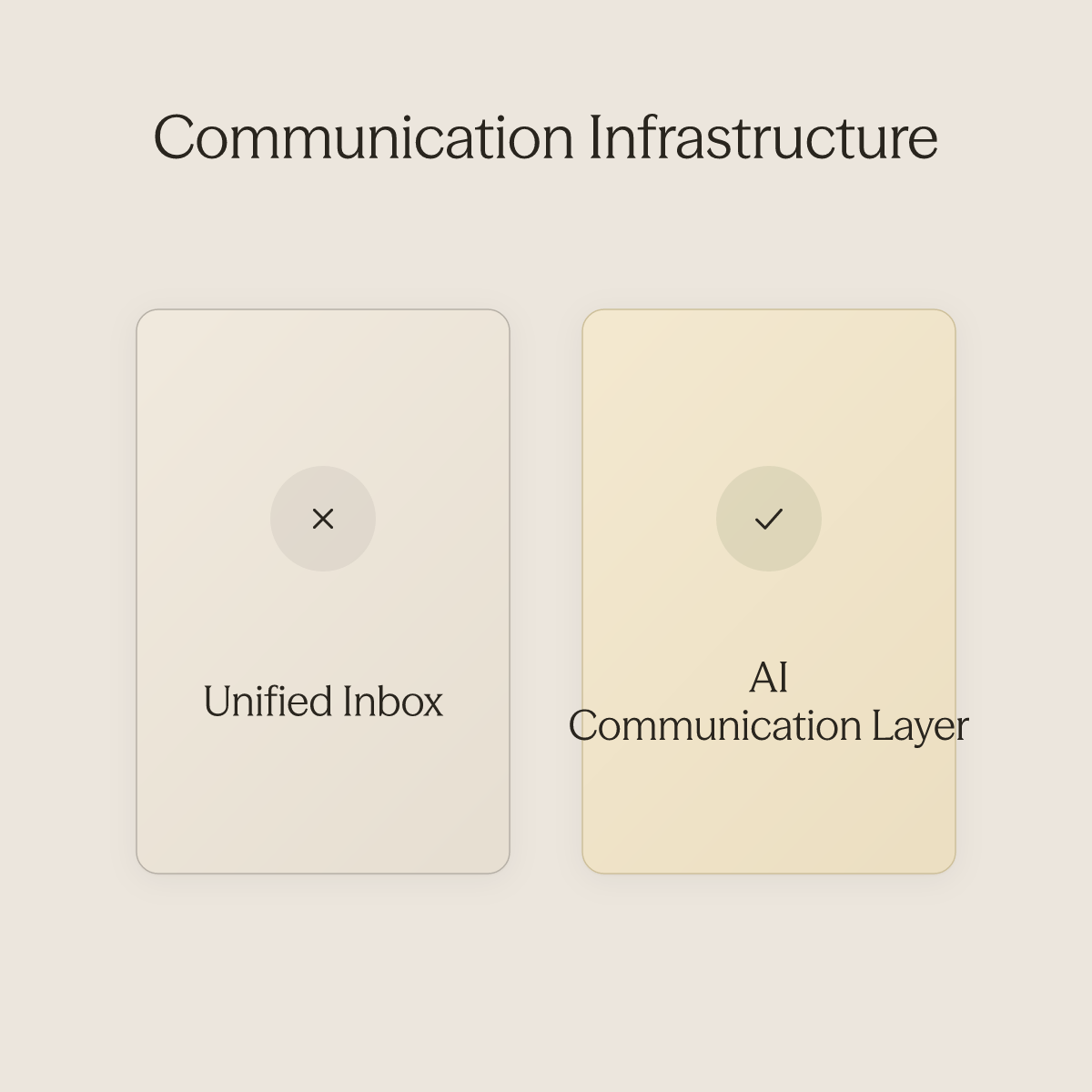
A unified inbox feels like the answer until you realize the inbox was never the problem. The real bottleneck sits one step upstream: the human who reads each message, decides how to respond, and types a reply. At one property, that latency is manageable. Across 20 or 35, it compounds into structural drag on review scores, OTA ranking, and ultimately the asset's cap rate.
The Router Problem
"Most VRBO-heavy tools (e.g., Escapia) are traditional enterprise platforms that lack modern AI-driven communication automation, leaving a gap in real-time, intelligent guest messaging."
The communication gap that standard VRBO tools leave open is not simply a speed problem; it is an architectural one. PMS tools route messages, dynamic pricing tools set rates, and channel managers distribute listings, but none of them generate contextually appropriate, on-brand responses under dynamic guest conditions (late check-ins, mid-stay complaints, repeat bookers). Operators who believe they have "covered communication" with a unified inbox are actually running a notification-routing system, not a communication infrastructure, and the difference shows up not in their dashboards but in their review scores and OTA ranking trajectories over time.
That architectural gap is sharpest for operators coming from VRBO-heavy stacks.
And because VRBO and most OTA-integrated platforms lack native AI-driven communication infrastructure, hosts end up stitching together bolt-on messaging tools that still require a person to triage and respond. The result is the same queue, just loading faster. New hosts feel this most acutely: without 24/7 availability to handle check-in questions, mid-stay issues, and emergencies, every unanswered message is both a guest experience failure and an algorithmic penalty.
OTA algorithms treat response time as a weighted ranking signal, meaning every minute of human-routing latency is a direct ranking cost, not just a hospitality inconvenience. Most operators who scale past 10 VRBO listings reach the same conclusion: hire another VA, add a co-host, or upgrade to a PMS with a unified inbox. In practice, the inbox just becomes a faster-loading queue that still waits for a person to triage it.
The fix is not a faster queue; it is removing the human from the repetitive, high-volume leg of the communication loop entirely. Conduit's AI Agents are designed precisely for this. They are most beneficial when a business receives a high volume of repetitive guest messages and already has existing documentation, SOPs, FAQs, property manuals, to train the agent on.
Once connected, the agent begins delivering automated guest replies within days, and continues responding continuously, before, during, and after every stay, without a person on shift. Critically, because Conduit integrates with tools operators already use, Notion, Google Drive, Airbnb, existing content is leveraged directly without manual re-entry, which means there is no documentation rebuild, no parallel system to maintain, and no delay getting the agent up to speed on property-specific context.
What 80 to 96 Percent Automation Looks Like
The automation rates that sound aspirational are already live in real portfolios. Erwan Le Roy's 35-property operation reached a 96% AI automation rate with sub-1-minute response times without adding headcount, using AI agents trained on his SOPs and property documentation. Easy BnB restructured its entire staffing model after deploying AI agents, producing a substantial reduction in per-message staffing cost and adding 75 units without a single new hire, as documented in Conduit's published case study.
These outcomes follow a consistent pattern: the AI Agent handles the continuous, high-volume communication layer, every guest message, every trigger event, every hour of the day, while Conduit's Inbox gives the operations team a single place to monitor, review, and step in on conversations the agent is managing across all properties and platforms simultaneously. Workflows layer on top, firing automatically after booking confirmations, check-ins, or keyword triggers, so recurring guest touchpoints that previously required manual staff action are removed from the team's plate entirely. Response time directly affects OTA ranking, and a system that responds in under a minute, consistently, at scale, converts that algorithmic signal from a liability into a structural advantage.
These results are not outliers; they reflect what happens when the communication layer is treated as infrastructure rather than a staffing problem: response quality becomes a property of the system, not a function of who is on shift.
Related Reading
- Lodgify Competitors
- Vrbo Automated Messages
- Guesty Alternatives
- Lodgify Vs Smoobu
- Guesty Vs Hostfully
- Ownerrez Vs Guesty
- Hospitable Vs Hostaway
- Guesty Vs Hostaway
- Guesty Vs Hospitable
Next steps
If your portfolio is growing but review scores and search visibility are quietly eroding, the path forward starts with treating communication as infrastructure, not a staffing variable. Start with our AI for hospitality.
The DIY native tool stack creates a false ceiling of operational control: every listing added beyond the first increases the odds a guest message arrives when no one is available, and VRBO's algorithm reads each slow reply as a ranking penalty that never surfaces in your dashboard. Dynamic pricing and channel management each automate one revenue lever in isolation, but neither touches the communication layer, meaning a portfolio running best-in-class rate optimization can still suppress its own visibility floor through inconsistent response times. Together, those two structural gaps point to the same corrective action: closing the communication layer with something that runs continuously, draws from your existing documentation, and responds in under a minute regardless of who is on shift.
Start with conduit.ai to see how Conduit's AI Agents and Workflows handle the continuous guest communication layer your current stack hands off to whoever happens to be available. Connect your existing SOPs, FAQs, or property manuals, and the agent begins delivering accurate, on-brand replies within days, before, during, and after every stay, across every property simultaneously.
Frequently Asked Questions
Does improving my VRBO listing photos and description actually lead to more bookings?
Listing quality gets guests to click, but it doesn't close the booking on its own. Multiple OTA operators and industry analysts have documented response time as a core algorithmic ranking signal, meaning communication speed directly determines search visibility and booking conversion, not listing content alone.
How do slow response times hurt my VRBO search ranking?
Response time is a direct algorithmic ranking factor on VRBO, and slow or inconsistent replies suppress listing visibility continuously regardless of how many staff are on the payroll. A listing that responds within one hour earns better visibility and, by extension, more bookings.
Why do I keep getting bad reviews even though my property is well-maintained?
Unanswered off-hours messages convert directly into negative reviews, a 1 AM message that goes unanswered until morning can become a one-star review before checkout. The gap between when a message arrives and when a human sees it is structural, not a staffing shortfall, and it persists no matter how well the physical property is managed.
What do professional VRBO management companies actually charge, and what's included?
Professional VRBO management companies typically charge 10 to 50% of rental revenue. Full-service providers like Vacasa sit at the higher end at roughly 25 to 35%, covering multi-platform listing distribution, dynamic pricing, housekeeping coordination, and regulatory compliance, while co-hosting models like Evolve charge around 10% but leave on-the-ground guest coordination to the owner.
At what point does the Vrbo Owner App stop being enough to manage my listings?
The Vrbo Owner App works well for solo hosts running one to three listings, but its ceiling becomes visible as the portfolio grows. It has no mechanism to enforce consistent response quality across off-hours, multiple time zones, or coverage gaps, and every listing added beyond the first increases the odds that a guest message arrives when no one is available, compounding into booking suppression that never surfaces as a visible metric inside the app.
Stay in the loop
Get the latest on AI automation, product updates, and customer stories.


