After the Agent Books: Why Guests Still Need the Property


After the Agent Books
Who handles the guest after an AI booking
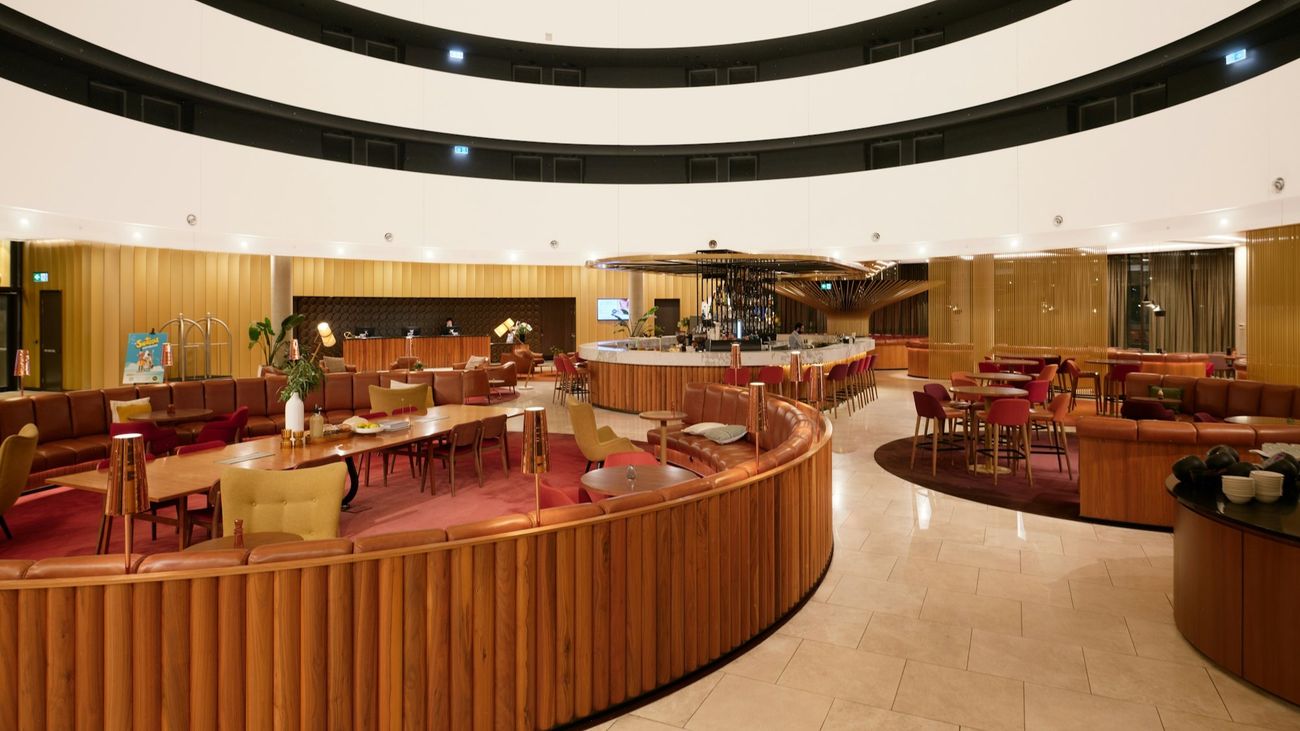
After an AI agent books a hotel, the property still does almost everything that follows. The hotel or OTA charges the card and sends the confirmation, and the guest still brings questions, date changes, special requests, upgrade decisions and in-stay problems to the property. That conversation is where an operator keeps the guest relationship, whichever agent made the booking.
I run Conduit, which builds AI agents for that conversation, so read this with that bias in mind. I have kept every claim about the agents to what their makers and the trade press have published, linked inline and read on October 8, 2026.
Who handles the guest after an AI agent books a hotel?
The hotel or the OTA handles the guest after an AI agent books, because the agents I looked at do not act as the seller. In Google's AI Mode hotel booking, which started rolling out in the US in August 2026, Skift reports that "the hotel or OTA still charges the card, sends the confirmation, and offers support" (Skift, August 27, 2026). Meta's Muse offers no hotel equivalent of the 24/7 support Duffel provides for its flights. A cancelled room or billing dispute goes to "whatever support the OTA or hotel brand provides" (Travelers Today, September 11, 2026). I compared the booking flows themselves in How AI Agents Book Hotels in 2026.
What happens after each kind of agent booking?
The post-booking work lands on the same two parties, the hotel and the OTA, for every agent path I could document, including Google AI Mode, Meta Muse and agents booking on a chain's own site. The table sets out who takes the money, who sends the confirmation, and who the guest calls when something changes.
| Booking path | Who charges the card and confirms | Who the guest contacts for changes and problems | Source |
|---|---|---|---|
| Google AI Mode (US, from Aug 2026) | The hotel or OTA, as merchant of record | The hotel or OTA | Skift |
| Meta Muse, hotels | The consumer travel site Muse checks out on, an OTA or a hotel site | The OTA or hotel brand's own support | Travelers Today |
| An agent on a chain's own site (Hilton accepts Muse bookings) | The hotel brand | The hotel brand | Skift, October 2, 2026 |
| Classic OTA booking | The OTA or the hotel, by payment model | The hotel for stay questions, the OTA for its own policies | Your OTA contract |
Citrini Research, an investment research firm, wrote that in travel "the ultimate service provider," meaning "the hotel, airline, or rental car," still "gets the customer" (Agentic Reality, September 22, 2026).
What do guests still need from the property after booking?
Guests still need the property for everything an agent cannot know or change on its own: arrival times, parking, early check-in, cots and accessibility requests, dietary notes, room moves, late checkout, and anything that breaks during the stay. Those requests depend on live inventory and on people, which sit in the property's systems and on its team. The questions also change shape by stay phase, which I wrote about in guest messages by stay phase. An agent can pass a question along, but the answer still has to come from the property, on whatever channel the guest picked.
Why do phone calls still matter when agents book?
Phone calls still matter because agent-booked guests call the same front desk as everyone else, and a caller who gets no answer may book somewhere else. On Wyndham's first-quarter 2026 call on April 30, CEO Geoff Ballotti said more than 1,100 Wyndham hotels use an AI voice agent through Wyndham Connect PLUS, helping drive "nearly 300 basis points of incremental direct contribution" at those hotels. He added that Wyndham had seen "an uptick of 400 basis points in guest satisfaction because those calls are answered right away," and tied the direct bookings to calls where the guest "didn't hop off onto a third party to book" (Q1 2026 call transcript, MarketBeat).
Will AI agents ask the property questions before booking?
AI agents carry more detail about what the traveller wants than a search box does, so I expect the questions that reach the property to get more specific. Expedia CEO Ariane Gorin said natural-language search gives "over 60% more information about traveler intent" (Q2 2026 call). A traveller who tells an agent they need two connecting rooms, a ground-floor entrance and a late arrival will get those checked somewhere. If your site, your OTA listings and your staff give the same answer fast, the agent can complete the booking. If they disagree, I would expect the agent to move on to a property where they agree. I covered the pre-booking side in How to Get Direct Bookings From ChatGPT and AI Agents.
Why does the post-booking conversation matter more for OTA bookings?
OTA bookings cancel about twice as often as direct ones, so the time between booking and arrival is where a property protects the revenue. Cloudbeds' 2026 State of Independent Hotels report, built on 90 million bookings in 180 countries, found a 21.8% cancellation rate on OTA bookings against 10.6% on direct bookings, with OTAs supplying 63.4% of independent hotel bookings in 2025 (Asian Hospitality, March 29, 2026). A fast reply to the pre-arrival question is one of the few levers you control on that booking. The numbers behind the OTA and direct split are in OTA vs Direct Hotel Bookings in 2026.
Can a property win the guest back after an OTA or agent booking?
A property can win the next booking from a guest who came through an OTA or an agent, but only through the stay itself and within the OTA's terms. The guest's real contact with you starts after the booking, in the messages and calls before arrival and during the stay. Read your OTA agreement before you mention your own website in OTA messages, because each platform sets its own rules on it. Upsells inside the stay, such as early check-in, late checkout or a room upgrade, are sold by you, whichever channel produced the booking, which I covered in hotel upselling.
Where does Conduit fit after the agent books?
Conduit runs the guest conversation after the booking, whichever channel produced it. Our agents answer guest messages and calls across voice, chat, email, WhatsApp and connected OTA messaging, and they act in connected tools, such as updating a booking, collecting a payment or creating a task, and hand off to staff when a request needs a person. Portals give each stay one link for check-in steps, upgrades with payment, a guidebook and an AI concierge. Haven Vacation Rentals reached 90% automation with Conduit, per its case study. Conduit is not a booking engine or an OTA, so it does not take the booking or a commission on it. Plans run from $18 to $48 per unit per month, with a $899 a month Startup plan for 0 to 25 units (pricing). Operations features for housekeeping, maintenance and inspections are marked coming soon on our site.
FAQ
The answers below follow a booking from the agent's checkout to the stay, using Skift's and Travelers Today's reporting, Wyndham's earnings call and Cloudbeds' data as they stood on October 8, 2026. Agent booking flows are changing quickly, so each answer links the source that describes the flow as it stood on that date.
What happens after an AI agent books a hotel room?
After an AI agent books a hotel room, the hotel or the OTA charges the card, sends the confirmation and supports the guest. In Google AI Mode the hotel or OTA stays the merchant of record (Skift).
Who do I contact to change a hotel booked by Meta Muse?
A hotel booked by Meta Muse is changed through the OTA or hotel brand where Muse completed the booking. Muse has no hotel equivalent of the 24/7 support Duffel gives its flight bookings, per Travelers Today.
Do hotels still need guest messaging if AI agents book rooms?
Hotels still need guest messaging when AI agents book rooms, because arrival details, changes, special requests, upsells and in-stay issues all go to the property. The agent hands over the booking and the guest arrives with the same questions as any other guest.
Do guests still call hotels in 2026?
Guests still call hotels in 2026. Wyndham's CEO said in April 2026 that more than 1,100 Wyndham hotels answer calls with an AI voice agent, and that guest satisfaction rose 400 basis points because those calls are answered right away (Wyndham Q1 2026 call).
Are OTA bookings more likely to cancel than direct bookings?
OTA bookings are about twice as likely to cancel at independent hotels. Cloudbeds found 21.8% of OTA bookings cancelled against 10.6% of direct bookings (Asian Hospitality).
Does Conduit take bookings from AI agents?
Conduit does not take bookings from AI agents. It is not a booking engine or an OTA. Conduit's AI agents answer guest messages and calls, act in connected tools such as the PMS, and run guest portals with upsells for bookings from any channel.
Sources
All sources read on October 8, 2026: Skift on Google AI Mode hotel booking, Travelers Today on Muse, Skift on Hilton and new agents, Wyndham Q1 2026 call transcript, MarketBeat, Expedia Q2 2026 call, Asian Hospitality on Cloudbeds' report, Citrini Research, Agentic Reality (paid note, quoted briefly).

Stay in the loop
Get the latest on AI automation, product updates, and customer stories.


