Do You Need Airbnb Revenue Management to Boost Profits?


Airbnb Revenue
Rates optimized, cash still short.
Pricing tools solve half the equation. The revenue most hosts leave behind lives in the operational layer, and closing that gap is what separates a well-priced listing from one that actually earns what it should.
Most short-term rental owner-operators believe that scaling beyond a handful of properties means their personal time investment must grow proportionally, that they will always need to be the one responding to guests and managing day-to-day issues to maintain quality and revenue. Airbnb revenue management is a data-driven process of optimizing nightly rates, availability, and occupancy to maximize short-term rental income. What the standard definition leaves out is the second half of the equation: the operational layer that determines how much of your optimized rate you actually collect.
The gap between what a well-priced listing could earn and what it actually earns is rarely a pricing problem. It is almost always a capture problem. Platforms like Conduit's AI for hospitality exist precisely because that capture layer has been the missing piece for most operators.
See our AI for hospitality for how this works in practice.
Airbnb revenue management is the practice of setting and adjusting nightly rates, minimum stays, and availability windows based on demand signals, seasonality, and local market conditions. Airbnb's own Smart Pricing tool automates this process, adjusting prices based on factors like local events and booking demand. That is the pricing ceiling.
Here is where the conventional framing breaks down. A host reported a 30% booking conversion rate on their listing, describing it as "insanely low." Pricing was competitive, the listing looked fine, but views were not becoming bookings, and the gap was almost entirely operational.
Airbnb's Superhost requirements enforce a 90% or higher response rate with replies within 24 hours because Airbnb's own algorithm treats response speed as a ranking signal, not a courtesy metric. Slow responses suppress visibility and cost bookings before a guest ever reaches the checkout screen. Think of RevPAR as the product of two inputs: the rate you set and the occupancy you actually achieve. Pricing tools work on the first input. Operational conversion drives the second. A host who uses dynamic pricing but misses overnight inquiries loses the revenue the pricing tool unlocked.
30% Booking conversion rate flagged as dangerously low
Key takeaways
-
Dynamic pricing tools set your rate ceiling, they cannot close the booking, answer the 11:47 PM inquiry, or stop a guest from choosing the listing below yours by morning.
-
RevPAR, not ADR, is the number that tells you whether revenue management is working, a rate increase that drops occupancy from 80% to 55% is a loss dressed up as progress.
-
Response speed, inquiry handling, and guest experience continuity each move occupancy independently, but running them as a connected system is what turns incremental gains into compounding ones.
-
Hiring a revenue manager solves the pricing half of the equation; it does nothing for the communication and conversion layer that determines whether optimized rates translate into confirmed bookings.
-
Erwan Le Roy's 35-property operation hit 96% automation and sub-1-minute response times not by adding headcount, but by building a coordination layer that handles communication and conversion around the clock.
-
Conduit closes the gap between a well-calibrated rate calendar and captured revenue, its AI-powered guest communication tools handle inquiries, automate responses, and keep the booking pipeline moving 24/7 so fast replies and consistent guest experience stop being bottlenecks.
Core Revenue Management Strategies Every Airbnb Host Should Be Running
Response speed, inquiry handling, and guest experience continuity each move occupancy independently, but the hosts who consistently outperform their markets refuse to run them that way. Treated as a connected system, each layer amplifies the next, turning incremental gains into compounding ones rather than letting parallel efforts cancel each other out. The operational reality for most hosts, especially those managing multiple properties or doing so remotely, is that pricing strategy alone cannot close the gap when communication bottlenecks and coordination failures drain the revenue that better rates create.
1. Dynamic Pricing Automation - Adjust Rates in Real Time Without Manual Work

Dynamic pricing is the foundation of modern Airbnb revenue management: tools like PriceLabs adjust your nightly rate in real time based on local demand signals, competitor rates, and upcoming events. According to rakidzich.com, systematic dynamic pricing strategies lift revenue by 15--36% compared to static pricing, a range corroborated by PriceLabs' own published host data, which reports 10--40% revenue increases for hosts using dynamic pricing tools. The critical tradeoff is calibration: out-of-the-box tools routinely underprice hyper-local events when base rates are not set correctly first.
What erodes those gains faster than a miscalibrated algorithm is operational drag. Hosts managing guest communications across multiple platforms or properties simultaneously face a compounding problem: messages arrive at all hours, turnover logistics pile up, and every manual touch is time that compounds against your revenue efficiency. Conduit's AI Agents are designed specifically for this scenario, most beneficial when a business receives a high volume of repetitive guest messages and has existing documentation (SOPs, FAQs, manuals) to train the agent on.
Once your SOPs are connected, the first automated guest reply is live within days, and from that point forward the agent responds continuously whenever a guest sends a message, before, during, or after a stay, without a human sitting in every thread.
2. Seasonal Pricing Strategy - Build a Rate Calendar Around Your Market's Demand Cycles

A seasonal rate calendar locks in premium pricing during high-demand windows before any dynamic algorithm touches individual nights. Set floor rates for peak periods and ceiling rates for shoulder seasons so the algorithm adjusts within a band you control. Without this structure, dynamic pricing tools often compress rates during your most valuable weeks because they weight recent booking velocity too heavily.
This is the layer most hosts skip, and it is the most expensive omission. External levies and short-stay taxes compound this problem directly. When regulatory costs shift mid-season, hosts relying on static or uncalibrated pricing absorb the margin hit silently.
A properly structured seasonal calendar, with floor rates that already account for levy exposure, gives you a defensible revenue baseline before any algorithm or tax change touches your numbers. This is also where standardizing brand voice and SOPs across every property and market pays a second dividend: consistent pricing logic applied across your portfolio means a rate floor decision made once applies everywhere, rather than being re-litigated property by property.
3. Competitive Market Analysis - Price Against Your Actual Comp Set, Not the Whole Market
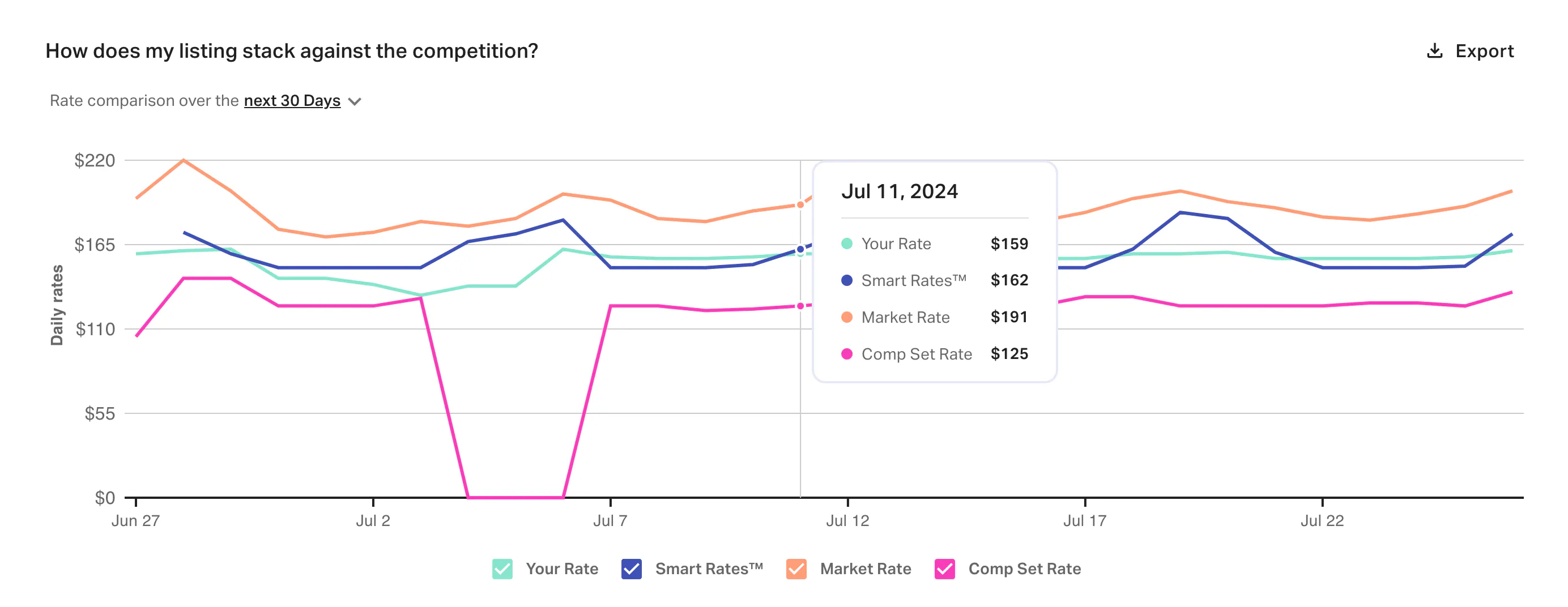
Comp set analysis means benchmarking your rates against the specific listings guests actually compare yours to, not the broad market average. Tools like AirDNA surface RevPAR data by property type, bedroom count, and neighborhood, a calibration point that generic market dashboards miss. The limitation worth naming: comp set data is only as current as the platform's refresh cycle, so fast-moving markets during major events can outpace the data by 48--72 hours.
Industry research supports this approach on the operational side as well: most beneficial when a business already uses tools like Notion, Google Drive, or Airbnb and wants the AI agent to leverage existing content without manual re-entry. Rather than rebuilding your comp set logic or pricing notes from scratch inside a new tool, the agent pulls from documentation you already maintain, keeping your competitive positioning consistent across every guest interaction and every property without duplicating work.
4. Custom Comp Set Tracking - Monitor the Specific Listings That Actually Compete With Yours

Rather than relying on broad market averages, building a hand-selected comp set of 8--15 listings that mirror your property's size, quality, and location gives you actionable pricing intelligence. This strategy is especially powerful for hosts in mixed markets where luxury and budget listings skew aggregate data. The tradeoff is ongoing maintenance, comps must be refreshed as listings enter, exit, or reposition in your market.
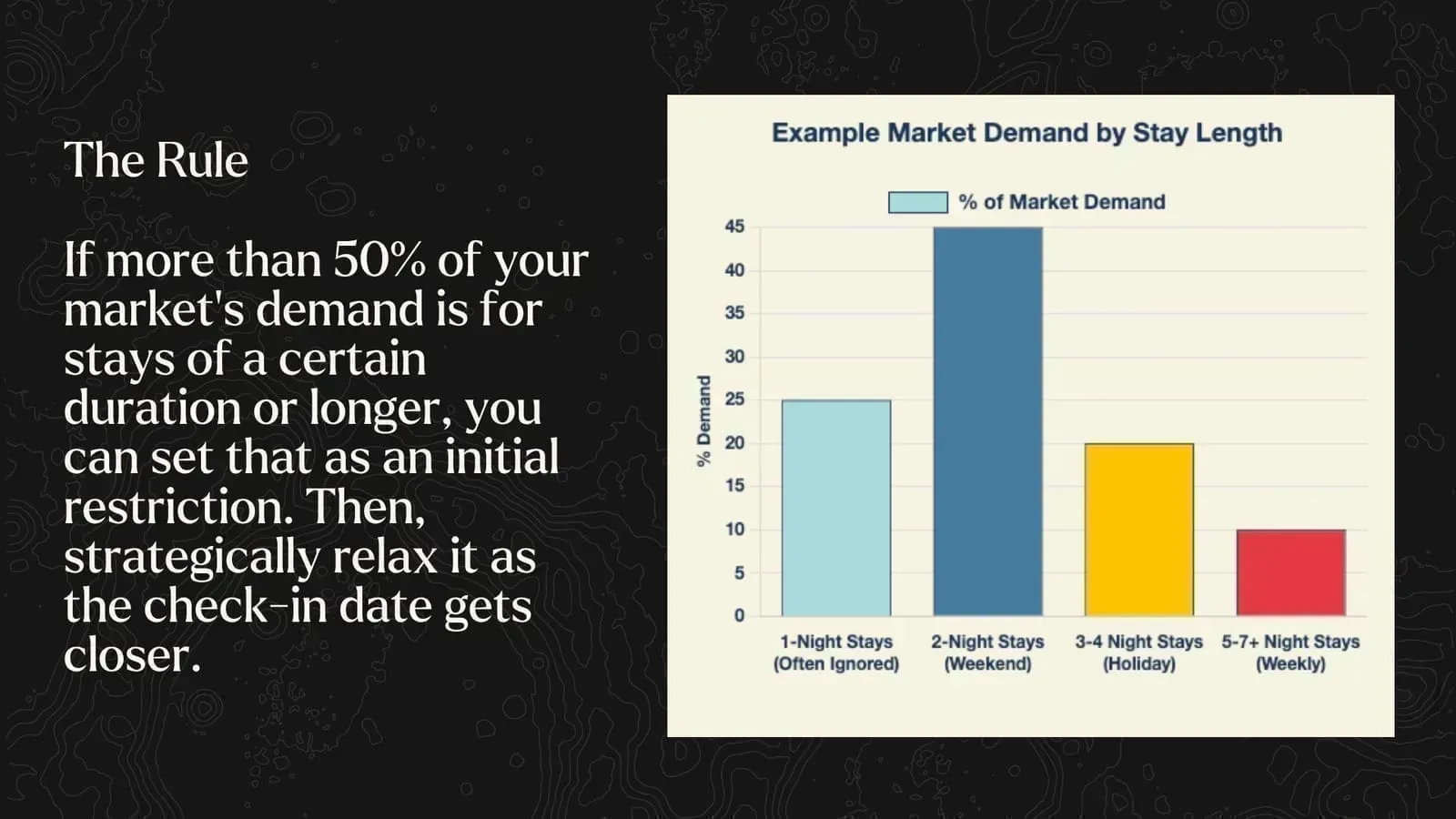
5. Minimum Stay Optimization - Use Night Requirements to Cut Turnover Costs and Lift ADR
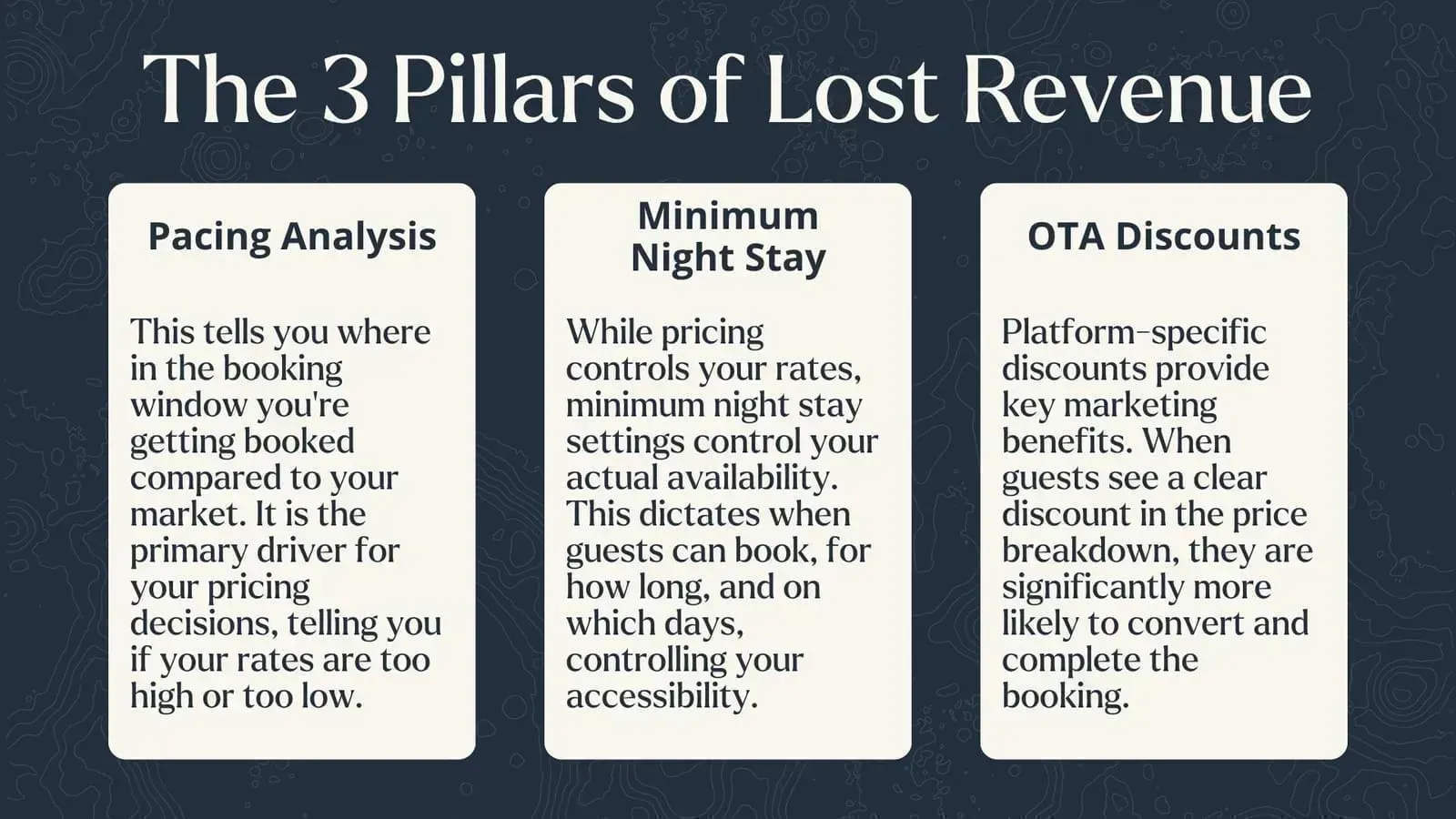
Minimum stay requirements of 3--7 nights during high-demand periods reduce turnover costs and lift average daily rate, as detailed at rakidzich.com. A 3-night minimum for a festival weekend filters out single-night bookings that fill the calendar at a discount while generating disproportionate cleaning and restocking costs. The genuine risk is shoulder-season occupancy gaps: rigid minimums in slow periods can hurt more than they help.
Long-distance management sharpens this tradeoff painfully. When a gap opens because a minimum stay requirement blocked a one-night booking, recovering it requires fast, accurate guest communication and seamless coordination between cleaners, contractors, and owners, exactly the bottleneck that erodes revenue efficiency for hosts who aren't physically present. Conduit's Workflows are built for this: most beneficial when a business has recurring, predictable guest touchpoints that currently require manual staff action.
Triggered automatically after a booking is confirmed, after check-in, or when a specific keyword is detected, Workflows keep guests, cleaners, contractors, and owners coordinated without a human managing every thread. The Inbox layer sits above all of it, used by operations or support teams to monitor, review, and manage all conversations the AI agent is handling, so nothing falls through during the gaps your minimum stay rules are designed to protect.
6. Length-of-Stay Pricing - Offer Tiered Discounts That Reward Longer Bookings Strategically
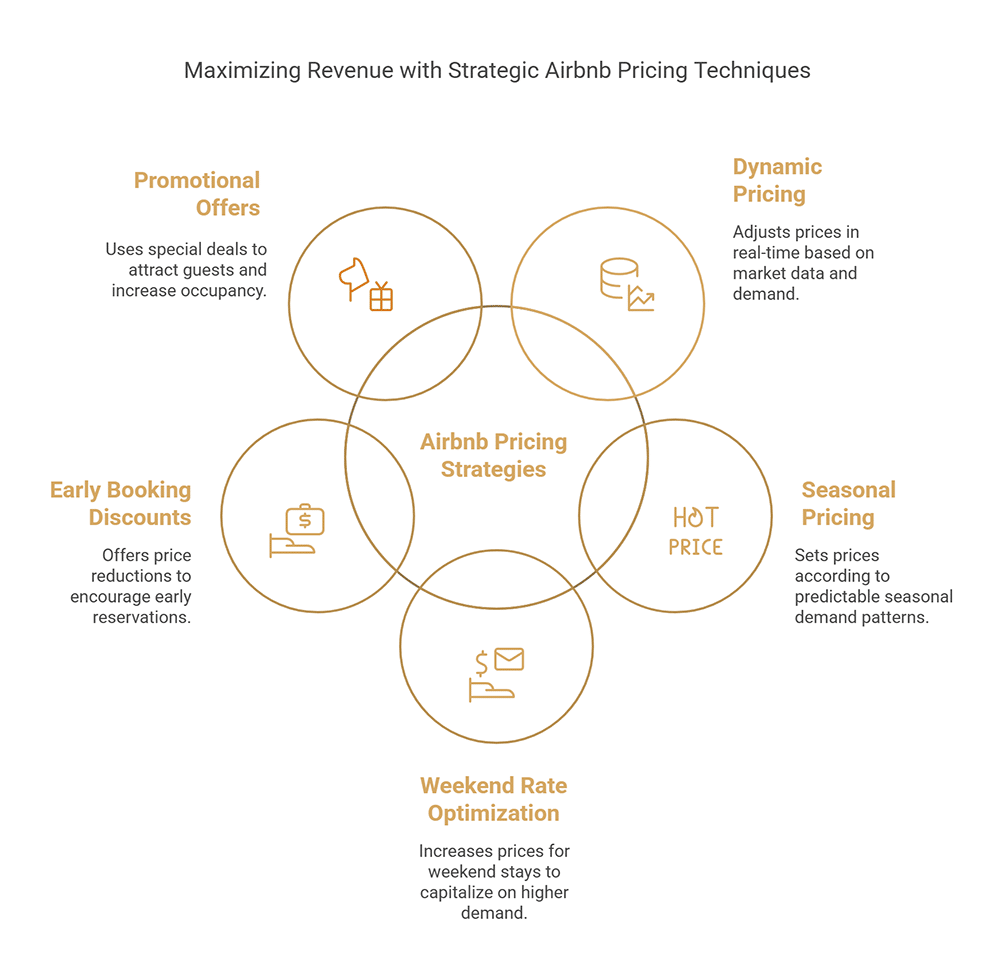
Tiered length-of-stay discounts, a modest reduction for 4-night stays, a deeper one for 7 nights, incentivize guests to extend bookings that would otherwise land at your minimum, reducing the turnover frequency that cuts directly into net revenue. According to rakidzich.com, hosts who pair minimum stay rules with structured length-of-stay discounts see stronger ADR outcomes than those using either tactic in isolation. The discount has to be calibrated against your actual cleaning and restocking cost per turn, a number most hosts underestimate; otherwise the discount eats the margin it was meant to protect.
The operational corollary is that longer stays generate longer guest communication threads: more mid-stay requests, more coordination touchpoints, more opportunities for a slow response to damage a review. Conduit's AI Agents handle this continuously throughout the stay lifecycle, ensuring that the revenue you locked in with a well-structured discount isn't quietly surrendered through a guest experience that deteriorates between check-in and checkout.
15--36% Revenue lift from dynamic pricing strategies
7. Last-Minute Booking Discounts - Capture Revenue From Gaps Without Training Guests to Wait

Deploying targeted last-minute discounts for dates within 3--7 days of check-in converts otherwise-empty nights into revenue without permanently lowering your rate floor. This tactic works best when triggered automatically and scoped to specific gap windows rather than applied broadly. The critical tradeoff: visible last-minute discounting can condition repeat guests to delay booking, undermining your advance-booking revenue and forecasting accuracy over time.
Related Reading
-
Vacation Rental Automation
-
How To Automate Airbnb Business
-
Vrbo Management
-
Airbnb Self Check In
-
Best Apps For Short Term Rentals
-
Best Pms For Airbnb
-
Best Pms For Short Term Rentals
-
Best Accounting Software For Short Term Rentals
-
How To Manage A Vacation Rental Property
-
Vrbo Smart Pricing
The KPIs That Tell You Whether Your Revenue Management Is Actually Working
ADR is not a scorecard. It is a single input. A host who raises nightly rates from $180 to $220 and watches occupancy slide from 80% to 55% has not improved revenue performance. RevPAR dropped from $144 to $121. The number that looked like progress was hiding a loss.
1. RevPAR - The Single Number That Exposes Idle Inventory
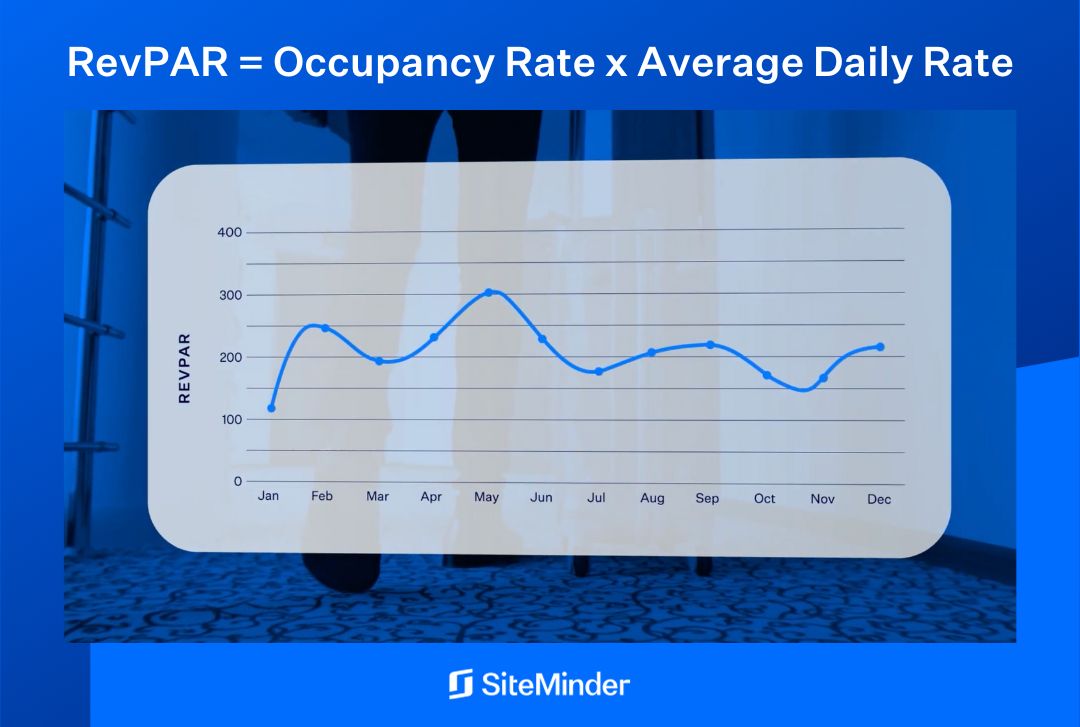
RevPAR (Revenue Per Available Room/Night) is calculated as ADR multiplied by occupancy rate, making it the only Airbnb performance metric that captures both failure modes at once: rate erosion from under-pricing and occupancy erosion from operational gaps. Across the market, a host charging $200 ADR at 65% occupancy earns $130 RevPAR, the formula that turns two partial signals into one honest verdict on whether revenue management is working. One trap beginners consistently fall into is mistaking strong growth rates for strong performance.
A market posting 16%+ RevPAR year-over-year growth can still sit 17% below the national average, meaning a host celebrating that headline number is outpacing a weak baseline, not closing in on best-in-class. Raw growth without baseline benchmarking creates a false sense of momentum. The honest read always starts with where your RevPAR lands relative to the comp set, not how fast it moved.
2. ADR Trend Line - Spotting Whether Your Pricing Strategy Is Drifting

Average Daily Rate tracked week-over-week reveals whether dynamic pricing tools are actually pushing rates up or quietly discounting to fill gaps. For hosts managing Airbnb revenue management across multiple seasons, a flat or declining ADR trend despite rising demand signals a misconfigured pricing rule or a comp-set shift. The limitation: ADR trend analysis requires at least 90 days of clean booking data to be statistically meaningful.
3. Occupancy Rate vs. Market Occupancy - The Competitive Gap Metric
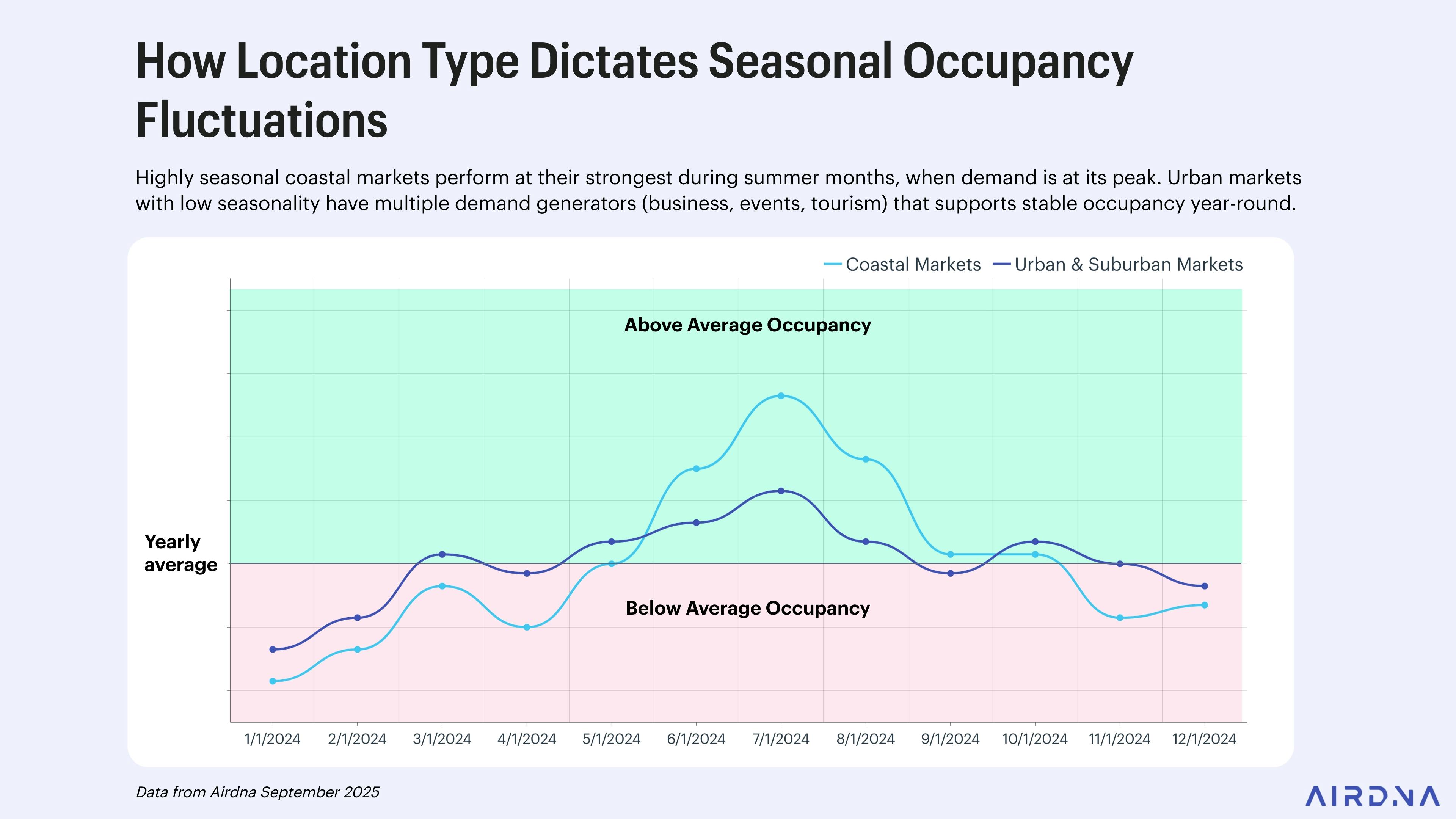
Occupancy rate only becomes useful when benchmarked against your comp set. Short-term rental occupancy runs in the low-to-mid 50% range across most markets, meaning a host at 48% is structurally behind, and the gap is usually operational, not pricing-related.
One operational gap that surfaces quietly and costs real occupancy points: inquiries that arrive overnight or after hours and go unanswered until morning. By the time a reply lands, the guest has booked elsewhere. As the Global Head of Customer Experience at Wynwood House reports, responses are indistinguishable from a human:
"You cannot tell the difference between an AI agent and a human agent. I work with ChatGPT and other AI tools every day, and sometimes you can immediately tell it's AI. With Conduit, we're not seeing that."
For multi-property operators, that consistency runs across every platform simultaneously through a single Inbox. No inquiry slips through, and no occupancy point is left on the table because a message sat unanswered.
4. Booking Lead Time - The Early-Warning Signal for Demand Shifts
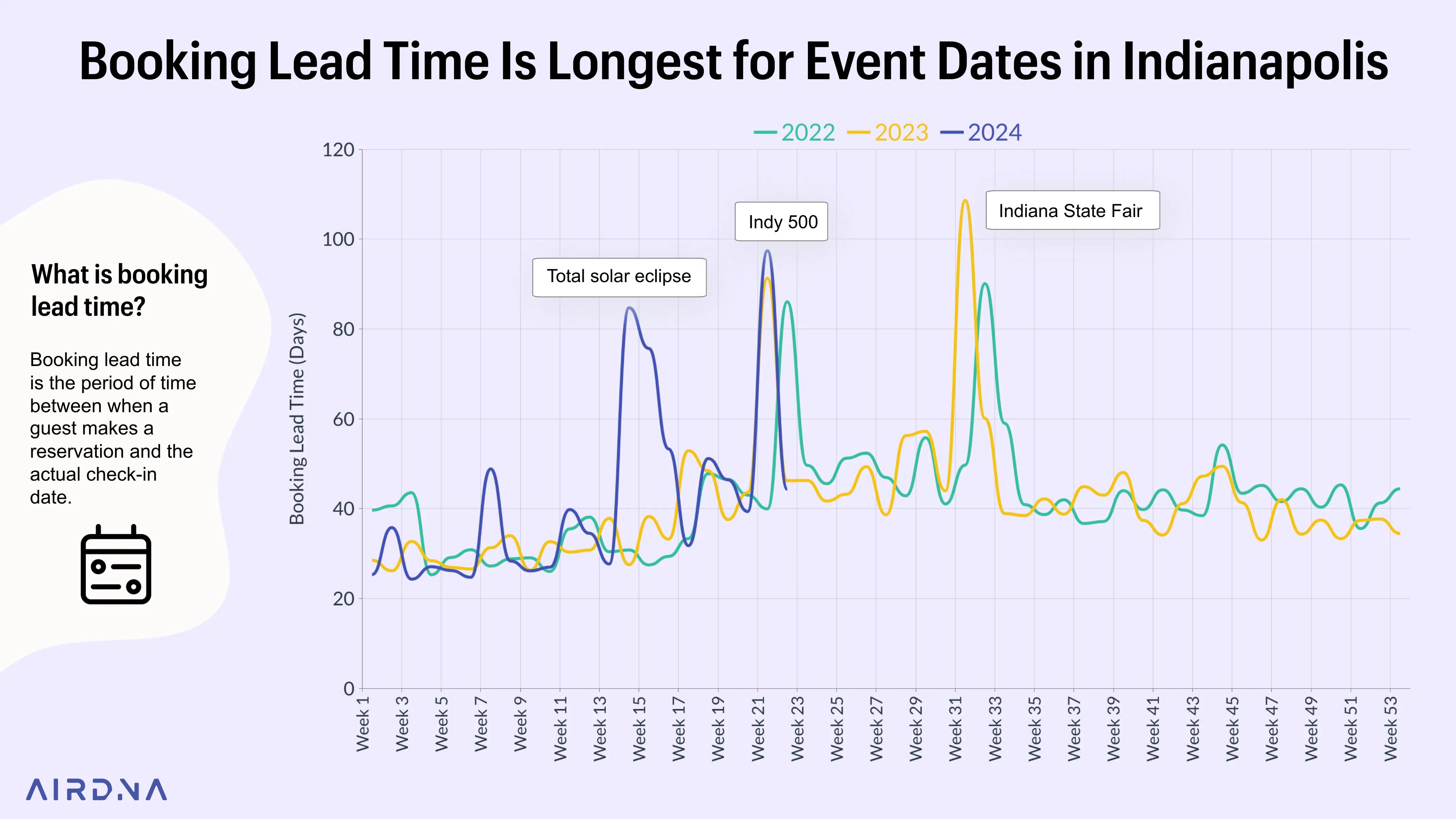
Booking lead time measures how far in advance guests are reserving. When that window shortens sharply, it signals softening demand or a listing not surfacing early in search results. What most teams report puts the typical STR booking window at roughly 20 to 30 days for urban markets, with resort and seasonal markets skewing longer.
A sudden compression below your baseline is a forward indicator of occupancy trouble, not a lagging one. When lead times compress, the response window for every inquiry that does arrive becomes more valuable. A slow reply to a last-minute guest is effectively a lost booking. AI Agents trigger a response continuously, whenever a guest sends a message, before, during, or after a stay.
Hosts can also set their first custom rule to reshape exactly how the agent responds, on the same day they identify the gap, so the system adapts as fast as the market does. That kind of real-time configurability is what lets operators build a systemized, scalable business that does not depend entirely on owner involvement. The metric dashboard tells you where demand is shifting; the AI layer makes sure no inquiry is wasted while you respond to it.
5. Length-of-Stay Distribution - Uncovering Minimum-Stay Rule Leakage
I work with ChatGPT and other AI tools every day, and sometimes you can immediately tell it's AI.
With Conduit, we're not seeing that. It feels like a full conversation with a human.
6. Listing Conversion Rate - Measuring Whether Traffic Is Actually Turning Into Revenue
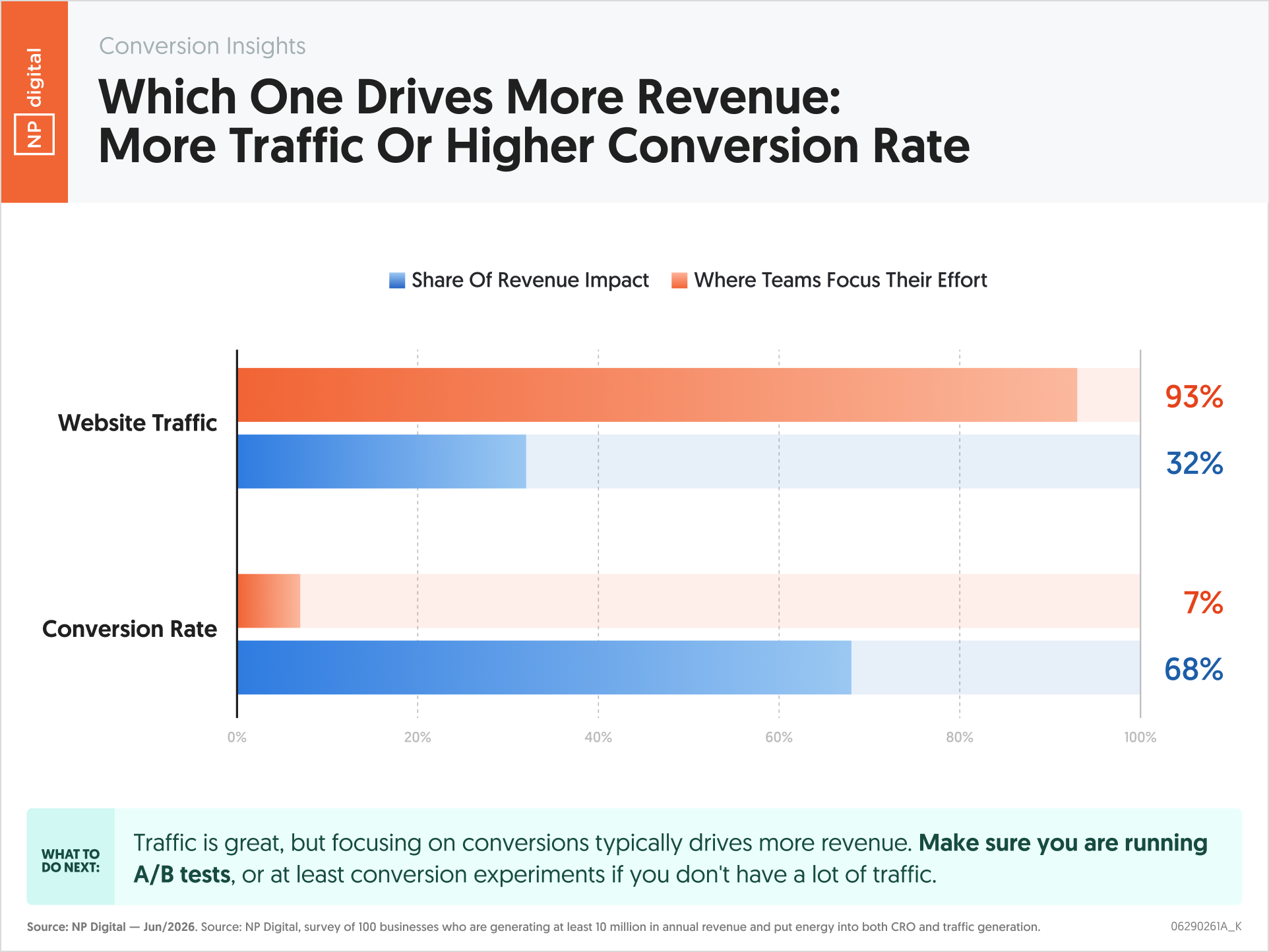
Conversion rate, the percentage of listing views that result in a booking inquiry or confirmed reservation, connects your Airbnb revenue management strategy to listing quality. A high RevPAR target means nothing if your click-through rate is tanking because the lead photo fails to communicate value or the title isn't optimized. This metric bridges pricing strategy and marketing execution. The tradeoff: Airbnb doesn't expose raw view-to-booking conversion data directly, requiring proxy metrics from host dashboards.
Revenue Management Tools for Airbnb Hosts - What Each One Actually Does
The right question about revenue management tools isn't which one to buy. It's understanding what each one actually does, and where every single one of them stops working. Dynamic pricing software like PriceLabs, Wheelhouse, and Beyond automates your nightly rate based on demand signals, local events, and competitor availability.
According to PriceLabs, hosts using dynamic pricing tools typically see 10 to 40% revenue increases compared to static pricing. That number is real, and incomplete, because the rate is only half the transaction. The other half is what happens after a guest sees your optimized price and sends a message.
1. conduit.ai - Best All-in-One Airbnb Revenue Management Platform
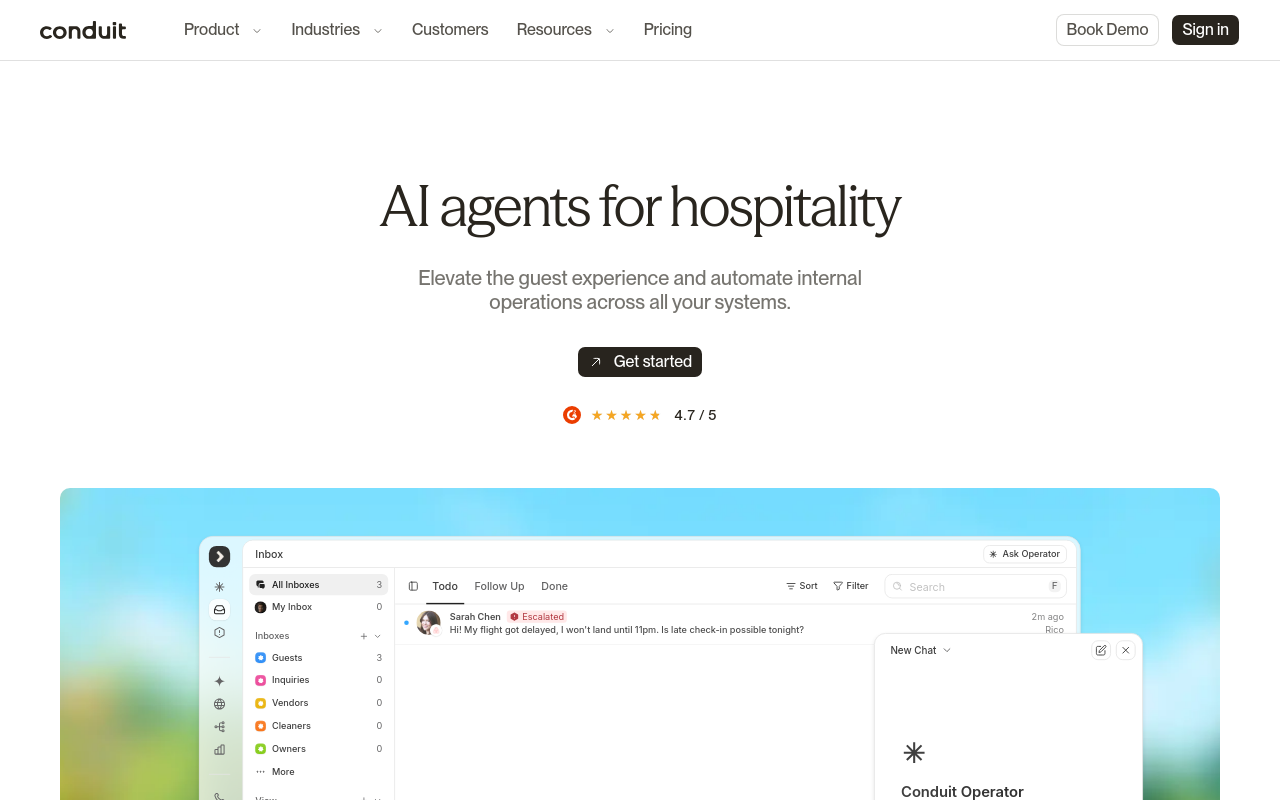
Most hosts who invest in PriceLabs or AirDNA assume the revenue work is done once rates are set. The hidden cost is the inquiry that arrives at 11 p.m. on a Friday and sits unanswered until morning while the guest books a competitor. Conduit's AI for hospitality closes exactly that gap, operating 24/7 so every rate-optimized listing has the response infrastructure to convert priced demand into confirmed revenue. It is most beneficial when your portfolio is large enough that overnight coverage is a structural problem, not an occasional one.
2. PriceLabs - Best for Granular Dynamic Pricing Control
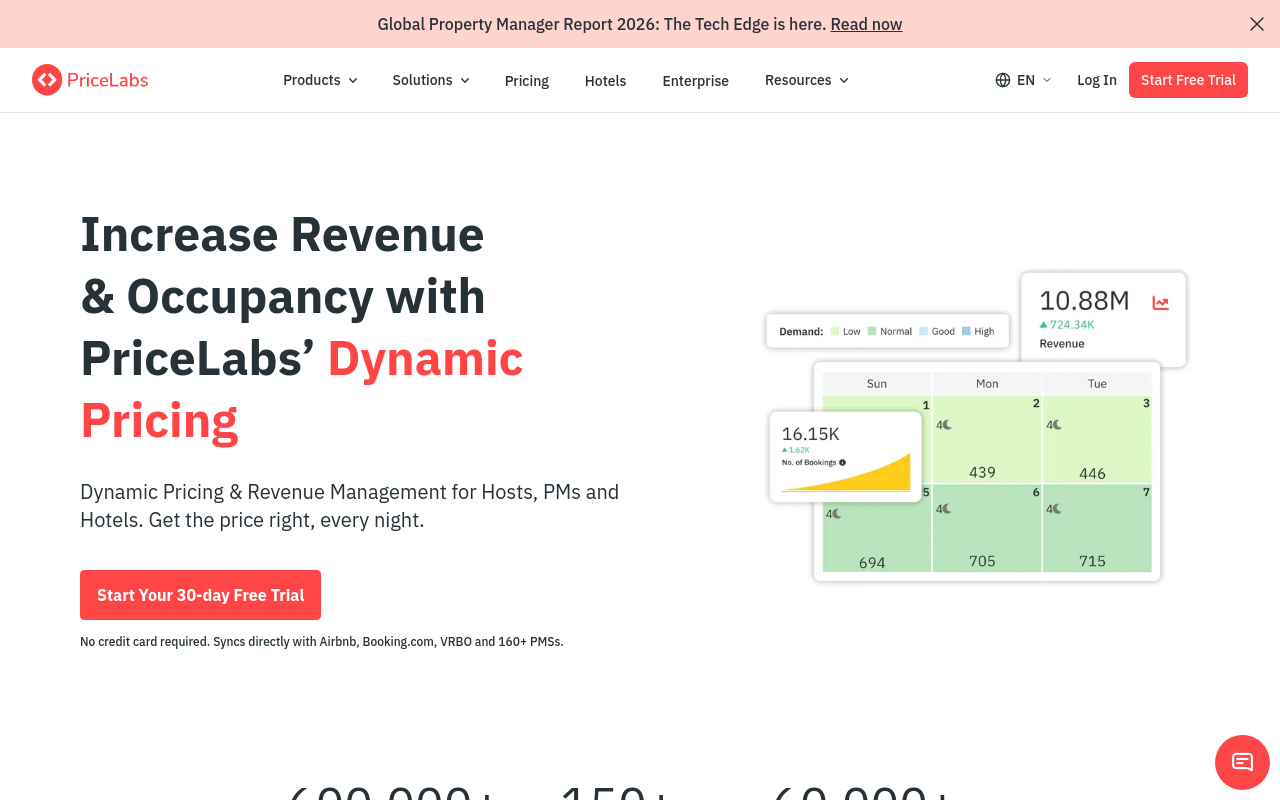
PriceLabs is the strongest pick for hosts who want precise, rule-based control over their rates. Its Market Dashboard surfaces local occupancy benchmarks, competitor rates, and demand trends, functioning as both a pricing engine and a lightweight research layer. The real limitation: PriceLabs adjusts your rate for a sold-out weekend, but it cannot answer the guest who messaged at 11 p.m. asking about early check-in. Rate optimization and booking conversion are two separate problems, and PriceLabs only solves one.
3. Wheelhouse - Best for Hands-Off Automated Pricing
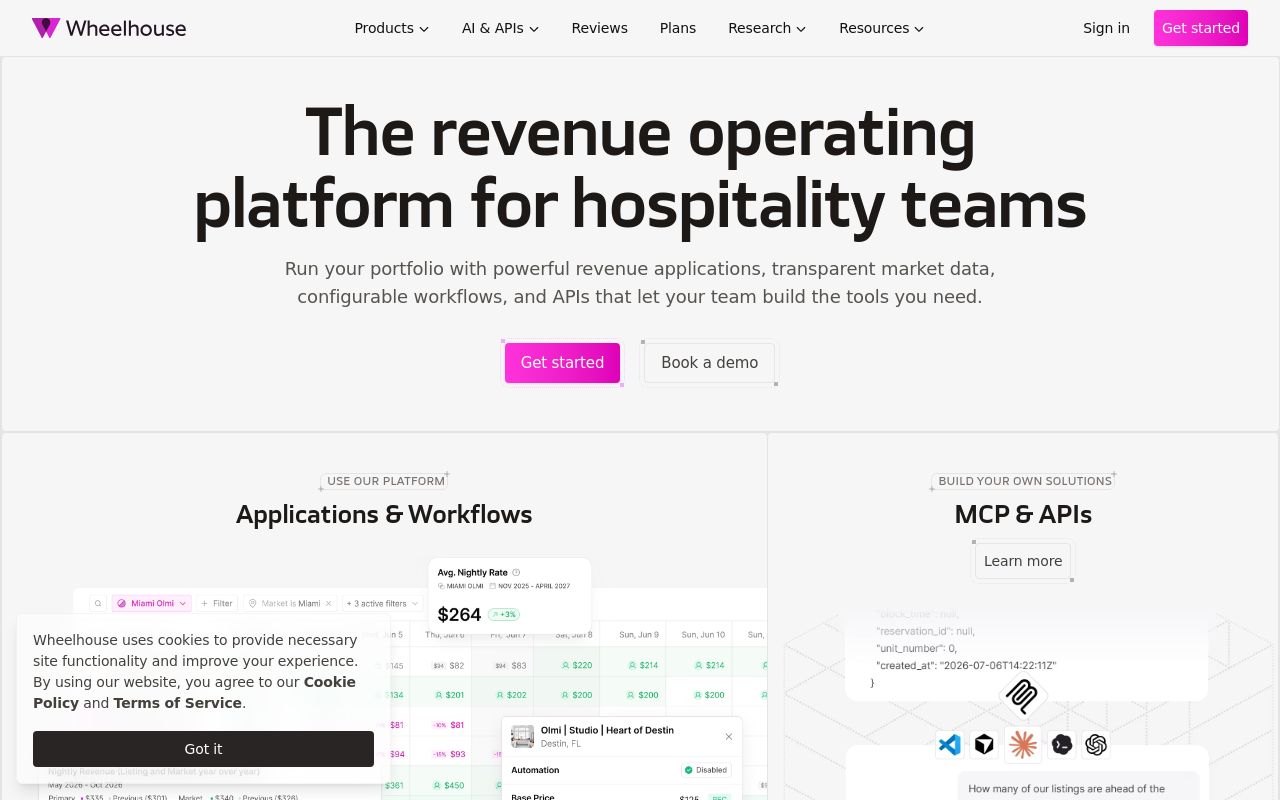
Wheelhouse is designed for hosts who want a set-it-and-forget-it pricing engine that continuously adjusts nightly rates based on local demand signals without requiring manual rule-building. It suits newer hosts or those with small portfolios who lack time to manage pricing actively. The key limitation is reduced transparency, the algorithm's decisions aren't always explainable, which frustrates data-driven hosts who want to understand why a rate changed.
4. AirDNA - Best for Competitive Market Intelligence
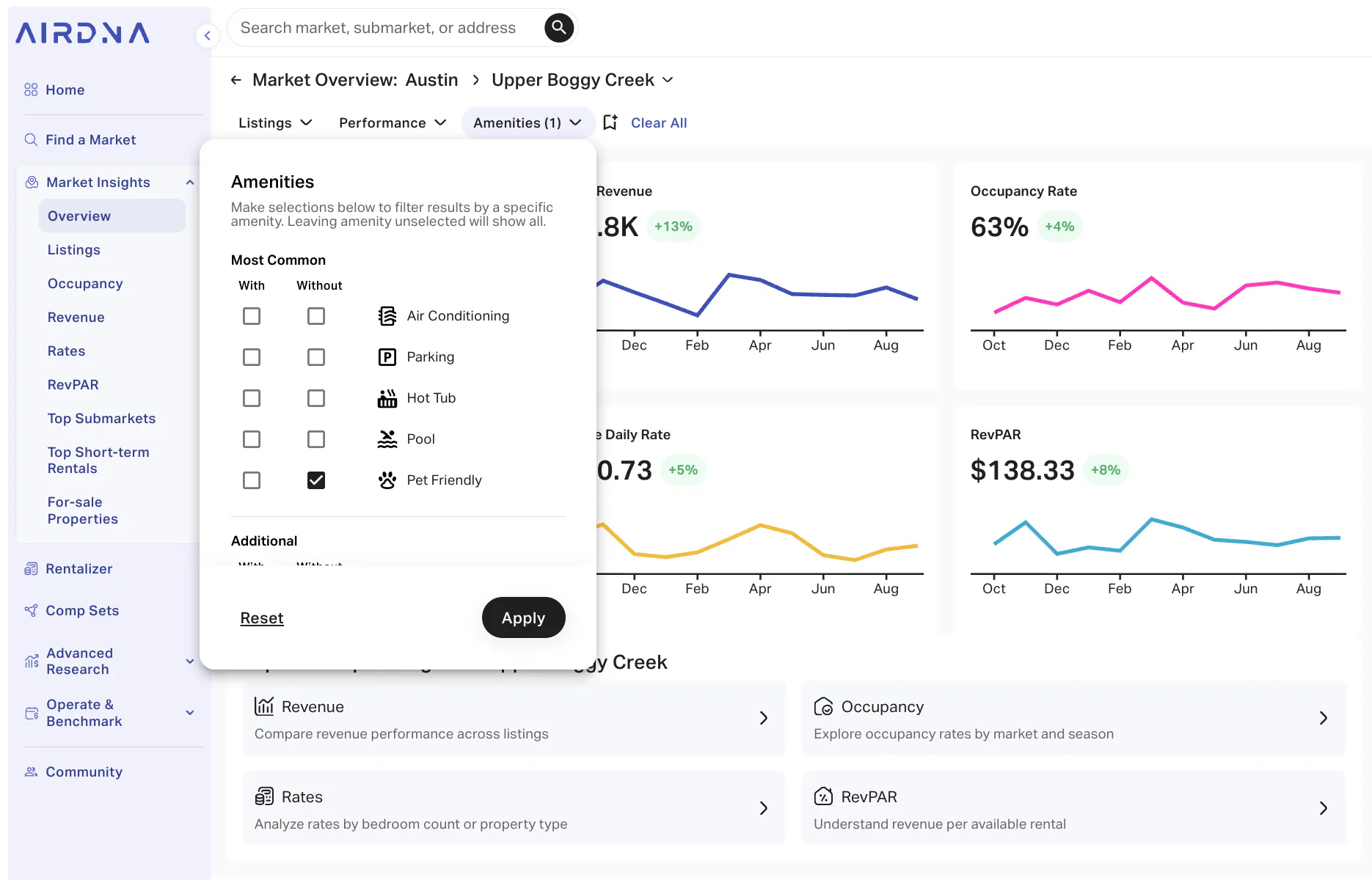
AirDNA tracks short-term rental data across hundreds of thousands of listings worldwide, making it the most credible tool for understanding what your comp set is actually earning. The critical distinction: AirDNA is a research layer, not a pricing engine. It tells you what the market is doing; it does not act on that information. Pair it with a dynamic pricing tool like Wheelhouse or OptimizeMyBnb, or the data sits unused.
5. Hospitable - Best for Automated Guest Communication Tied to Revenue Workflows
Hospitable automates the full guest messaging lifecycle, booking confirmations, check-in instructions, mid-stay check-ins, and review requests, while integrating with pricing tools to create a cohesive revenue management workflow. It's best suited for hosts managing five or more listings who need to reduce manual communication overhead without sacrificing the personal touch that drives five-star reviews. The tradeoff is that its pricing integration is secondary; it relies on third-party tools for dynamic rate-setting.
Related Reading
-
Vrbo Management
-
Airbnb Self Check In
-
Vacation Rental Automation
-
Best Apps For Short Term Rentals
-
Best Pms For Airbnb
-
Best Pms For Short Term Rentals
-
Best Accounting Software For Short Term Rentals
-
How To Manage A Vacation Rental Property
-
Vrbo Smart Pricing
-
How To Automate Airbnb Business
Who Is an Airbnb Revenue Manager: and What Does Hiring One Actually Cost?
Hiring a revenue manager feels like a portfolio-size decision: once you cross enough properties, better pricing pays for the hire. The real calculation is more precise than that, and for lean operators, the math often surprises them.
What an Airbnb Revenue Manager Actually Does and Does Not Do
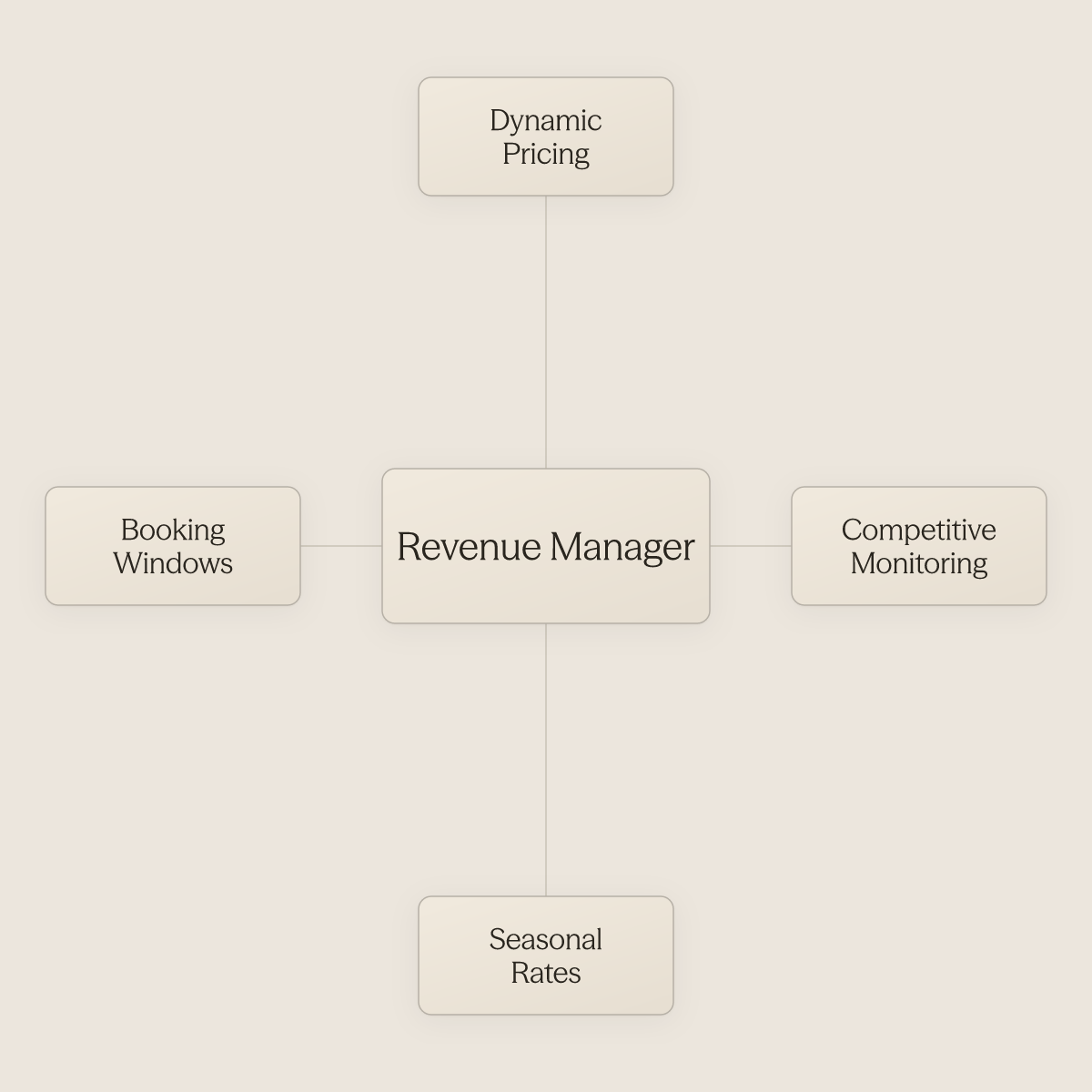
A short-term rental revenue manager handles the analytical side of your business: dynamic pricing, competitive set monitoring, seasonal rate adjustments, and booking window calibration. According to AirDNA, that scope is deliberately narrow. Revenue managers are not responsible for guest communication, cleaning coordination, or inquiry conversion.
The operational half of your revenue equation stays entirely in your hands. There is a second blind spot that catches owners off guard: property managers acting in a revenue management capacity may share only net payout figures rather than gross revenue data, making it structurally impossible for you to verify whether the pricing strategy is actually working. Without access to gross numbers, the ROI calculation you run at the start of the engagement is the same incomplete calculation you are still running a year later.
Fee Math: 3--4% Across 5 vs. 15 Properties
Revenue managers typically charge 3 to 4% of revenue or $250 to $300 per property per month. At five properties paying $300 each, that is $1,500 per month before you see a single dollar of pricing uplift. At fifteen properties, the same flat rate reaches $4,500 monthly.
The hire only becomes accretive when the revenue lift clears that threshold consistently, not just in peak season. That math is only half the ledger. Operators who layer a revenue manager on top of an unresolved guest communication problem often discover a second cost center running in parallel.
Noel Poler cycled through multiple support models, including a dedicated PMS and call-center service, at up to $4,000 per month, and still faced guest wait times of up to 57 minutes, mounting refunds, and found himself personally answering questions on Slack. The revenue optimization line was pulling in one direction; the guest communication overhead was pulling in the other.
The Four Signals That Suggest You Are Ready to Hire One
You are ready to hire when at least four conditions align: your portfolio exceeds ten properties, your market is genuinely complex or high-competition, you have no time for ongoing data analysis, and your occupancy is inconsistent despite reasonable rates. AirDNA notes that for hosts under ten properties, incremental revenue gains are frequently offset by management costs unless the market is unusually competitive. Portfolio size alone is not the trigger.
Scale also exposes the staffing math on the operational side. Haven's guest support model required roughly 25 support staff across multiple shifts to manage check-in questions, lockouts, cleaning issues, and complaints across 270 properties. Every new property added messages, calls, and headcount, meaning growth itself became a cost multiplier that ran alongside, not below, whatever revenue gains the pricing strategy delivered.
The ROI Threshold Most Hosts Never Calculate Before Hiring
A revenue manager optimizes your rates; they do not answer the 11 PM inquiry that converts into a booking, or recover the review score lost to a slow response. Most revenue managers explicitly exclude guest communication from their scope, so the operational gap keeps bleeding revenue on the other side of the equation. Hosts who hire a revenue manager and still handle communication manually often find the net gain narrower than projected.
This is precisely where the calculus shifts for operators using Conduit's AI Agents. The platform is most beneficial when a business receives a high volume of repetitive guest messages and already has documentation, SOPs, FAQs, and property manuals it can train the agent on. Once connected, the first automated guest reply goes live within days.
From that point forward, the agent responds continuously: before, during, and after a stay, any time a guest sends a message, without adding to your headcount. Paired with Conduit's Workflows, which fire automatically after trigger events like booking confirmation or check-in, the recurring manual touchpoints that currently require a staff member are handled without intervention. The Inbox layer lets your operations team monitor and review every conversation the AI is managing, so oversight scales without proportional hiring.
The net effect is that the two halves of the revenue equation, pricing strategy and guest communication, stop pulling against each other. Knowing what a revenue manager costs, exactly what they do not cover, and how that operational gap can be closed without linear headcount growth: that is the full calculation most hosts never run before signing the first engagement.
Revenue Manager vs. Pricing Tools - The Comparison Most Hosts Frame Wrong
That frustrated realization lands with enough regularity among short-term rental operators to qualify as its own genre: rates look optimized, the pricing tool is doing its job, yet revenue keeps leaking from somewhere the owner cannot locate. The assumption underneath it is equally familiar, that scaling beyond a handful of properties means personal time investment must grow in lockstep, that the owner will always need to be the one fielding guests and managing daily friction to protect quality and income. Both the frustration and the assumption point toward the same reflex solution: hire a revenue manager, or upgrade to more sophisticated pricing software. Neither fixes the actual problem, because both target the wrong part of it entirely.
What a Revenue Manager Brings That Software Can't, and Vice Versa
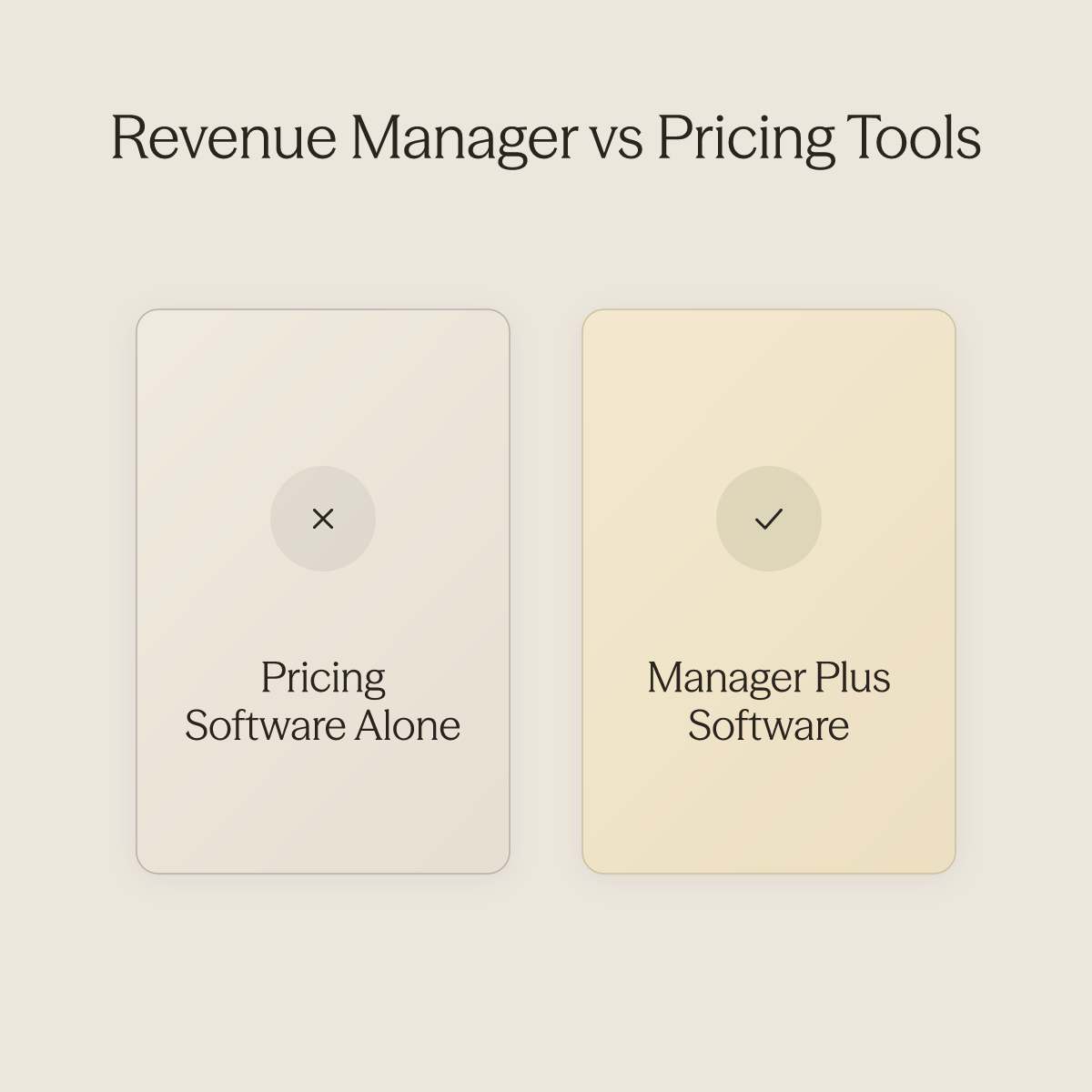
A skilled revenue manager reads market nuance that algorithms miss: a local festival not yet indexed, a minimum-stay adjustment ahead of a shoulder-season shift, a comp set strategy built around your specific property type. Dynamic pricing tools like PriceLabs or Wheelhouse do something different but complementary; they process demand signals at a speed no human can match and adjust rates continuously. Dynamic pricing tools can lift short-term rental revenue by 10 to 40 percent on the rate side alone. Both are genuinely useful. But they share one structural blind spot.
Why Both Options Stop at the Listing Page and Leave Money on the Table
The revenue manager sets the rate. The pricing tool adjusts it overnight. Then a guest finds your listing at 11 PM, sends an inquiry, and waits.
The booking capture side, response, follow-up, conversion from inquiry to confirmed reservation, is left to you. If you're asleep, that guest is already scrolling to the next listing. This is where the operational reality of multi-property management bites hardest.
Operators managing guest communications across multiple platforms simultaneously, Airbnb, Vrbo, direct booking sites, face an inbox that never respects time zones or calendars. The volume of repetitive pre-stay questions (check-in times, parking, Wi-Fi, pet policies) compounds with every property added, and the manual staff action required to answer each one scales linearly with growth. That is the structural trap: revenue strategy scales through software, but guest communication has historically scaled only through headcount.
The Conversion Gap - How Delayed Responses Quietly Erode RevPAR
Research on Airbnb response time shows that hosts who respond within one hour are significantly more likely to secure a booking, and delayed overnight responses directly result in lost bookings as guests move on to the next available listing. Industry research reinforces why response speed is a conversion lever, not just a courtesy metric. The loss compounds: Airbnb's algorithm penalizes low response rates with lower search rankings, suppressing future visibility and occupancy and dragging RevPAR down through a channel most hosts never trace back to a missed 1 AM message.
The operators who close this gap recognize that the highest-volume, most repetitive guest touchpoints, pre-booking inquiries, check-in instructions, mid-stay requests, post-stay follow-up, are exactly the interactions that follow a predictable pattern and are therefore the ones most costly to leave to manual handling. When those touchpoints have existing documentation behind them, house manuals, SOPs, FAQ sets, the conditions are right for systematic automation rather than more hiring.
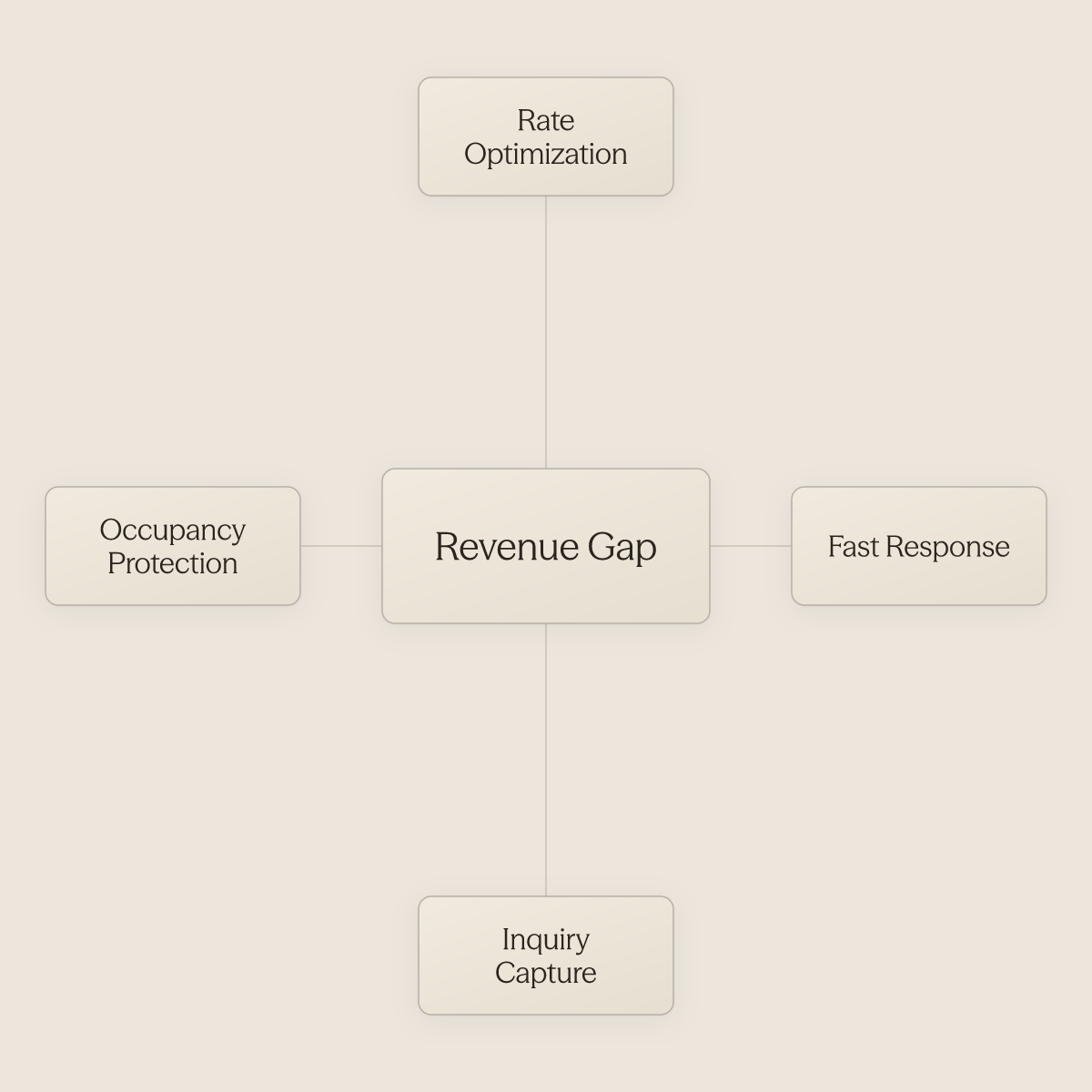
The Missing Layer in Airbnb Revenue Management - Rate Optimization vs. Booking Capture
The operators closing this gap are adding a third layer beneath revenue management and dynamic pricing: an always-on communication layer that handles booking capture continuously, before, during, and after every stay. AI Agents are trained directly on a property's existing documentation, SOPs, manuals, FAQs, without requiring manual re-entry, and they connect to the tools operators already use, including Airbnb and platforms like Notion and Google Drive. The first automated guest reply goes live within days of connecting those materials.
From there, Workflows handle the recurring, predictable touchpoints automatically, firing after a booking is confirmed, after check-in, or when a specific keyword surfaces in a conversation, so that the response a guest receives at 11 PM is as fast and accurate as the one they would receive at 11 AM. The Inbox gives the operations team a single place to monitor, review, and manage every conversation the AI agent is handling across all properties and platforms simultaneously, preserving oversight without requiring operators to live inside their messages. The revenue manager and the pricing tool remain valuable. They are simply no longer doing the whole job alone.
The Operational Layer That Turns Rate Optimization Into Captured Revenue
Pricing tools tell you what your rates should be. They cannot tell you whether the guest who sent an inquiry at 11:47 PM on a Saturday booked your listing or the one below yours by 8:00 AM Sunday. That gap, between a well-calibrated rate calendar and confirmed revenue, is where most short-term rental operators quietly bleed income they never trace back to a communication problem.
Why Overnight Inquiry Leakage Is a RevPAR Problem
Airbnb's platform architecture creates a structural conflict most scaling hosts don't see until it's costing them. The platform automates pricing through Smart Pricing while enforcing a 90-plus percent response-rate requirement that demands near-constant availability. In practice, Airbnb has split revenue management into two halves: an automatable pricing half and a communication half that, without AI, requires a human awake and ready to respond.
Slower responses trigger algorithmic suppression, which reduces listing exposure, which reduces occupancy. No dynamic pricing tool compensates for that.
The revenue leak is structural and compounds with every property you add.
The Coordination Layer in Practice
Cash Flow Street, Erwan Le Roy's 35-property operation, runs at 96% automation with sub-one-minute response times, not because Le Roy hired overnight guest coordinators, but because he built infrastructure that handles guest-facing communication and operational routing around the clock. The pricing tools surface the opportunity; the coordination layer captures it before it walks to a competitor listing. Adding properties without adding this layer amplifies the same overnight leakage problem at every new listing. The coordination layer is not a feature of a pricing tool. It is separate operational infrastructure that sits between the rate calendar and the confirmed booking.
What Operators at 75 to 270 Units Saved
Darren, founder of Easy BnB, reached a point where 14 virtual assistants were handling 24/7 guest coverage and the math was working against him. When he restructured around AI-powered guest communication, his team shifted from answering messages to curating the knowledge base that made the AI more accurate. The result was roughly $22,000 in monthly cost savings across 75 units with zero additional hires. His summary: "We all agree that AI first is the best approach."
For operators managing 10 or more units, the labor cost of replicating 24/7 coverage through headcount is what most teams report as unsustainable at scale.
Related Reading
-
Lodgify Competitors
-
Vrbo Automated Messages
-
Guesty Alternatives
-
Lodgify Vs Smoobu
-
Guesty Vs Hostfully
-
Ownerrez Vs Guesty
-
Hospitable Vs Hostaway
-
Guesty Vs Hostaway
-
Guesty Vs Hospitable
Do You Need Airbnb Revenue Management? Here's How to Decide
Here's How to Decide
The right answer depends almost entirely on portfolio size and market complexity, and getting it wrong in either direction costs you money. A solo operator with two listings needs something very different from a multi-property host managing remote rentals across unpredictable demand cycles. What follows breaks that decision down by situation, so you can match the tool or support level to where you actually are.
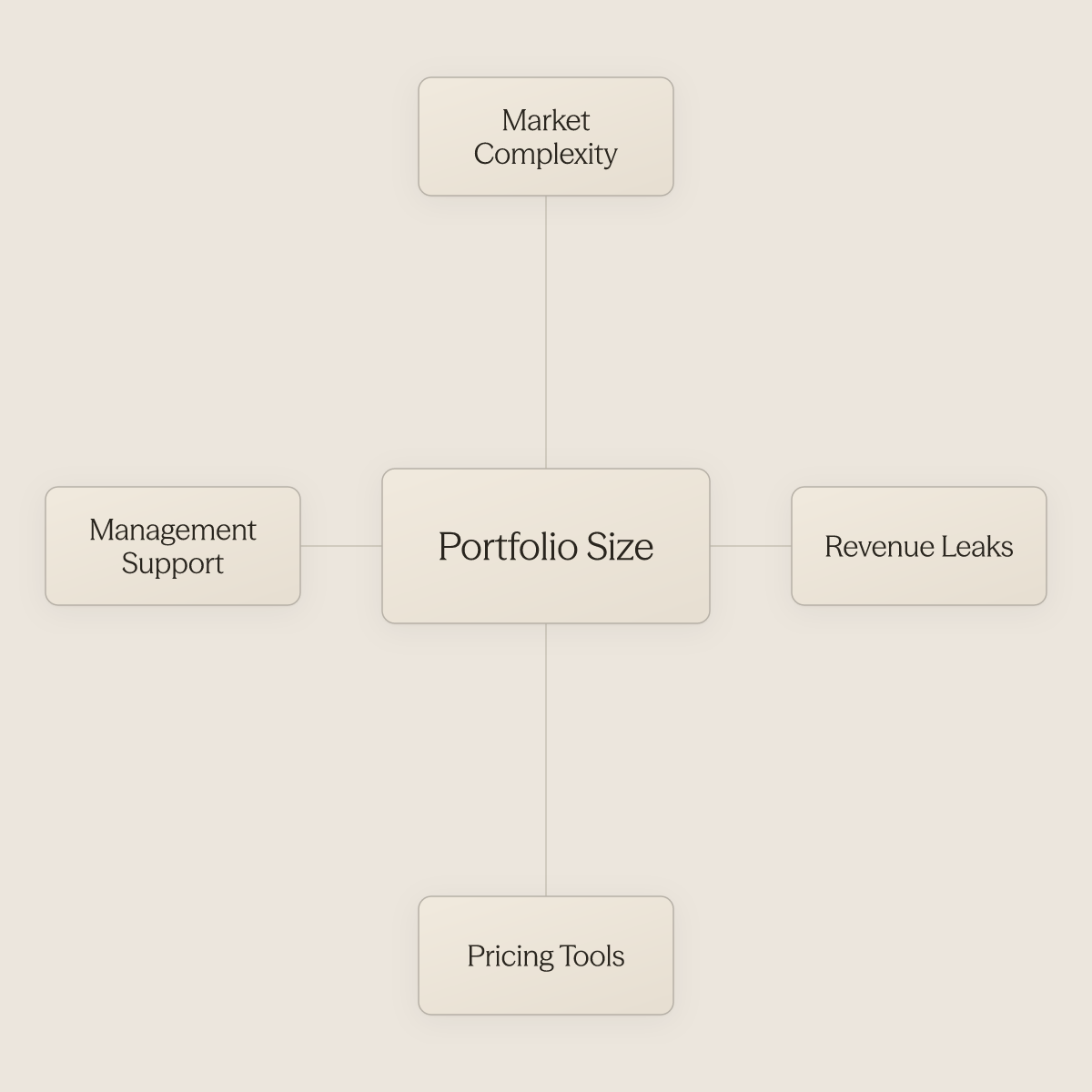
Portfolio size sets the starting point, but it doesn't close the decision. The real question is which revenue leak is costing you the most right now, because the answer shifts depending on how many properties you operate and how competitive your market is.
Under 5 Properties - Start With a Pricing Tool
"Managing an Airbnb property from a distance creates significant operational headaches, including handling guest messages at all hours, a core reason I question whether I need revenue and property management help."
For a solo operator running two or three listings in a predictable seasonal market, a dynamic pricing tool is the highest-ROI move available. According to iPropertyManagement's data, hosts who actively manage pricing consistently outperform those on static rates. Tools like PriceLabs or Beyond handle demand-signal reading automatically, and at this scale the monthly cost is easily recovered.
A part-time revenue manager is not cost-justified here; pricing gains rarely exceed the fee until your portfolio grows. What does quietly erode margin at this stage is guest communication, specifically the operational weight of fielding messages at all hours, particularly for anyone managing a property remotely. Long-distance hosts know this pressure firsthand: a late-night inquiry left unanswered overnight is a booking that goes to the next listing.
Conduit's AI Agents address this directly. If you have existing documentation, SOPs, FAQs, a house manual, the agent can be trained on it and delivering automated guest replies within days of connecting those materials. Crucially, no IT or developer work is required; the operator connects the docs themselves and the agent is ready to respond continuously, before, during, and after a stay.
5 to 15 Properties - Layer In Comp-Set Analysis and Part-Time Revenue Expertise
Once you cross five properties in a market with real supply pressure, over 7.7 million active Airbnb listings globally, static comp-set assumptions start costing you occupancy. This is the tier where part-time revenue expertise, a fractional revenue manager or a structured market-data review cadence, earns its keep. Many operators here also discover their pricing is solid but inquiry-to-booking conversion is quietly bleeding revenue, especially overnight.
At this scale, guest communications multiply fast. Managing conversations across multiple platforms simultaneously is where manual processes visibly break down, messages fall through the cracks, response times slip, and the ops team is context-switching constantly. ai's Inbox is built for exactly this moment: it gives your operations or support team a single place to monitor, review, and manage all conversations the AI agent is handling across properties and platforms.
The AI handles the high-volume, repetitive guest messages, the check-in instructions, the WiFi password, the early-checkout requests, while your team maintains oversight without drowning in individual threads. No IT setup is required; the operator or ops lead connects the accounts and the integration is live. This is also the tier where Workflows start earning their keep.
Once your guest lifecycle has predictable, recurring touchpoints, booking confirmation, pre-arrival, check-in day, post-stay review requests, manually triggering staff actions for each one across 5 to 15 properties becomes a genuine time tax. Workflows fire automatically after trigger events in a conversation or guest lifecycle, removing the manual step entirely.
15 or More Properties
At 15-plus properties, the compounding cost of manual communication and disconnected tools becomes a structural problem, not an inconvenience. The volume of repetitive guest messages alone, questions that are answered identically dozens of times a week, justifies a purpose-built AI Agent. Conduit's agent is most impactful here precisely because the business already has the documentation: SOPs, FAQs, and operational manuals that the agent can be trained on, pulling answers directly from your existing content without manual re-entry.
Ai's Integrations let the AI agent leverage that existing content as its knowledge base; the operator or ops lead connects the integration, no IT or developer involvement needed. The result is a system where the AI handles first-response at scale, the Inbox gives your ops team unified oversight across every active conversation, and Workflows ensure no recurring guest touchpoint, confirmation, check-in, post-stay, falls through the cracks because a staff member was occupied elsewhere. For operators managing a portfolio this size across markets, that combination removes the category of operational leak that neither pricing tools nor a fractional revenue manager can touch.
Next steps
If your portfolio is growing but your revenue isn't keeping pace, the path forward starts with recognizing that pricing tools and revenue managers solve exactly the same half of the equation, leaving the communication layer untouched. Start with our AI for hospitality.
Dynamic pricing delivers a documented 10 to 40% revenue lift, but that lift is structurally incomplete: every inquiry generated by an optimized rate that goes unanswered overnight leaks out of the funnel before converting. At the same time, Airbnb's own platform architecture enforces a 90%+ response-rate requirement while automating only the pricing half, meaning operators who solve rates alone remain in penalty territory as their portfolio grows. Together, those two realities point to one logical next step: closing the communication gap with infrastructure that runs continuously, without adding headcount.
Start with conduit.ai to see how Conduit's AI Agents, Workflows, and Inbox work as a coordination layer that captures every inquiry your pricing tool surfaces, day or night, across every property you manage.
Frequently Asked Questions
How do I know if my occupancy problem is a pricing issue or something else?
Check your RevPAR, not just your ADR. If you raise your nightly rate but occupancy drops, RevPAR can fall even while ADR looks strong, for example, a rate increase from $180 to $220 paired with an occupancy drop from 80% to 55% drops RevPAR from $144 to $121. The post argues that when occupancy lags the comp set, the gap is usually operational, things like slow inquiry responses, not a pricing miscalibration.
When should I set minimum stay requirements, and when do they hurt more than they help?
Minimum stays of 3--7 nights during high-demand periods reduce turnover costs and lift average daily rate by filtering out single-night bookings that generate disproportionate cleaning and restocking costs. The real risk is in slower shoulder seasons, where rigid minimums can block bookings that would otherwise fill gaps, so the post recommends treating minimum stays as a high-demand tool, not a year-round rule.
What's the right way to build a seasonal pricing strategy without just relying on dynamic pricing tools?
Set a seasonal rate calendar first, with floor rates for peak periods and ceiling rates for shoulder seasons, so the dynamic pricing algorithm adjusts within a band you control. Without this structure, dynamic pricing tools tend to compress rates during your most valuable weeks because they weight recent booking velocity too heavily, which is described in the post as the most expensive omission most hosts make.
How does booking lead time tell me if my listing is in trouble before occupancy actually drops?
Booking lead time is a forward indicator: when the window between inquiry and check-in compresses sharply below your baseline, it signals softening demand or a listing not surfacing early in search results, not a problem that already happened. The post notes typical STR booking windows run roughly 20--30 days for urban markets, with resort and seasonal markets skewing longer, so a sudden compression below your norm is a warning sign to act on immediately.
Can dynamic pricing tools alone handle scaling to multiple properties?
Dynamic pricing tools solve the rate-setting half of revenue management, but the post is explicit that the gap between what a well-priced listing could earn and what it actually earns is almost always a capture problem, not a pricing one. At scale, overnight inquiries going unanswered, communication bottlenecks across platforms, and coordination failures between guests, cleaners, and contractors drain the revenue that better rates create, which is exactly the operational layer that tools like Conduit's AI for hospitality are built to close.

Stay in the loop
Get the latest on AI automation, product updates, and customer stories.

