Guesty vs Hostfully: How They Compare in 2026


Guesty vs Hostfully
AI tools and features for growing portfolios.
Guesty scales channel depth. Hostfully polishes guest experience. Neither one resolves your inbox. Here is how to pick the platform that fits your portfolio size, and where both leave the same gap.
Most vacation rental property managers and operations leads assume that once they pick the right PMS, Guesty or Hostfully, their communication overhead will shrink because the platform will handle the operational complexity and their team can focus on guests. But operators who've gone through this process will tell you the real question isn't which platform does more. It's which platform fits where your portfolio is right now, and what neither one covers once you start growing past the point where a single inbox can keep up. See our AI for hospitality for how this works in practice.
Platforms like Conduit's AI for hospitality exist precisely because the PMS decision and the guest communication decision are two separate problems, and the industry has spent years conflating them. Guesty is built for operators who have moved past the scrappy phase. In April 2024, the company raised $130 million at a $900 million valuation, backed by KKR, with revenue reportedly growing 5x over the prior three years (TechCrunch, 2024).
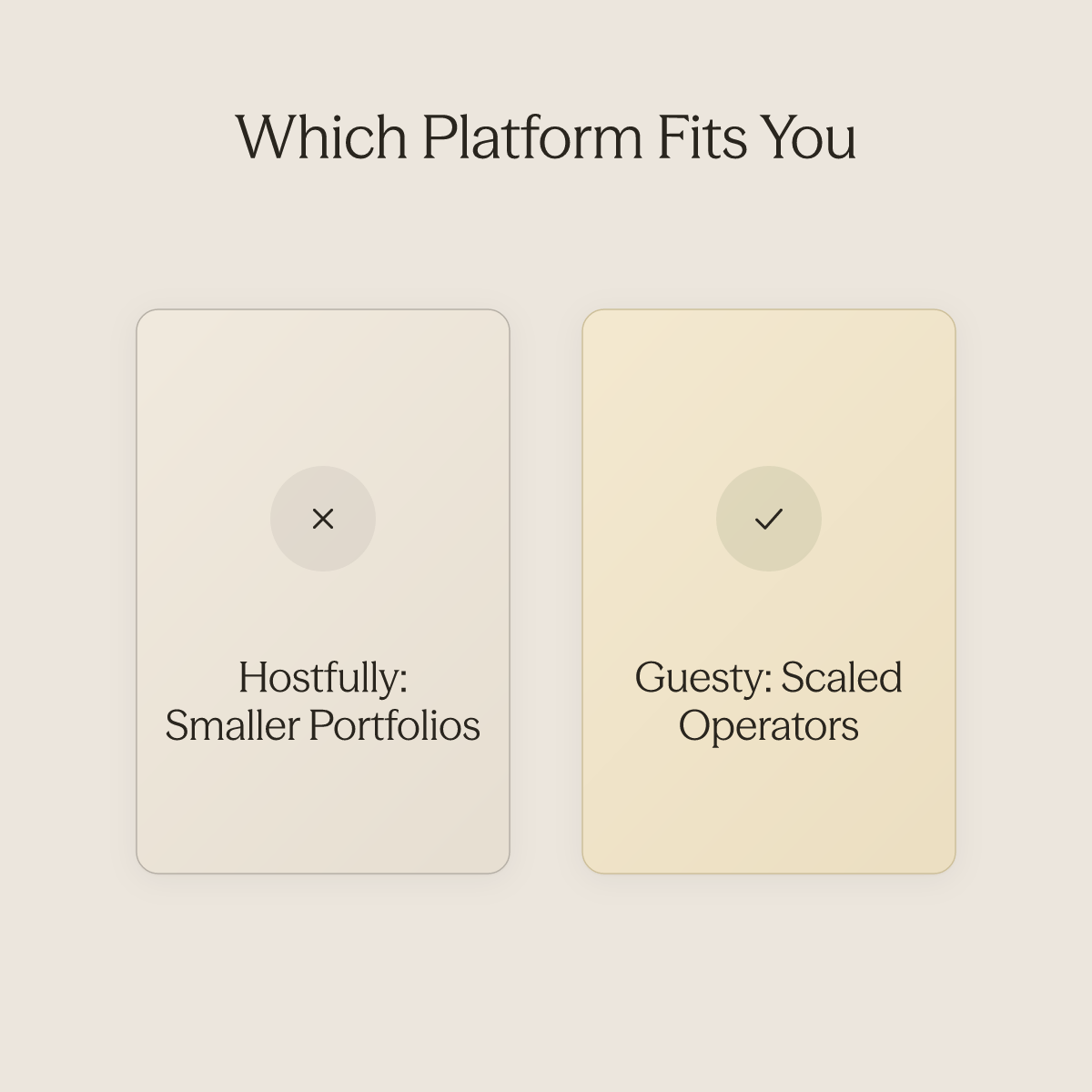
Guesty is built for operators managing multiple channels and direct booking simultaneously. Operators managing 50 or more units with a dedicated ops team tend to find Guesty's depth worth the investment. Operators managing closer to 10 or 20 units consistently find the pricing difficult to justify. Hostfully built its reputation on a digital guidebook product before expanding into full property management software. That origin shaped the platform's philosophy: guest experience polish and onboarding simplicity came first, enterprise depth came later.
Key takeaways
-
Guesty is built for operators who need deep OTA channel coverage across 60+ platforms; Hostfully is built for teams that want flexibility and a lighter setup, the right pick depends on portfolio stage, not feature count.
-
Pricing pages for both platforms hide the real cost: the subscription fee is usually the smallest number in the stack once you account for add-ons, onboarding, and the staff hours neither platform eliminates.
-
The most consistent complaints in long-term G2, Capterra, and Reddit reviews for both platforms aren't about calendar sync or channel logic, they're about communication overhead that never shrinks the way operators expected.
-
A unified inbox organizes messages; it does not answer them. Operators scaling past 30 units without adding headcount have learned that distinction the hard way.
-
Choosing between Guesty and Hostfully is a real decision, but it doesn't touch the guest communication problem. The operators growing without proportional headcount are layering a purpose-built communication layer on top of whichever PMS they pick.
-
Conduit.ai's AI Agents close that gap by reading directly from your SOPs, manuals, and FAQs to handle guest conversations autonomously across channels, no human intervention required, on either platform.
Feature Comparison - Where Guesty and Hostfully Actually Diverge
Both platforms handle the core jobs of property management, but the gaps between them widen fast once you move past the basics. Channel management depth and automation flexibility are where operators running larger portfolios or more complex workflows will feel the difference most acutely. What follows breaks down exactly where Guesty pulls ahead and where Hostfully holds its own, so you can match the right tool to how your business actually operates.
Channel Management and OTA Integrations - Where Guesty's Depth Outpaces Hostfully's Breadth
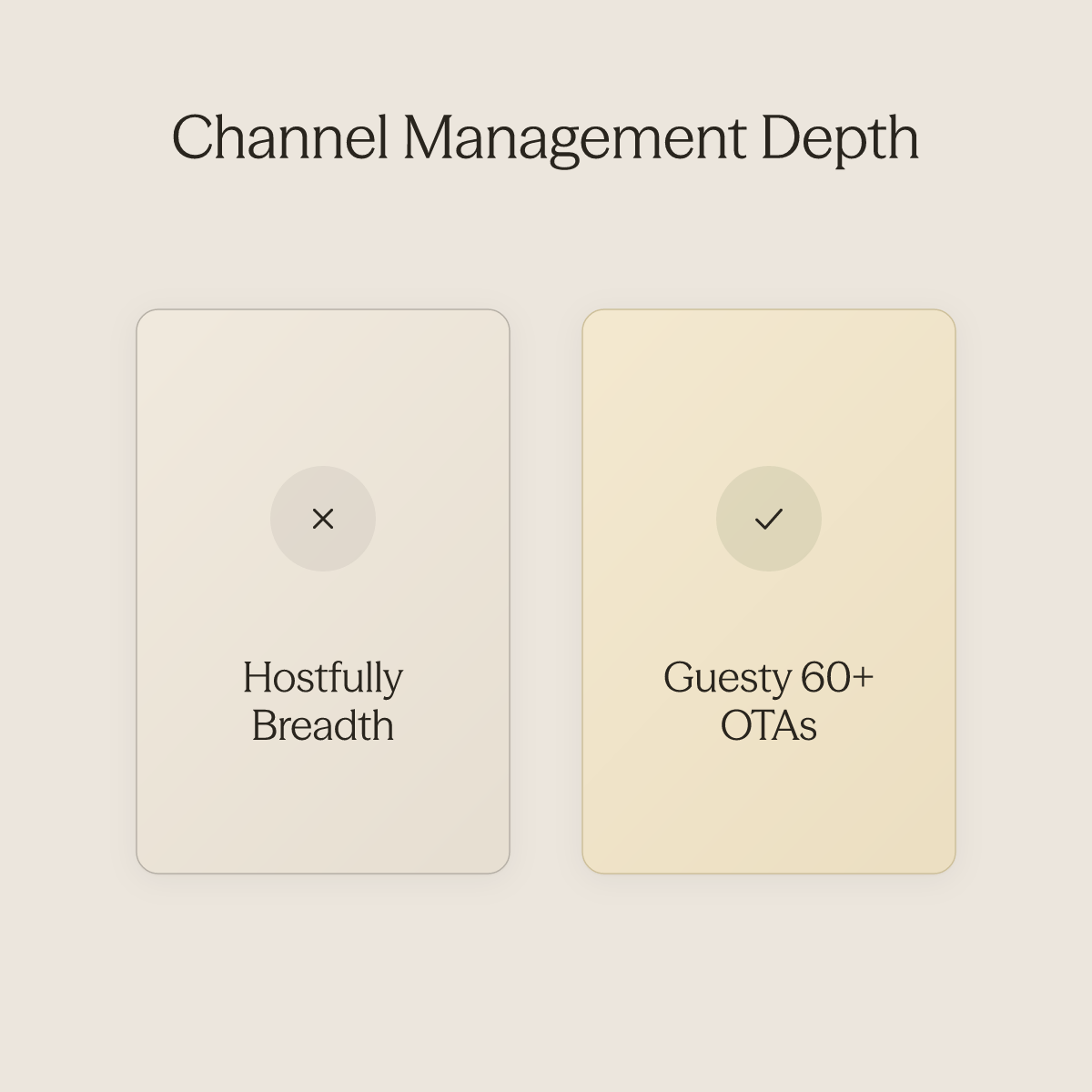
Guesty's channel manager syncs rates and availability across 60+ OTA channels, including Airbnb, Vrbo, and Booking.com, according to Guesty's own channel manager documentation. That depth matters most above 50 units across multiple markets, where a missed rate sync or double-booking creates real revenue damage. Hostfully covers the major OTAs competently, but its channel integrations are built for breadth rather than the enterprise-grade, real-time sync that larger operators depend on. Guesty's channel depth pays off when you are actively distributing across four or more OTAs simultaneously and cannot afford manual rate reconciliation.
Automation and Task Triggers - Hostfully's Rule Builder vs. Guesty's Enterprise Workflow Engine
60+ OTA channels Guesty syncs rates across
Hostfully's pipeline automation gives mid-market operators a visual, approachable rule builder with triggers based on booking events, templated messages, and task assignments, no code required. Guesty's workflow engine goes deeper, supporting complex conditional logic and multi-step automations suited to teams with dedicated ops staff. Guesty rewards operators who invest time in setup and have someone to maintain it.
Hostfully is faster to configure, but its rule builder is designed for straightforward trigger-based logic. Operators in the 50-plus-unit range who need branching conditional automations or portfolio-wide rule standardization across property types may find Guesty's workflow engine better suited to that complexity, a trade-off Hostfully itself acknowledges by positioning the product toward growing mid-market teams rather than enterprise ops departments.
Direct Booking Websites and the Hostfully Guidebook Differentiator
Hostfully's Guidebook genuinely separates it from Guesty at the guest experience layer. The digital welcome book gives guests a branded, pre-arrival hub covering house rules, check-in instructions, local recommendations, and property-specific FAQs. Operators consistently cite it as a friction-reducer for pre-arrival questions, and a well-built Guidebook deflects a meaningful share of repetitive inbound messages before they hit the inbox.
Reporting, Owner Statements, and API Openness
Guesty's API access unlocks deeper custom integrations, but programmatic access is gated behind higher pricing tiers. For solo operators and small-portfolio hosts who want programmatic control over their listings, that gating matters: API access arrives at a tier priced for larger operations. Running a profitable short-term rental business with a lean team or as a solo operator means every dollar of platform spend has to justify itself, and enterprise-tier API pricing rarely does at sub-20-unit scale.
Hostfully's open API is more accessible at the mid-market level, appealing to operators who want lightweight custom connections without Guesty's enterprise cost structure. On reporting, Guesty offers more granular owner statement tools and financial dashboards suited to multi-owner portfolios; Hostfully's reporting is functional but better suited to operators not yet managing complex owner-pay structures across dozens of properties. Conduit's Integrations feature closes the gap without requiring programmatic access at all, the AI agent pulls from tools you already use, like Notion, Google Drive, or your existing Airbnb content, so your documentation feeds the agent directly rather than requiring manual re-entry or custom API work.
The Unified Inbox Problem Both Platforms Share
Both Guesty and Hostfully consolidate guest messages into a single interface, which is genuinely useful. But neither platform resolves those messages autonomously. Every inquiry lands in a queue waiting for a human to open, read, and reply.
For solo operators and lean teams, this is where the operational math breaks down: more units mean more messages, and more messages mean more hours spent in the inbox rather than on the business. Response times stretch well beyond one hour during off-peak staffing windows, the exact window when guests are most anxious and reviews are being mentally drafted. The result is linear scaling: more units, more messages, more headcount.
Operators running 40-plus units often find the inbox becomes the operational ceiling, not the platform itself. Conduit's AI Agents are most valuable precisely here, when the business receives a high volume of repetitive guest messages and already has documentation like SOPs, FAQs, or property manuals that can train the agent. The first automated guest reply typically goes live within days of connecting those materials, and from that point the agent operates continuously, before, during, and after every stay, without adding headcount.
Conduit Inbox sits alongside this, giving the operations or support team a single place to monitor, review, and manage every conversation the AI agent is handling across multiple platforms and properties simultaneously. It is most useful precisely when that multi-channel complexity would otherwise require constant human triage. This points to a synthesis the PMS market has not yet confronted directly: Guesty's $130M raise and sustained OTA growth confirm that massive capital investment can solve channel aggregation at enterprise scale, yet that same capital has not been directed at autonomous guest communication, because resolving messages is not a PMS problem.
It is a communication-layer problem, and the operators who have solved it have done so by adding a purpose-built AI agent on top of whichever platform they chose.
Pricing and Cost Breakdown - What Guesty vs Hostfully Actually Costs at Your Portfolio Size
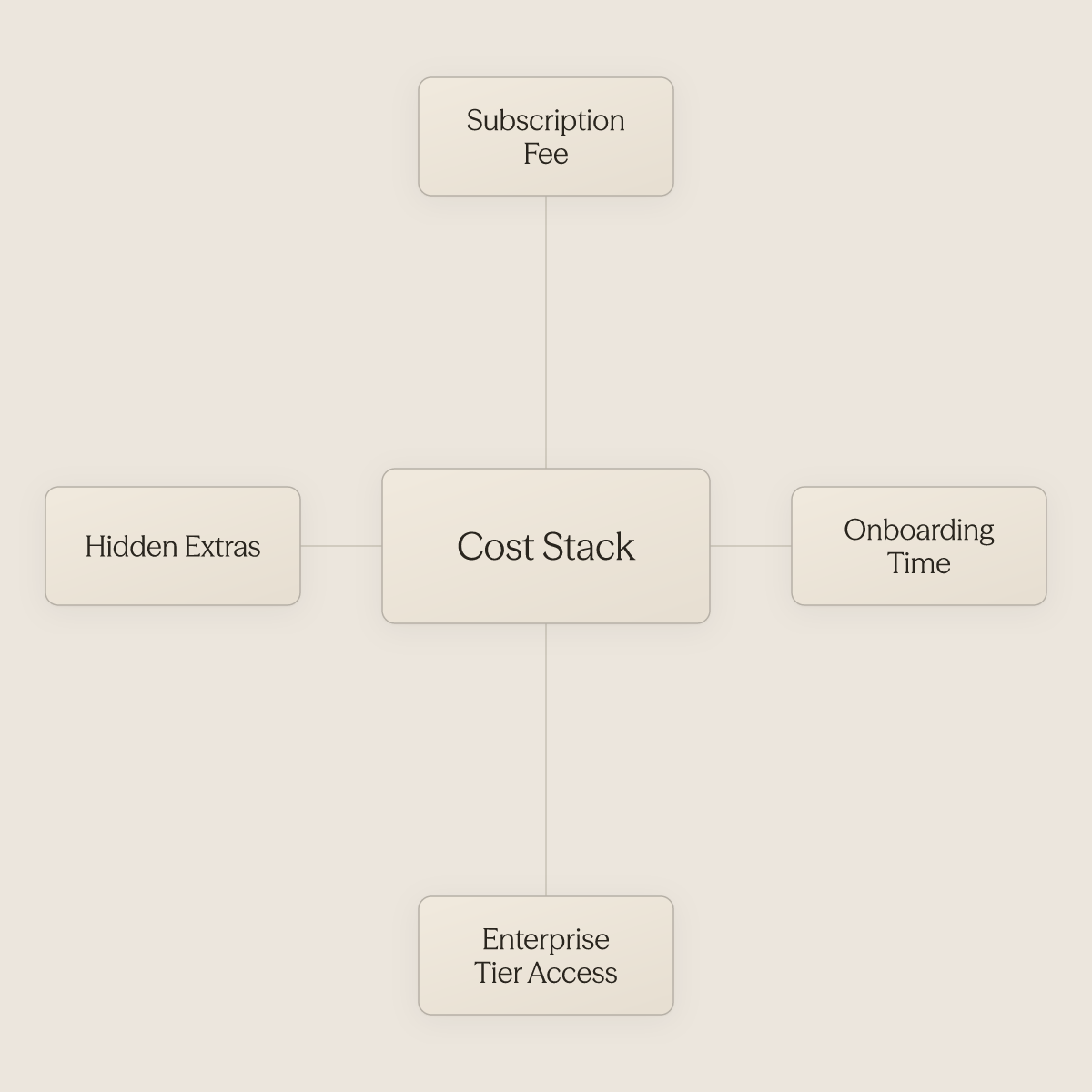
Budget math feels clean when you're staring at two pricing pages side by side. Pick the lower per-listing fee, multiply by your unit count, and the answer looks obvious. The problem is that the subscription line item is often the smallest number in the actual cost stack, and the two figures that dwarf it rarely appear on any pricing page.
How Guesty Structures Its Pricing
Guesty uses a tiered model that scales by portfolio size, with pricing determined through a sales conversation rather than a public rate card. The feature depth most growing portfolios need, dedicated account management, advanced reporting, and full API access, sits behind enterprise tiers that require a demo to price. Per-listing cost drops meaningfully at volume, which benefits 50-plus-unit operators but makes Guesty harder to justify for a 20-unit portfolio still testing the platform.
How Hostfully Structures Its Pricing
The platform scales incrementally by number of properties, with tiers structured to keep entry costs lower than enterprise-focused alternatives, a genuine advantage for operators in the 15-to-50-unit range. The Hostfully FAQ on cost confirms that prospects are directed to a demo before specific figures are quoted, so published third-party numbers should be treated as estimates, not commitments.
The Costs Neither Pricing Page Shows
Onboarding friction is where the real budget surprise lives. Operators consistently report that going live on a new PMS takes longer than the vendor's timeline suggests, with integration setup, channel reconnections, and team retraining adding weeks of reduced productivity. A 25-unit operator who switches platforms mid-season often absorbs more cost in lost operational efficiency than in the subscription delta between the two tools.
Neither Guesty nor Hostfully resolves guest messages. Both route them to a human inbox. This is the cost that compounds hardest as a portfolio grows.
Operators who track team time commonly find that a substantial share of weekly hours goes toward fielding repetitive guest inquiries, check-in instructions, WiFi details, early departure requests, work that scales with every unit added regardless of which PMS is in use. The core problem is structural: every new property is also a new source of inbound guest messages, and without a system that handles those messages autonomously, headcount must grow in lockstep with the portfolio. This is precisely the dynamic that Conduit's AI Agents are built to break.
When a business receives a high volume of repetitive guest messages and already has documentation, SOPs, FAQs, property manuals, Conduit can train an AI agent on that content without requiring manual re-entry, particularly when that documentation already lives in tools like Notion or Google Drive. The agent begins fielding guest messages automatically, typically issuing its first automated guest reply within days of connecting those materials. It runs continuously, before, during, and after a stay, so the operational load of answering the same questions across a growing property count no longer translates directly into more staff hours.
The Inbox layer sits alongside this, giving the operations or support team a single place to monitor, review, and manage every conversation the AI agent is handling across multiple platforms or properties simultaneously. That visibility matters most at scale: it means a small team stays informed without being buried. Workflows extend this further, triggering automated guest touchpoints, post-booking confirmations, check-in reminders, keyword-detected responses, after specific events in the guest lifecycle, replacing manual staff action on the recurring, predictable moments that currently consume the most team time.
The honest total-cost-of-ownership comparison for any PMS includes not just the license fee but the ongoing labor cost of a team that must manually resolve every guest message, a figure that compounds with every property added and is unaffected by which platform sits underneath it. Conduit doesn't compete on the subscription line item; it attacks the line item that actually dominates the cost stack, making it possible to scale the portfolio without proportionally increasing headcount. The subscription delta between Guesty and Hostfully is largely a distraction once that labor cost is on the ledger.
Pros, Cons, and Who Each Platform Actually Fits - Target Market and Customer Reviews
Real costs are only half the picture. Reviews accumulating on G2, Capterra, and across operator communities after users have lived inside these platforms for 12 to 18 months tell a more complicated story than any feature matrix does. The complaints that surface most consistently have almost nothing to do with channel sync or calendar logic. They center on communication: slow support, manual inbox handling, and guest-facing gaps the platform was never designed to close.
Guesty's Genuine Strengths and the Complexity Tax That Comes With Them
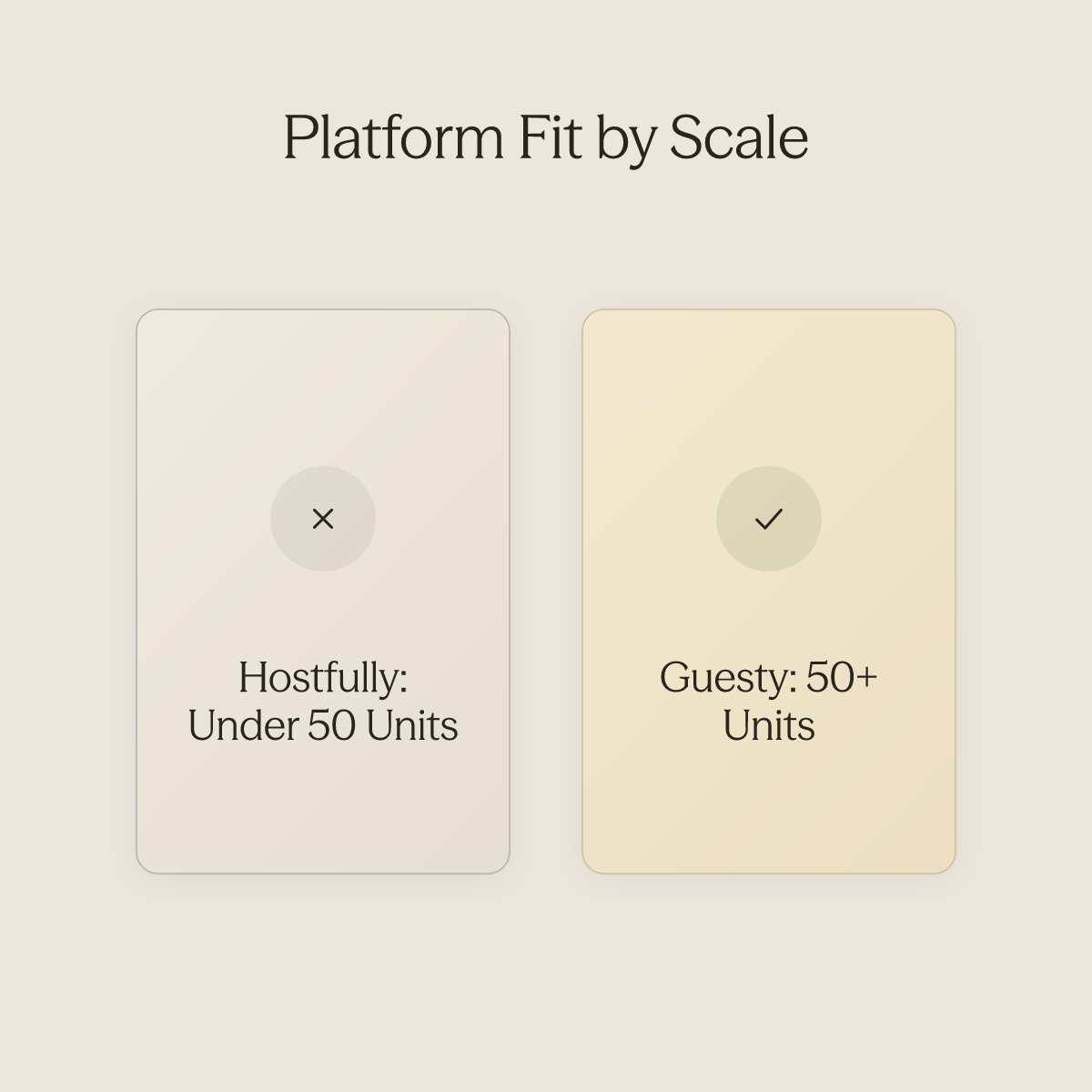
Guesty is built for enterprise operations. The platform's depth of OTA integrations, multi-unit automation triggers, and owner reporting infrastructure is considerable at scale. For portfolios running 50 or more units across multiple channels, that depth matters. The trade-off is real: that depth comes with a longer learning curve and an onboarding process that asks for meaningful internal time before the platform is fully in use.
Hostfully's Onboarding and What Changes Past 50 Units
Hostfully onboards quickly for operators in the 15 to 50 unit range. The Guidebook product adds a guest-facing layer Guesty doesn't replicate natively, and the pricing structure is more accessible for growing portfolios. The picture changes once portfolios push past 50 units. According to publicly reported G2 and Capterra reviews, reporting depth and scalability are cited as constraints above 100 units, so portfolios heading well beyond that range should scope their reporting requirements before committing.
Who Each Platform Is Built For
Guesty fits when the portfolio is already large, the team has dedicated operations staff, and the priority is integration depth over simplicity. Property management companies running 75 or more units across Airbnb, Vrbo, Booking.com, and direct channels get real value from Guesty's automation layer. It is not the right call for a 20-unit operator who needs to move fast without a dedicated ops person. Hostfully's ideal customer sits in the 15 to 50 unit range, where the Guidebook differentiator improves guest experience and reporting gaps haven't yet become blockers. The honest caveat: if the growth plan targets 100-plus units within two years, operators may face a platform migration at exactly the moment their operations are most complex.
The One Complaint Both Review Pools Share
Hostfully's higher score reflects satisfaction among smaller-portfolio operators, which is the segment it is built around. Review-site averages track how well a platform serves its core buyer, so they say more about fit than about quality, and are worth reading against your own growth stage.
Scroll through enough threads on BiggerPockets or across Hostfully's and Guesty's own G2 review pages and one pattern surfaces across both platforms: the complaints that produce the lowest scores are almost never about calendar sync or rate management. They are about communication, slow support responses, manual inbox handling, and the gap between what the platform organizes and what it cannot resolve on its own. This is the structural problem neither Guesty nor Hostfully was built to solve, when a check-in code fails or a noise complaint surfaces. That gap, between what gets scheduled and what gets communicated, is exactly where review scores bleed.
Protecting those scores requires resolving issues fast and consistently, standardizing brand voice and SOPs across every property and market, and improving guest experience through timely, consistent communication at every touchpoint. Conduit's AI Agents are built specifically for this gap. The agent reads your existing SOPs, FAQs, and manuals, or pulls them directly from tools like Notion or Google Drive through native integrations, and can deliver its first automated guest reply within days of connecting that documentation.
For operators managing guest communications across multiple platforms or properties simultaneously, the Inbox gives the operations team a single place to monitor, review, and manage every conversation the AI agent is handling, without manually touching each one. What operators who have made this shift notice first is not the efficiency, it's the quality. Mayra, Global Head of Customer Experience at Wynwood House, put it this way:
"The first thing we noticed was the quality of the AI replies. You cannot tell the difference between an AI agent and a human agent. I work with ChatGPT and other AI tools every day, and sometimes you can immediately tell it's AI. With Conduit, we're not seeing that."
That distinction matters for review scores. Guests don't leave five-star reviews because a calendar synced correctly. They leave them because someone, or something indistinguishable from someone, answered their question clearly, quickly, and in a tone consistent with the brand.
Workflows extend that consistency further: triggered automatically after a booking is confirmed, after check-in, or when a specific keyword surfaces in a conversation, they eliminate the manual follow-up steps that fall through the cracks when a team is stretched across 50 or more units. The complaint both review pools share is a solvable problem. It just requires a different tool than a PMS.
Related Reading
The Communication Gap Neither Platform Solves: and What Scaling Operators Are Doing About It
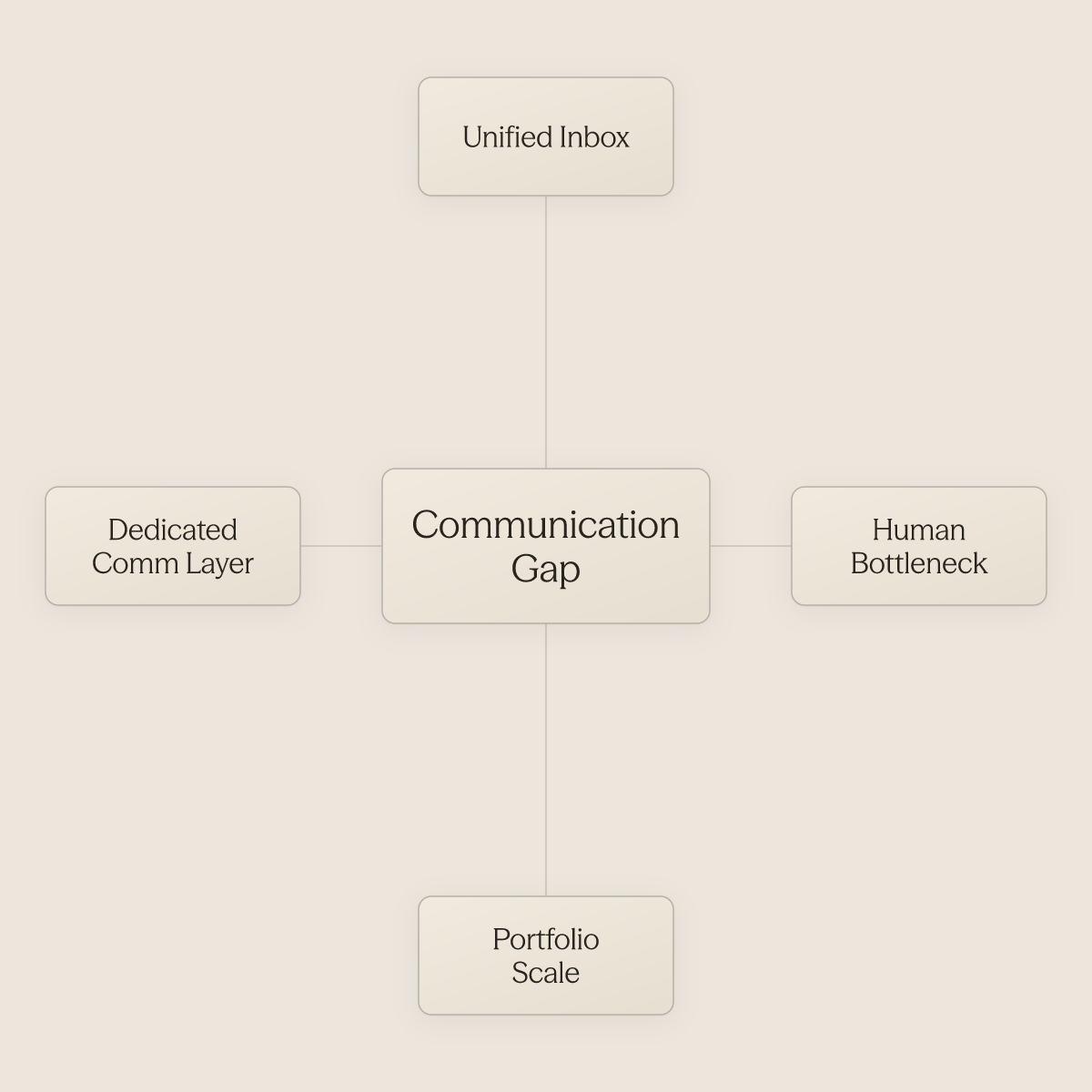
Choosing between Guesty and Hostfully will determine how your operations are organized, but neither platform changes the fundamental economics of guest communication: every message still needs a human to read it, decide, and respond. That constraint is manageable at small portfolio sizes and quietly becomes the thing that limits your growth at 30 units and beyond. What follows breaks down why the unified inbox falls short of solving the real problem, how the throughput math turns against operators as portfolios scale, and what teams are actually achieving when they add a dedicated communication layer on top of their PMS.
Why a Unified Inbox Doesn't Fix Your Guest Communication Problem
Most vacation rental property managers and operations leads think that once they pick the right PMS, Guesty or Hostfully, their communication overhead will shrink because the platform will handle the operational complexity and their team can focus on guests. But a unified inbox is an organizational tool. It collects messages; it does not answer them.
Every check-in question, WiFi request, and early departure inquiry still requires a human to read context, decide on a response, and send it. The PMS made your communication visible. It did not make it autonomous.
At 10 or 15 units, that distinction barely matters. At 30 and beyond, it becomes the ceiling on everything.
The Throughput Ceiling - How Portfolio Growth Outpaces Team Capacity at 30+ Units
Operators tracking message volume commonly report that a single booking generates a significant number of guest touchpoints across a stay, pre-arrival questions, mid-stay requests, and checkout follow-ups that together add up quickly at any meaningful portfolio size. At 30 units running reasonable occupancy, that volume easily exceeds 300 to 500 messages per month, each requiring a human decision. Hiring to match that volume costs more than most operators model when they budget for growth, and the math gets worse with every property added. The throughput ceiling is not a staffing failure; it is a structural feature of any system where humans resolve every message.
What Operators Are Actually Achieving When They Add a Communication Layer
Cash Flow Street reached a 96% automation rate across 35 properties using Conduit AI, resolving the overwhelming majority of guest messages without a human in the loop. Cascadia Getaways achieved 60% automation while maintaining a 4.9 guest communications score, directly contradicting the assumption that removing humans from routine responses degrades review quality. Easy BnB, managing 75 units, saved approximately $22,000 per month without adding communication headcount, according to Conduit's published customer case study for that operator. These operators did not switch PMS platforms to get there.
The Reframe - Your PMS Choice Matters, But It Is Not the Variable Removing the Headcount Constraint
Guesty and Hostfully are serious platforms built for serious operators. But neither was designed to resolve guest conversations autonomously, that is a different job requiring a different layer. Conduit's AI agents read directly from an operator's own SOPs, manuals, and FAQs, then handle guest inquiries across channels without waiting for a human to open the inbox.
The benefit materializes most clearly when a team already has documentation in place and faces high volumes of repetitive guest questions, which describes almost every operator past 20 units. The operators who've broken through that ceiling aren't running a different PMS. They're running a different architecture.
AI Agents as the Growth Layer - What Operators Add on Top of Guesty or Hostfully
That architecture starts with an honest look at what a unified inbox actually does. It collects every guest message in one place. It does not answer them. That distinction sounds minor until it's 11 PM on a Friday and a guest is locked out because the door code in the welcome template was for the wrong unit. The PMS did its job. The communication gap is still yours to close.
What Guesty and Hostfully Don't Handle, and What Does
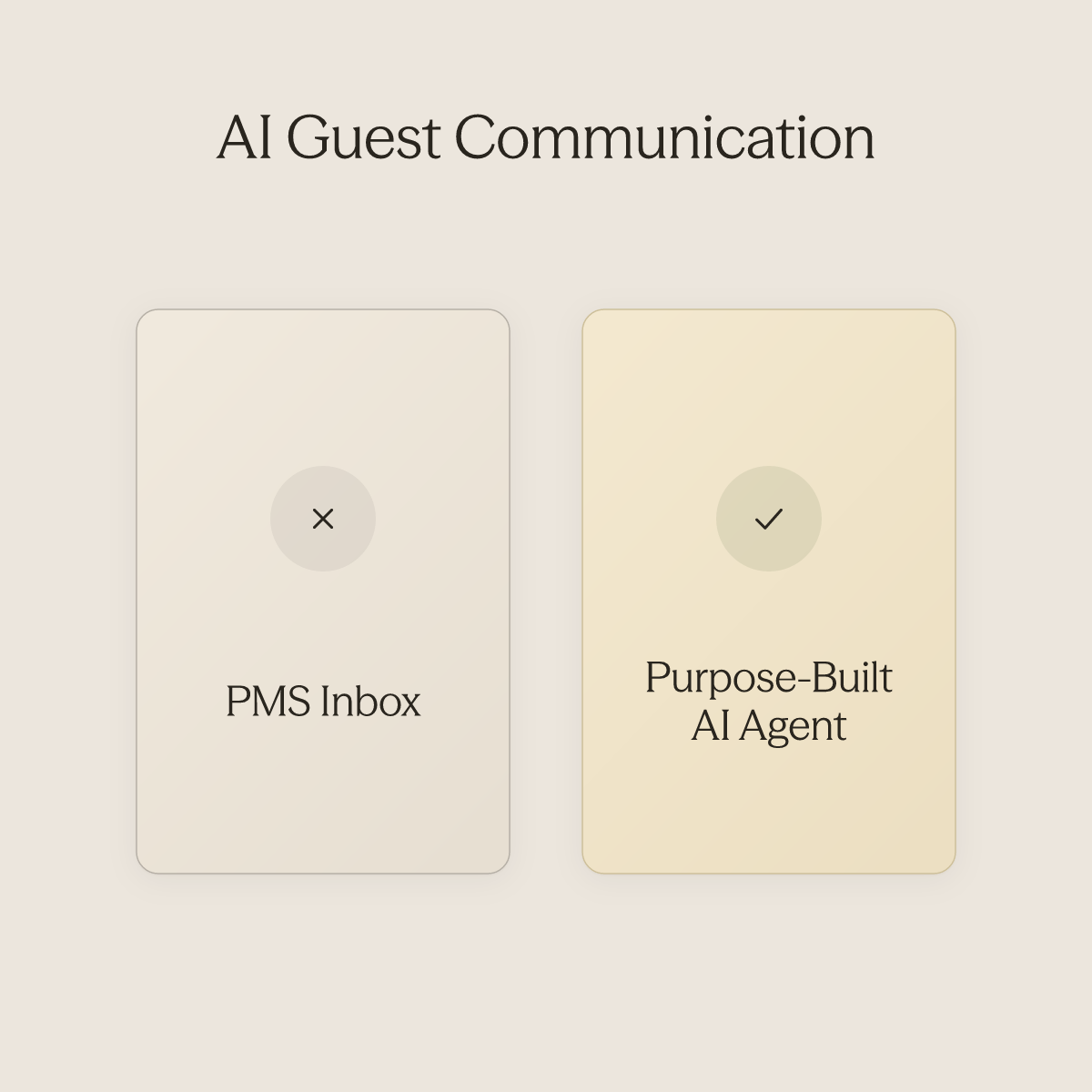
Property management software is built around property data: calendars, rates, channel distribution, owner statements. Guest communication is a different job. It requires reading context, interpreting intent, and producing a response that reflects your specific house rules. Guesty and Hostfully route messages to your inbox because that is what they were designed to do. Resolving those messages autonomously is a separate function neither platform was built to perform.
What "Purpose-Built for Hospitality" Actually Means
The meaningful difference in AI guest communication tools is not response speed; it is what the agent is trained on. A purpose-built hospitality AI agent reads from the operator's own SOPs, manuals, and FAQs, so the answer to "Can I check in at 2 PM?" reflects your actual policy, not a generic script. Conduit's AI agents work this way: the operator connects existing documentation, and the agent answers from that source of truth across every channel. This benefit materializes most clearly for operators who already have documented procedures and receive high volumes of repetitive inquiries.
Proof at Scale, Wynwood House and Blue Gems
Wynwood House saw measurable results after deploying an AI agent layer on top of their existing stack. Their Global Head of Customer Experience noted that guests could not distinguish AI replies from human ones. Blue Gems, managing 185 units, automated 65% of guest communications entirely. Different portfolio sizes, same structural outcome: the resolution bottleneck moved, and headcount did not grow with it.
Additive, Not Disruptive
The AI agent layer does not replace the PMS; it sits on top of it. Wynwood House cut resolution time from 15 minutes to 3 minutes across 7 countries by layering AI communication on top of their existing system rather than switching platforms. Together, these operators establish a specific and measurable outcome: the return on adding an AI communication layer, measured in hours saved, headcount not hired, and resolution times cut, has consistently outpaced the return on switching PMS platforms for operators whose primary constraint is message volume, not channel management.
Alternative Platforms Worth Considering: and Where Each Fits the Stack
Most operators searching for Guesty alternatives or Hostfully alternatives ask a single-layer question: which PMS should I switch to? The more useful question has two parts:
-
Which platform fits your portfolio stage?
-
Which communication layer sits on top of it?
One of the clearest friction points operators at every stage share is not knowing which platform handles which role in their stack, whether a given tool is the right fit for finances, tenant management, channel distribution, or guest communication. That confusion compounds when guidance online feels dated or contradictory. Here is what belongs on your shortlist, and where each fits.
1. Conduit.ai - Best for AI-Powered Guest Communication Across Any PMS Stack
"Existing posts on property management software recommendations are perceived as dated with mixed reviews, making it hard to find current, reliable guidance on which platforms to choose."
Operators scaling past 30 units without adding headcount are not winning the PMS feature war. They are layering hospitality-purpose-built AI agents on top of whichever platform they chose, and the gains are concrete. Consider what managing guest communications across multiple platforms without a unified layer actually looks like in practice: agents constantly switching between platforms to draft messages, translate responses, review guest history, and track performance.
Guest resolution times stretch to 15 minutes per interaction, sentiment gets tracked manually in inconsistent spreadsheets, shift handoffs require reading entire conversation histories, and managers lose reliable visibility into guest satisfaction at scale. Conduit is built to collapse that overhead. Its AI Agents are most beneficial when your business receives a high volume of repetitive guest messages and already has existing documentation, SOPs, FAQs, and property manuals to train on.
Once you connect those materials, the agent can deliver your first automated guest reply within days, then continues answering guests across channels before, during, or after a stay, without a human in the loop on routine messages. Its Inbox consolidates those conversations in one place, which is most beneficial when you are managing guest communications across multiple platforms or properties simultaneously, the exact scenario where disconnected tools create the 14--15-minute resolution drag. The Workflows layer handles recurring, predictable guest touchpoints, post-booking confirmations, check-in instructions, keyword-triggered follow-ups, that currently require manual staff action.
And Integrations mean that if your team already organizes knowledge in Notion, Google Drive, or Airbnb, the AI agent can leverage that content without manual re-entry. Conduit is not a PMS substitute; it is what makes any PMS on this list actually scale.
2. OwnerRez - Best Guesty Alternative for Cost-Conscious Mid-Scale Operators
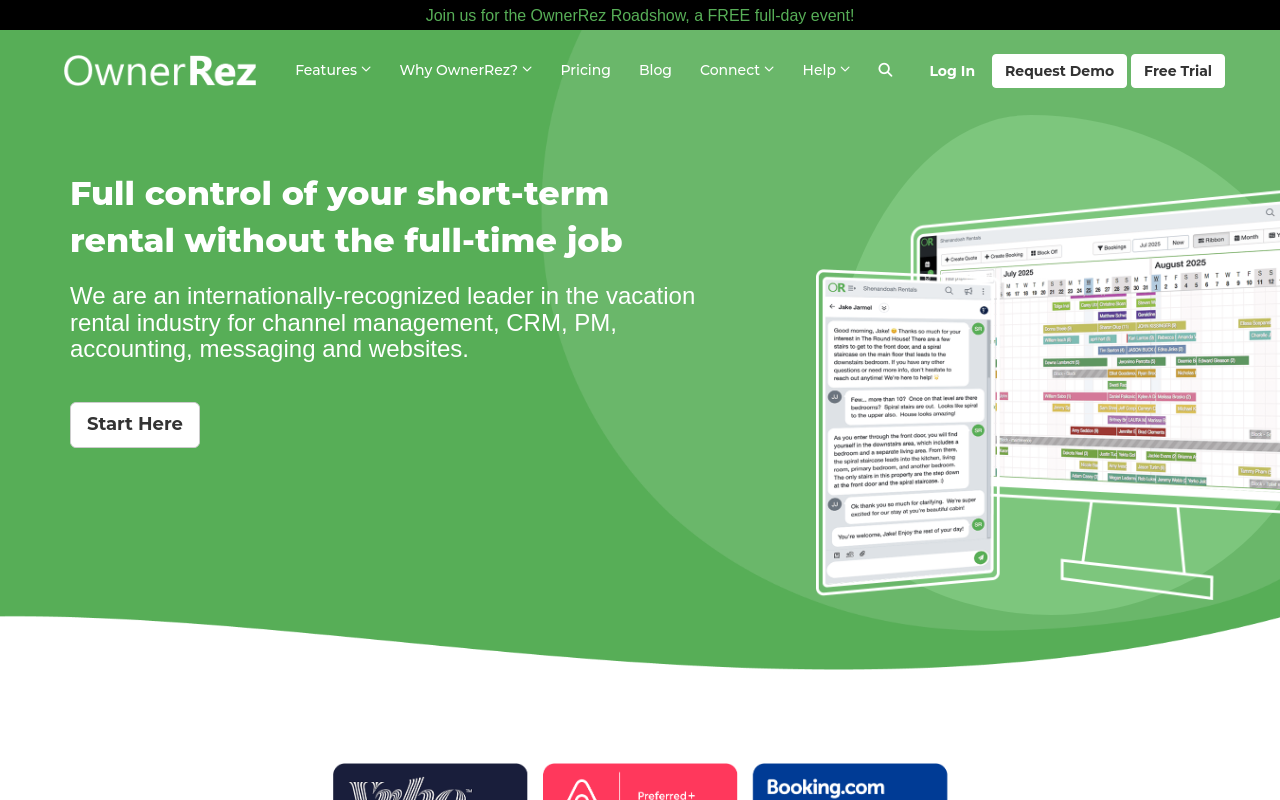
OwnerRez earns consistent praise from property managers in the 15-to-75-unit range who find Guesty's enterprise contract costs difficult to justify before hitting true scale. It handles channel management, direct booking, and owner statements reliably. The tradeoff: the interface requires patience, onboarding is self-directed, and dedicated account support is limited compared to Guesty's higher tiers. As portfolios grow past the point where a single operator can personally handle every guest message, OwnerRez's native communication tools route messages to your inbox rather than resolving them, which is where a dedicated communication layer like Conduit becomes the practical next addition.
3. Hostaway - Best for Scaling Teams Needing Multi-Channel Reliability
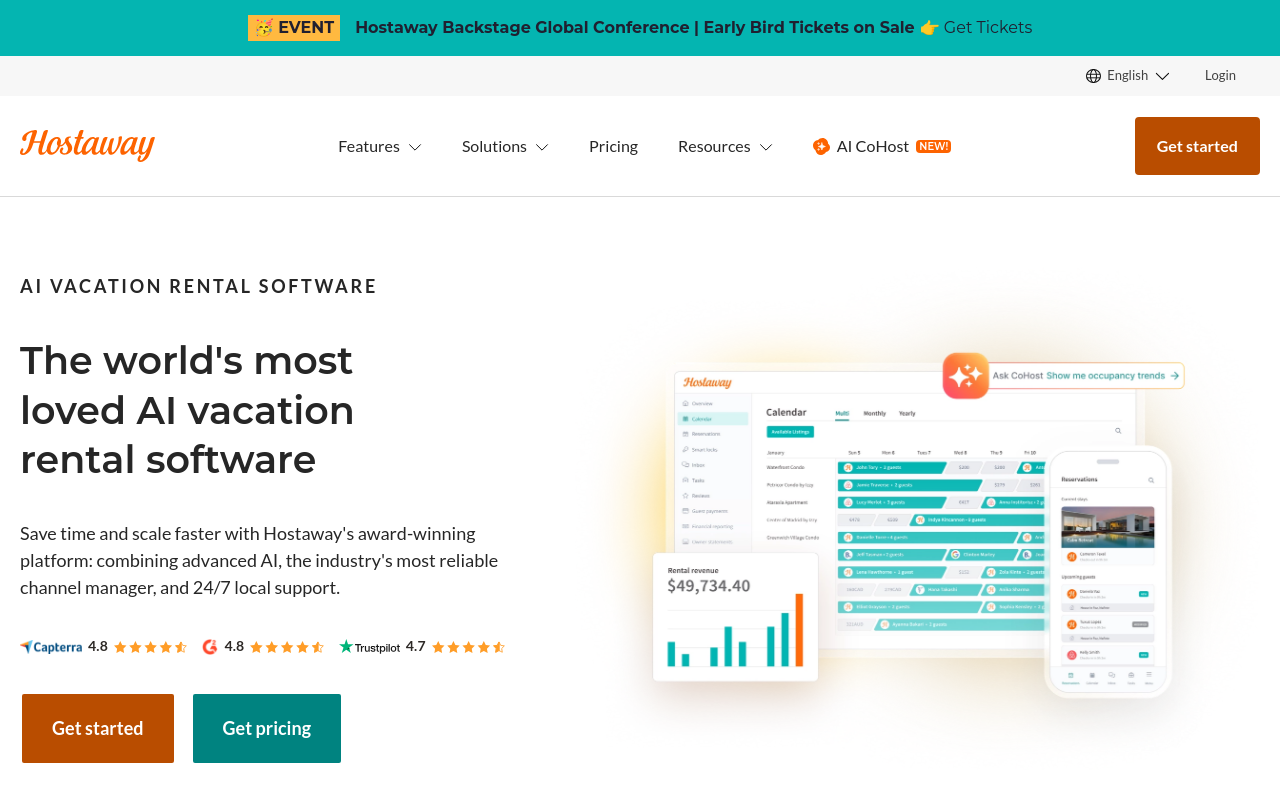
Hostaway is among the most frequently recommended mid-market alternatives in the 20-plus-unit range. Its channel management depth and integration library are well-documented strengths, and independent platform comparisons confirm its position as a competitive mid-market option for operators who have outgrown lighter tools. For a broader view of how leading short-term rental platforms stack up heading into 2025, this PMS comparison offers useful context on where Hostaway fits relative to Guesty, Hostfully, and others.
Like every PMS on this list, Hostaway routes guest messages to your inbox rather than resolving them, so communication overhead grows with your portfolio regardless of which platform you choose. The case for a dedicated communication layer applies here just as it does with Guesty or Hostfully, and the earlier you install it, the less operational drag you absorb during the growth phase where staffing decisions are most consequential.
4. Hospitable - Best Lightweight Option for Independent Hosts Under 10 Units
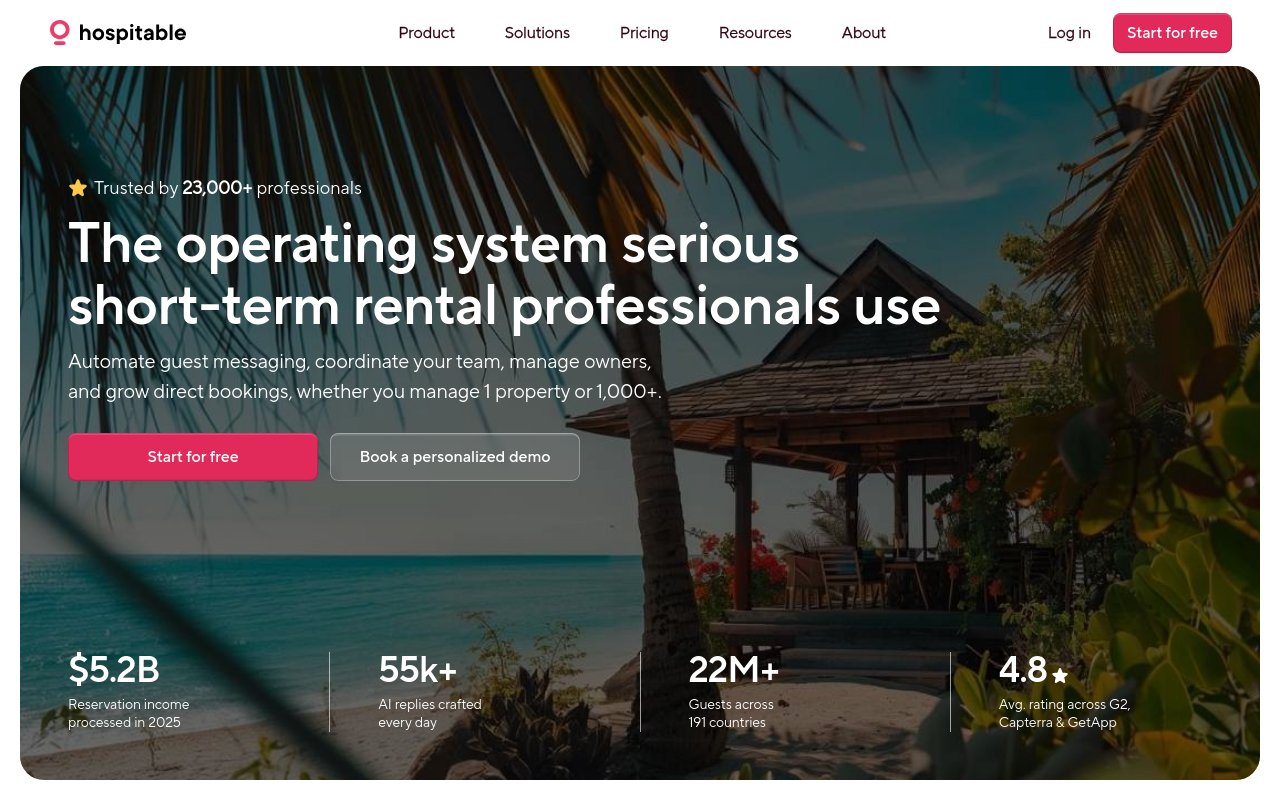
Hospitable (formerly Smartbnb) targets independent hosts who want automated messaging, review management, and direct booking without the complexity or cost of a full PMS. For solo operators or small portfolios, it delivers fast time-to-value and a clean UX. In a Guesty vs. Hostfully comparison, the relevant difference is scope: Hospitable is built around messaging and direct booking rather than the owner reporting and multi-user workflows professional managers tend to need beyond roughly 10 units.
5. Lodgify - Best All-in-One Pick When a Direct Booking Website Is the Priority

Lodgify differentiates itself from both Guesty and Hostfully by bundling a professional direct booking website builder directly into its PMS, which suits operators who want to reduce OTA dependency and build a branded guest acquisition channel. Channel sync and automation are solid for small-to-mid portfolios. The tradeoff is that its property operations depth, task management, owner statements, and advanced reporting, is scoped differently from enterprise PMS platforms built around higher unit counts.
Related Reading
-
Ownerrez Vs Guesty
Next steps
If your team is still fielding the same midnight check-in questions at 40 units that it fielded at 10, the path forward starts with recognizing that the PMS was never the variable removing the communication bottleneck. Start with our AI for hospitality.
Guesty's $130M raise confirmed that enterprise capital can solve channel aggregation at scale, yet that same investment left every guest message routing to a human inbox for resolution. Meanwhile, operators like Easy BnB documented $22,000 in monthly savings at 75 units, and Wynwood House cut resolution time from 15 minutes to 3 minutes, both by layering AI communication on top of whichever platform they already had. Capital solves distribution. A purpose-built communication agent solves throughput. Those are two separate problems requiring two separate tools, and the operators who separated them stopped debating PMS features and started compounding on the only variable that scales without headcount.
Start with conduit.ai to see how Conduit's agents train on your existing SOPs and property documentation, then handle repetitive guest inquiries across every channel before they ever reach your inbox.
Frequently Asked Questions
Which portfolio size is each platform actually built for?
Guesty is best suited for operators managing 50 or more units with a dedicated ops team, where its deep OTA integrations and enterprise workflow engine justify the cost. Hostfully fits operators in the 15-to-50-unit range, where its onboarding simplicity and Guidebook product add real value, though operators who grow past 100 units often find its reporting depth and scalability become genuine constraints.
How does Guesty's channel management compare to Hostfully's?
Guesty's channel manager syncs rates and availability across 60+ OTA channels, including Airbnb, Vrbo, and Booking.com, with enterprise-grade real-time sync that larger operators depend on. Hostfully covers the major OTAs competently, but its channel integrations are built for breadth rather than that level of depth, making Guesty's advantage most meaningful for operators actively distributing across four or more OTAs simultaneously.
Do Guesty or Hostfully automatically respond to guest messages?
Neither platform resolves guest messages autonomously, both consolidate messages into a unified inbox, but every inquiry still waits for a human to open, read, and reply. This is a structural limitation that compounds as a portfolio grows, which is why a purpose-built communication layer like Conduit's AI Agents, trained on your existing SOPs, FAQs, and property manuals, is needed to handle that volume without adding headcount.
What does Hostfully's Guidebook actually do?
Hostfully's Guidebook is a digital welcome book that gives guests a branded, pre-arrival hub covering house rules, check-in instructions, local recommendations, and property-specific FAQs. Operators consistently cite it as a friction-reducer for pre-arrival questions, and a well-built Guidebook deflects a meaningful share of repetitive inbound messages before they hit the inbox, a guest-experience layer Guesty does not replicate natively.
Is Guesty's API accessible for smaller operators?
Guesty gates programmatic API access behind higher pricing tiers, making it effectively inaccessible for most sub-20-unit operators. Hostfully's open API is more accessible at the mid-market level, appealing to operators who want lightweight custom connections without Guesty's enterprise cost structure.

Stay in the loop
Get the latest on AI automation, product updates, and customer stories.


