HiJiffy Pricing: What Hotels Should Evaluate First


HiJiffy Pricing
Costs and what to evaluate
Hotels investing in AI Communications for Hotels face a common dilemma: understanding what they're actually paying for and whether the investment delivers real returns.
When evaluating HiJiffy pricing, hoteliers need clarity on costs, features, contract terms, and how the platform's chatbot technology compares to alternatives for guest communication automation.
Key factors include subscription models, implementation fees, and the specific capabilities that justify the price tag.
Making informed decisions requires tools that simplify comparison and reveal what matters most for your property.
Rather than focusing solely on sticker prices, successful evaluations examine guest experience outcomes, integration capabilities, and total cost of ownership.
Hotels should ask better questions about booking conversion rates, response times, multilingual support, and whether the vendor's pricing structure aligns with occupancy patterns and guest volume when choosing AI for hospitality.
Summary
- Guest communication volume has structurally outpaced hotel staffing capacity, with 150-room properties now fielding over 300 daily interactions during peak season.
- The strain shows up as unanswered booking inquiries that sit for hours while front desk teams answer identical questions about check-in times and parking 17 times before lunch.
- Properties can't hire their way out because qualified candidates willing to work evening shifts answering repetitive questions remain scarce, while three full-time staff handling guest communication costs $135,000 annually before benefits and still leaves nights understaffed.
- HiJiffy uses tiered pricing starting at around €99 per month that scales with property size, measured in rooms or beds, meaning two hotels evaluating the same product receive completely different quotes.
- The platform achieves over 87% automation on guest queries and drives 5% direct booking conversion through chat, according to GetLatka. Custom pricing exists because a 40-room inn and a 1,000-room resort operate in different universes, with vastly different message volumes, integration complexity, and infrastructure demands, making one-size-fits-all models impractical.
- Inefficiencies from system fragmentation can leak 12 to 18% of potential revenue through operational drag that accumulates across hundreds of small delays and repeated manual steps, according to HospitalityOS Research.
- Most hotel teams operate across five or more systems daily, with staff spending meaningful portions of shifts moving between platforms, searching for context, and manually transferring information.
- A three-minute task repeated 40 times daily consumes two hours of labor, and when multiplied across team members over weeks, the productivity cost becomes substantial even though no single instance feels significant.
- The gap between installing AI technology and integrating it into operations helps explain why 78% of hotel chains deploy AI systems yet only 7% operate with a comprehensive AI strategy, according to h2c's 2025 global study.
- Most hotels have chatbots that generate plausible responses from training data, while the strongest platforms generate accurate responses by accessing actual reservation details, guest history, and real-time property availability.
- Systems without operational access create more work because staff must verify information, correct errors, and manually complete transactions the AI initiated but couldn't finish.
- Guest communication creates operational work that extends beyond the initial conversation, including updates to reservation systems, housekeeping notifications, room-blocking adjustments, and billing modifications.
- Platforms that stop at acknowledging requests leave staff to handle manual coordination, while those that execute multi-step workflows across connected systems reduce the interruptions and inconsistencies that consume labor hours.
- Properties using hospitality AI that handles entire workflows, rather than just initial responses, report automation rates of 90%, meaning the vast majority of guest interactions are resolved without requiring staff intervention.
- AI for hospitality addresses this by learning how individual properties handle specific situations and executing procedures across existing systems, so hotels maintain service quality while reducing the manual coordination work that fragments team attention.
Why Hotels Start Researching HiJiffy Pricing
Hotels consider HiJiffy pricing when the volume of guest messages exceeds their team's capacity to respond quickly and consistently. They seek more than a price —they want to know whether an AI-powered platform can address the operational challenges that damage service quality, diminish team morale, and reduce revenue .
Key Point: Hotels don't research HiJiffy pricing just for cost comparison—they're looking for a solution to operational challenges that directly impact guest satisfaction and staff productivity .
"Hotels that implement AI-powered messaging solutions see significant improvements in response times and staff efficiency , addressing the core issues that drive pricing research."
Tip: When guest message volume exceeds your team's capacity for timely responses , it's a clear signal that automated solutions like HiJiffy can provide immediate value beyond just cost savings .
The pressure starts with volume
Guest questions arrive through multiple channels: website chat boxes, WhatsApp messages, Instagram DMs, email, booking platforms, and SMS. A 150-room property receives 300+ guest interactions daily during peak season, with many guests asking identical questions about check-in times, parking, pet policies, or breakfast hours. Front desk staff answer the same question 17 times before lunch, while new-booking questions go unanswered for hours. According to Hospitality Net, properties now evaluate platforms based on guest satisfaction and performance rather than feature lists. The volume problem is structural, not seasonal.
Why do staffing constraints make guest communication problems worse?
Hiring more guest service agents sounds obvious until you examine hospitality labor markets. Many properties struggle to find qualified candidates willing to work evening and weekend shifts and to answer repetitive questions. Training takes weeks, turnover remains high, and labor costs rise steadily.
A hotel paying $45,000 annually to three full-time staff members spends $135,000 before benefits, yet nights and early mornings remain understaffed. Teams burn out, response times lengthen, and guest satisfaction scores drop.
How can AI platforms solve hospitality staffing challenges?
Platforms like Conduit's AI for hospitality automate repetitive questions across every channel while learning each property's specific operations, policies, and tone. Our platform enables hotels to maintain 24/7 response coverage, handle seasonal spikes, and redirect human staff to complex requests requiring judgment and empathy, without adding headcount.
The platform adapts to how the business runs rather than forcing properties to rebuild workflows around rigid automation rules.
Revenue opportunities disappear in the chaos
Guest communication isn't just a cost center. Every question from a guest represents potential revenue if someone takes the time to notice it. A guest asking about late checkout might book an extra night if offered a good rate. Someone asking about airport transportation could be upsold on a spa package or dinner reservation.
A family asking about cribs and high chairs might appreciate hearing about the kids' activity program. When your team is buried in basic FAQs, these moments disappear, and upsell signals hidden in simple questions go unnoticed.
How do you calculate the true value of AI communication platforms?
The real question isn't whether HiJiffy costs $500 or $2,000 monthly, but whether the platform reduces workload, captures revenue opportunities, and improves guest satisfaction enough to justify the investment. This requires examining what operational problems the platform solves, how much time it saves, and whether those savings exceed the cost.
Understanding that value equation requires knowing how HiJiffy structures its pricing.
How HiJiffy Pricing Works
HiJiffy uses a tiered pricing model starting around €99 per month , scaling by property size (rooms or beds). Larger properties pay more due to higher guest communication volumes and greater platform demands . Unlike fixed-price software, two hotels may receive different quotes based on their operational footprint .
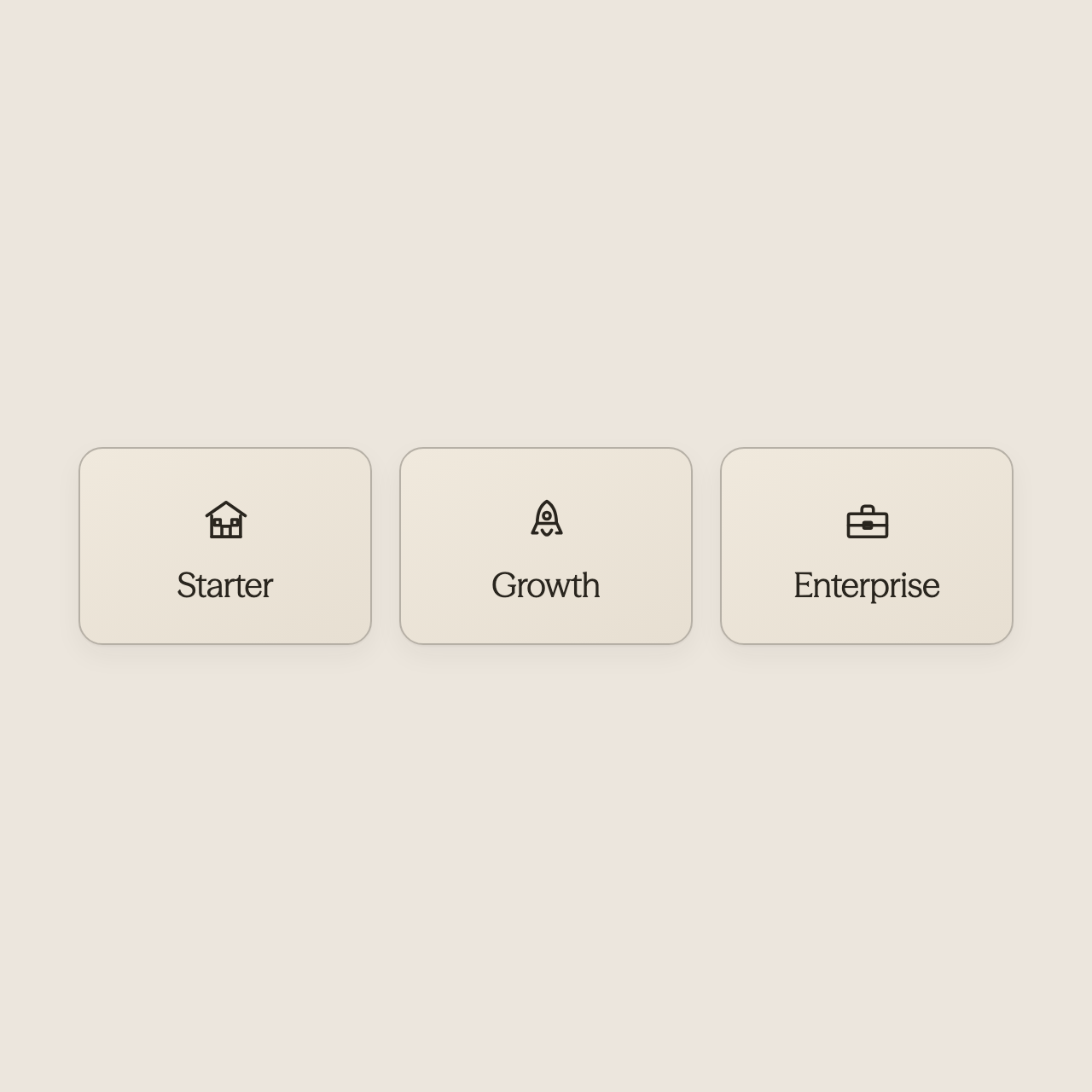
Key Point: HiJiffy's pricing scales with your property's actual needs rather than offering a one-size-fits-all approach, ensuring you pay for what you actually use.
" Tiered pricing models allow SaaS companies to capture maximum value while accommodating businesses of different sizes and usage patterns." — Simon-Kucher Pricing Strategy Report, 2024
Warning: The custom quote system means you won't find transparent pricing on their website - you'll need to contact sales for your specific property requirements .
What determines your actual cost?
Property size is the most visible factor. A 50-room boutique hotel pays less than a 300-room resort because guest interaction volumes differ significantly. According to GetLatka, HiJiffy achieves over 87% automation on guest queries, handling hundreds or thousands of conversations without human intervention. This automation capacity scales with property size, as does the price.
How do message volume and integrations affect pricing?
Message volume matters: a property receiving 500 inquiries monthly has different infrastructure needs than one handling 5,000. Integrations add complexity. Connecting HiJiffy to a PMS, booking engine, CRM, or guest messaging system increases costs, either bundled into base pricing or charged separately per connection.
What role do feature requirements and deployment complexity play?
What features you need affect the cost. A hotel requiring only FAQ automation pays less than one needing omnichannel communication, upselling workflows, multilingual support, and advanced analytics. Setup complexity also varies: a single independent property is easier to implement than a multi-property group requiring standardized workflows, centralized reporting, and enterprise-grade security.
Why do vendors avoid fixed pricing models?
Hotels often find custom pricing frustrating because it makes comparison shopping harder. However, hospitality properties vary widely in size, guest volume, technology stacks, and service offerings, so a one-size-fits-all model rarely works. A 40-room inn and a 1,000-room resort operate in fundamentally different contexts. Custom pricing lets vendors match costs with expected usage and implementation effort, rather than forcing every property into the same box.
How do AI platforms generate revenue beyond cost savings?
GetLatka reports that HiJiffy drives a 5% direct booking conversion through chat, meaning the platform generates revenue beyond reducing work. The real question isn't what the platform costs, but whether automation, improved guest satisfaction, and increased booking conversions justify the investment. Platforms like Conduit build AI agents that learn business operations from start to finish, execute multi-step procedures, and integrate with existing systems, enabling hotels to grow without hiring additional staff while maintaining high-touch service.
What questions should you ask during pricing discussions?
Focus on what's included and what you can expect to get, not just the monthly fee. Ask how pricing changes as your property grows; whether integrations, implementation, and onboarding cost extra; whether there are message limits; which automation features are included in each tier; the cost to add more properties; and what reporting, analytics, support, and training come standard.
How do you evaluate total cost and long-term value?
These questions reveal the total cost and long-term value beyond the advertised price. The goal is understanding what the platform automates, how much work it removes from your team, how well it serves your guests, and whether the value justifies the investment.
But knowing the price is only the start. Hotels often miss the costs that never appear on the invoice.
Related Reading
- AI Communications For Hotels
- AI For Vacation Rentals
- AI For Airbnb Hosts
- AI Use Cases In Hospitality
- Best Hotel Chatbot
The Hidden Costs Hotels Often Miss When Evaluating Hospitality AI
Higher operational costs rarely show up in vendor comparison spreadsheets , yet they often determine whether a hospitality AI investment creates value or shifts expenses around . The difference usually appears months after implementation , when teams discover how much manual work remains.
Key Point: The true cost of hospitality AI extends far beyond the initial software licensing fees and includes ongoing operational expenses that can make or break your ROI calculations .
" Hidden operational costs can account for up to 60% of total AI implementation expenses in the hospitality sector, often surfacing only after the first 6 months of deployment." — Hospitality Technology Research, 2024
Warning: Many hotels focus exclusively on upfront costs and feature comparisons while overlooking the long-term operational burden that can turn a promising AI solution into a resource drain .
The Labor Cost That Never Decreases
A guest messaging platform handling only 30% of inquiries still requires staff to manage the remaining 70%. Those team members answer questions, coordinate requests, and resolve issues throughout their shifts. The software subscription appears as a new line item, but payroll remains unchanged. When inquiry volumes grow during peak seasons or after marketing campaigns, properties discover they still need additional staff despite automation in place. That gap between partial automation and meaningful labor savings represents one of the highest hidden costs in hospitality AI adoption.
Revenue Opportunities That Disappear Quietly
Guest conversations create dozens of opportunities each day to offer upgrades, services, and experiences that increase revenue per stay. A couple asking about late checkout might pay for a half-day extension. A family asking about nearby attractions might book spa treatments or restaurant reservations. Business travelers asking about meeting spaces might upgrade to executive suites. When communication platforms focus only on answering questions rather than identifying revenue moments, those opportunities pass unnoticed. The financial impact compounds across hundreds of conversations monthly, yet it never appears as a cost on any invoice.
The Fragmentation Tax on Staff Productivity
Most hotel teams work across five or more systems throughout their day. Guest information lives in the PMS; booking details sit in the reservation system; previous conversations exist in email; current messages arrive through chat platforms; and internal coordination happens through separate communication tools. Staff members spend significant portions of their shifts moving between these systems, searching for information, and manually transferring data. HospitalityOS Research found that such inefficiencies leak 12-18% of potential revenue through operational drag. A three-minute task repeated 40 times daily consumes two hours of labor. Multiply that across multiple team members over weeks and months, and the productivity cost becomes substantial.
Integration Gaps That Create Double Work
When hospitality AI platforms cannot connect with existing property systems, staff members become the integration layer, manually updating guest preferences in the PMS after messaging conversations, copying reservation details from booking systems into communication tools, and transferring request information from chat platforms into operations systems. This double-entry work takes time while increasing the risk of errors and inconsistencies. Guest information gets handled multiple times by multiple people, creating operational expenses that scale with inquiry volume. Conduit addresses this by learning how properties operate and executing multi-step procedures across systems, reducing the manual coordination work that fragments team attention and creates redundant data entry.
The Compounding Cost of Slow Response Times
Response delays hurt more than guest satisfaction. When inquiries sit unanswered for hours, potential bookings go to competitors and brand perception suffers. A boutique hotel that responds to website inquiries in four hours instead of four minutes loses bookings to faster properties, but that lost revenue is never attributed to communication speed in monthly reports. The cost hides within broader performance metrics.
But the most expensive mistake hotels make when evaluating AI platforms has nothing to do with features or pricing.
Related Reading
AI Agents For Hotels
- Guest Communication Tools
- AI Chatbot For Hotels
- Hotel Automation Tools
- AI Tools For Hotels Hotel Chatbot Guide
- Best Hotel Chatbot
What Hotels Should Look for Beyond Pricing
What really separates effective hospitality AI platforms
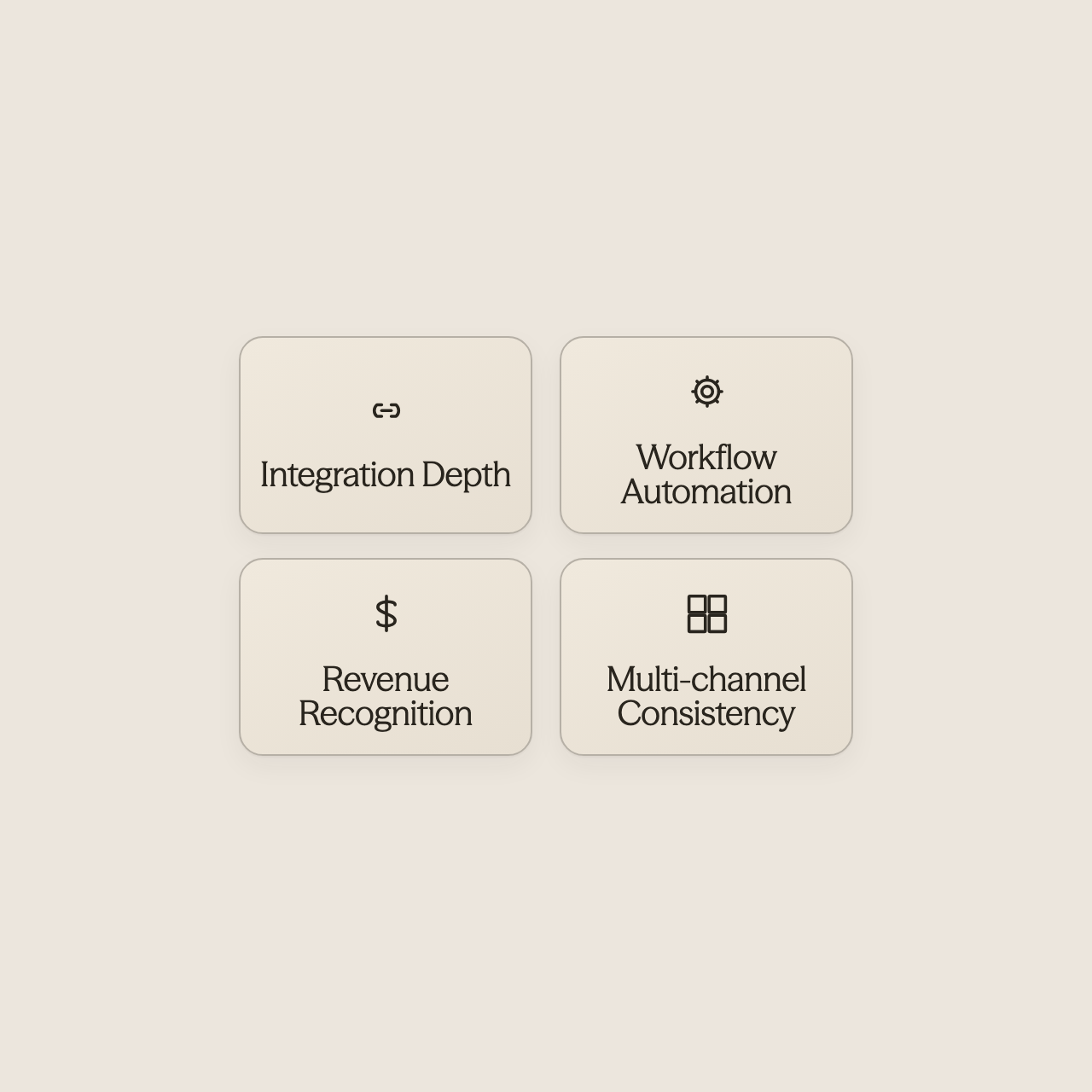
The best hospitality AI platforms access operational data, run workflows, and improve results across communication, service delivery, and revenue generation. They understand hospitality context: reservation changes, room availability, loyalty program rules, and property-specific policies. Generic conversational AI trained on broad datasets struggles with these details, while systems built specifically for hospitality operations—like Conduit—handle them reliably.
Integration depth determines response accuracy
Most AI tools create text. Far fewer connect to the systems that hold the information guests need. Without integration into the PMS, booking platforms, CRM, and channel management systems, AI lacks the operational context to answer questions about specific reservations, availability, or guest history. A traveler asking about upgrading their booking or modifying check-in times needs more than a polite response—the system must access real-time data to provide accurate information or complete the request. Better integrations lead directly to higher automation rates because the AI can resolve inquiries rather than simply acknowledge them.
Workflow automation beyond conversation
Answering a question creates value. Resolving the underlying request creates more. The difference shows up in how much manual work remains after an AI interaction. If a guest requests late checkout and the system only confirms receipt, staff still need to check availability, update the reservation, and notify housekeeping. Platforms that automate portions of the workflow reduce the manual steps employees must complete. According to Duetto's 2025 traveler trends and profitability insights, operational efficiency gaps between properties widened significantly from January through July 2025 compared to the prior year, with properties using integrated automation systems maintaining stronger performance during high-volume periods.
Revenue workflows that recognize opportunity
Guest communication creates opportunities to sell additional products that often go unnoticed. A traveler asking about parking might also need airport transportation; someone inquiring about checkout times could be interested in a late departure package. Properties using AI in hospitality that recognize these patterns can present relevant offers at natural conversational points. Our platform learns which offers perform well in specific situations and presents them when guest-interest signals an opportunity, transforming communication from a cost center into a revenue channel.
How does multi-channel consistency maintain seamless guest experiences?
Guests expect smooth communication across the website, WhatsApp, Instagram, email, and SMS. Managing these channels separately creates operational silos and inconsistent experiences. Unified platforms preserve conversation context across touchpoints and route complex requests to the right team members, including the full interaction history.
When should escalation intelligence transfer conversations be transferred to human staff?
Complaints, special requests, and sensitive issues require human judgment. The best systems identify these situations quickly and equip staff with the information needed to respond effectively. This allows automation to handle routine interactions while keeping important decisions under human control.
But the most sophisticated platforms handle tasks most hotels don't expect AI to manage at all.
What the Best Hospitality AI Platforms Do Differently
The strongest hospitality AI platforms connect to operational systems , access real-time data , and complete workflows without any staff intervention. This separates conversational interfaces from systems that reduce workload and create measurable business outcomes .
Key Point: The difference between basic chatbots and enterprise-grade hospitality AI lies in system integration depth and autonomous workflow execution .
"True hospitality AI platforms don't just respond to queries—they actively complete tasks and integrate seamlessly with existing hotel operations to deliver measurable ROI ." — Hospitality Technology Research, 2024
Best Practice: Look for AI platforms that can automatically update your PMS , process reservations , and trigger operational workflows without requiring staff to manually transfer information between systems.
What makes operational context so important for hotel AI?
Most AI chatbots generate plausible answers based on training data. The best hospitality platforms deliver accurate answers grounded in actual reservation details, guest history, and property availability. Our Conduit platform connects directly to your property management system, ensuring guests receive accurate information about availability and pricing in real time.
When a guest asks about upgrading to a suite, context determines whether the AI provides a generic answer or checks inventory, calculates pricing, and completes the booking. Systems without operational access create more work because staff must verify information, correct errors, and manually complete transactions the AI started but couldn't finish. With Conduit, your AI has direct access to your booking system, so guests can complete transactions end-to-end without staff intervention.
Why do most hotels struggle with comprehensive AI strategies?
According to H2C's 2025 global study, 78% of hotel chains use AI systems, yet only 7% operate with a comprehensive AI strategy. Most hotels have chatbots; few have systems that understand how their property operates.
How does workflow automation replace manual follow-through?
Answering a question doesn't solve it. A guest who asks for a late checkout gets confirmation, but someone still needs to update the reservation system, notify housekeeping, adjust room blocking, and ensure billing reflects the change.
Platforms built for hospitality automate these steps rather than requiring staff to complete them manually. When AI handles the entire workflow, properties experience fewer interruptions and more consistent execution.
Why do adaptive platforms outperform rigid automation?
Platforms like Conduit learn how individual properties handle specific situations, adapting to operational procedures rather than forcing hotels to conform to rigid automation rules. Our platform reduces friction by working with your existing workflows instead of against them.
Proactive engagement drives revenue, not just service quality
Reactive AI waits for guests to ask questions. The best platforms identify opportunities throughout the guest journey and initiate conversations at moments when engagement creates value. A guest checking in early might receive an offer for immediate room access, while someone extending their stay by one night could see pricing for an additional night at a preferred rate.
These interactions don't feel like sales pitches because they're relevant to the situation and timed to match guest behavior. Properties using proactive AI report measurable increases in ancillary revenue: the system creates opportunities rather than waiting for guests to discover them on their own.
How does proactive AI change hotel revenue strategies?
The shift from reactive support to proactive engagement changes how hotels think about guest communication platforms. Instead of viewing AI as a cost center that reduces labor expenses, properties recognise it as a revenue tool that pays for itself through incremental bookings, upgrades, and service purchases.
But most hotels implementing these platforms discover that one capability matters more than any individual feature.
How Conduit Helps Hotels Automate Guest Communication and Operations
The difference between a chatbot that answers questions and a platform that runs operations comes down to how deeply it is connected to your systems . When AI can access reservation data, room inventory, pricing rules, loyalty information, and operational workflows in real time, it becomes part of how the property works , not merely a messaging tool . This is where Conduit separates itself from hospitality AI platforms .
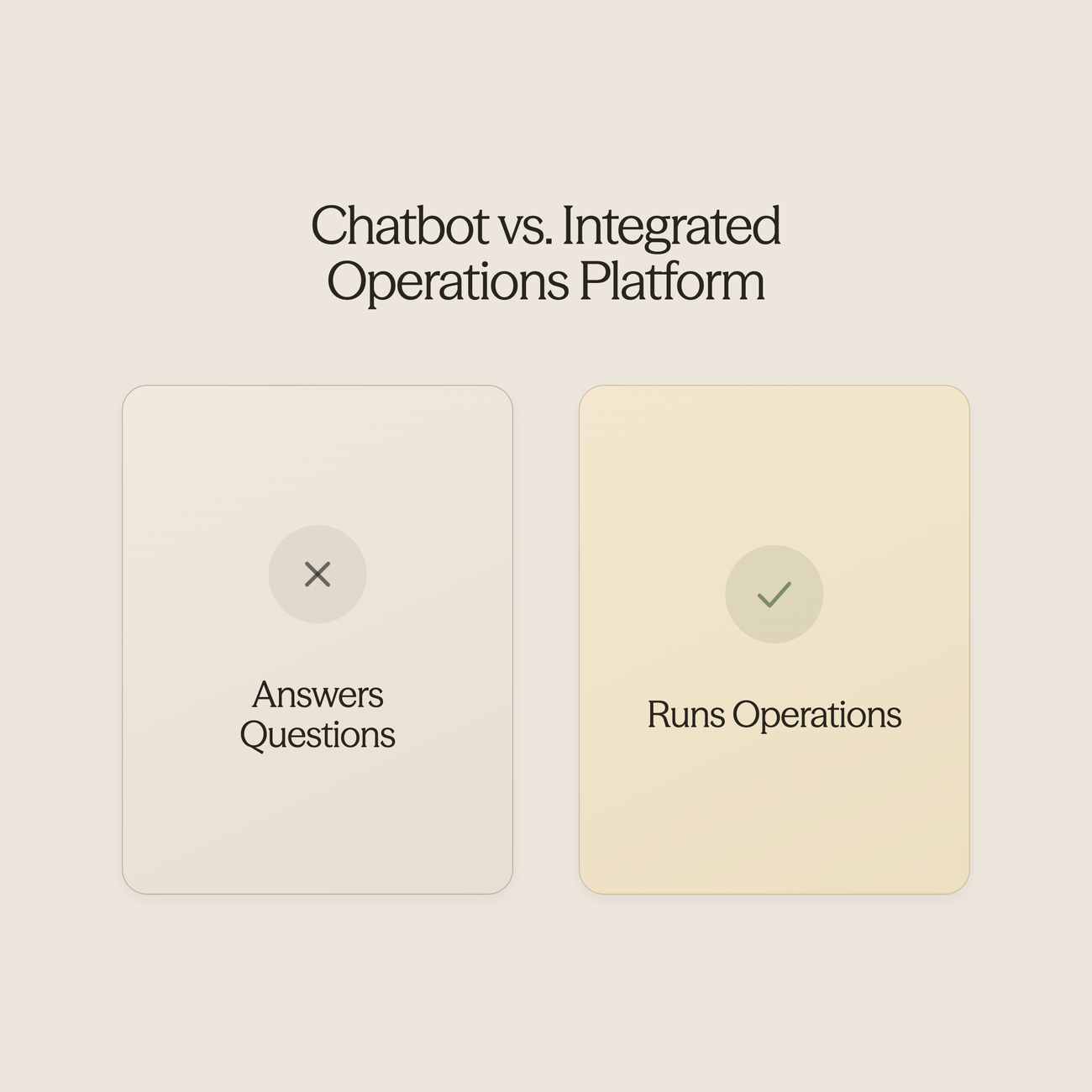
Key Point: True operational automation requires deep system integration, not just surface-level chat responses.
"When AI can access reservation data, room inventory, pricing rules, loyalty information, and operational workflows in real time , it stops being just a messaging tool and becomes part of how the property actually works ."
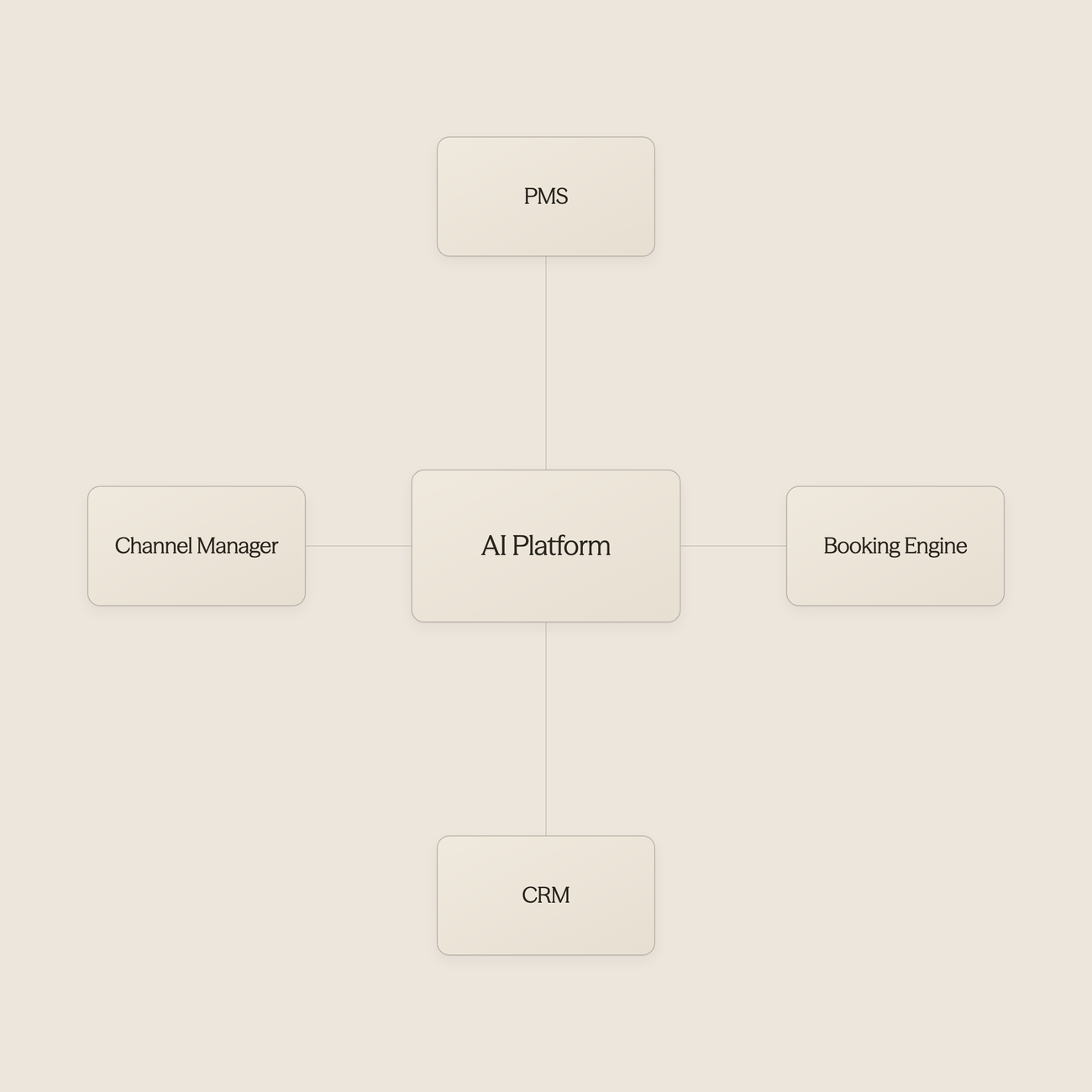
Best Practice: Look for AI platforms that integrate directly with your PMS , inventory systems , and operational workflows rather than standalone chatbots that operate in isolation.
How does hotel-specific AI differ from generic platforms?
Most conversational AI platforms were designed to support customer service across industries. They work well for frequently asked questions but struggle when conversations require access to operational data, execution of multi-step procedures, or coordination across departments.
What operational systems can hotel AI integrate with?
Conduit was built specifically for hotels. The platform connects directly with property management systems, channel managers, CRM platforms, and booking engines, allowing the AI to pull actual reservation details, check real-time room availability, access guest history, and run workflows across multiple systems.
According to Conduit AI's research on AI agents for hotels, 80% of guest inquiries are repetitive. When AI has access to the operational context needed to resolve these requests automatically, properties dramatically reduce workload without sacrificing accuracy or personalization.
How does this create better guest experiences?
The result is automation that feels less like a chatbot and more like an extension of the hotel's operations team.
How does automation handle post-conversation workflows?
Guest communication creates necessary work. A late checkout request requires updating the reservation, notifying housekeeping, adjusting room blocking, and changing billing. An upgrade inquiry demands checking availability, calculating pricing, processing payment, and updating the booking.
Most messaging platforms stop at acknowledging the request. Conduit completes the workflow by executing necessary steps across connected systems, routing tasks to appropriate teams with full context, and ensuring nothing falls through the cracks.
What automation rates can hotels achieve?
Hotels using Conduit report automation rates in the 70-90% range, meaning most guest interactions are resolved without staff intervention.
But there's another way this deep integration matters, one that most hotels overlook when evaluating messaging platforms.
Related Reading
- Duve Pricing
- Best AI for Hotels
- Property Management AI Tools
- Enso Connect Pricing
- Airbnb Automated Messages
- Hotel Automation Software
- Airbnb Automation Tools
- AI Software For Hotels with the Best Reviews
Book a Demo to See Conduit's AI for Hospitality Customer Service in Action
Hospitality AI pricing only tells part of the story. The real question is how much operational workload , guest communication friction , and revenue opportunity the platform captures. Cost per message matters less than whether the system eliminates enough manual work to change staffing requirements or funds itself through upselling .
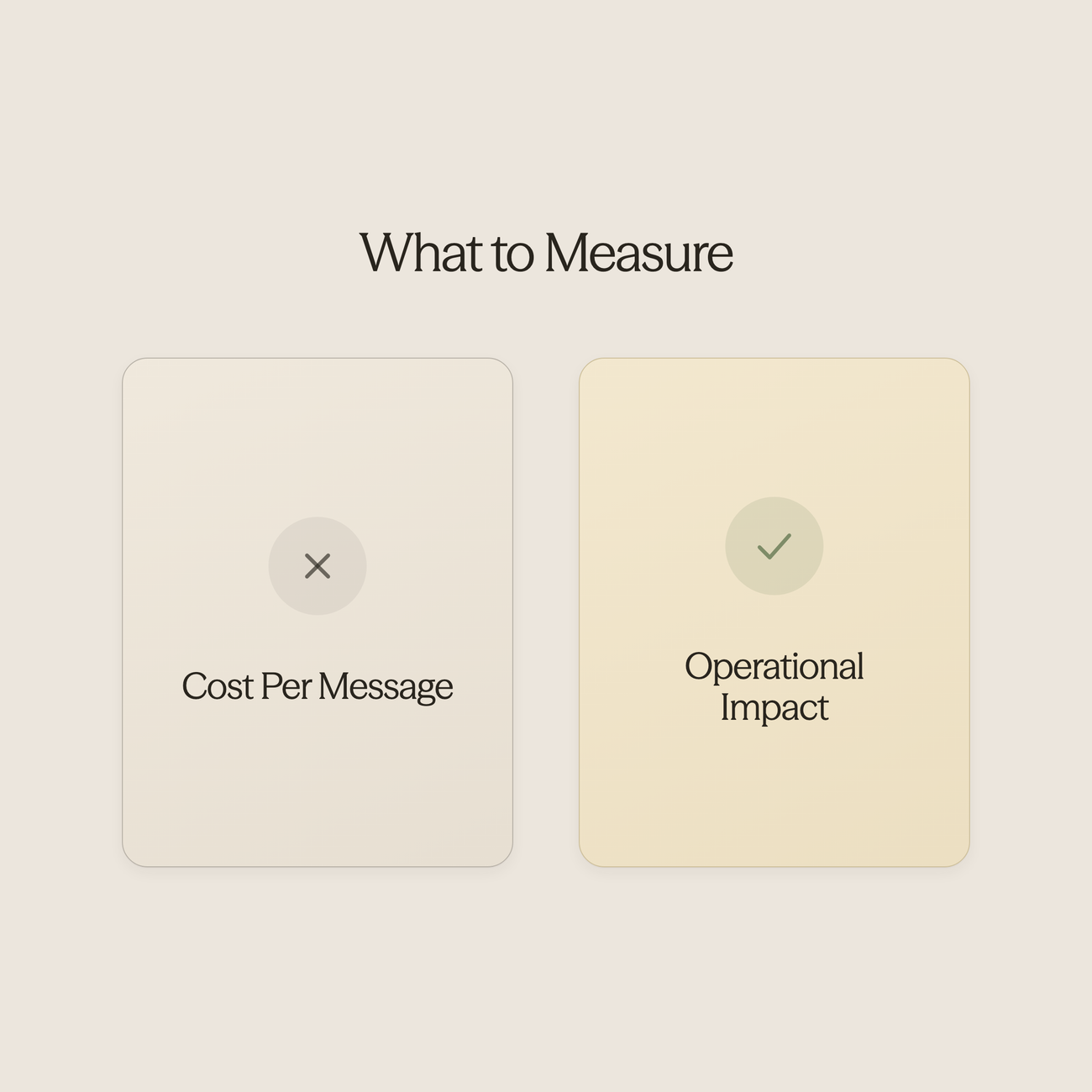
Key Point: The true value of hospitality AI isn't measured in per-message costs, but in operational transformation and revenue generation that fundamentally changes your business model.
" Cost per message matters less than whether the system eliminates enough manual work to change staffing requirements or funds itself through upselling ." — Hospitality AI Value Assessment
Book a demo with Conduit to see how hospitality-specific AI works in your existing technology stack . Your first session identifies which guest conversations can be automated , where revenue opportunities exist across the guest journey , and how much manual workload your team could eliminate . The conversation starts with your operations , not a product pitch .
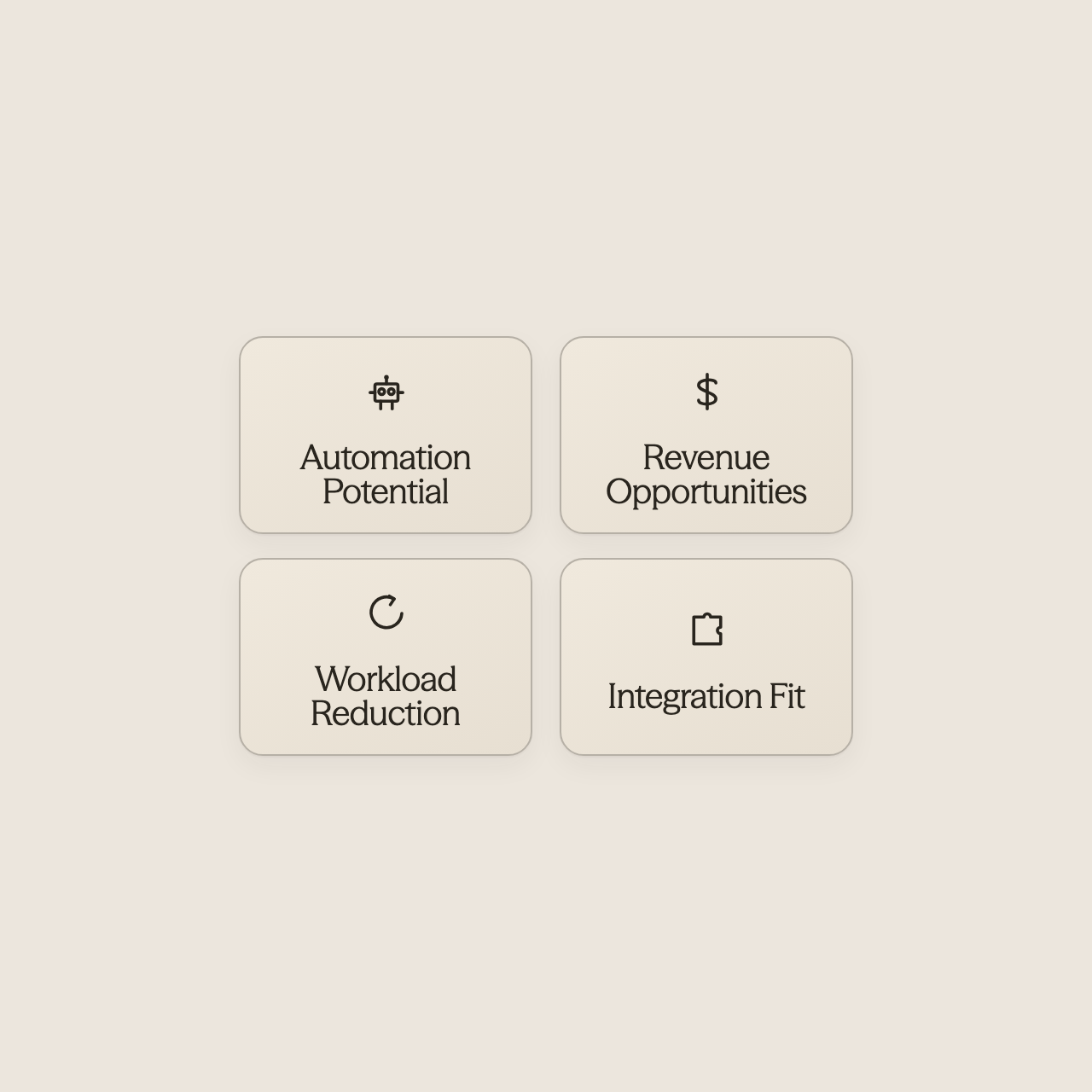
Tip: Come prepared with your current guest communication volume and staff time allocation data to get the most accurate ROI projections during your Conduit demo session .
Stay in the loop
Get the latest on AI automation, product updates, and customer stories.

