13 Ways How to Improve Guest Experience in Hotel Fast


Improve Guest Experience
Improve guest experience in hotels
.Your rooms are fine. Your staff are trying. The reviews are still sliding, and the real leak is in your communication infrastructure, not your thread count.
Most hospitality business owners think that if they upgrade the physical product and train staff harder, the guest experience scores will catch up, that the problem is in the room or the service delivery, not the communication infrastructure. Yet most hotels that struggle with guest satisfaction have already done the hard work: renovated rooms, hired attentive staff, stocked premium toiletries. Yet the 3-star reviews keep arriving, and the complaints share a pattern that has nothing to do with thread counts or welcome gifts. See our AI for hospitality for how this works in practice.
The breakdown is almost always a communication failure, and it almost always happens when no one is watching. Understanding this requires a closer look at how guest communication actually works at scale across a modern property portfolio, where benchmarking across the market shows messages routinely arrive across multiple channels simultaneously and guests who wait an extended period for a reply are significantly more likely to post a negative review. Guest experience spans pre-arrival, in-stay, and post-stay.
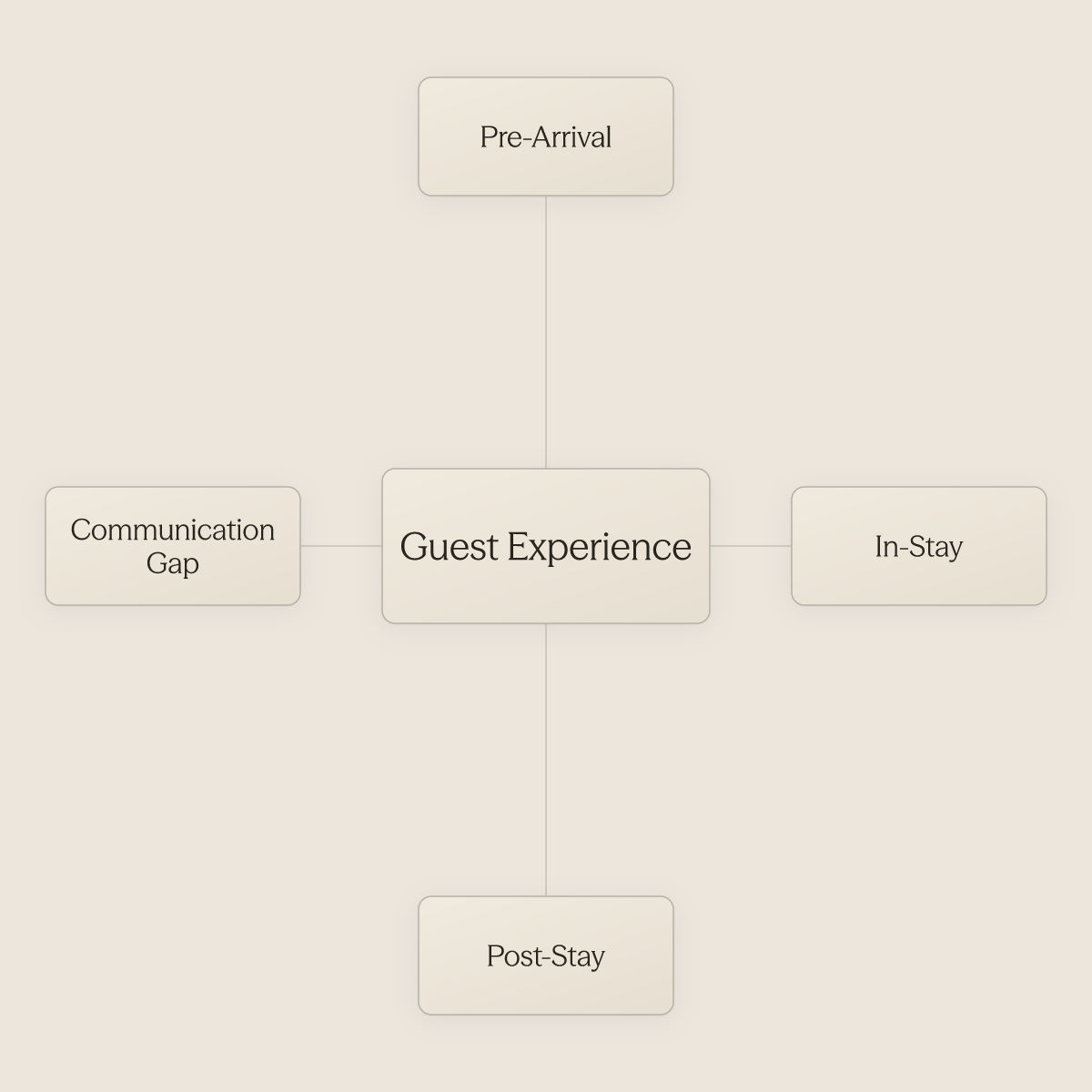
Most operators invest heavily in the first and last stages: polished booking confirmations, post-stay review requests. The in-stay stage gets the least structured attention, yet it carries the most emotional weight. A guest who sends a maintenance request at 11pm and hears nothing until 9am does not remember the upgraded bathroom.
They remember the silence. Broader industry trends consistently identify response-time failures during the in-stay window as the most direct trigger of negative reviews, regardless of physical product quality. The misdiagnosis is understandable.
A bad review mentions "the shower pressure," so the operator fixes the shower. But what most teams report consistently shows that the majority of guests who leave negative reviews never reported the issue during their stay. The problem was not the shower.
The problem was that there was no fast, reliable channel for the guest to raise the issue during the stay and receive a response that made them feel heard before they checked out and opened a review platform instead.
Key takeaways
- Most hotels that struggle with guest satisfaction have already renovated the rooms and trained the staff, the breakdown is in the communication layer, not the physical product.
- A 57-minute response window to a mid-stay issue erases the value of premium amenities, attentive staff, and a strong pre-arrival experience in a single interaction.
- Guest experience scores bleed from one or two specific friction points in the journey, operators who treat it as a property-wide problem waste budget fixing the wrong stage.
- Three friction points, pre-arrival uncertainty, mid-stay silence, and post-stay neglect, account for the majority of review score erosion in otherwise well-run hotels.
- The 13 tactics in this post are organized by journey stage because patching one phase while ignoring the others produces no lasting score improvement.
- Every tactic carries a hidden dependency: consistent, fast communication. Without it, even well-designed improvements quietly revert to their worst-case version under real operating conditions.
- Conduit's AI-powered guest communication platform closes the response-window gap directly, automating guest interactions across the full stay so the speed and consistency the tactics require is no longer dependent on staff availability.
The Three Friction Points That Turn Good Hotels Into Bad Reviews
Most hospitality business owners think that if they upgrade the physical product and train staff harder, the guest experience scores will catch up, that the problem is in the room or the service delivery, not the communication infrastructure. In reality, a hotel can have spotless rooms, warm staff, and a breakfast spread guests rave about, and still watch its review score erode month after month. The reason rarely shows up in an exit survey.
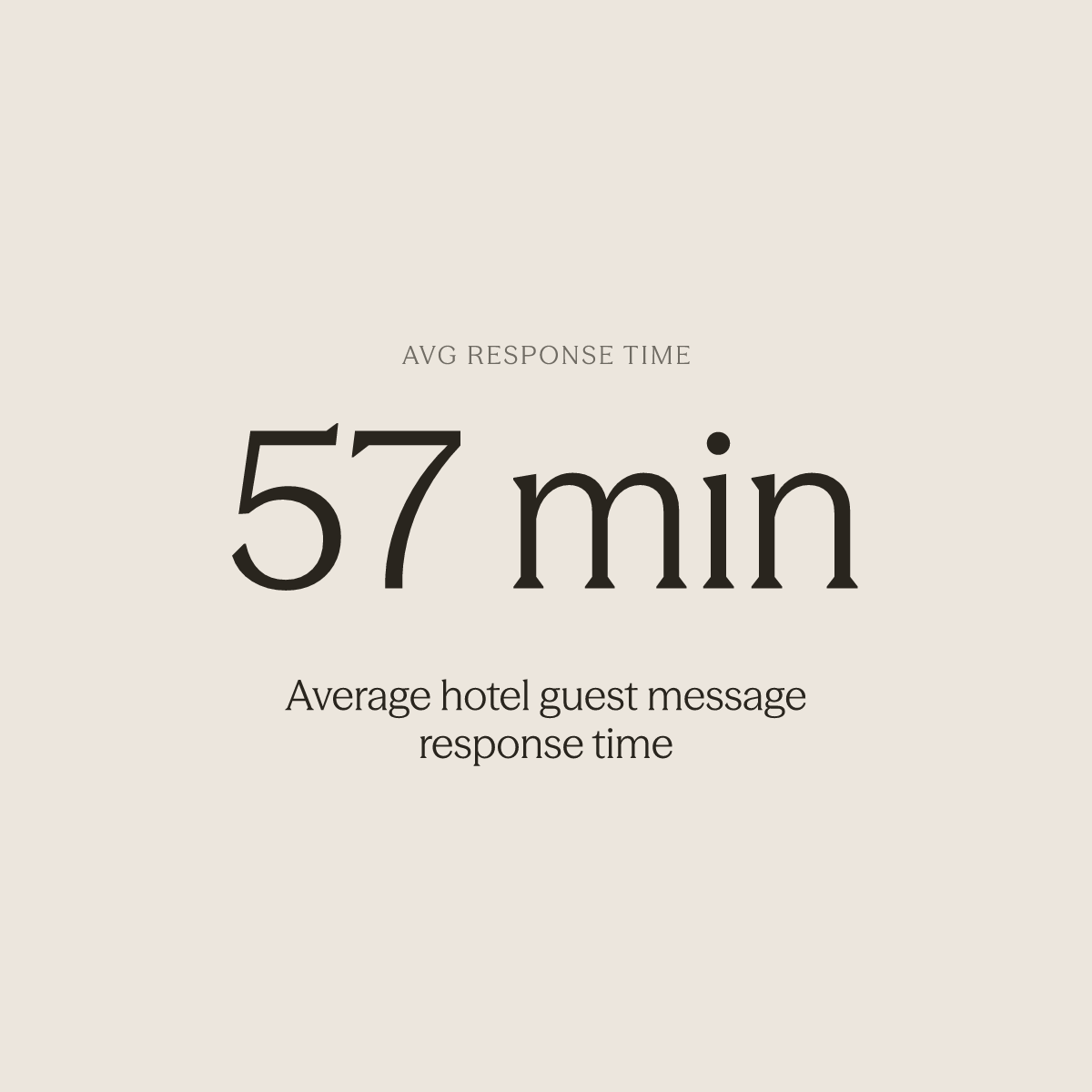
Industry benchmark data shows the average hotel takes 57 minutes to respond to a guest message. In that window, booking decisions get made elsewhere, mid-stay frustrations harden into grievances, and the guest who needed help at 11pm has already drafted their one-star review by morning. Protecting review scores, it turns out, is less about the product on offer and more about resolving issues fast and consistently, before they have a chance to calcify into public complaints.
Friction Point 1 - The After-Hours Black Hole
The front desk closes, the inbox keeps filling. A guest messages about a noisy neighbor at midnight; a prospective booker asks about parking at 1am. Neither gets an answer until morning, by which point, given how long the average hotel takes to respond to a message, the guest has escalated and the prospective booker has completed their reservation elsewhere.
The structural lag between message sent and message seen is where fixable problems become permanent negative reviews. This is precisely the gap that AI Agents are most valuable in closing: when a business receives a high volume of repetitive guest messages and has existing documentation, SOPs, FAQs, manuals, the agent begins handling replies continuously, before, during, or after a stay, with a first automated guest reply going live days after connecting those materials. For operators running lean, that kind of coverage changes the economics entirely.
As Noel Poler, Owner of The Lauderdale Boutique Hotel, put it: "The more hands-off the property, the higher the valuation." Responding fast and resolving issues before they escalate is how review scores get protected, not by hoping the morning shift catches up in time.
Friction Point 2 - The Scattered-Inbox Problem
Guests contact hotels across multiple channels simultaneously: SMS, OTA platforms, email, and direct messaging apps. The result: contradictory answers, dropped threads, and guests who feel ignored even when multiple staff members technically responded.
A unified Inbox addresses this directly, and it is most beneficial when managing guest communications across multiple platforms or properties simultaneously. The operations or support team uses it on an ongoing basis to monitor, review, and manage every conversation the AI agent is handling, giving staff a single point of truth rather than a patchwork of disconnected threads. Integrations compound this further: when the business already uses tools like Notion, Google Drive, or Airbnb, the AI agent can leverage that existing content without requiring manual re-entry, so the answers guests receive across every channel draw from the same source of record.
Friction Point 3 - The Repetitive-Query Tax
The majority of inbound messages a hotel receives are variations of the same small set of questions:
- Check-in time
- Wi-Fi password
- Parking details
- Late checkout availability
Each one consumes a staff member's attention for a task that carries no relationship value and crowds out the interactions that do. At volume, this repetitive load is the silent tax that prevents front-desk teams from doing the work guests actually remember. AI Agents are built precisely for this scenario, most beneficial when the business receives a high volume of repetitive guest messages, handling those queries continuously so staff capacity is freed for higher-value moments.
Workflows extend that logic further, automating recurring, predictable guest touchpoints that currently require manual staff action: triggering after a booking is confirmed, after check-in, or when a specific keyword is detected in a conversation. And because behavior can be adjusted with a first custom rule on the same day it is needed, the system adapts to operational reality rather than demanding operations adapt to it.
Related Reading
- Best Hospitality Management Software
- How To Maximize Your Hotel Revenue
- How To Increase Hotel Occupancy Rate
- Hotel Operating Costs Breakdown
- Hotel Revenue Generating Ideas
- Self Service Hotel
- What Is Revpar
13 Ways to Improve Guest Experience in Hotel - The Fast-Implementation List
Fixing one stage of the guest journey while ignoring the others is like patching a single leak in a pipe and calling the plumbing done. The 13 tactics below are organized by journey stage because most operators waste budget treating guest experience as a property-wide problem when the score is usually bleeding from one or two specific friction points. Diagnose first. Then sequence by impact.
"Misleading hotel room photos on booking platforms create a significant gap between guest expectations and reality, a core issue that a fast-implementation guest experience checklist could address by auditing photo accuracy."
How to Time Upsell Offers So Guests Welcome Them
Offer room upgrades and add-ons at the pre-arrival stage, not at check-in. Hotel upselling software that triggers offers 24 to 48 hours before arrival consistently outperforms front-desk upselling because the guest has time to consider without feeling pressured. The key variable is relevance: an upgrade offer matched to the guest's room type and occasion converts; a generic blast to every reservation actively irritates guests who feel marketed to rather than served. Timing and specificity are the levers, not the discount.
Automated Post-Stay Follow-Up
Quick-Reference Implementation Checklist, 13 Ways to Improve Guest Experience
[[TBL_0_10029]]
The post-stay window is where review scores are actually written, and most operators abandon the guest the moment they check out. A personalized follow-up message sent within 24 hours of departure, referencing something specific about the stay, increases the probability that a satisfied guest converts private satisfaction into a public review. Generic "thanks for staying" emails produce almost no response. This tactic depends on the same communication layer as tactics four and eleven: consistent execution at volume, across every checkout, including the ones at 6 a.m. on a Sunday.
Most operators reading this list will recognize every tactic and quietly admit that four or five already exist somewhere in their operation, half-implemented and inconsistently executed. The reason is structural, not motivational. Tactics four, five, eleven, and thirteen all depend on someone being available to send, read, and respond to messages in real time, across every channel, without a shift ending and leaving a guest mid-conversation.
That is the gap where Conduit's hospitality-specific AI closes the loop, handling real-time guest messaging across SMS, WhatsApp, and chat, triggering mid-stay check-ins automatically, and generating personalized post-stay follow-ups so the communication layer that holds all 13 tactics together keeps running without adding headcount. This communication layer delivers the most value to properties with recurring, predictable guest touchpoints, multi-property operators, boutique groups, and vacation rental managers, where the volume of those touchpoints has already outpaced what a staffed team can handle manually without things falling through.
Implementing even five of these 13 tactics will move your scores. But operators who have done it consistently report one uncomfortable truth: the tactics don't hold under volume without a coordination layer underneath them. That is the gap the next section maps in detail, and it is where most hotels are still completely exposed.
1. Deploy Mobile Check-In and Digital Room Keys Before Guests Arrive
Contactless check-in eliminates front-desk queues and lets guests bypass the lobby entirely using their smartphones. It's the right move for business travelers and tech-savvy guests who value speed above all else. The real tradeoff: PMS integration must be airtight, without a live connection to your property management system, room assignments break down and the experience backfires badly.
2. Send Personalized Pre-Arrival Messages Using Guest History Data
Triggering a tailored pre-arrival email or SMS, referencing past preferences like pillow type, floor level, or dietary needs, signals to guests that the hotel remembers them. This is especially powerful for loyalty members and repeat bookers. The limitation is data quality: if your CRM is fragmented or staff don't log preferences consistently, personalization feels hollow or, worse, inaccurate.
3. Offer Targeted Room Upgrade Upsells at the Right Moment in the Journey
Presenting a room upgrade offer 24–48 hours before arrival, when guests are mentally engaged with their trip, converts significantly better than at check-in. It improves guest satisfaction while generating ancillary revenue. The tradeoff: poorly timed or irrelevant upsell offers feel pushy and can damage the relationship, so segmentation and offer relevance are non-negotiable prerequisites.
4. Build a Real-Time Guest Messaging System Across SMS, WhatsApp, and Chat
Guests increasingly expect to communicate with hotels the same way they message friends, instantly and on their preferred channel. A unified messaging platform that routes SMS, WhatsApp, and in-app chat to a single staff dashboard reduces response times dramatically. The key limitation is staffing: without dedicated coverage or AI-assisted triage, message queues pile up and the experience deteriorates during peak hours.
5. Use AI-Powered Anticipatory Service to Predict Needs Before Guests Ask
Leading hotels are deploying AI tools that analyze booking data, weather, local events, and past behavior to proactively offer services, an umbrella before rain, a restaurant reservation before the guest thinks to ask. This approach works best for full-service and luxury properties with rich data histories. The tradeoff is implementation complexity: AI recommendations are only as good as the data pipelines feeding them.
6. Implement a Robust In-Stay WiFi Experience That Matches Guest Expectations
Reliable, fast WiFi is no longer a differentiator, its absence is a dealbreaker. Hotels that invest in enterprise-grade wireless infrastructure and segment bandwidth by room type or loyalty tier see measurable improvements in review scores. The honest tradeoff: infrastructure upgrades require significant capital expenditure and ongoing managed-service contracts, making this a longer-horizon investment than most items on this list.
7. Introduce Contactless Payments and Digital Folios at Checkout
Allowing guests to review and settle their bill via a mobile link, without queuing at the front desk, removes one of the most friction-heavy moments of any stay. Digital folios also reduce billing disputes and paper waste. The limitation is payment processor integration: hotels running legacy PMS platforms often face compatibility gaps that require middleware solutions, adding cost and implementation time.
8. Personalize In-Room Amenities Based on Guest Segment and Booking Purpose
Stocking a room with items relevant to the guest's purpose, a yoga mat for wellness travelers, a welcome note for honeymooners, a local snack for first-time visitors, creates a memorable first impression that drives reviews and repeat bookings. This tactic scales well for boutique and lifestyle hotels. The tradeoff is operational complexity: housekeeping workflows must be updated and staff trained to execute segmented room setups consistently.
9. Invest in Staff Recognition Programs That Directly Elevate Guest Interactions
Guest experience is ultimately delivered by people, and hotels with engaged, recognized employees consistently outperform on satisfaction scores. Structured recognition programs, peer nominations, real-time manager shoutouts, performance-linked rewards, reduce turnover and build the service culture guests feel. The tradeoff: programs require sustained leadership commitment and budget; one-off initiatives without follow-through actually worsen morale.
10. Create a Digital Concierge or Guest App for On-Demand Local Recommendations
A branded guest app or web portal that surfaces curated local dining, activity, and transport recommendations reduces front-desk call volume while making guests feel genuinely looked after. It's particularly effective for independent hotels competing against OTA-driven commoditization. The limitation: content must be kept current, outdated restaurant listings or closed attractions erode trust faster than having no app at all.
11. Collect and Act on Mid-Stay Feedback to Resolve Issues Before Checkout
Sending a brief mid-stay survey or check-in message on day two of a multi-night stay gives guests a low-friction channel to flag issues before they become negative reviews. Hotels that close the loop within the hour see measurable improvements in final satisfaction scores. The tradeoff: this only works if staff are empowered and equipped to resolve complaints immediately, a mid-stay survey with no follow-up action is worse than silence.
12. Design Flexible Room Layouts That Adapt to Both Work and Leisure Guests
With bleisure travel blurring the line between business and vacation stays, rooms that can transition from a productive workspace to a relaxing retreat, through convertible furniture, adjustable lighting, and dual-purpose storage, serve a broader guest base without requiring room-type proliferation. The tradeoff is upfront FF&E investment, and flexible furniture solutions require careful vendor selection to avoid sacrificing comfort for function.
13. Leverage Post-Stay Surveys and Review Response Strategy to Drive Loyalty
A structured post-stay feedback program, automated survey within 24 hours of checkout, followed by personalized responses to both positive and negative reviews, closes the guest relationship loop and signals that the hotel genuinely cares. It also generates actionable data for operational improvements. The key limitation: generic, templated review responses are easily spotted by guests and do more reputational harm than good.
Related Reading
- Hotel Budgeting And Forecasting
- Hotel Demand Forecasting
- How To Improve Hotel Operations
- How To Increase Revpar
- Hotel Upselling
- Hotel Revenue Management Strategies
- Automated Hotel Reservation System
- Hotel Guest Messaging
- Hospitality Automation
- Hospitality Operations Management
- Adr Vs Revpar
The Communication Layer That Makes All 13 Tactics Stick: and Where Most Hotels Are Still Exposed
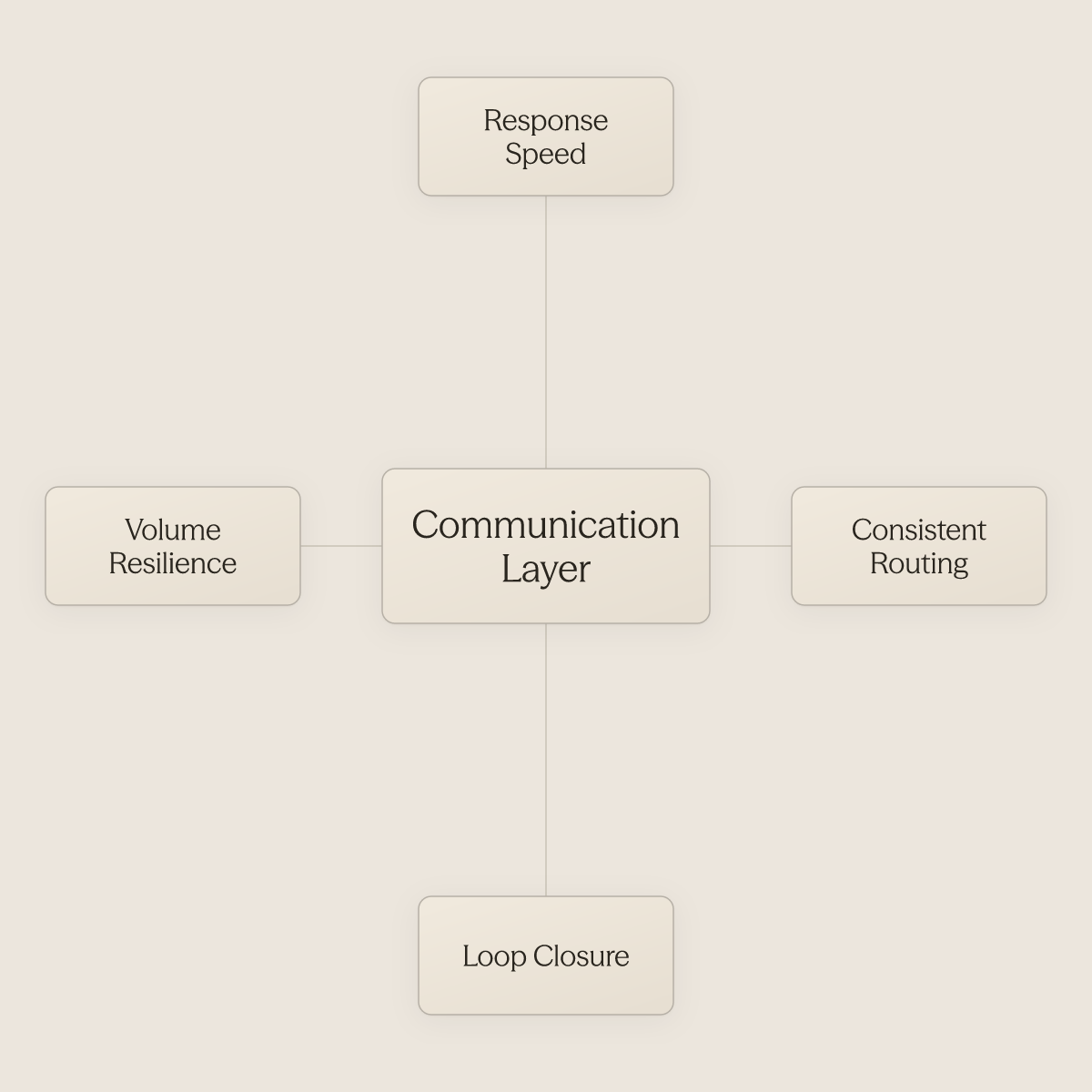
Thirteen tactics can transform a guest's stay on paper. Every one of them carries a hidden dependency most improvement programs never audit: the speed and consistency of surrounding communication. When that layer is fragile, tactics don't fail dramatically, they quietly revert to their worst-case version the moment volume spikes, a shift ends, or a maintenance issue surfaces at 2am.
Why Every Tactic Has a Communication Dependency
A personalized welcome note is a promise. A pre-arrival preference survey is a promise. An upsell offer sent at the right moment is a promise.
Each requires someone, or something, to receive a guest's response, route it correctly, and close the loop before the moment passes. Broader industry trends confirm that response timing and prioritization materially shape guest satisfaction outcomes, a gap that persists regardless of physical product quality, room tier, or star rating. What most teams report reinforces the same pattern: hotels responding to guest messages quickly see significantly higher satisfaction scores than those with slow response patterns.
Key takeaway: The leverage point is not hiring faster responders, it is removing the manual action from the touchpoints that are already recurring and predictable.
Conduit.ai's AI Agents are trained directly on a property's existing SOPs, FAQs, and manuals, and can deliver a first automated guest reply within days of connecting that documentation. Every message a guest sends before, during, or after a stay is handled continuously, without a staff member needing to be in the loop for the responses your operation already knows how to give. The operational logic behind this is straightforward: as one hospitality operator put it when evaluating the AI-first approach, "I've just got to stop investing in building our own stuff because these guys are going to do it better."
The Shift-Change Cliff
The failure point is almost never the tactic itself, it's the handoff. Hotel staff turnover is widely documented as among the highest of any industry, meaning institutional memory constantly drains out of the building. A communication layer that captures context, flags open requests, and surfaces unresolved threads at every handoff is not a luxury.
It is the only way a training investment survives contact with a real operating schedule. Conduit's Inbox is designed precisely for this failure mode. The operations or support team uses it on an ongoing basis to monitor, review, and manage all conversations the AI agent is handling, meaning the full thread, its context, and its status are visible at shift change rather than locked inside a departing employee's memory.
For businesses with specific brand standards, escalation policies, or complex multi-property operations that require differentiated agent behavior, AI Agents can be configured to reflect those standards consistently, so the quality of the handoff does not depend on who happens to be walking in the door.
The Channel Scatter Problem
Across the market, hotel guests now reach properties across multiple parallel channels, SMS, WhatsApp, OTA messaging platforms, and email, with no expectation of consistency between them. A response sent through one channel is invisible to the agent handling another, which means threads go unanswered not through negligence but through structural invisibility. This is precisely where managing guest communications across multiple platforms simultaneously compounds the handoff problem.
Conduit's Inbox consolidates those scattered threads into a single view for the team, while Integrations allow the AI agent to draw on content already living in tools like Notion, Google Drive, or Airbnb, without requiring manual re-entry of documentation that already exists. For distributed portfolios, this combination does something no per-property fix can: it standardizes guest communication quality and brand voice across the entire portfolio, so a guest contacting a property at 2am on any channel receives the same caliber of response they would expect at noon from your best-trained agent. Unifying those channels is the precondition for every other communication improvement; without it, response time gains in one channel are simply offset by blind spots in the rest.
Next steps
If your review scores keep slipping despite renovated rooms and trained staff, the path forward starts with closing the communication gap that forms before any recovery is possible. Start with our AI for hospitality.
The 57-minute average response window does not just frustrate guests in the moment; it structurally predetermines negative review outcomes before a single service recovery intervention can be attempted. That finding, combined with evidence that amenities and service delivery have become table-stakes expectations across the market, means the competitive layer has migrated fully to response velocity. Hotels still allocating the majority of improvement budget to physical upgrades are optimizing a category guests no longer use to differentiate comparable properties, while the variable that actually drives retention goes under-resourced. Together, these two realities point to one action: close the in-stay response window before the next guest checks out.
Start with conduit.ai to see how Conduit handles inbound guest messages continuously across SMS, WhatsApp, and chat, trained on your existing SOPs and FAQs, with a first automated reply going live within days. After setup, your team monitors every thread through a unified inbox, routes the requests that need human judgment, and stops losing guests to a silence that was never necessary in the first place.
Frequently Asked Questions
What actually is guest experience in a hotel, and why does it matter so much for reviews?
Guest experience covers every stage of a stay, pre-arrival, in-stay, and post-stay, and how a guest feels across all three determines what they write publicly afterward. The post makes clear that response-time failures during the in-stay window are among the most direct triggers of negative reviews, regardless of how good the physical product is.
Why do guests leave bad reviews even when the room and staff are genuinely good?
The majority of guests who leave negative reviews never reported the issue during their stay, which means the problem usually isn't the product, it's that there was no fast, reliable channel for the guest to raise the issue and feel heard before checkout. A guest who messages at 11pm and hears nothing until 9am remembers the silence, not the upgraded bathroom.
When is the best time to send an upsell or room upgrade offer?
The pre-arrival window, 24 to 48 hours before check-in, consistently outperforms in-stay and post-stay upsell attempts because the guest is still in planning mode and has time to consider without feeling pressured. The key is making the offer specific to the guest's room type and occasion; generic blasts to every reservation irritate guests rather than convert them.
How do I stop the same basic questions, Wi-Fi, check-in time, parking, from eating up my front desk team's time?
The post identifies this as the "repetitive-query tax" and notes that the majority of inbound hotel messages are variations of the same small set of questions. Handling those queries through an AI Agent frees staff capacity for higher-value guest interactions that guests actually remember.
Does a post-stay follow-up email actually get guests to leave a review?
A personalized follow-up message sent within 24 hours of departure, referencing something specific about the stay, increases the likelihood that a satisfied guest converts private satisfaction into a public review. Generic "thanks for staying" emails produce almost no response, so specificity is the variable that makes this tactic work.
Stay in the loop
Get the latest on AI automation, product updates, and customer stories.


