10 Tips for How to Manage a Vacation Rental Property


Vacation Rental Management
Proven systems for bookings and growth.
Most hosts manage harder when things break down. The ones who scale build systems around pricing, distribution, and operations that run without them.
Most vacation rental owners start with a simple mental model: keep the place clean, respond quickly, and the bookings will come. That model works fine for one property. It starts cracking at three. By ten, it has usually broken completely, and the owner has become a full-time front-desk clerk who also does accounting, maintenance dispatch, and marketing. Short-term rental management is a multi-discipline operation where hospitality, pricing, distribution, compliance, and maintenance all run simultaneously. A failure in any one area drags down the others.
Understanding that before you scale means the tips ahead aren't a checklist; they're the building blocks of a system. Operators who build systems that respond for them outperform those who simply work harder. Most vacation rental property managers and operations leads think the only fix for communication overload is hiring more staff or accepting that quality will slip. They see it as a staffing problem with no structural solution short of bringing on a dedicated communications team.
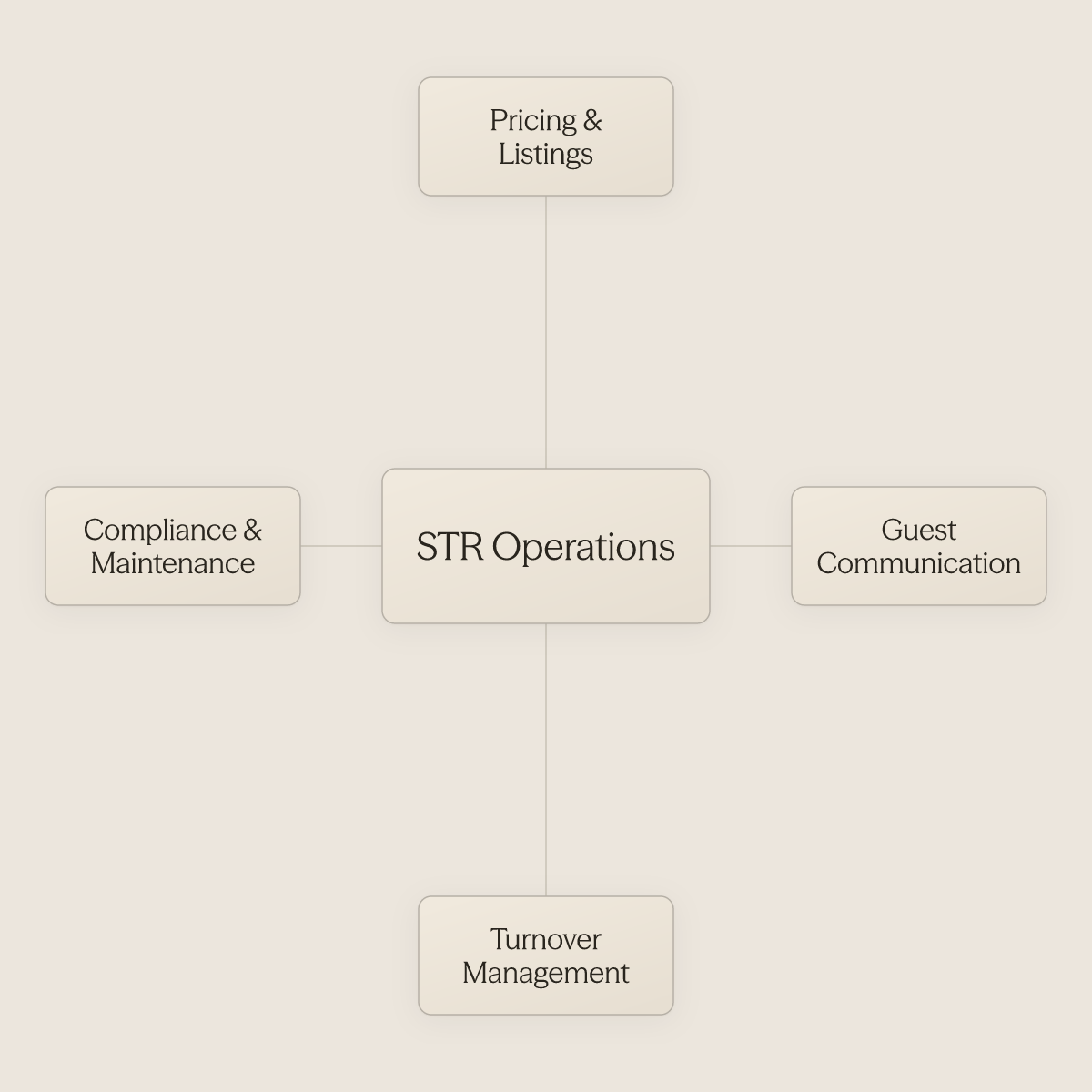
Three decisions drive the majority of your revenue and the majority of your headaches:
-
Where you list and how you price
-
How you handle guest communication
-
How you manage turnover
Get those three right and the rest of the operation becomes far more forgiving. Get them wrong and no amount of effort on the margins, better throw pillows, a fancier welcome book, will compensate. Professional property managers typically charge between 8% and 12% of monthly rental income, and up to 15% for short-term rentals, handling marketing, guest communication, cleaning coordination, and maintenance on your behalf.
12% of monthly rental income, and up to 15% for short-term re
Key takeaways
-
Vacation rental management breaks as a system before it breaks as a hospitality problem, most owners don't see the crack until they're already the full-time front-desk clerk.
-
Listing, pricing, and distribution only compound when optimized together; treat them as separate tasks and each one quietly underperforms the other two.
-
Proactive maintenance scheduling cuts emergency repair costs by 32%, that single shift in posture rewrites how you staff and budget across a growing portfolio.
-
Guest communication isn't a customer service function, it's the operational bottleneck that determines whether a portfolio scales or stalls at the owner's personal bandwidth ceiling.
-
A single unanswered 11 PM lockbox message, multiplied across 20 or 35 properties, is where review scores erode and the staffing treadmill starts.
-
Compliance isn't a background task, NYC's Local Law 18 removed non-registered hosts from Airbnb and Vrbo entirely, and similar enforcement is expanding across U.S. markets.
-
conduit.ai's AI Agents close the communication gap by reading directly from your SOPs, manuals, and FAQs to answer guests accurately across every channel, without human intervention, including at 2 a.m. on a peak check-in weekend.
Tips 1--3 - Build Your Listing, Pricing, and Distribution Foundation
Optimize your vacation rental listing, pricing, and distribution together, and the three elements compound. Get one wrong, and the other two are working at a fraction of their potential. Most managers treat these as separate tasks: update the photos once, set a rate that feels competitive, pick the platform a neighbor recommended. That approach is understandable. It's also quietly costing you bookings every week.
1. Craft a Conversion-Focused Listing Title and Description That Highlights Your Property's Unique Selling Points

New hosts learning how to manage a vacation rental property often underestimate how much a weak listing title costs them in visibility and clicks. A strong, benefit-driven title paired with a scannable description that leads with standout amenities, private pool, mountain views, walkable location, directly drives booking conversion. The real tradeoff: writing compelling copy takes iteration; generic phrases like 'cozy retreat' actively hurt search ranking on Airbnb and Vrbo.
2. Implement Dynamic Pricing to Automatically Adjust Nightly Rates Based on Demand, Seasonality, and Local Events

Hosts who set a flat nightly rate leave significant revenue on the table during peak weekends, local festivals, and holiday windows. Dynamic pricing tools analyze real-time market data to raise or lower your rate automatically, keeping occupancy high in slow periods and maximizing revenue when demand spikes. The key tradeoff: tools like PriceLabs or Beyond charge monthly fees, so hosts with fewer than two properties should weigh cost against incremental revenue gain carefully.
3. Distribute Your Listing Across Multiple OTA Channels - Airbnb, Vrbo, and Booking.com: While Protecting Margin With a Channel Manager
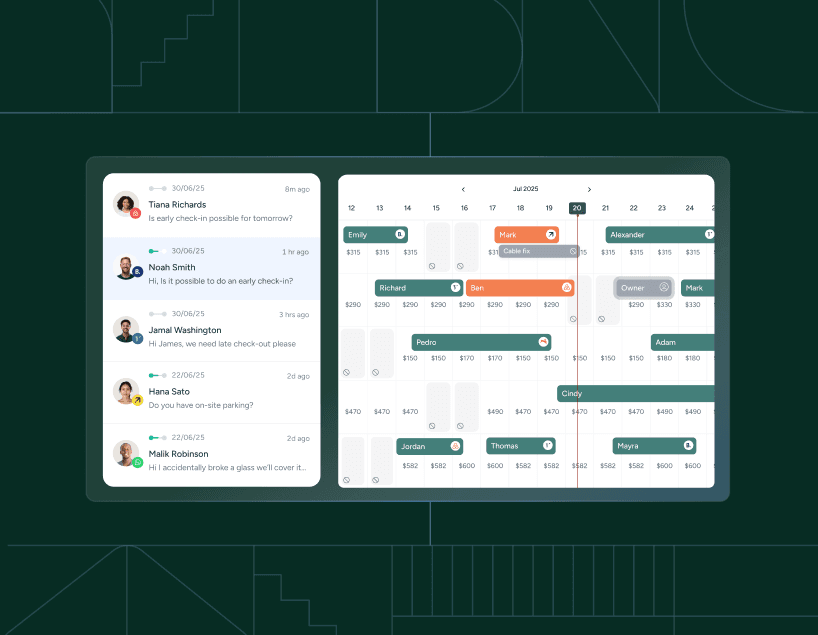
Relying on a single platform is one of the most common mistakes hosts make when learning how to manage a vacation rental property. Listing on Airbnb, Vrbo, and Booking.com simultaneously expands your reach to different traveler demographics, reducing vacancy risk. A channel manager syncs calendars and rates in real time to prevent double-bookings. The critical tradeoff: each OTA charges commission fees of 3--15%, so hosts must factor platform costs into their base pricing strategy from day one.
Tips 4--6 - Build Operations and Maintenance Systems That Scale
Proactive maintenance can reduce emergency repairs by 32%, according to Belong Home's analysis of rental property cost benchmarks. That single figure rewrites the math on how you staff, budget, and schedule across a growing portfolio. The operators who internalize it stop treating maintenance as something that happens to them and start treating it as a system they control.
What that 32% figure actually reveals is a compounding-cost principle that extends well beyond HVAC filters and gutters: the same structural logic that makes deferred property maintenance disproportionately expensive per incident applies directly to deferred communication infrastructure investment. Operators who skip systematic guest communication architecture face a structurally identical "emergency staffing" bill, reactive hires, burnout churn, and platform penalties from slow response times, costs that never appear on the same P&L line as maintenance, which is precisely why the true break-even math stays invisible until it's too late.
Building a Tiered Vendor Network for Reliable Maintenance
Every hour a property sits unavailable during a booking window is direct revenue loss.
Smart locks remove one coordination layer entirely: unique guest codes auto-generated per booking eliminate in-person key handoffs and give remote teams instant access control. Smart thermostats let you manage energy costs and confirm occupancy patterns without a site visit. The honest constraint: reliable contractors in high-demand tourist markets often prioritize large property management companies over smaller independent operators, so relationship-building with your vendor network is ongoing work, not a one-time setup.
Most managers who invest in vacation rental cleaning and maintenance SOPs still leave guest-facing communication running on human bandwidth alone, without anyone picking up a phone.
Seasonal Preventive Maintenance Checklist
Use this schedule as a repeatable template across every property in your portfolio:
| Season | Task | Property Area | Priority |
|---|---|---|---|
| Spring | Inspect HVAC filters; replace if needed | All units | High |
| Spring | Check gutters and downspouts for winter debris | Exterior | High |
| Summer | Test all smart locks and backup codes | Entry points | High |
| Summer | Inspect and clean outdoor furniture | Exterior | Medium |
| Fall | Flush water heater; check anode rod | Utility room | High |
| Fall | Test smoke and CO detectors; replace batteries | All rooms | High |
| Winter | Insulate exposed pipes in cold climates | Utility/exterior | High |
| Winter | Confirm thermostat remote-access settings | All units | Medium |
| Ongoing | Audit restocking supplies against SOP checklist | All units | Medium |
| Ongoing | Review and update vendor contact list | Admin | Medium |
Print or duplicate this table for each property. Assign a named staff member or vendor to each row and set calendar reminders two weeks before each seasonal window.
1. Tip 4: Build a Seasonal Preventive Maintenance Schedule Before Problems Find You

Hosts who manage vacation rental property reactively spend far more on emergency repairs and lose bookings to avoidable downtime. A documented seasonal checklist, HVAC filters in spring, gutter clearing in fall, plumbing checks before freeze season, catches small issues before guests do. The real tradeoff: building this system takes upfront time investment, and it only pays off if your cleaning or co-host team actually executes it consistently between every turnover.
2. Tip 5: Create Written SOPs for Every Repeatable Operation So Your Property Runs Without You

Learning how to manage a vacation rental property at scale means removing yourself as the single point of failure. Standard operating procedures, covering check-in sequences, restocking thresholds, damage reporting, and guest communication scripts, let cleaners, co-hosts, and contractors execute to your standard without a phone call. The limitation: SOPs require regular auditing; a procedure written for one property often breaks when applied to a second with different layouts or appliances.
3. Tip 6: Vet and Retain a Tiered Vendor Network So Maintenance Never Stalls a Booking

A single reliable plumber or HVAC tech can mean the difference between a five-star review and a refund request. Successful hosts build a tiered vendor network, a primary contractor for each trade plus a vetted backup, with pre-negotiated rates and response-time expectations documented in writing. The honest tradeoff: cultivating these relationships takes months, and vendors in high-demand tourist markets often prioritize larger property management companies over solo owners unless you offer consistent, repeat work.
Tips 7--8 - Guest Communication and Experience: The Operational Bottleneck Most Managers Underestimate
At 11 PM on a Friday, a guest can't find the lockbox code. Your phone buzzes. Then buzzes again. By the time someone responds, the guest has already left a note in the review draft. That single moment, multiplied across 20 or 35 properties, is where review scores quietly erode and where the staffing treadmill begins.
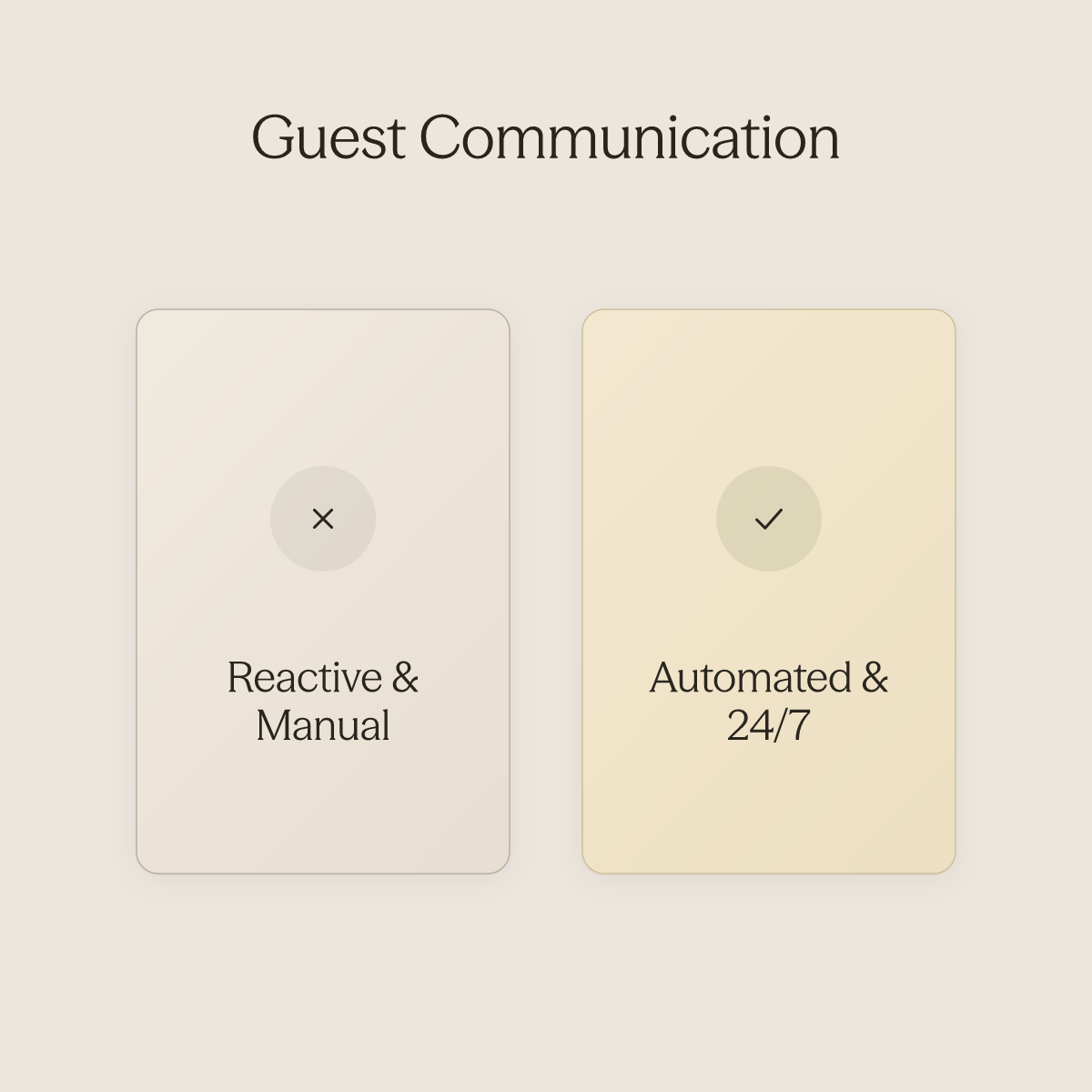
Tip 1: Automate Guest Communication as Infrastructure, Not a Checklist
"Guest communication and experience management is a significant enough operational burden that it requires dedicated full-time hiring, it simply cannot be handled casually or part-time."
Pros and cons at a glance (Tips 7--8 - Guest Communication and Experience, The Operational Bottleneck Most Managers Underestimate)
| ✓ Pros | ✗ Cons |
|---|---|
| Covers liability, lost rental income, and guest-caused damage as a business asset | Standard homeowners insurance almost universally excludes short-term rental activity |
| Math flips quickly in favor of coverage for multiple units | Premium increase may feel steep for single-property operators with infrequent bookings |
Enhancing the guest experience starts with one non-negotiable: be available to address concerns 24/7, not just during business hours. The operational weight of that requirement is heavier than most new operators anticipate. Airbnb's support window is unforgiving, a 30-minute response threshold at 3 AM is the line between a resolved issue and a full refund plus a 30% discount paid out of your pocket.
That is not a staffing preference; it is an operational constraint that runs every night of the year across every property in your portfolio. Most managers solve it by hiring, a VA covers nights, another hire covers peak check-in windows, and the cost structure grows with the portfolio. The hidden problem is not the payroll; it is the inconsistency.
Tone drifts between team members. A missed overnight shift becomes a 3-star review. A message that falls through the cracks on Vrbo never gets answered at all.
The operational burden is significant enough that many operators treat it as a full-time role, which means it cannot be handled casually or part-time once your portfolio clears even a handful of properties. What the operator community consistently misdiagnoses as a staffing and hours problem is actually a workflow architecture problem wearing a staffing costume: the significant hours per week a single-property host spends on guest communication are not evidence that more people are needed, but evidence that the decision logic embedded in those hours has never been externalized into a system. The operators who break out of the staffing treadmill are the ones who recognize this distinction first.
AI for hospitality without proportional headcount growth. That figure is the inverse proof: when communication is treated as a logic infrastructure problem, headcount becomes nearly invariant to portfolio size. The decision logic embedded in repetitive messages, lockbox questions, WiFi troubleshooting, check-out reminders, review nudges, can be externalized into a system that runs without a person attached to it.
Easy BnB made the same structural shift. After deploying AI-powered guest communication, the operation scaled significantly and achieved substantial monthly labor savings with zero additional hires. The team's role changed: instead of answering messages, they curated the knowledge base the AI agent reads from.
The people did not disappear; their leverage multiplied. Conduit's AI Agents are most beneficial when a business receives a high volume of repetitive guest messages and already has existing documentation, SOPs, FAQs, property manuals, to train the agent on. Once those materials are connected, the first automated guest reply can go out within days.
From that point forward, the agent runs continuously, responding before, during, and after every stay, across every platform, without a person in the loop for routine inquiries. For operators already using tools like Notion, Google Drive, or Airbnb, Conduit's integrations allow the AI agent to pull from that existing content directly, no manual re-entry required. One honest trade-off: this approach works best when you already have documented SOPs, FAQs, and property-specific manuals, and when your operation receives a high volume of repetitive guest messages.
An AI agent trained on thin or inconsistent documentation will reflect that inconsistency back to guests. For operators managing fewer than five properties with low message volume, the return may not justify the setup investment immediately; the inflection point where the benefit is clearest is when repetitive inquiry volume outpaces what a small team can handle consistently.
Tip 2: Deliver Consistent Guest Experience Across Every Channel
Automate the predictable moments, booking confirmations, check-in instructions, post-stay review requests, and you recover hours. But the messages that determine your rating arrive outside those windows. Cascadia Getaways achieved a top-tier communications score alongside a high automation rate, demonstrating that speed and quality are not in tension when the system is built correctly.
Wynwood House, operating across seven countries, significantly reduced guest resolution time after consolidating all guest communication into a single platform. What made that improvement sustainable was not just speed, it was quality. Mayra, the Global Head of Customer Experience at Wynwood House, described the experience directly:
"The first thing we noticed was the quality of the AI replies. You cannot tell the difference between an AI agent and a human agent. I work with ChatGPT and other AI tools every day, and sometimes you can immediately tell it's AI. With Conduit, we're not seeing that."
That quality bar is what protects a review score at scale, not just response speed. Conduit's Inbox gives the operations or support team a single place to monitor, review, and manage every conversation the AI agent is handling across all properties and platforms simultaneously, so nothing falls through the cracks on Vrbo or any other channel. The AI handles the repetitive volume; the team functions as the quality control layer above it, reviewing escalations and refining the knowledge base the agent reads from.
Workflows layer on top: after a booking is confirmed, after check-in, or when a specific keyword is detected, automated touchpoints fire without manual staff action, turning every predictable guest lifecycle moment into a consistent, on-brand interaction. The team stops being the communication system and starts being the quality control layer above it. That structural shift, from human-as-responder to human-as-curator, is what turns guest communication from a staffing cost into a scalable infrastructure layer.
Getting guest communication right protects your reviews and your revenue, but none of it compounds the way it should if the legal and tax foundation underneath your operation has gaps. Tips 9 and 10 cover the compliance layer that most managers defer until it becomes expensive: the permits, tax obligations, and liability protections that determine whether every other system you have built is actually protected.
Related Reading
-
How To Automate Airbnb Business
-
Vrbo Smart Pricing
-
Vacation Rental Automation
-
Best Apps For Short Term Rentals
-
Best Pms For Airbnb
-
Best Pms For Short Term Rentals
-
Best Accounting Software For Short Term Rentals
Tips 9--10 - Legal, Tax, and Compliance Requirements Every Vacation Rental Manager Must Get Right
Fines for operating without a permit can run into thousands of dollars per violation in cities across the U.S., and in places like New York City, non-compliance doesn't just mean a fine. Under NYC's Local Law 18, hosts who failed to register were removed from Airbnb and Vrbo entirely, according to The Guardian's 2023 reporting. That's a complete revenue shutdown, mid-season, with no warning. Vacation rental legal compliance is not a one-time setup task. It is infrastructure you actively maintain.
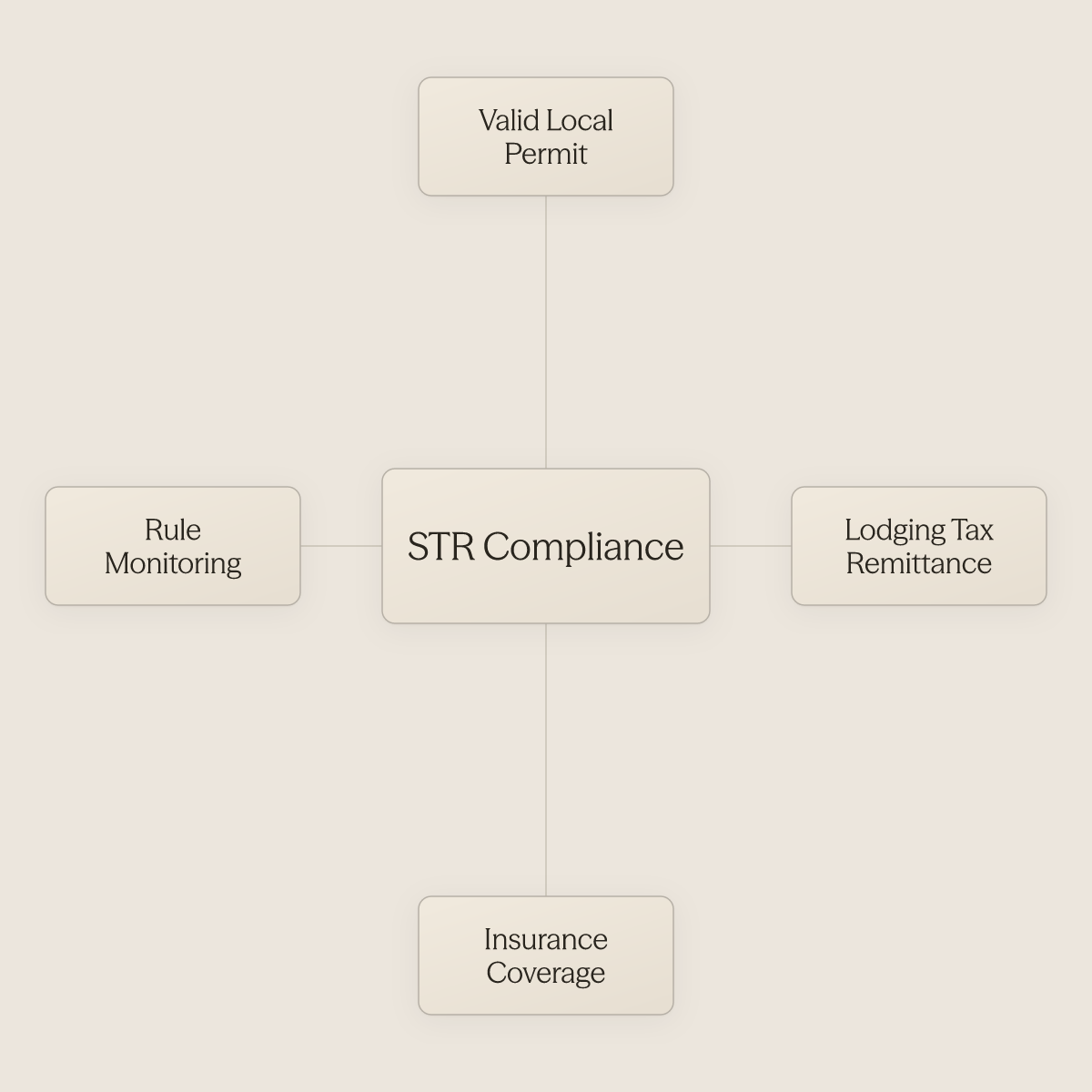
Short-Term Rental Regulations, Permits, and Taxes
Meeting your short-term rental regulations obligations means three things: holding a valid local permit, collecting and remitting lodging tax correctly, and keeping both current as rules change. Cities routinely cap permit numbers, add lodging tax categories, or reclassify STR zones mid-season. Platforms like Airbnb remit occupancy tax on your behalf in some jurisdictions, but not all; where they don't, the obligation falls entirely on the operator. A significant share of STR revenue goes unreported each year, which is why local tax authorities are increasing enforcement. Missing a renewal or filing in the wrong category creates back-tax liability that compounds quietly until it surfaces at the worst possible moment.
Vacation Rental Insurance and Liability Coverage
Standard homeowners insurance policies almost universally exclude short-term rental activity. A guest injury, property damage, or theft during a paid stay will typically be denied under a personal policy. The fix is commercial vacation rental insurance, which covers liability, lost rental income, and guest-caused damage as a business asset. Purpose-built STR coverage costs more upfront; for operators running a single property with infrequent bookings, the premium increase may feel steep relative to exposure. For anyone managing multiple units, the math flips quickly.
The Compliance Gap Most Operators Miss
Legal and financial compliance intersects with operations in a way most operators don't anticipate. Regulatory frameworks like NYC's Local Law 18, documented in detail by The Guardian, increasingly require documented proof of compliance: registration records, platform-level verification, and in some cases guest-stay documentation. Operators whose guest interaction records are scattered across personal inboxes and platform DMs have no clean audit trail to produce under pressure.
Operators we work with describe the same compounding problem: they're not just scrambling to answer guest questions at midnight, they're also trying to coordinate cleaners, contractors, and owners without sitting in every thread, all while staying current on permit renewals and tax filings. That's not a bandwidth problem. That's a structural one.
Reactive, undocumented communication workflows create the exact exposure that regulators and insurers look for. Conduit's AI agents are trained on your own SOPs, property manuals, and FAQs, with the first automated guest reply going live within days of connecting your documentation. Every guest inquiry is answered accurately and every interaction is logged, creating a structured, retrievable communication record that supports your compliance posture without adding headcount.
The Inbox gives your operations team a single place to monitor, review, and manage all conversations the AI agent is handling across multiple platforms and properties simultaneously. Workflows fire automatically after trigger events, a booking confirmation, check-in, or detected keyword, so guests, cleaners, contractors, and owners stay coordinated without a human sitting in every thread. And because Conduit integrates directly with tools like Notion, Google Drive, and Airbnb, your existing content trains the agent without manual re-entry.
The result: operators get off the 24/7 on-call treadmill and back to growing the business, while maintaining exactly the kind of documented, auditable communication record that regulators increasingly demand. Operators like Cascadia Getaways, which achieved a top-tier communications score at a high automation rate, illustrate that accuracy and auditability can coexist with scale. Get tips 1 through 10 right and you've built a vacation rental operation that's legally sound, operationally tight, and positioned to grow.
But there's one structural ceiling none of these tips address on their own: the compounding cost of doing all of it manually. The next section names that ceiling and shows what operators who've broken through it actually did differently.
The Hidden Cost of DIY - Why Manual Vacation Rental Management Caps Your Growth
Managing one vacation rental manually is demanding. Managing several starts to feel like a second job you never applied for. This section examines the structural reasons why manual operations hit a ceiling, and where the real revenue damage quietly accumulates before most operators notice it.
The Bandwidth Wall
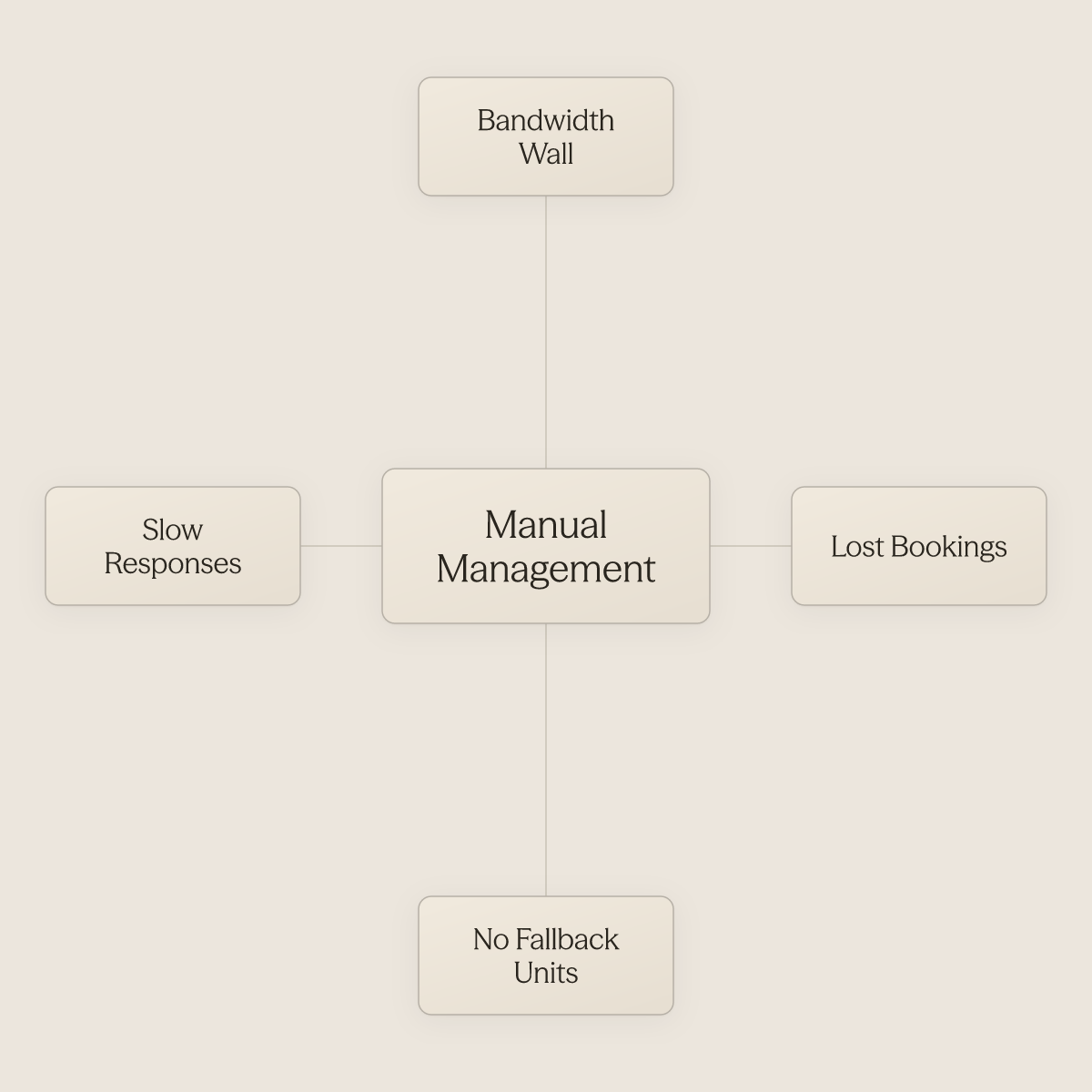
The honest math is uncomfortable. A single property, managed carefully, can consume a significant number of hours per week in communication, coordination, and follow-up, as host community discussions consistently confirm. Add a second property and the volume compounds.
Add a fifth and the system breaks, not because the operator lacks knowledge, but because human bandwidth is a fixed resource and message volume is not. Somewhere between five and ten units, every new listing stops feeling like growth and starts feeling like debt. There is a second, quieter failure point that compounds this pressure: small vacation rental operations typically lack the inventory depth to offer a guest an alternative unit when a cancellation occurs.
When the inbox floods and a booking falls through, the manual operator has no fallback to offer, the gap simply becomes lost revenue. This scalability ceiling is not a knowledge problem. It is a structural one, and it does not resolve by hiring faster.
The Real Price of Manual Operations
Slow responses are a direct revenue leak. Delayed replies during the booking inquiry window reduce conversion rates, often before the guest sees a competing listing. A missed message at 1 AM doesn't just cost a booking, it costs the review that would have followed, and the future bookings that review would have driven.
Vacation rental operations efficiency breaks down quietly, one unanswered inquiry at a time. Conduit's AI Agents are designed precisely for this break point. They are most beneficial when a business receives a high volume of repetitive guest messages and has existing documentation, SOPs, FAQs, property manuals, to train the agent on.
Once connected, the agent delivers the first automated guest reply within days, not weeks, and continues responding before, during, and after every stay, continuously, whenever a guest sends a message. The Inbox layer runs alongside it, giving operations and support teams a single place to monitor and review every conversation the AI is handling across multiple platforms and properties simultaneously, so nothing goes unanswered at 1 AM without a human needing to be awake to ensure it.
The Self-Management vs. Property Manager Decision - A Framework for Choosing
The self-management vs. property manager decision is typically framed as a choice between paying 10--30% management fees or absorbing 40+ hours per week in personal labor. That framing is a false binary: it dissolves the moment an operator installs an AI coordination layer, because the true comparison is not "my time vs.
Their fee" but "my time cost plus opportunity cost vs. automation infrastructure cost", and those curves do not behave the same way at scale. Darren, founder of Easy BnB, ran a large team of virtual assistants before recognizing that the vast majority of his message volume was low-value repetition, and that staff reliability issues were actively capping his EBITDA and exit valuation.
Scaling headcount scales cost linearly, not quality, consistency, or margin. Conduit's Workflows address exactly this pattern: after a trigger event, a confirmed booking, a check-in, a specific guest keyword, recurring touchpoints that previously required manual staff action are handled automatically, without adding headcount. Integrations with tools operators already use, such as Notion, Google Drive, and Airbnb, mean the AI agent can leverage existing content and documentation without manual re-entry, removing the setup friction that typically stalls adoption.
When a single-property host spending 40 hours per week on manual communication scales to 10 properties with AI handling the repetitive majority of interactions, the manual operator's cost grows in lockstep with each new unit, while the automated operator's support burden does not. The outcome Conduit is built around is direct: reduce time spent on manual, repetitive messaging tasks and enable rapid portfolio expansion without proportional growth in support headcount. Those two outcomes are what separate operators who scale from operators who stall.
Related Reading
-
Vrbo Automated Messages
-
Lodgify Competitors
-
Guesty Alternatives
-
Hospitable Vs Hostaway
-
Guesty Vs Hostaway
-
Lodgify Vs Smoobu
-
Guesty Vs Hostfully
-
Guesty Vs Hospitable
-
Ownerrez Vs Guesty
Next steps
If your portfolio is growing but your inbox is growing faster, the path forward starts with treating guest communication as infrastructure rather than a staffing variable. The operators who have broken past 20 and 30 units without proportional headcount growth did not hire their way out. They externalized the decision logic embedded in repetitive messages into a system that runs without a person attached to it. Start with our AI for hospitality.
The 96% AI automation rate Erwan Le Roy's 35-property operation achieved is not an outlier. It is the logical result of recognizing that the hours per week absorbed by guest communication are not a staffing problem but a workflow architecture problem wearing a staffing costume. Combine that with the compounding-cost principle that makes deferred communication infrastructure structurally identical to deferred maintenance, and the next step becomes obvious: the time to build the system is before the cost of not having it surfaces on the P&L.
Start with conduit.ai to see how Conduit's AI agents train on your existing SOPs and documentation, then handle guest inquiries autonomously across every platform, so your team manages exceptions rather than the inbox.
Frequently Asked Questions
Does professional photography actually make a difference for bookings?
Yes, professional Airbnb photography can increase bookings by up to 40%. Guests filter on visuals before they read the price or check amenities, so strong photos front-run the pricing decision entirely. For anyone managing three or more properties, professional photography is considered non-negotiable infrastructure.
How do dynamic pricing tools like PriceLabs actually work?
Tools like PriceLabs and Wheelhouse pull in local demand signals, competitor rates, and event calendars to adjust your nightly rate automatically, raising it during a regional festival and dropping it on a slow Tuesday to protect occupancy. The critical requirement is thoughtful upfront configuration of your base rate and minimum/maximum boundaries; without that, the algorithm optimizes against the wrong floor.
Is it really necessary to list on multiple platforms, or is Airbnb enough?
Listing exclusively on one OTA is a reach problem disguised as a simplicity preference, Airbnb, Vrbo, and Booking.com each attract meaningfully different traveler segments, so relying on one platform means those other segments never see your property. The operational risk of managing multiple platforms manually is real: hosts without a channel manager routinely face double bookings, and resolving one costs far more in guest compensation and review damage than a channel manager subscription ever will.
How do I handle guest messages at 2 or 3 in the morning without hiring overnight staff?
The post frames this as a workflow architecture problem, not a staffing one, the decision logic embedded in repetitive messages (lockbox questions, WiFi troubleshooting, check-out reminders) can be externalized into an AI system that runs continuously without a person attached to it. Conduit's AI Agents, for example, respond before, during, and after every stay across every platform for routine inquiries, and operators like Cash Flow Street reached 96% AI automation of guest communications without proportional headcount growth.
What's the real advantage of building written SOPs for cleaning and maintenance?
Documented SOPs let your standards travel with the task rather than with a specific person, so any new cleaner or vendor can follow them without a training call, effectively removing the owner as the single point of failure for turnover quality. The trade-off is an upfront time investment that feels counterproductive during a busy season, and SOPs need updating every time a property or process changes.

Stay in the loop
Get the latest on AI automation, product updates, and customer stories.


