AI Software for Hotels With Best Reviews That Saves Staff Time


AI Software for Hotels
Conduit's AI helps hotels earn top reviews.
AI Software for Hotels With Best Reviews That Saves Staff Time
Front desk teams at busy hotels often face a relentless stream of guest messages, routine questions, and requests that stretch response times well beyond acceptable limits. The hotels earning the strongest reviews today are tackling this problem head-on by adopting AI software that handles repetitive communication automatically. Choosing the right tool means staff can focus on high-value interactions while guests receive faster, more consistent service.
Conduit is one platform built specifically for this purpose, automating guest messaging and freeing hotel teams from time-consuming back-and-forth without sacrificing the personal touch guests expect. Properties that prioritize both operational efficiency and guest satisfaction will find real value in exploring purpose-built AI for hospitality.
Summary
-
Guest communication failures are rarely dramatic. They accumulate quietly through delayed responses, missed upsell windows, and requests that fall between systems during shift changes. Hotels using AI-driven communication tools are beginning to quantify this cost, and the numbers are significant. Research from Leverege found that hotels can lose up to 40% of potential revenue due to poor guest communication and service bottlenecks, a figure that reframes slow response times as a financial problem rather than just an operational inconvenience.
-
Response speed has become a hard threshold in hospitality, not a soft preference. According to Hotel Technology News, 73% of guests expect a reply within five minutes when messaging through SMS, WhatsApp, or hotel apps. The same research from Leverege found that guests who experience wait times over five minutes at check-in are 50% more likely to leave a negative review. Missing that window consistently compounds into reputation damage that affects future booking cycles long after the original guest has moved on.
-
AI adoption in hotels is widespread, but strategic use remains rare. A 2025 global study by H2C found that only 7% of hotel chains operate with a comprehensive AI strategy, even as AI tools become standard across the industry. That gap between using AI and using it well is where most of the operational and revenue value gets lost. Properties that connect AI to live property management systems, booking engines, and channel managers see meaningfully different results than those running disconnected tools from static scripts.
-
Proactive communication is where measurable differences in revenue appear among hotel AI platforms. Hotels using messaging-based upsell workflows are seeing 10 to 15 percent increases in ancillary revenue, according to Hotel Technology News, with room upgrades, spa packages, and late checkout offers converting best when they arrive at the right moment in the guest journey. A guest who just confirmed a booking is actively planning their stay, and that window closes quickly. Most properties miss it because their systems are not configured to act on it.
-
The internal productivity gains from well-implemented AI are as significant as the guest-facing ones. Research from Syracuse University's iSchool indicates that AI adoption can boost business productivity by up to 40%. In a hotel context, that shows up as recovered staff hours redirected toward higher-value interactions, the kind that require judgment, relationship, and presence rather than information retrieval. Personalization reinforces this further: PwC's 2025 CX Survey with Oracle found that 86% of users say AI-driven personalization has improved customer satisfaction, which signals that guests are not just tolerating automated outreach but responding to it when it is relevant and well-timed.
-
Implementation speed and escalation design are the two evaluation criteria most buyers underweight when comparing hotel AI platforms. A platform that takes months to configure rarely earns strong reviews even if its underlying technology is solid. And a platform that handles routine volume well but loses context during escalation, forcing guests to repeat themselves to a staff member who received no background, fails at the moment it matters most. According to Escoffier's Hospitality Industry Trends and Statistics report, 68% of hotel technology roadmaps now prioritize AI integration with property management systems, and hotels using AI-driven personalization see up to a 20% increase in guest satisfaction scores when the AI is connected to real guest data rather than a static knowledge base.
-
AI for hospitality addresses the coordination gap at the infrastructure level, connecting guest-facing channels and internal operations into a single layer that routes requests, preserves conversation context during escalation, and triggers proactive outreach based on real booking behavior rather than broadcast schedules.
Finding AI Software for Hotels With Best Reviews Is Harder Than It Sounds
Finding the right AI software for hotels is difficult because the evaluation process itself is flawed. Most review platforms capture satisfaction at a single moment in time, from one user type, under conditions that rarely match how your property actually operates.
"Most review platforms capture satisfaction at just one moment in time — from one type of user, under conditions that rarely reflect how your property actually operates." — A critical flaw in hotel AI software evaluation
When researching AI hotel software, always look beyond the aggregate star rating — dig into who left the review, when they left it, and what property type they were running.
Relying on surface-level reviews to make a high-stakes software decision is one of the most common — and costly — mistakes hotel operators make.
| Review Platform Limitation | Why It Matters for Hotels |
|---|---|
| Single point-in-time feedback | Misses how software performs across seasons |
| One user type sampled | A front-desk view ≠ a GM's or revenue manager's view |
| Generic property conditions | A boutique inn and a 200-room resort have very different needs |
| No operational context | Reviews rarely reflect real workflow integration challenges |
Why do strong ratings fail to predict the right fit for your property?
The same issue appears across independent hotels and large hotel groups: a tool receives strong ratings from one operator type and fails another. A boutique property in Lisbon has different escalation procedures, channel preferences, and guest expectations than a 400-room urban hotel chain. Software that automates 60% of messaging for one may create friction for the other. Reviews don't indicate which category you fall into.
The failure point is usually integration depth, not feature count. A platform can handle WhatsApp messages beautifully while leaving OTA inquiries, voice requests, and internal team coordination untouched. That gap doesn't show up in a five-star rating. It shows up at 2 a.m. when a guest complaint arrives through an uncovered channel, and a tired front desk agent must manually piece together a response.
Where does the gap between using AI and using it well actually show up?
Most hotel operators collect reviews, read comparison articles, and request demos. According to a 2025 global study by h2c, via Hospitality Upgrade, only 7% of hotel chains have a comprehensive AI strategy, even though many hotels use AI. That gap between using AI and using it well is where misleading reviews do the most damage. Conduit addresses this by learning how a specific property operates, following its procedures, accessing its systems, and covering every communication channel rather than automating isolated parts of the guest journey.
What metrics actually reveal whether hotel AI software is working?
The honest measure of any hotel AI software is whether the tool reduces manual decision-making across every channel and hour. Automation rate, guest satisfaction scores, and revenue recovered through faster response times reveal the real story.
Knowing what to measure is only half the challenge.
Related Reading
- AI For Airbnb Hosts
- AI For Vacation Rentals
- Artificial Intelligence in the Hotel Industry
- AI Use Cases In Hospitality
What Makes AI Software for Hotels Earn Strong Reviews?
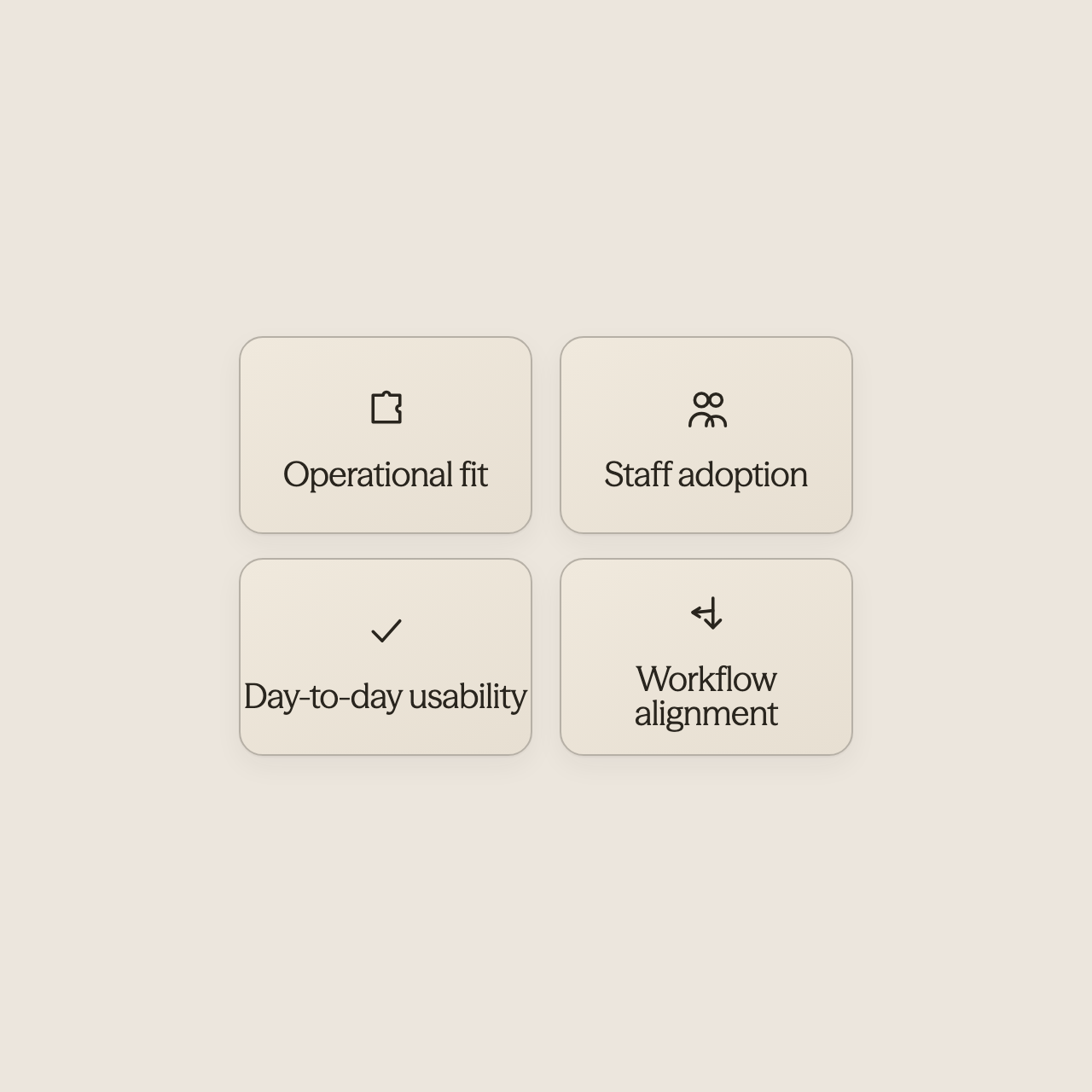
The best-reviewed hotel AI platforms win on fit. When a tool matches how a property operates, staff work with it instead of around it. That shift is where strong reviews come from.
"The best-reviewed hotel AI platforms win on fit — when the tool matches how a property operates, staff work with it instead of around it." — Core Insight
Fit between software and operations is the single biggest driver of strong hotel AI reviews — not features, not price.
Before evaluating any hotel AI platform, map your current workflows first. The tool that complements your operations will always outperform the tool with the longest feature list.
| What Hotels Evaluate | What Actually Drives Strong Reviews |
|---|---|
| Feature count | Operational fit |
| Price point | Staff adoption rate |
| Brand recognition | Day-to-day usability |
| Integration list | Workflow alignment |
Why does response speed matter so much to guests?
Speed is the most visible factor. According to Hotel Technology News, 73% of guests expect a response within five minutes when messaging through SMS, WhatsApp, or hotel apps. Missing this consistently damages the impression no friendly front desk staff can repair. The best platforms close that gap automatically, even at 2 am on a Saturday, without staff intervention.
How does accuracy separate useful tools from expensive frustrations?
Accuracy and reliability separate useful tools from expensive frustrations. Wrong answers create more problems than slow ones. Hotels need AI to consistently provide accurate information about reservations, amenities, and policies. The highest-rated tools connect directly to property management systems, booking engines, and internal knowledge bases rather than relying on static scripts.
How does unified multi-channel coverage eliminate missed guest messages?
Most teams handle multi-channel communication by assigning staff to monitor each platform separately, which breaks down during peak times or staffing gaps. Conversations get missed, and guests who message on Instagram at midnight hear nothing until morning checkout. AI for hospitality platforms like Conduit unify every channel — email, WhatsApp, OTAs, voice, and social — into a single intelligent layer, eliminating that gap. Properties achieving 70% messaging automation aren't working harder; they're removing the manual handoff from every routine exchange.
Does implementation speed affect the reviews a platform earns?
How fast a platform can be set up matters more than most buyers think. A platform that takes three months to set up and requires IT support at every step rarely receives positive reviews, even if the technology performs well. Hotels operate on small budgets and lean teams; operators need tools that integrate with their existing systems quickly and deliver immediate value. Our Conduit platform is built with this reality in mind, enabling rapid deployment and seamless integration with existing property management systems. According to Career Trainer AI's analysis of AI in the hospitality industry, 68% of hotel technology roadmaps now prioritize integrating AI with property management systems, signaling that connectivity is the baseline expectation rather than a bonus feature.
How does human handoff capability shape guest trust?
The ability to hand off to a human makes or breaks guest trust. Automated responses handle much work, but not everything. A guest disputing a charge, a family facing a medical emergency, or an important guest with a special request needs to speak with a real person. Platforms that keep operators happy escalate cleanly, passing the full conversation context to staff without requiring guests to repeat themselves. When this works well, automation feels warm rather than cold and unfriendly.
A gap in communication doesn't just annoy guests — it quietly costs money in ways that are easy to miss until you measure them.
Why Guest Communication Bottlenecks Hurt Revenue and Satisfaction
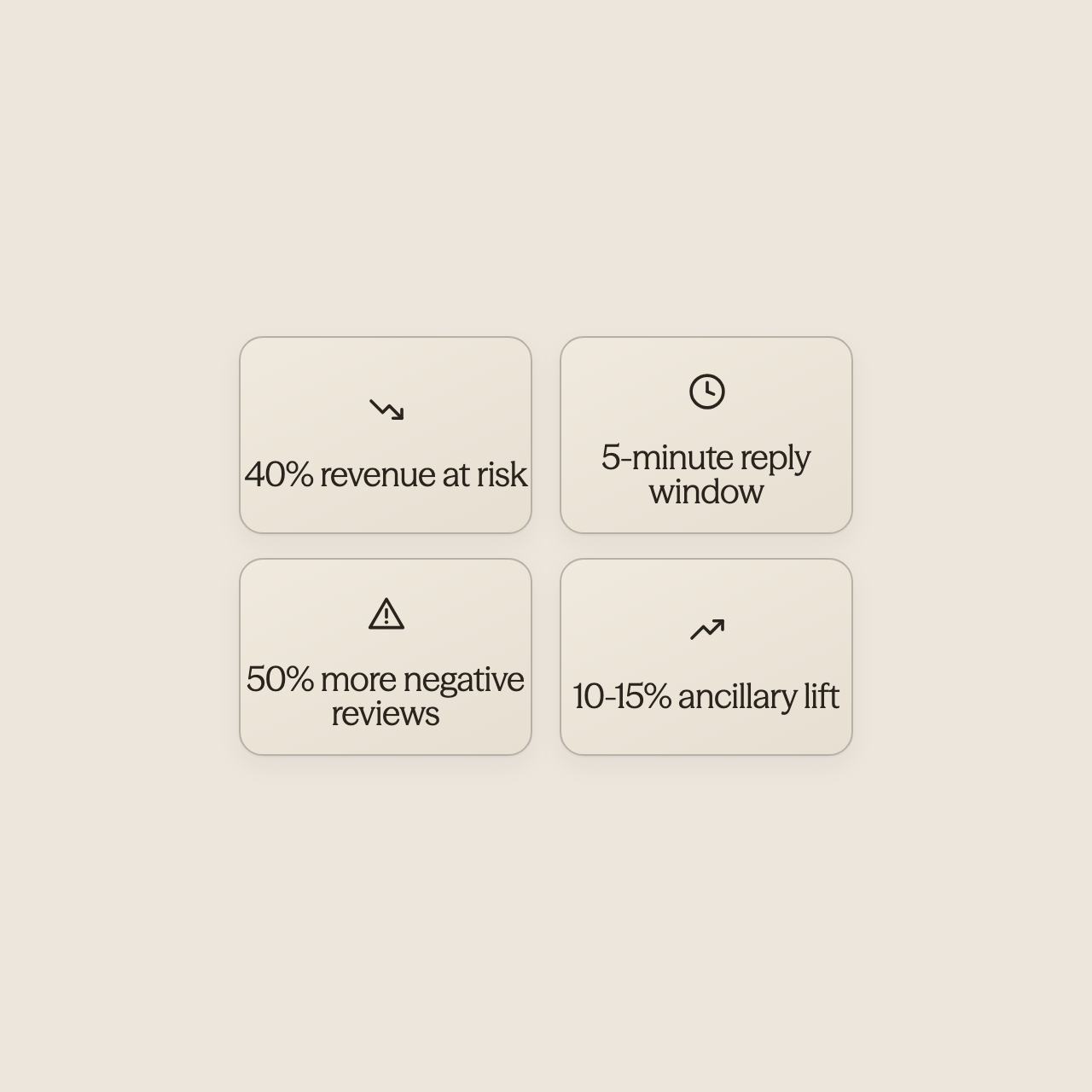
Communication gaps drain revenue across every unanswered message and delayed request. According to Leverege's analysis of hotel revenue and wait times, hotels can lose up to 40% of potential revenue due to poor guest communication and service bottlenecks. A guest waiting two hours for a late checkout response is gone from the upsell conversation entirely.
"Hotels can lose up to 40% of potential revenue due to poor guest communication and service bottlenecks." — Leverege, Hotel Revenue & Wait Time Analysis
Guest communication speed is not a hospitality nicety but a core revenue driver. A two-hour delay on a single request like late checkout can eliminate an entire upsell opportunity, making response time one of the highest-ROI operational metrics a property can track.
How do slow responses translate into negative reviews and lost bookings?
The same research found that guests who wait more than five minutes at check-in are 50% more likely to leave a negative review. This reputation damage compounds over time, as negative reviews persist indefinitely.
Why does adding more staff fail to fix the coordination problem?
Most properties respond by adding staff during busy times or monitoring more inboxes. But when messages arrive simultaneously through WhatsApp, email, OTA platforms, and phone calls, more workers don't solve the coordination problem. Requests get lost between systems, and guests receive different answers depending on which channel they use. Our AI for hospitality works across all channels simultaneously, leveraging live reservation data and escalation procedures to address this structural gap. Properties using our end-to-end coverage report automate up to 70% of guest messaging without sacrificing response quality or escalation capability.
How does timing determine whether ancillary revenue is captured or lost?
Extra money from dining bookings, room upgrades, and spa appointments depends on sending messages at the right time and ensuring they matter to the guest. A guest who receives a message about a dinner reservation opening at the opportune moment will respond differently than one who learns about it at checkout. Timing converts interest into revenue.
What to Look for When Comparing Hotel AI Platforms
Problems often go unnoticed — a missed upsell, a guest who never sees the spa offer, a complaint that wasn't routed correctly. That silence is what makes platform evaluation essential.
"The most costly hotel AI failures aren't loud crashes — they're silent gaps: missed upsells, unrouted complaints, and offers that never reach the right guest."
When evaluating hotel AI platforms, don't just ask what the system does — ask what it catches that your current setup is missing entirely.
A platform that looks functional on the surface can still be silently losing revenue through poor upsell routing, incomplete guest targeting, and unresolved complaint workflows.
| Silent Revenue Leak | What It Costs You | What to Look For in a Platform |
|---|---|---|
| Missed upsells | Lost ancillary revenue per stay | Automated, contextual offer triggers |
| Unrouted complaints | Guest dissatisfaction & bad reviews | Smart escalation and routing logic |
| Invisible spa/amenity offers | Low F&B and wellness conversion | Targeted guest segmentation tools |
Why does integration matter more than features?
The best way to evaluate a hotel AI platform is to examine what it can access and use in real situations, not just in a demo. A platform that cannot connect with your property management system, booking engine, or channel manager will provide generic answers instead of specific ones — and generic answers harm guest satisfaction over time. According to the Escoffier Hospitality Industry Trends and Statistics report, hotels using AI-driven personalization see up to a 20% increase in guest satisfaction scores, and that improvement occurs only when the AI accesses real guest data rather than relying on a static FAQ library.
Does a disconnected platform create more work for staff?
Integration determines whether the platform creates operational lift or drag. A disconnected tool forces staff to manually bridge the gap between what the AI says and what the system knows, adding steps rather than removing them. The best platforms become part of the hotel's existing operation rather than running alongside it.
What escalation workflows reveal about a platform
Most platforms handle easy interactions well. The real test is what happens when a conversation gets complicated: a billing dispute, a late checkout request during a sold-out night, a complaint about noise at 2 am. These moments need human judgment, and the platform must hand them off without losing context. When a guest repeats their room number, issue, and frustration to a staff member who received no background, the technology has failed. Escalation design reveals more about a platform's operational maturity than any feature list.
Many hotel teams route complex issues through separate inboxes or manual handoffs, which break under volume or staff changes. AI for hospitality platforms like Conduit preserve full conversation context during escalation, so staff members know what happened, what was promised, and what the guest needs. That continuity separates a resolved complaint from a negative review.
How does proactive capability generate revenue where reactive AI cannot?
Reactive AI answers questions. Proactive AI makes money. A platform that only responds to guest messages will always lag behind. One that initiates relevant, timely communication — such as pre-arrival upgrade offers, dining recommendations sent the evening before, or stay extension messages on the final morning — creates touchpoints that convert because they arrive at the right moment rather than at checkout when the opportunity has passed. The Escoffier report notes that 73% of travelers expect hotels to use technology to enhance their stay, confirming guests anticipate proactive outreach.
Why does internal coordination separate a communication tool from a real operations platform?
Internal coordination capabilities deserve equal weight during evaluation. Guest requests almost always involve multiple departments. Platforms that earn strong reviews route tasks internally, track resolution, and flag exceptions before they become complaints. That operational layer is where the difference between a communication tool and a genuine operations platform becomes visible.
The platforms earning the best reviews are not those with the longest feature lists.
Why the Best AI Software Creates Value Beyond Customer Support
The platforms that earn the best reviews are not the ones that answered the most questions. They are the ones who changed what was possible.
"The platforms that earn the best reviews are not the ones that answered the most questions: they are the ones that changed what was possible." — Core Insight
When evaluating AI software, don't measure response speed alone. Measure how much the platform expands what your team can achieve.
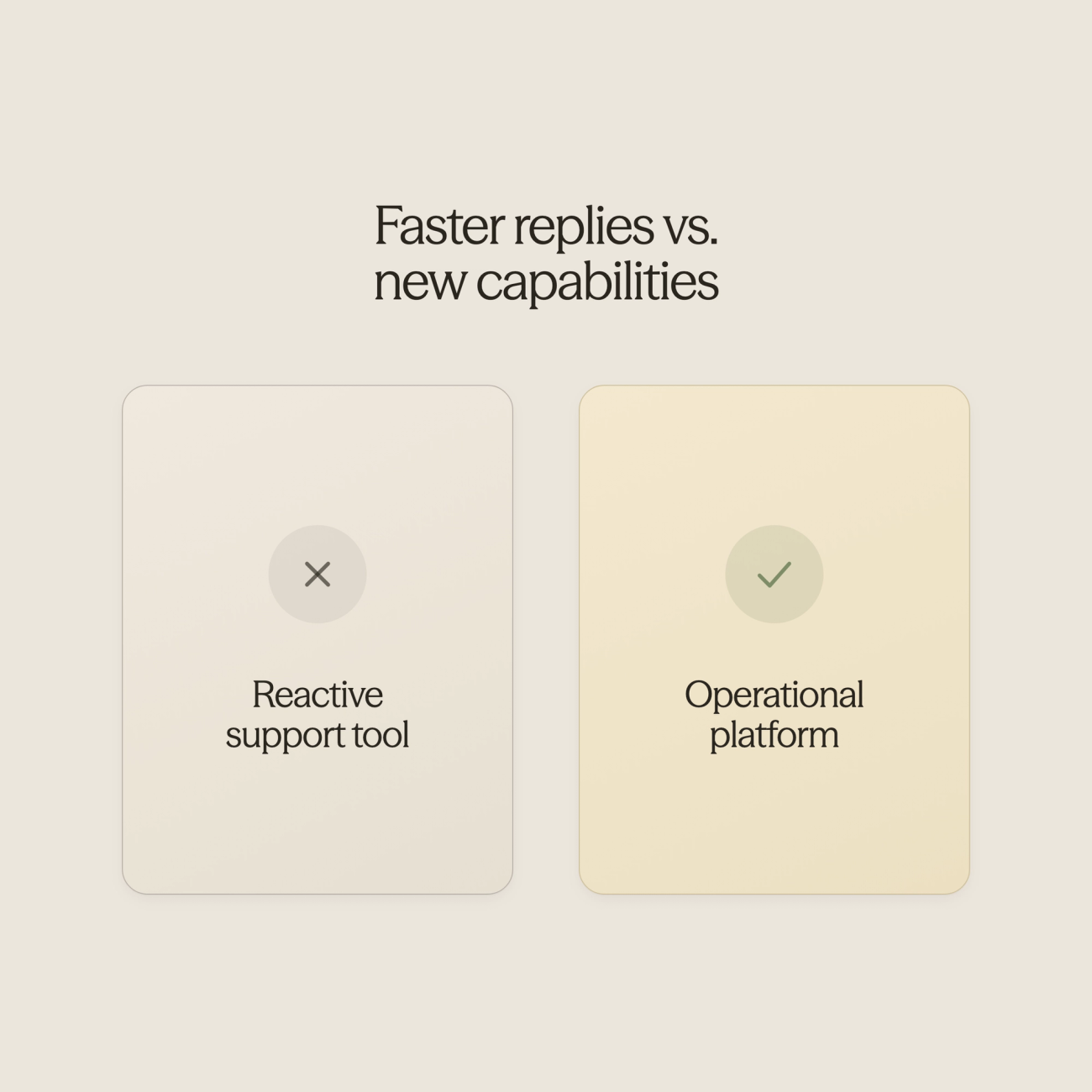
Most hotels start with AI for faster responses and a lighter front desk load. But properties that see the strongest operational results discover that guest communication is just the starting point — not the limit.
The real value of best-in-class AI platforms isn't found in ticket deflection — it's found in the operational transformation that follows.
Treating AI as only a support tool means leaving its most powerful capabilities — from revenue generation to proactive guest engagement — completely untapped.
| AI Adoption Stage | Primary Focus | Value Unlocked |
|---|---|---|
| Stage 1: Reactive | Faster response times | Reduced front desk load |
| Stage 2: Proactive | Guest communication flows | Improved satisfaction scores |
| Stage 3: Transformative | Full operational integration | Revenue growth + scalability |
Where revenue starts to separate the tools
Making money separates messaging tools from real AI platforms. Hotels using messaging-based upsell workflows see 10 to 15 percent increases in extra revenue, according to Hotel Technology News, with offers for room upgrades, spa packages, early check-in, and late checkout converting best when timed to the guest journey rather than broadcast as blanket offers. A guest who has confirmed their booking is actively planning their stay — that window is short, and most hotels miss it because their systems don't know to act.
How does lifecycle messaging drive revenue and relationships?
The same logic applies to lifecycle messaging. Pre-arrival, in-stay, and post-departure touchpoints each carry distinct revenue and relationship value. According to PwC's 2025 CX Survey with Oracle, 86% of users say AI-driven personalization has improved customer satisfaction. Personalized offers feel like service rather than sales, and the difference between a guest who books again and one who doesn't often comes down to whether the property communicated with them between stays.
What happens when manual follow-up can't keep pace with volume?
Most teams manually follow up on bookings, send pre-arrival emails, and check in on long-stay guests. As booking volume grows and channels multiply, that process breaks down. Offers aren't sent, follow-ups are delayed, and guests miss dining reservation reminders. AI for hospitality platforms like Conduit learn how a property operates, then send the right message in the right language across the right channel without requiring staff to initiate every interaction manually.
How efficiency compounds over time
Productivity gains inside the company are significant. Syracuse University's iSchool research on the benefits of AI shows that using AI can boost business productivity by up to 40%. In hotels, this means staff members reclaim hours for higher-value work. When AI answers routine questions, suggests add-on sales, and routes internal tasks simultaneously, the combined effect on revenue and service quality becomes measurable.
Hotels that get the most out of AI investment measure success by revenue gained, reviews earned, and repeat bookings — not by questions deflected. This shift in metrics separates tools worth recommending from those that perform well in demonstrations but falter at scale.
Connecting all of this into a single operational layer yields results that most operators underestimate.
Related Reading
- Best Hotel Chatbot
- Guest Communication Tools
- AI Agents For Hotels
- Hotel Automation Tools
- AI Tools For Hotels
- AI Chatbot For Hotels
How Conduit Helps Hotels Deliver Faster Service and Unlock Revenue
Connecting every communication channel into one operational layer transforms what's possible in fundamental ways.
"The hotels that win on service aren't working harder — they're operating from a single, unified communication layer that makes every interaction faster, smarter, and more connected." — Hospitality Operations Insight
Unifying every communication channel into one layer transforms hotel operations entirely, enabling capabilities previously impossible.
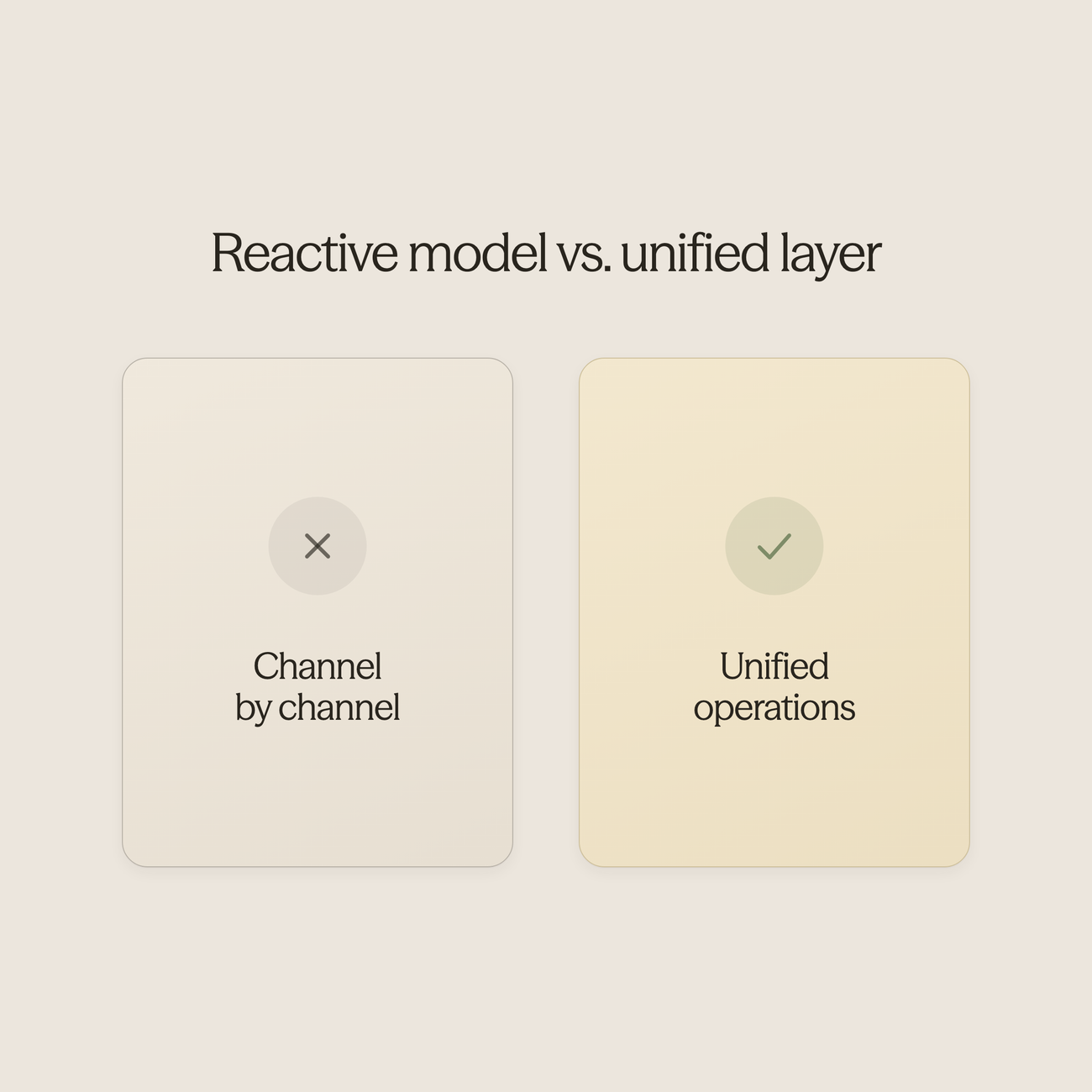
Most hotels manage guest communication by reacting to it. A message arrives, someone responds, a request gets logged, and a follow-up gets forgotten. That cycle works when there isn't much to do. When it breaks down, it is at scale — across channels, across shifts, across languages. The real problem is coordination, not effort.
The fix isn't hiring more staff or asking teams to work harder — it's eliminating the coordination gaps that cause requests to fall through the cracks in the first place.
| Reactive Communication | Unified Operational Layer |
|---|---|
| Messages handled channel by channel | All channels are managed in one place |
| Follow-ups frequently forgotten | Automated tracking across every request |
| Breaks down across shifts | Seamless handoffs at every shift change |
| Lost in translation across languages | Centralized context regardless of language |
If your team is constantly catching up on missed messages or dropped requests, the issue is a structural coordination problem — and effort alone will never solve it.
How does Conduit address the coordination problem at the infrastructure level?
AI for hospitality addresses this at the infrastructure level by acting as connective tissue between guest-facing channels and internal operations. It pulls live reservation data into every conversation, so guests receive answers grounded in their actual booking rather than generic scripts. According to Conduit's Voice AI Statistics 2026, voice AI can reduce front-desk call-handling time by up to 60%, freeing staff to focus on revenue-generating interactions.
High-performing properties use AI to protect the conditions that make hospitality possible. When routine volume is handled automatically, staff gain bandwidth to notice frustrated guests, offer genuine upgrades, and remember returning guests' preferences. Conduit's hotel upselling research shows acceptance rates of 25 to 30 percent on well-timed offers: the opportunity lies in sending the right message at the right moment through the guest's preferred channel.
What makes Conduit's AI agents trusted across 1,000-plus hospitality brands?
Conduit's AI agents aren't static. They learn how a specific property operates, follow its escalation procedures, and access its internal systems. A noise complaint at 11 pm is routed to the right person with full context and resolved without the guest having to repeat themselves. This operational specificity separates a demo-impressive tool from one trusted across 1,000-plus hospitality brands in more than 120 countries.
How do proactive workflows compound revenue impact at scale?
Revenue impact grows when you layer in proactive workflows. Pre-arrival messages, in-stay prompts, and post-departure outreach are each triggered by real booking behavior, not generic schedules. The difference between a message that converts and one that gets ignored is timing and relevance. Conduit is programmable, which is why properties that use it unlock measurable value at scale.
Seeing how that operational layer performs inside a real property transforms abstract numbers into concrete results.
Related Reading
- Hijiffy Pricing
- Duve Pricing
- Hotel Automation Software
- Airbnb Automated Messages
- Airbnb Automation Tools
- Best AI for Hotels
- Enso Connect Pricing
- Property Management AI Tools
Book a Demo to See Conduit's AI for Hospitality Customer Service in Action
Book a demo with Conduit to see how conversations from your existing channels get automated using real reservation context. You'll see where room upgrades, stay extensions, and add-ons slip through your current workflows unnoticed.
"Properties across 120+ countries are already using Conduit to automate 70% of guest messaging while unlocking measurable revenue that manual processes miss."
Every unanswered or manually handled guest message is a missed revenue opportunity. Most properties don't realize how many are slipping through until they see it firsthand.
Properties across 120+ countries are already using Conduit to automate 70% of guest messaging while unlocking measurable revenue that manual processes miss. Your first session shows what that looks like at your scale, on your channels, with your guests.
| What You'll See in the Demo | Why It Matters |
|---|---|
| Automated guest conversations | Eliminates manual response bottlenecks |
| Room upgrade opportunities | Revenue actively recovered, not missed |
| Stay extension triggers | Captured at the right moment, automatically |
| Add-on offer automation | Scales across 120+ countries effortlessly |
70% automation of guest messaging isn't just an operational win — it's a direct revenue unlock that manual workflows are structurally incapable of achieving.
Book your first demo session scoped to your specific channels and property scale — generic demos miss the revenue gaps that matter most to your operation.

Stay in the loop
Get the latest on AI automation, product updates, and customer stories.

